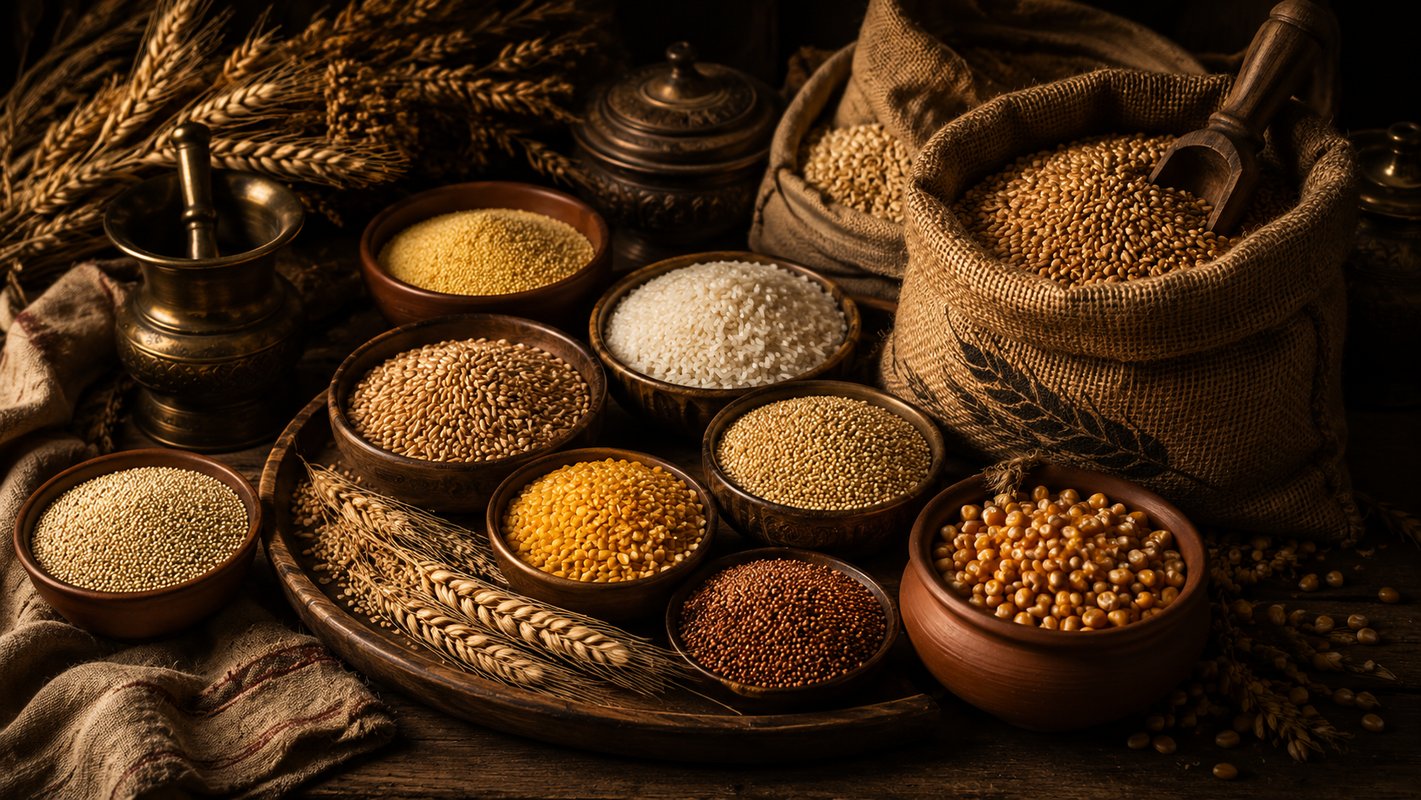
📊 All data from ICMR-NIN "Nutritive Value of Indian Foods" (2017 edition) — the authoritative Indian nutrition database. Values are per 100g dry, raw weight. Cooking reduces gram weight but concentrates minerals per serving.
Complete Macro Comparison
| Dal / Legume | Energy (kcal) | Protein (g) | Carbs (g) | Fibre (g) | Fat (g) |
|---|---|---|---|---|---|
| Chana Dal (split Bengal gram) | 372 | 25.9 | 59.8 | 29.9 | 5.6 |
| Kala Chana (black chickpea) | 372 | 25.9 | 59.8 | 29.9 | 5.6 |
| Whole Masoor (brown lentil) | 346 | 25.4 | 59.9 | 14.2 | 0.9 |
| Urad Dal (split white, black gram) | 347 | 25.1 | 53.8 | 8.5 | 1.4 |
| Masoor Dal (split red lentil) | 343 | 25.1 | 59.0 | 11.0 | 1.1 |
| Val Dal (field beans) | 347 | 24.9 | 60.1 | 28.0 | 0.8 |
| Moong Dal (split yellow) | 348 | 24.5 | 56.1 | 8.2 | 1.2 |
| Moth Beans (matki) | 330 | 23.4 | 56.5 | 18.5 | 1.6 |
| Chawli (black-eyed peas) | 323 | 23.4 | 54.5 | 25.6 | 1.4 |
| Toor Dal (split pigeon pea) | 335 | 22.3 | 56.6 | 15.0 | 1.7 |
| Rajma (kidney bean) | 347 | 22.9 | 60.6 | 24.9 | 1.3 |
| Kabuli Chana (white chickpea) | 360 | 17.4 | 60.9 | 17.4 | 5.2 |
Complete Micronutrient Comparison
| Dal / Legume | Iron (mg) | Calcium (mg) | Potassium (mg) | Folate (mcg) | Phosphorus (mg) |
|---|---|---|---|---|---|
| Urad Dal (whole black) | 9.1 | 154 | 983 | 216 | 385 |
| Moth Beans (matki) | 9.0 | 150 | 1130 | — | 373 |
| Chawli (black-eyed peas) | 8.6 | 77 | 1112 | 633 | — |
| Masoor Dal (split red) | 7.6 | 68 | 803 | 181 | — |
| Whole Masoor | 7.6 | 68 | — | — | — |
| Urad Dal (split white) | 7.3 | 154 | 983 | 216 | 385 |
| Chana Dal | 5.3 | 56 | 875 | — | 312 |
| Val Dal (field beans) | 5.6 | 249 | 1139 | — | 322 |
| Kabuli Chana | 4.6 | 202 | 875 | — | — |
| Moong Dal (whole green) | 6.7 | 124 | 1246 | 625 | — |
| Rajma (kidney bean) | 5.1 | 130 | 1359 | 394 | — |
| Toor Dal | 4.3 | 73 | 1392 | 456 | 304 |
Key Finding
Protein — the differences are smaller than you think
Most split Indian dals fall in a narrow 22–26g protein range per 100g. The gap between the highest (chana dal, 25.9g) and the most commonly eaten (toor dal, 22.3g) is only 3.6g — less than the variation you'd get from a different cooking water ratio. Kabuli chana (17.4g) is the genuine outlier with meaningfully less protein.
Key Finding
Fibre — the most variable nutrient between dals
Fibre varies far more than protein: from 8.2g (moong dal) to 29.9g (chana dal / kala chana) — a nearly 4× difference. This is primarily driven by whether the seed coat is intact. Whole legumes (kala chana, val dal, chawli) have dramatically more fibre than their split, skinned equivalents.
Key Finding
Iron — the underrated leaders
Moth beans (9.0mg) and whole black urad (9.1mg) have the highest iron of common Indian legumes — more than masoor (7.6mg) which is usually cited as the best dal iron source. Chawli (8.6mg) is also exceptional. These three deserve more recognition for iron content.
Key Finding
Folate — chawli and whole green moong are exceptional
Chawli (633 mcg) and whole green moong (625 mcg) have dramatically more folate than other legumes. Toor dal (456 mcg) and rajma (394 mcg) are also high. Folate is critical for cell development — these legumes deserve attention for anyone monitoring folate intake.
Key Finding
Calcium — val dal and kabuli chana lead
Val dal (249mg) and kabuli chana (202mg) are the standout calcium sources among legumes. Urad dal (154mg) is also notable. Most other legumes provide 56–130mg — useful contributions but not exceptional. Val dal's calcium content (249mg) is comparable to some dairy products.
Key Finding
The myth of the "best" dal
No single dal is best across all nutrients. Chana dal leads in protein and fibre; chawli and moong lead in folate; moth beans and urad lead in iron; val dal and kabuli lead in calcium. Eating a variety of legumes consistently provides better nutrition than eating the largest quantity of any single "optimal" dal.
The Biggest Nutritional Myth in Indian Legumes
"Some dals are healthy and some are not"
All 12 common Indian legumes in this comparison are nutritionally excellent. They share: high protein (17–26g), very high fibre, low fat, low glycaemic index, and good mineral profiles. The differences are real but marginal for most nutrients. The least-healthy way to eat Indian legumes is to restrict yourself to only the "healthiest" one — variety provides a broader nutrient profile than any single dal eaten exclusively. Cook and eat whichever dal you enjoy, in variety, consistently. That is more impactful than optimising for the highest protein or lowest carbohydrate figure.