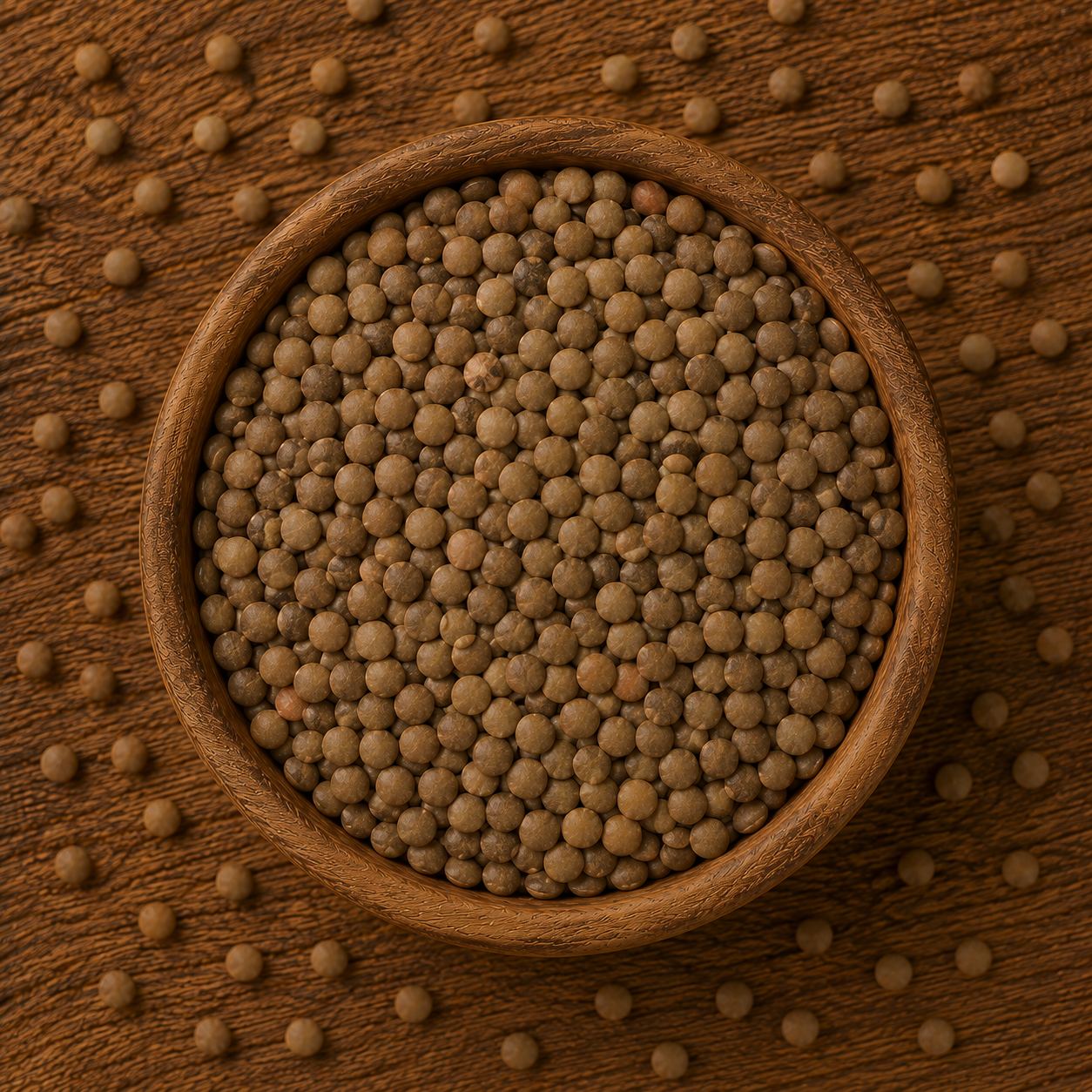
Ingredient identity
Ingredient DNA
Sabut Masoor — Whole Brown Lentil
Lens culinaris · Family: Fabaceae · Genus: Lens
Origin
Middle East
Category
Dal (whole with skin)
Form
Dark olive-brown seeds, skin intact
Difference from split masoor
Skin on — earthier, firmer, longer cooking
Cooking Time
20–25 min (PC with soaking)
Taste profile
What Does Sabut Masoor Taste Like?
Flavour Profile — Sabut Masoor
Earthiness★★★★☆
Nuttiness★★★☆☆
Firmness★★★☆☆
Mildness★★★☆☆
Creaminess★★☆☆☆
Aroma Strength★☆☆☆☆
Botanical classification
Kingdom
Plantae
Family
Fabaceae
Genus
Lens
Species
Lens culinaris
Hindi Name
Sabut Masoor / Kali Masoor
Sanskrit Name
Masura
English Name
Sabut Masoor
Arabic Name
Adas Bani
Names across India
Sabut Masoor in Every Indian Language
| Language | Name | Pronunciation |
|---|---|---|
| English | Whole Brown Lentil | BROWN LEN-til |
| Hindi | साबुत मसूर — Sabut Masoor | SAH-boot MAH-soor |
| Bengali | সাবুত মসুর | SAH-boot MAH-soor |
| Tamil | முழு மசூர் | moo-ZHOO MAH-soor |
| Telugu | మొత్తం మసూర్ | MOH-thum MAH-soor |
| Malayalam | മസൂർ മൊത്തം | MAH-soor MOH-thum |
| Kannada | ಸಂಪೂರ್ಣ ಮಸೂರ | sum-POOR-nah MAH-soo-rah |
| Gujarati | સાબૂત મસૂર | SAH-boot MAH-soor |
| Marathi | साबुत मसूर | SAH-boot MAH-soor |
| Punjabi | ਸਾਬੁਤ ਮਸਰ | SAH-boot MAH-sar |
| Urdu | ثابت مسور | SAH-boot MAH-soor |
Origin and identity
What Is Sabut Masoor?
Sabut masoor is the whole form of the same lentil that, split and skinned, produces masoor dal. The dark olive-brown outer skin remains intact, giving it a different character — earthier, firmer, requiring soaking and longer cooking.
The whole skin contributes a faintly earthy, slightly bitter note through polyphenols and tannins, producing a more complex flavour than the mild split version.
What Indian Cooking Loses Without Sabut Masoor
- Sabut masoor dal is a specific North Indian preparation — firmer, more textured than split masoor
- The whole skin contributes dietary fibre and polyphenols
- For preparations where distinct lentil texture is desired
- More complex flavour than split masoor for those who want earthier dal
Historical significance
Sabut Masoor Through History
Historical Record
Skin-On and Split — Same Ancient Lentil
Whole masoor and split masoor dal are from the same plant. The decision to cook with or without skin has been a constant in Indian cooking for millennia. Whole masoor's earthiness suits robust, spiced preparations; split masoor's mildness suits quick, simple dals.
Cooking science
The Science of Sabut Masoor
Cooking Science
The Skin's Chemical Contribution
The outer skin contains polyphenols and tannins that contribute the slightly astringent, earthy quality. These tannins partially bind to proteins, slightly reducing protein availability. Soaking before cooking leaches out some tannins, improving digestibility and reducing the earthy quality if desired.
Storage science
How to Store Sabut Masoor
Storage Reference
Dried
18–24 months
Cooked
3–4 days
Note
Store in airtight container away from heat and light
Buying guide
How to Buy Good Sabut Masoor
Technique
How to Use Sabut Masoor Correctly
Using Sabut Masoor in the Kitchen
Technique, quantity, and what to avoid
- Soak 2–4 hours before cooking
- Pressure cook: 3–4 min (soaked)
- Cook until just soft — individual lentils visible
- Season with cumin-garlic tadka and lime
- 1/2 cup dry per 2 servings
Pairings
What Sabut Masoor Pairs Well With
Best Pairings — Sabut Masoor
Famous dishes
Dishes That Use Sabut Masoor
Key Dishes Using Sabut Masoor
Sabut Masoor Dal
North India · Whole lentil
Primary
Masoor Khichdi
North India · Rice-lentil
Alternate form
Simple Masoor Dal
Bengal · Everyday
Both forms used
Regional use
Where Sabut Masoor Matters Most
Regional Importance
★★★★☆
North India
Everyday whole dal
★★★★☆
Bengal
Alongside split masoor
★★★☆☆
Maharashtra
Some use
★★☆☆☆
South India
Less common
Where Sabut Masoor Fits in Indian Cooking
| North Indian Cuisine | Common |
| Bengali Cuisine | Common |
| All Indian Cuisines | Common |
| Jain Cooking | Common |
| Sattvic Cooking | Common |
Comparison
Whole Masoor vs Split Masoor Dal
Whole Masoor vs Split Masoor Dal
| Feature | Whole Masoor (Sabut) | Split Masoor Dal |
|---|---|---|
| Skin | Yes | No |
| Colour | Dark olive-brown | Salmon-pink |
| Cooking time | Longer — soaking needed | Very fast |
| Texture cooked | Firm, distinct lentils | Creamy smooth purée |
| Flavour | Earthier | Mild, clean |
Nutrition
Nutrition and Key Compounds
Sabut Masoor — Honest Nutritional Picture
Culinary quantities — aromatic and flavour contribution, not macro nutrition
Slightly more dietary fibre and polyphenols than split masoor due to skin. Protein ~25g/100g dry.
Substitutions
Substitutes for Sabut Masoor
What Works and What Does Not
Direct substitute
Split masoor dal (shorter cooking)
Faster but different texture.
Good substitute
Whole brown/green lentils
Similar earthy profile.
People Also Search
Related Articles
Chef's notes
Practical Insight
From the Kitchen
To keep whole masoor dal intact, cook only until a lentil pressed between fingers yields — don't overcook or skin bursts and dal becomes similar to split masoor.