Ingredient identity
Ingredient DNA
Chawli — Black-Eyed Peas
Vigna unguiculata · Family: Fabaceae · Genus: Vigna
Origin
West Africa — ancient Indian
Category
Whole Legume
Form
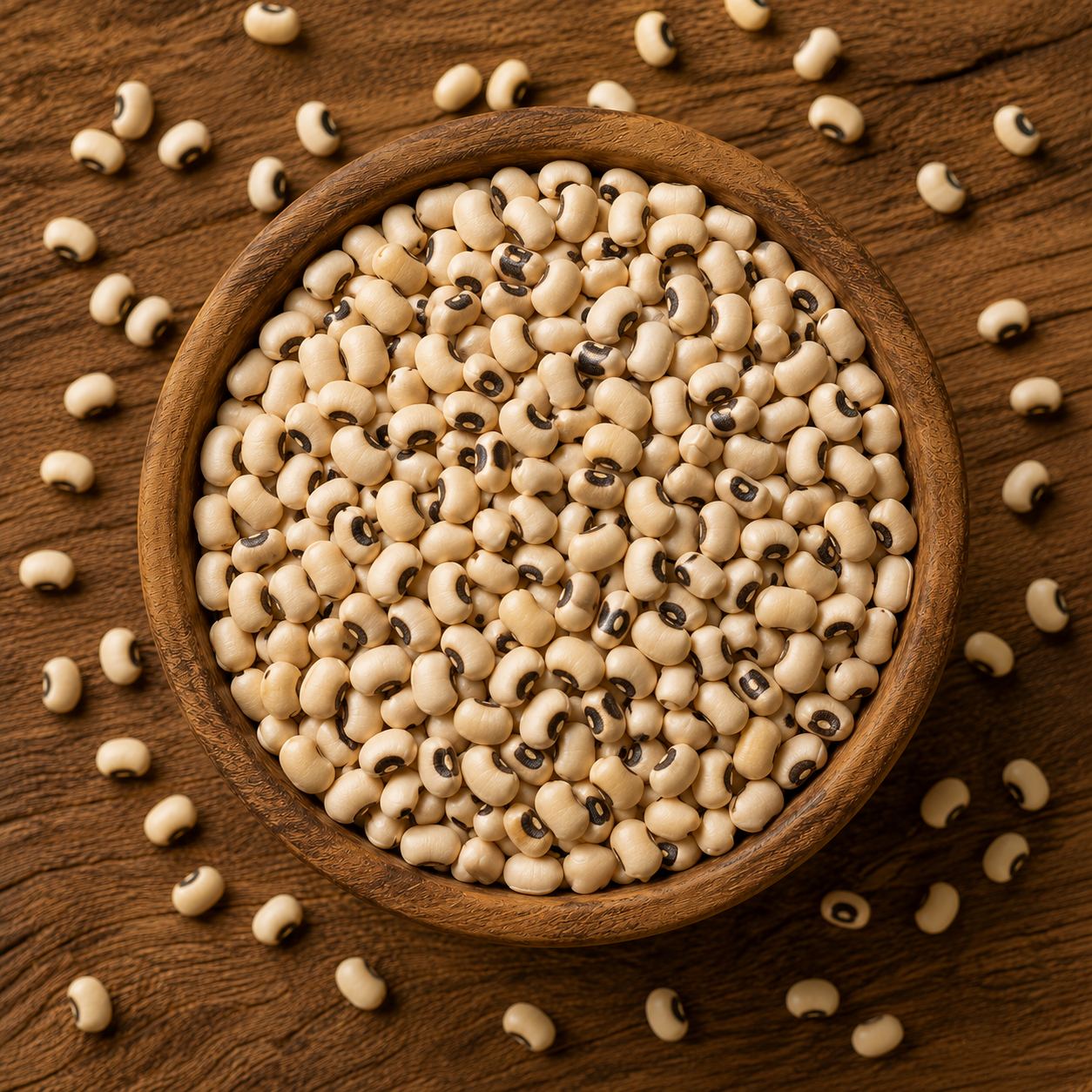
Cream oval beans with black eye
Iron Content
Very high — among best plant sources
Cooking Time
5–8 min (PC soaked)
Protein
~24g per 100g
Taste profile
What Does Chawli Taste Like?
Flavour Profile — Chawli
Earthiness★★★☆☆
Creaminess★★★☆☆
Nuttiness★★☆☆☆
Mildness★★★☆☆
Firmness★★★☆☆
Aroma Strength★☆☆☆☆
Botanical classification
Kingdom
Plantae
Family
Fabaceae
Genus
Vigna
Species
Vigna unguiculata
Hindi Name
Chawli / Lobia
Sanskrit Name
Rajashimbi
English Name
Chawli
Arabic Name
Lubiya
Names across India
Chawli in Every Indian Language
| Language | Name | Pronunciation |
|---|---|---|
| English | Black-Eyed Peas | BLAK-EYD PEEZ |
| Hindi | चवली / लोबिया — Chawli / Lobia | CHOW-lee |
| Bengali | বরবটি — Barbati | BAR-bah-tee |
| Tamil | காராமணி — Karamani | kah-RAH-mah-nee |
| Telugu | అలసంద — Alasanda | ah-lah-SAN-dah |
| Malayalam | വൺ പയർ — Van Payar | VAN pah-YAR |
| Kannada | ಅಲಸಂದೆ — Alasande | ah-lah-SAN-deh |
| Gujarati | ચોળી — Choli | CHO-lee |
| Marathi | चवळी — Chawli | CHOW-lee |
| Punjabi | ਲੋਬੀਆ — Lobia | LOH-bee-ah |
| Urdu | لوبیہ — Lobia | LOH-bee-ah |
| Sanskrit | राजशिंबी — Rajashimbi | rah-jah-SHIM-bee |
Origin and identity
What Is Chawli?
Chawli — black-eyed peas — are one of the most nutritious Indian legumes, particularly notable for very high iron content. Cultivated in India for thousands of years, important in Maharashtra, Rajasthan, and South India.
Chawli is often sprouted — sprouting significantly improves iron bioavailability by reducing phytate content. Sprouted chawli with lime juice is one of India's most effective plant-based iron sources for vegetarians.
What Indian Cooking Loses Without Chawli
- Chawli's high iron makes it among the most important legumes for vegetarian iron — particularly for menstruating women
- Maharashtra's chawli masala showcases the bean's earthy firm character
- Sprouted chawli is a traditional health food especially for pregnancy and anaemia
- South India's karamani sundal is a specific temple food preparation
Historical significance
Chawli Through History
Historical Record
Africa's Gift to Indian Agriculture
Cowpea is native to West Africa with cultivation records from 5000 BCE. In India, cultivated at least 2,000 years for drought tolerance and nutritional density. Its importance as an iron source in traditional Indian medicine reflects ancient empirical knowledge — now confirmed by nutritional science.
Cooking science
The Science of Chawli
Cooking Science
Iron Bioavailability — Why Sprouting Matters
Chawli contains ~5–6mg iron per 100g dry — among highest plant foods. Plant iron (non-haeme) has lower bioavailability (2–8%) than animal iron (15–35%). Sprouting reduces phytate content 30–50%, significantly improving iron bioavailability. Adding lime juice (Vitamin C) at serving further enhances absorption — a traditional combination that is nutritionally validated.
Storage science
How to Store Chawli
Storage Reference
Dried
18–24 months
Sprouted
2–3 days
Cooked
3–4 days
Buying guide
How to Buy Good Chawli
Technique
How to Use Chawli Correctly
Using Chawli in the Kitchen
Technique, quantity, and what to avoid
- Soak 4–6 hours or overnight
- Pressure cook: 5–8 min (soaked)
- For sprouting: soak 8 hours, sprout 24–36 hours
- Combine with lime juice when serving for iron
- 1/2 cup dry per 2 servings
Pairings
What Chawli Pairs Well With
Best Pairings — Chawli
Famous dishes
Dishes That Use Chawli
Key Dishes Using Chawli
Chawli Masala
Maharashtra · Curry
Primary
Lobia Masala
North India · Curry
Primary
Karamani Sundal
Tamil Nadu · Temple prasad
Primary
Sprouted Chawli Salad
All India · Health food
Sprouted
Rongi
Punjab · Regional name
Primary
Regional use
Where Chawli Matters Most
Regional Importance
★★★★★
Maharashtra
Everyday preparation
★★★★★
Rajasthan
Iron-rich desert tradition
★★★★★
South India
Karamani — temple and everyday
★★★★☆
North India
Lobia preparations
★★★★★
Gujarat
Choli preparations
Where Chawli Fits in Indian Cooking
| Maharashtrian Cuisine | Essential |
| South Indian Cuisine | Essential |
| Rajasthani Cuisine | Essential |
| North Indian Cuisine | Common |
| Jain Cooking | Essential |
| Sattvic Cooking | Essential |
Comparison
Chawli vs Moth Beans vs Rajma
Chawli vs Moth Beans vs Rajma
| Feature | Chawli | Moth Beans | Rajma |
|---|---|---|---|
| Distinctive feature | Black eye spot | Uniform brown | Kidney shape |
| Iron content | Very high | High | High |
| For sprouting? | Excellent — best for iron | Yes | Less common |
| Maharashtra use? | Chawli masala — essential | Misal — essential | Less central |
| Cooking time (PC) | 5–8 min | 8–10 min | 20–25 min |
Nutrition
Nutrition and Key Compounds
Chawli — Honest Nutritional Picture
Culinary quantities — aromatic and flavour contribution, not macro nutrition
~24g protein, 60g carbohydrate, 11g fibre, ~5–6mg iron per 100g. High folate, potassium. High iron + Vitamin C in sprouted form = most effective plant-based anaemia-prevention food.
Substitutions
Substitutes for Chawli
What Works and What Does Not
Good substitute
Moth beans
Similar size and earthiness.
Acceptable
Kala chana
Different appearance.
No substitute
For Karamani Sundal
Culturally specific.
People Also Search
Related Articles
Chef's notes
Practical Insight
From the Kitchen
Add nothing else but consider sprouted chawli with lime as a daily practice if iron is a concern. Soak overnight, sprout 24 hours, eat raw with salt, lime, cumin powder, green chilli. One of India's most nutritionally validated preparations for iron intake.