Ingredient identity
Ingredient DNA
Sabut Moong — Whole Green Mung
Vigna radiata · Family: Fabaceae · Genus: Vigna
Origin
South Asia
Category
Whole Legume
Form
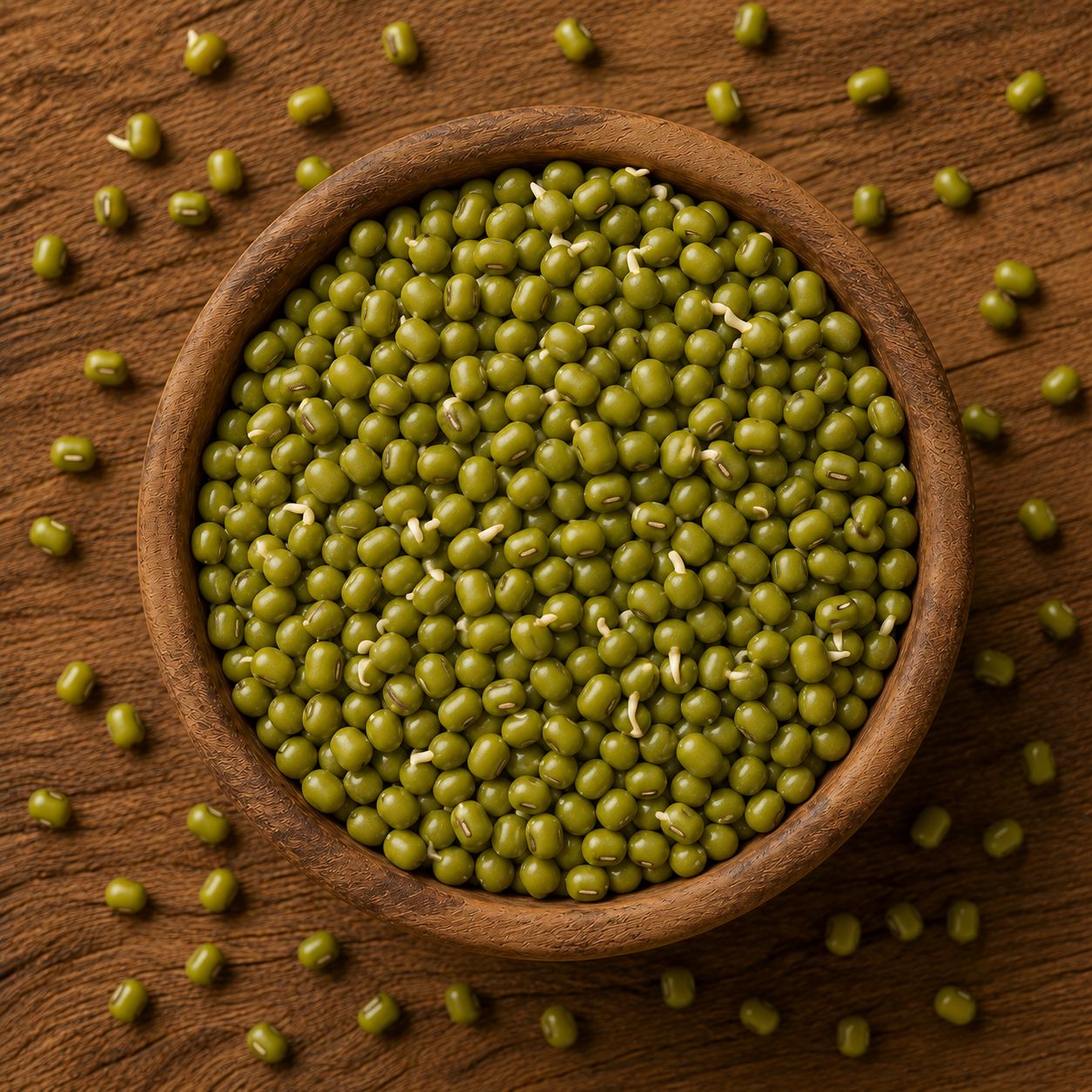
Small oval bright green seeds with skin
Primary Use
Sprouting · Kosambari · Whole moong dal
Difference from moong dal
Skin intact — higher fibre, earthier, different texture
Cooking Time
5–7 min (PC after soaking)
Taste profile
What Does Sabut Moong Taste Like?
Flavour Profile — Sabut Moong
Earthiness★★☆☆☆
Mildness★★★★☆
Nuttiness★★☆☆☆
Freshness (sprouted)★★★★☆
Creaminess★★★☆☆
Aroma Strength★☆☆☆☆
Botanical classification
Kingdom
Plantae
Family
Fabaceae
Genus
Vigna
Species
Vigna radiata
Hindi Name
Sabut Moong / Hara Moong
Sanskrit Name
Mudga (whole)
English Name
Sabut Moong
Arabic Name
Adas Akhdar Tamam
Names across India
Sabut Moong in Every Indian Language
| Language | Name | Pronunciation |
|---|---|---|
| English | Whole Green Gram | GREEN MUNG |
| Hindi | साबुत मूंग — Sabut Moong | SAH-boot MOONG |
| Bengali | সাবুত মুগ | SAH-boot MOOG |
| Tamil | பச்சை பயறு — Pachai Payaru | PAH-chye PAH-yah-roo |
| Telugu | పెసలు — Pesalu | peh-SAH-loo |
| Malayalam | ചെറുപയർ — Cherupayar | cheh-roo-PAH-yar |
| Kannada | ಹೆಸರು ಕಾಳು — Hesaru Kalu | HEH-sah-roo KAH-loo |
| Gujarati | મઠ (whole moong) | MATH |
| Marathi | मूग (whole) | MOOG |
| Punjabi | ਮਾਂਹ ਹਰਾ | MAAH |
Origin and identity
What Is Sabut Moong?
Whole green moong — sabut moong — is the same plant as yellow moong dal but with its green outer skin intact. The skin changes the character significantly: firmer, slightly earthier, higher in fibre, requiring soaking and longer cooking. Also the most commonly sprouted legume in India.
Sprouted moong — the crisp white shoots from germinated whole moong — is India's most consumed sprout, available from street vendors nationwide.
What Indian Cooking Loses Without Sabut Moong
- Sprouted moong is India's most consumed sprout — available from street vendors and restaurants nationwide
- Kosambari requires whole moong — South Indian raw sprouted salad
- Whole moong provides more dietary fibre and polyphenols than split version
- For fasting preparations, moong is a common permitted ingredient
- Green skin provides earthier character for robust preparations
Historical significance
Sabut Moong Through History
Historical Record
The Most Ancient Cultivated Sprout
Moong cultivated in India at least 4,500 years. Practice of sprouting is ancient — Ayurvedic texts recommend sprouted mudga as highly digestible and potent. The street vendor selling moong sprouts is one of India's most persistent ancient food traditions.
Cooking science
The Science of Sabut Moong
Cooking Science
Sprouting — Seven Changes in 24 Hours
Sprouting for 24–36 hours initiates simultaneous changes: starch converts to simpler sugars; phytates drop 30–50% (better mineral absorption); Vitamin C synthesis begins; enzyme activity increases; glycemic response decreases. These seven simultaneous changes explain why Ayurveda values sprouts — the bean genuinely becomes more nutritious and digestible during germination.
Storage science
How to Store Sabut Moong
Storage Reference
Dried
18–24 months
Sprouted
2–3 days
Cooked
3–4 days
Buying guide
How to Buy Good Sabut Moong
Technique
How to Use Sabut Moong Correctly
Using Sabut Moong in the Kitchen
Technique, quantity, and what to avoid
- Soak 6–8 hours before cooking
- Pressure cook: 5–7 min (soaked)
- For sprouting: soak 6–8 hours, drain, sprout 24–36 hours
- Sprouts: eat raw with lime and salt, or lightly cook
- Kosambari: raw sprouts with cucumber, coconut, lime, mustard seeds
Pairings
What Sabut Moong Pairs Well With
Best Pairings — Sabut Moong
Famous dishes
Dishes That Use Sabut Moong
Key Dishes Using Sabut Moong
Kosambari
South India · Raw sprouted salad
Standard sprout
Moong Sprout Salad
All India · Health food
Standard
Sabut Moong Dal
All India · Whole green lentil
Primary
Moong Usal
Maharashtra · Sprout curry
Primary
Festival Moong Khichdi
All India · Fasting food
Permitted ingredient
Regional use
Where Sabut Moong Matters Most
Regional Importance
★★★★★
All India
Most universally sprouted legume
★★★★★
South India
Kosambari, pesalu preparations
★★★★★
Maharashtra
Moong usal and sprouting
★★★★★
All India
Navratri and fasting food
Where Sabut Moong Fits in Indian Cooking
| All Indian Cuisines | Essential |
| Festival Food | Essential |
| Ayurvedic Cooking | Essential |
| Jain Cooking | Essential |
| Sattvic Cooking | Essential |
| Health Food | Essential |
Comparison
Whole Green Moong vs Split Yellow Moong Dal
Whole Green Moong vs Split Yellow Moong Dal
| Feature | Whole Green Moong | Split Yellow Moong Dal |
|---|---|---|
| Skin | Yes — green | No — removed |
| Colour | Green | Yellow |
| For sprouting? | Yes — standard | No |
| Cooking time | Longer — needs soaking | Very fast |
| For kosambari? | Yes — standard | No |
Nutrition
Nutrition and Key Compounds
Sabut Moong — Honest Nutritional Picture
Culinary quantities — aromatic and flavour contribution, not macro nutrition
~24g protein, 63g carbohydrate, 16g fibre. Sprouted adds Vitamin C, reduces phytates, increases digestibility.
Substitutions
Substitutes for Sabut Moong
What Works and What Does Not
Good substitute
Yellow moong dal (split)
Faster, softer — misses skin texture and sprouting.
Good substitute
Moth beans (sprouting)
Similar earthy flavour when sprouted.
People Also Search
Related Articles
Chef's notes
Practical Insight
From the Kitchen
For freshest crunchiest moong sprouts, use at 24 hours when sprout is 2–5mm. Longer sprouting gives leafier sprouts preferred in salads. For cooking, shorter sprouts hold up better.