★★★★★ South India (sambhar)
★★★★★ Maharashtra · Gujarat
What Does Toor Dal Taste Like?
Toor Dal in Every Indian Language
| Language | Name | Pronunciation |
|---|---|---|
| English | Split Pigeon Pea / Toor Dal | TOOR DAL |
| Hindi | तूर दाल — Toor Dal | TOOR DAL |
| Bengali | অড়হর ডাল — Arhar Dal | AR-har DAL |
| Tamil | தூவரம் பருப்பு — Thuvaram Paruppu | TOO-vah-rum PAH-roo-poo |
| Telugu | కంది పప్పు — Kandi Pappu | KAN-dee PAP-poo |
| Malayalam | തുവരപ്പരിപ്പ് — Thuvara Parippu | TOO-vah-rah PAH-rip-poo |
| Kannada | ತೊಗರಿ ಬೇಳೆ — Togari Bele | TOH-gah-ree BEH-leh |
| Gujarati | તુવેર દાળ — Tuver Dal | TOO-ver DAL |
| Marathi | तूरडाळ — Turdal | TOOR-dal |
| Punjabi | ਤੂਰ ਦਾਲ — Toor Dal | TOOR DAL |
| Urdu | تور دال — Toor Dal | TOOR DAL |
| Sanskrit | आढकी — Adhaki | AH-dah-kee |
What Is Toor Dal?
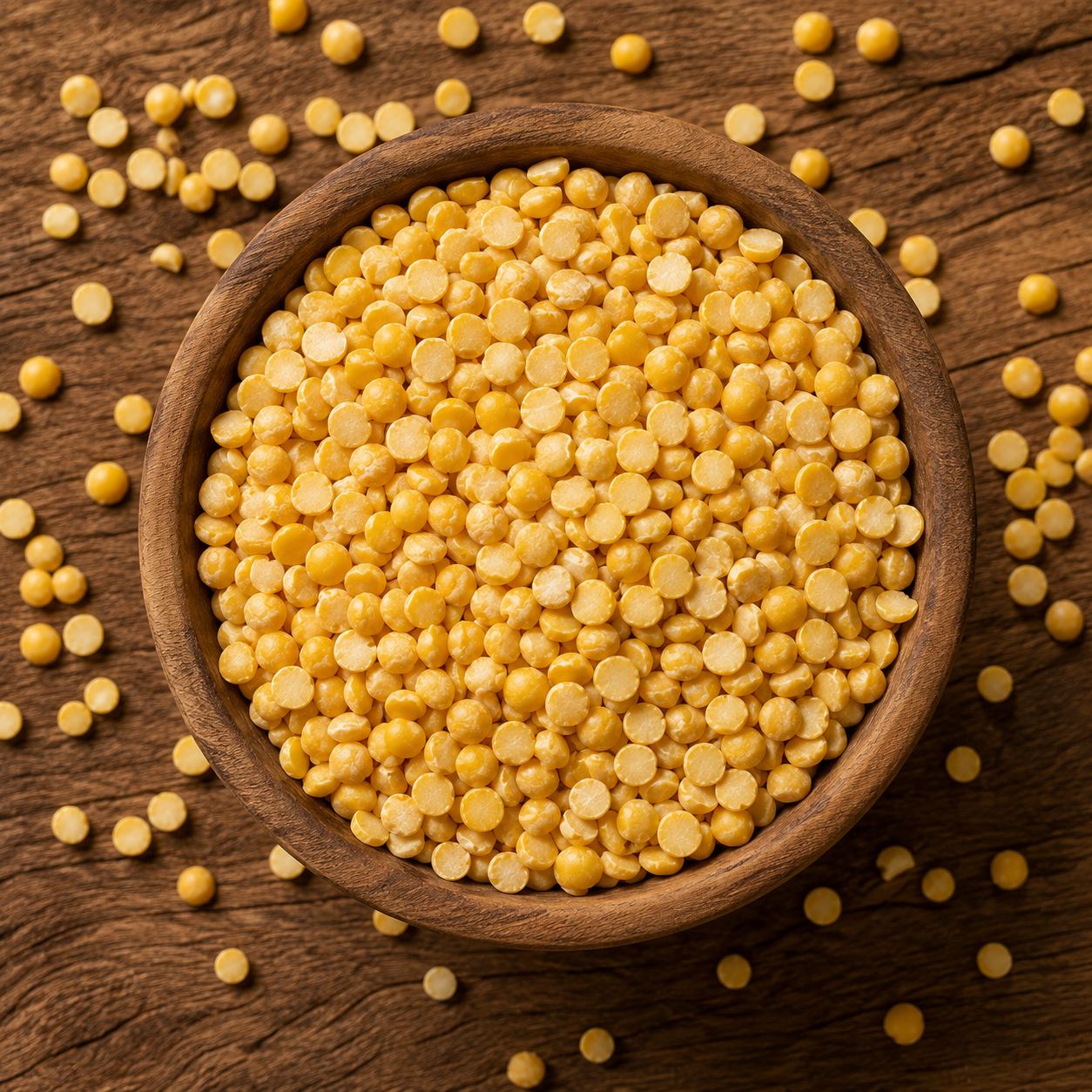
Toor dal — split pigeon pea — is the most widely consumed lentil in India. The dried seeds of Cajanus cajan split and de-husked produce the familiar yellow lentils used in sambhar, dal tadka, dal fry, and hundreds of regional preparations. In South India it is the primary base for sambhar. In North India and Maharashtra it is the everyday dal.
Toor dal is available in two forms: plain (uncoated) and oily (coated with castor oil for preservation). The oily version must be washed thoroughly; plain can be used directly. Both produce the same result once washed.
- Sambhar — consumed at virtually every South Indian meal — is structurally built on toor dal
- Dal tadka and dal fry in North India are default toor dal preparations
- Gujarat's signature sweet-sour dal is made with toor dal
- The protein contribution of toor dal to India's largely vegetarian diet is enormous
- Without toor dal, Indian vegetarian cooking loses its most versatile central legume
Toor Dal Through History
Pigeon pea has been cultivated in India for at least 3,500 years, with the crop found in Harappan sites. It appears in Vedic texts and is one of the oldest continuously cultivated food crops in India. The tradition of dal as a daily meal — dal-roti, dal-chawal — is largely built on toor dal's widespread cultivation across Maharashtra, Gujarat, and Andhra Pradesh.
The Science of Toor Dal
How to Store Toor Dal
How to Buy Good Toor Dal
How to Use Toor Dal Correctly
- Soak 30 minutes before cooking
- Pressure cook: 4–5 minutes; boiling: 45 minutes
- Sambhar: cook dal separately, mash partially, add to tamarind-vegetable base
- Dal tadka: cook to creamy consistency, finish with ghee-cumin-garlic tadka
- 1/2 cup dry per 2 servings
What Toor Dal Pairs Well With
Dishes That Use Toor Dal
Where Toor Dal Matters Most
| All Indian Cuisines | Essential |
| Jain Cooking | Essential |
| Sattvic Cooking | Essential |
Toor Dal vs Moong Dal vs Chana Dal
| Feature | Toor Dal | Moong Dal | Chana Dal |
|---|---|---|---|
| Colour | Yellow | Yellow | Yellow (larger) |
| Texture cooked | Creamy-smooth | Very smooth | Firm |
| For sambhar? | Yes — standard | Not traditional | No |
| Cooking time (PC) | 4–5 min | 2–3 min | 5–7 min |
| Protein/100g | ~22g | ~24g | ~20g |