Ingredient identity
Ingredient DNA
Val Dal — Field Beans
Lablab purpureus · Family: Fabaceae · Genus: Lablab
Origin
Africa / South Asia
Category
Dal (split) / Whole Legume
Form
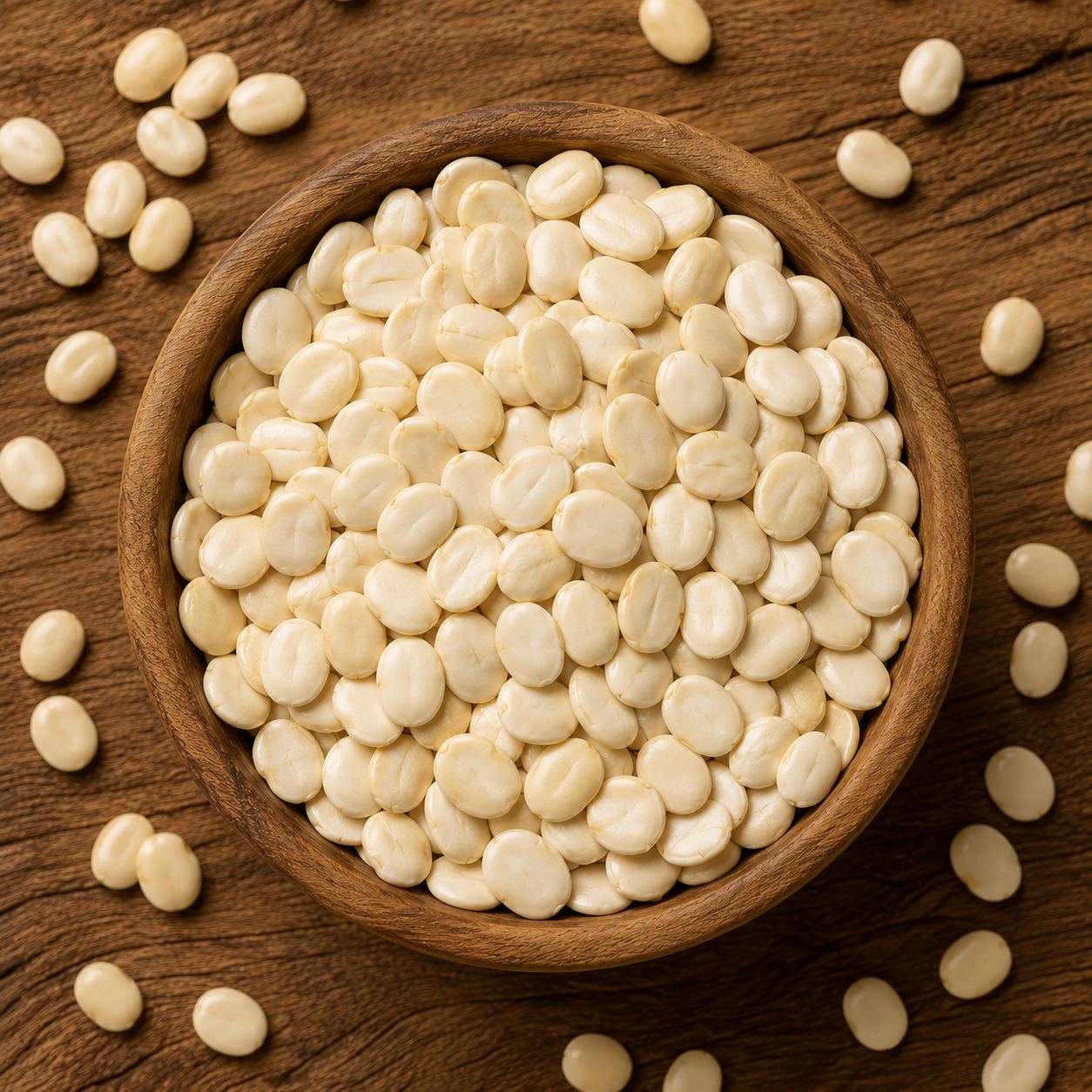
White flat kidney-shaped seeds (split) or whole beans
Primary Use
Maharashtra coastal · Karnataka · Usal
Seasonal
Fresh avarekalu — Karnataka winter tradition
Taste profile
What Does Val Dal Taste Like?
Flavour Profile — Val Dal
Earthiness★★★☆☆
Nuttiness★★★☆☆
Creaminess★★★☆☆
Firmness★★★☆☆
Sweetness★☆☆☆☆
Aroma Strength★☆☆☆☆
Botanical classification
Kingdom
Plantae
Family
Fabaceae
Genus
Lablab
Species
Lablab purpureus
Hindi Name
Val / Sem
Sanskrit Name
Nishpava
English Name
Val Dal
Arabic Name
Lubiya
Names across India
Val Dal in Every Indian Language
| Language | Name | Pronunciation |
|---|---|---|
| English | Field Beans | FEELD BEENZ |
| Hindi | वाल — Val | VAL |
| Bengali | শিম — Shim | SHIM |
| Tamil | அவரை — Avarai | ah-VAH-rye |
| Telugu | అనుమువ్వులు | ah-noo-moo-VOO-loo |
| Malayalam | അവര — Avara | ah-VAH-rah |
| Kannada | ಅವರೆಕಾಳು — Avarekalu | ah-VAH-reh-kah-loo |
| Gujarati | વાલ ની દાળ | VAL nee DAL |
| Marathi | वाल ची डाळ | VAL chee DAL |
| Goan | Vali Dal | VAL-ee DAL |
Origin and identity
What Is Val Dal?
Val dal — field beans or hyacinth beans — is one of South India and Maharashtra's regional speciality legumes. The split de-husked form (val dal) is used in dal preparations; the whole fresh bean (particularly avarekalu in Karnataka) is its own seasonal ingredient.
Lablab purpureus produces an earthy, slightly bitter legume that pairs well with coconut-based preparations and bold Maharashtrian and Goan coastal spices.
What Indian Cooking Loses Without Val Dal
- Avarekalu season in Karnataka generates entire seasonal menus — one of India's most anticipated annual food events
- Val dal's earthy flavour pairs well with coconut and tamarind in coastal preparations
- Regional identity in coastal Maharashtra and Karnataka is partly defined by val dal
- Fresh avarekalu is a genuine marker of geographic culinary heritage
Historical significance
Val Dal Through History
Historical Record
South Asia's Ancient Garden Bean
Lablab purpureus is one of the oldest cultivated legumes in South Asia, with records dating thousands of years. Grown as both food and nitrogen-fixing cover crop. The fresh bean season in Karnataka remains one of India's few genuinely seasonal food celebrations.
Cooking science
The Science of Val Dal
Cooking Science
Anti-Nutritional Compounds and Preparation
Raw val contains canavanine and trypsin inhibitors inactivated by heat. The slightly bitter quality comes from canavanine residues and phenolic compounds in the seed coat — coconut fat in preparations carries fat-soluble bitter compounds away from the palate, explaining why val pairs naturally with coconut-based dishes.
Storage science
How to Store Val Dal
Storage Reference
Dried
18–24 months
Fresh
1 week refrigerated
Cooked
3–4 days
Buying guide
How to Buy Good Val Dal
Technique
How to Use Val Dal Correctly
Using Val Dal in the Kitchen
Technique, quantity, and what to avoid
- Soak 4–6 hours for split dal
- Pressure cook: 6–8 min (soaked)
- Fresh: cook 15–20 min
- Pairs well with coconut and tamarind
Pairings
What Val Dal Pairs Well With
Best Pairings — Val Dal
Famous dishes
Dishes That Use Val Dal
Key Dishes Using Val Dal
Val Dal
Maharashtra coastal · Field bean dal
Primary
Avarekalu Saaru
Karnataka · Fresh bean broth
Seasonal
Val Usal
Maharashtra · Spiced bean
Primary
Val Kadhi
Goa · Coconut-bean
Regional
Avarekalu Curry
Karnataka · Seasonal
Seasonal specialty
Regional use
Where Val Dal Matters Most
Regional Importance
★★★★★
Coastal Maharashtra
Core regional legume
★★★★★
Karnataka
Avarekalu season — cultural event
★★★★★
Goa
Traditional coastal
★★★★☆
Gujarat
Val preparations
★★★☆☆
Rest of India
Less known
Where Val Dal Fits in Indian Cooking
| Maharashtrian Cuisine | Essential |
| Goan Cuisine | Essential |
| Karnataka Cuisine | Essential |
| Gujarati Cuisine | Common |
| Jain Cooking | Common |
Comparison
Val Dal vs Moth Beans vs Toor Dal
Val Dal vs Moth Beans vs Toor Dal
| Feature | Val Dal | Moth Beans | Toor Dal |
|---|---|---|---|
| Regional focus | Coastal Maharashtra, Karnataka | Rajasthan, Maharashtra | All India |
| Seasonal fresh form? | Yes — avarekalu | No | No |
| Flavour | Earthy, slightly bitter | Earthy, nutty | Mild, creamy |
| Coconut pairing? | Excellent | Good | Good |
Nutrition
Nutrition and Key Compounds
Val Dal — Honest Nutritional Picture
Culinary quantities — aromatic and flavour contribution, not macro nutrition
~24g protein, 61g carbohydrate, 17g fibre per 100g.
Substitutions
Substitutes for Val Dal
What Works and What Does Not
Acceptable
Toor or moong dal
Different flavour and texture.
No substitute
For avarekalu season
The specific fresh bean character cannot be replicated.
People Also Search
Related Articles
Chef's notes
Practical Insight
From the Kitchen
Look for val during winter months in Maharashtrian or Kannada stores. Fresh avarekalu has a different flavour from dried — fresher, less bitter. Karnataka's avarekalu season is one of India's most charming seasonal food traditions.