Ingredient identity
Ingredient DNA
Chana Dal — Split Bengal Gram
Cicer arietinum (desi split) · Family: Fabaceae · Genus: Cicer
Origin
Middle East / South Asia
Category
Dal (split)
Form
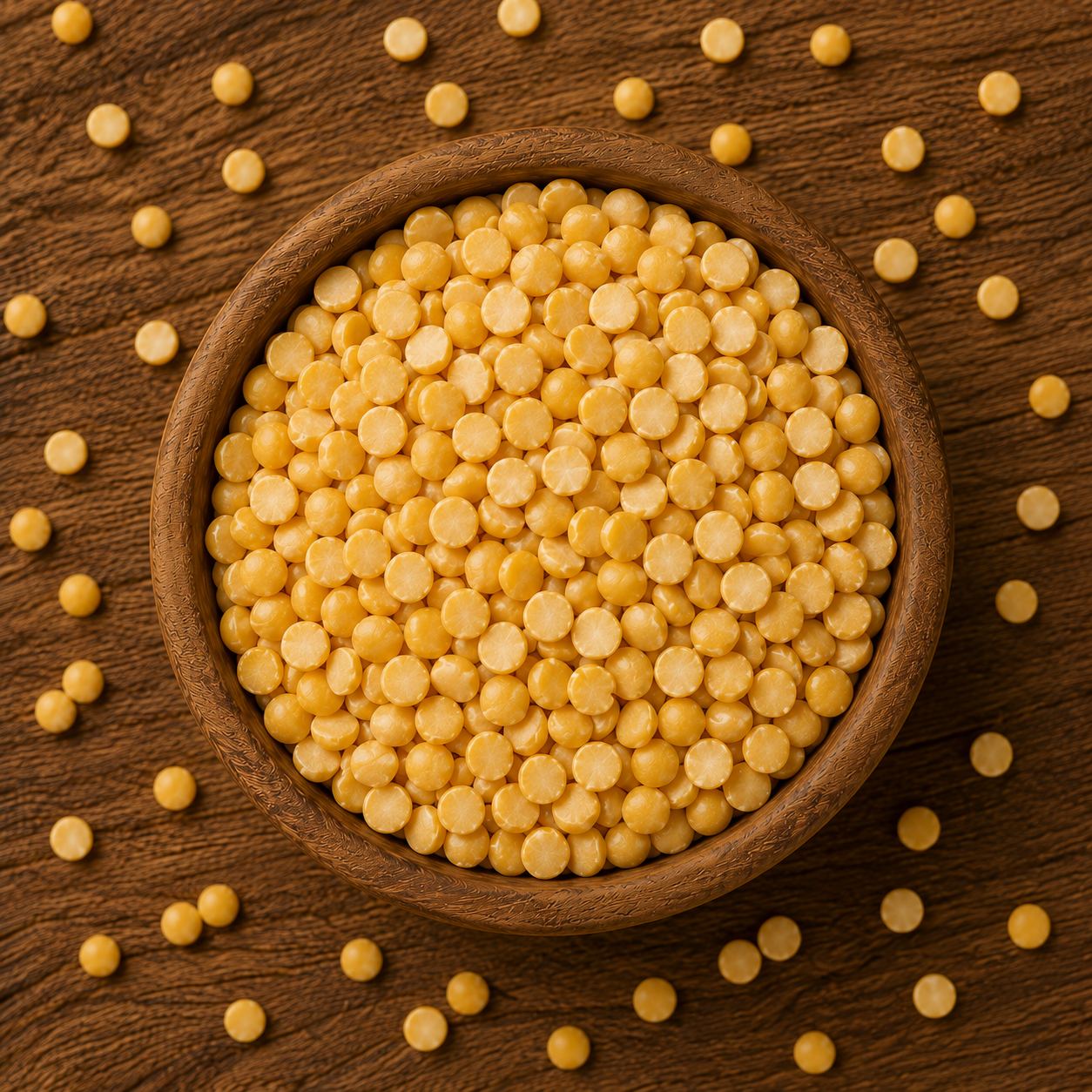
Large yellow split lentils — hulled desi chickpea
Primary Use
Dal · Halwa · Sambar powder · Besan production
Unique Role
Roasted chana dal is a spice blend ingredient
Cooking Time
5–7 min (PC soaked)
Protein
~20g per 100g dry
Taste profile
What Does Chana Dal Taste Like?
Flavour Profile — Chana Dal
Earthiness★★★☆☆
Nuttiness★★★★☆
Creaminess★★★☆☆
Firmness★★★★☆
Bitterness★☆☆☆☆
Aroma Strength★★☆☆☆
Botanical classification
Kingdom
Plantae
Family
Fabaceae
Genus
Cicer
Species
Cicer arietinum (desi split)
Hindi Name
Chana Dal
Sanskrit Name
Chanaka
English Name
Chana Dal
Arabic Name
Adas Hummus
Names across India
Chana Dal in Every Indian Language
| Language | Name | Pronunciation |
|---|---|---|
| English | Split Bengal Gram | CHAH-nah DAL |
| Hindi | चना दाल — Chana Dal | CHAH-nah DAL |
| Bengali | ছোলার ডাল — Chholar Dal | CHO-lar DAL |
| Tamil | கடலை பருப்பு — Kadala Paruppu | kah-DAH-lah PAH-roo-poo |
| Telugu | శెనగ పప్పు — Senaga Pappu | seh-NAH-gah PAP-poo |
| Malayalam | കടല പരിപ്പ് — Kadala Parippu | kah-DAH-lah PAH-rip-poo |
| Kannada | ಕಡಲೆ ಬೇಳೆ — Kadale Bele | KAH-dah-leh BEH-leh |
| Gujarati | ચણા ની દાળ — Chana Ni Dal | CHAH-nah nee DAL |
| Marathi | हरभऱ्याची डाळ — Harbharyachi Dal | HAR-bha-ryah-chee DAL |
| Punjabi | ਚਣੇ ਦੀ ਦਾਲ — Chane Di Dal | CHAH-neh dee DAL |
| Urdu | چنے دال — Chane Dal | CHAH-neh DAL |
| Sanskrit | चणक — Chanaka | CHAH-nah-kah |
Origin and identity
What Is Chana Dal?
Chana dal is the split, hulled desi chickpea — the largest and firmest of common Indian split lentils, holding its shape through cooking. This firmness suits preparations needing texture: chholar dal in Bengal, chana dal halwa, pakoda batter.
Chana dal uniquely serves as a spice blend ingredient: dry-roasted chana dal is incorporated into South Indian sambar powder, chutneys, and some spice blends as a texture and flavour element. No other major dal plays this role.
What Indian Cooking Loses Without Chana Dal
- Chholar dal requires chana dal's firm texture — toor or moong would dissolve
- South Indian spice blends include roasted chana dal for thickening and flavour
- Chana dal halwa requires the dal's properties when cooked in ghee
- Besan (chickpea flour) — the most versatile Indian flour — is made from chana dal
- Papad from chana dal has different crispness from urad dal papad
Historical significance
Chana Dal Through History
Historical Record
Bengal's Festival Lentil
Chickpea cultivation in India since 2500 BCE — Indus Valley sites. In Bengal, chholar dal (chana dal with coconut) is the traditional Durga Puja and wedding feast dal — its festive status speaks to its special occasion identity.
Cooking science
The Science of Chana Dal
Cooking Science
Why Chana Dal Holds Its Shape
Chana dal's firmness comes from its higher starch gelatinisation temperature and structural protein content. The desi chickpea's harder seed coat means starches are more protected and gelatinise at higher temperatures than moong or masoor. This is why chana dal at the same cooking time produces textured, grain-separated results rather than creamy mash.
Storage science
How to Store Chana Dal
Storage Reference
Dried
18–24 months
Cooked
3–4 days
Note
Store in airtight container away from heat and light
Buying guide
How to Buy Good Chana Dal
Technique
How to Use Chana Dal Correctly
Using Chana Dal in the Kitchen
Technique, quantity, and what to avoid
- Soak 1–2 hours before cooking
- Pressure cook: 5–7 minutes (soaked)
- Chholar dal: cook until just done — individual lentils hold shape
- For halwa: cook, drain, fry in ghee until fragrant
- For spice blends: dry-roast until golden, cool, grind
- 1/2 cup dry per 2 servings
Pairings
What Chana Dal Pairs Well With
Best Pairings — Chana Dal
Famous dishes
Dishes That Use Chana Dal
Key Dishes Using Chana Dal
Chholar Dal
Bengal · Festive coconut chana dal
Primary dal
Chana Dal Halwa
North India · Lentil sweet
Primary ingredient
Sambar Powder
South India · Spice blend
Roasted spice ingredient
Dal Pakwan
Sindhi · Dal with flatbread
Primary dal
Panchmel Dal
Rajasthan · Five lentil dal
One of five
Kadala Curry
Kerala · Black chickpea curry
Related — uses whole kadala
Regional use
Where Chana Dal Matters Most
Regional Importance
★★★★★
Bengal
Chholar dal — festival staple
★★★★★
South India
In spice blends and chutneys
★★★★☆
North India
Chana dal preparations
★★★★☆
Gujarat
Dal and snacks
★★★★★
All India
Besan production
Where Chana Dal Fits in Indian Cooking
| Bengali Cuisine | Essential |
| South Indian Cuisine | Essential |
| North Indian Cuisine | Common |
| All Indian Cuisines | Common |
| Jain Cooking | Essential |
| Sattvic Cooking | Essential |
Comparison
Chana Dal vs Kabuli Chana vs Toor Dal
Chana Dal vs Kabuli Chana vs Toor Dal
| Feature | Chana Dal | Kabuli Chana | Toor Dal |
|---|---|---|---|
| Form | Split, hulled | Whole, skin on | Split, hulled |
| Texture cooked | Firm, holds shape | Very firm | Creamy-soft |
| For halwa? | Yes | No | No |
| In spice blends? | Yes — roasted | No | No |
| Besan flour? | Yes — primary source | No | No |
Nutrition
Nutrition and Key Compounds
Chana Dal — Honest Nutritional Picture
Culinary quantities — aromatic and flavour contribution, not macro nutrition
~20g protein, 57g carbohydrate, 17g fibre per 100g. Low glycemic index — excellent for blood sugar. High in iron, folate, zinc.
Substitutions
Substitutes for Chana Dal
What Works and What Does Not
Partial
Toor dal (everyday dal)
Cooks differently — softer.
No substitute
For chholar dal or chana dal halwa
Firm texture is essential.
People Also Search
Related Articles
Chef's notes
Practical Insight
From the Kitchen
Chholar dal should have individual lentils holding their shape — cook to just-done, not fully soft. The coconut, ghee, and warm spices transform an everyday dal into something genuinely festive. Always make it for guests.