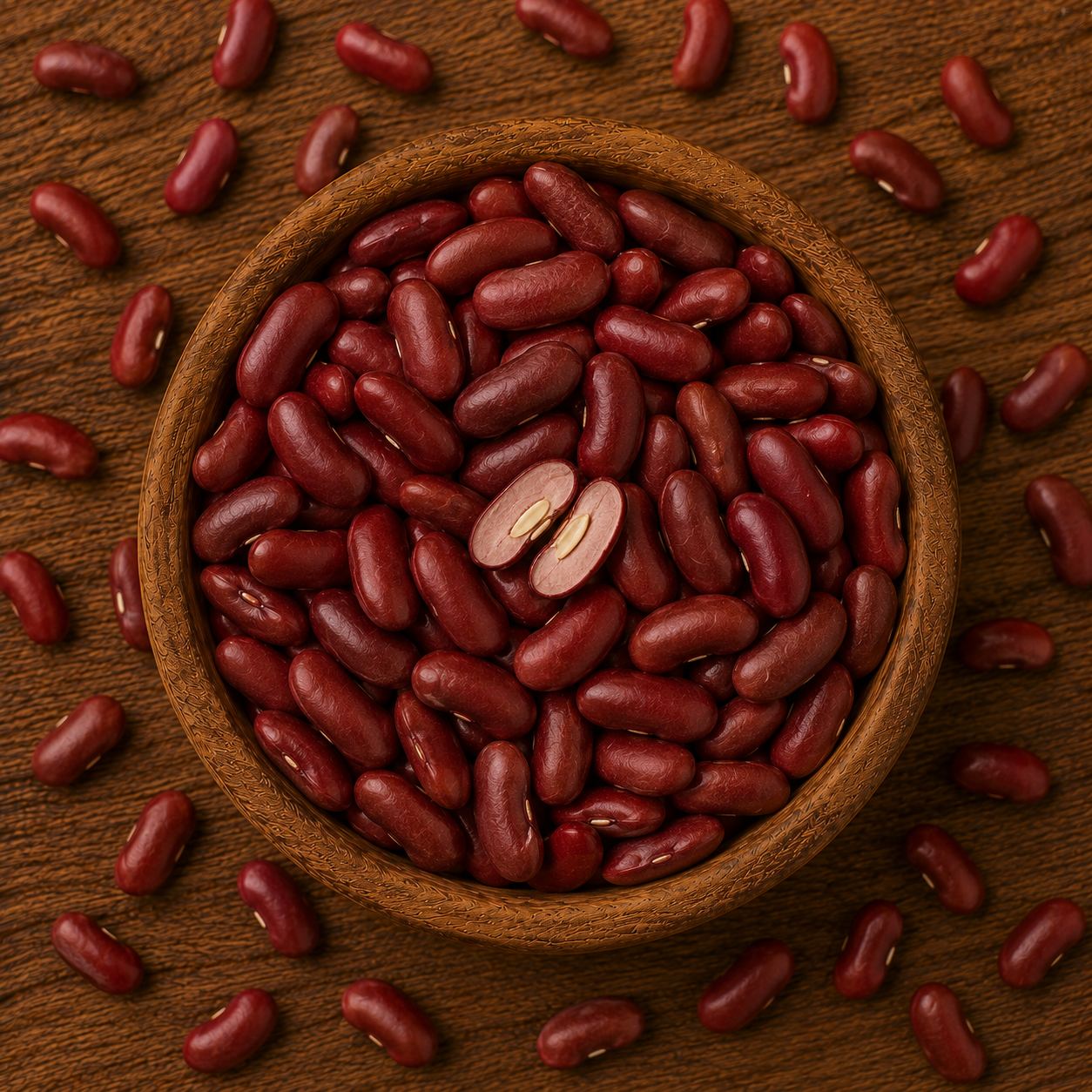
What Does Rajma Taste Like?
Rajma in Every Indian Language
| Language | Name | Pronunciation |
|---|---|---|
| English | Kidney Bean | KID-nee BEEN |
| Hindi | राजमा — Rajma | RAJ-mah |
| Bengali | রাজমা | RAJ-mah |
| Tamil | ராஜ்மா | RAJ-mah |
| Telugu | రాజ్మా | RAJ-mah |
| Malayalam | രാജ്മ | RAJ-mah |
| Kannada | ರಾಜ್ಮ | RAJ-mah |
| Gujarati | રાજમા | RAJ-mah |
| Marathi | राजमा | RAJ-mah |
| Punjabi | ਰਾਜਮਾਹ — Rajmah | RAJ-mah |
| Urdu | راجماہ | RAJ-mah |
| Kashmiri | রাজমাহ | RAJ-mah |
What Is Rajma?
Rajma arrived in India with Portuguese traders in the 16th century, the same wave that brought red chilli and tomatoes. Despite this recent introduction, it has become deeply embedded in Punjabi and Himalayan food culture. Rajma chawal — kidney bean curry with rice — is the ultimate comfort food of North India.
Kashmir and Himachal Pradesh produce locally cultivated varieties — Chitra rajma (spotted, Himachal) and Kashmiri rajma (small, dark red). These mountain varieties are superior in flavour to commercially grown standard kidney beans.
- Rajma chawal is the single most beloved comfort food in North India — culturally resonant across Punjab, Delhi, the Hindi belt
- The Punjabi diaspora worldwide has spread rajma chawal internationally
- Mountain varieties from Himachal and Kashmir are genuinely superior agricultural products
- Slow-cooked tomato-onion rajma develops a meaty quality rare in Indian vegetarian cooking
- Without rajma, the North Indian weekend lunch tradition loses its centrepiece
Rajma Through History
Kidney beans are native to Mexico/Central America, arriving in India via Portuguese routes in the 16th century. Simultaneously with tomatoes and red chilli — all Columbian Exchange crops — kidney beans were adopted most enthusiastically in Punjab and mountain regions where cold climate suits the bean. Generations of local cultivation produced the prized Chitra and Kashmiri varieties.
The Science of Rajma
How to Store Rajma
How to Buy Good Rajma
How to Use Rajma Correctly
- Soak overnight (8–12 hours minimum)
- Boil at full rolling boil 10+ minutes OR pressure cook 20–25 min after soaking
- DO NOT use slow cooker from dry — unsafe
- Mash 1/3 with spoon for creamier gravy
- Simmer rajma in curry gravy last 20 minutes for best flavour
- 1/2 cup dry per 2 servings
What Rajma Pairs Well With
Dishes That Use Rajma
Where Rajma Matters Most
| Punjabi Cuisine | Essential |
| North Indian Cuisine | Essential |
| Kashmiri Cuisine | Essential |
| Delhi Cuisine | Essential |
| Jain Cooking | Common |
| Sattvic Cooking | Common |
Rajma vs Kabuli Chana vs Kala Chana
| Feature | Rajma | Kabuli Chana | Kala Chana |
|---|---|---|---|
| Origin | Americas | Middle East | South Asia |
| Toxicity? | Yes — must cook fully | No | No |
| Primary use | Rajma chawal | Cholay, hummus | Festival, curries |
| Mountain variety? | Yes — Chitra, Kashmiri | No | No |
| Cooking time | Very long — 20+ min PC | 20–25 min PC | 20–25 min PC |