1500-800 BCE
Rigvedic Period — Grain and Dairy
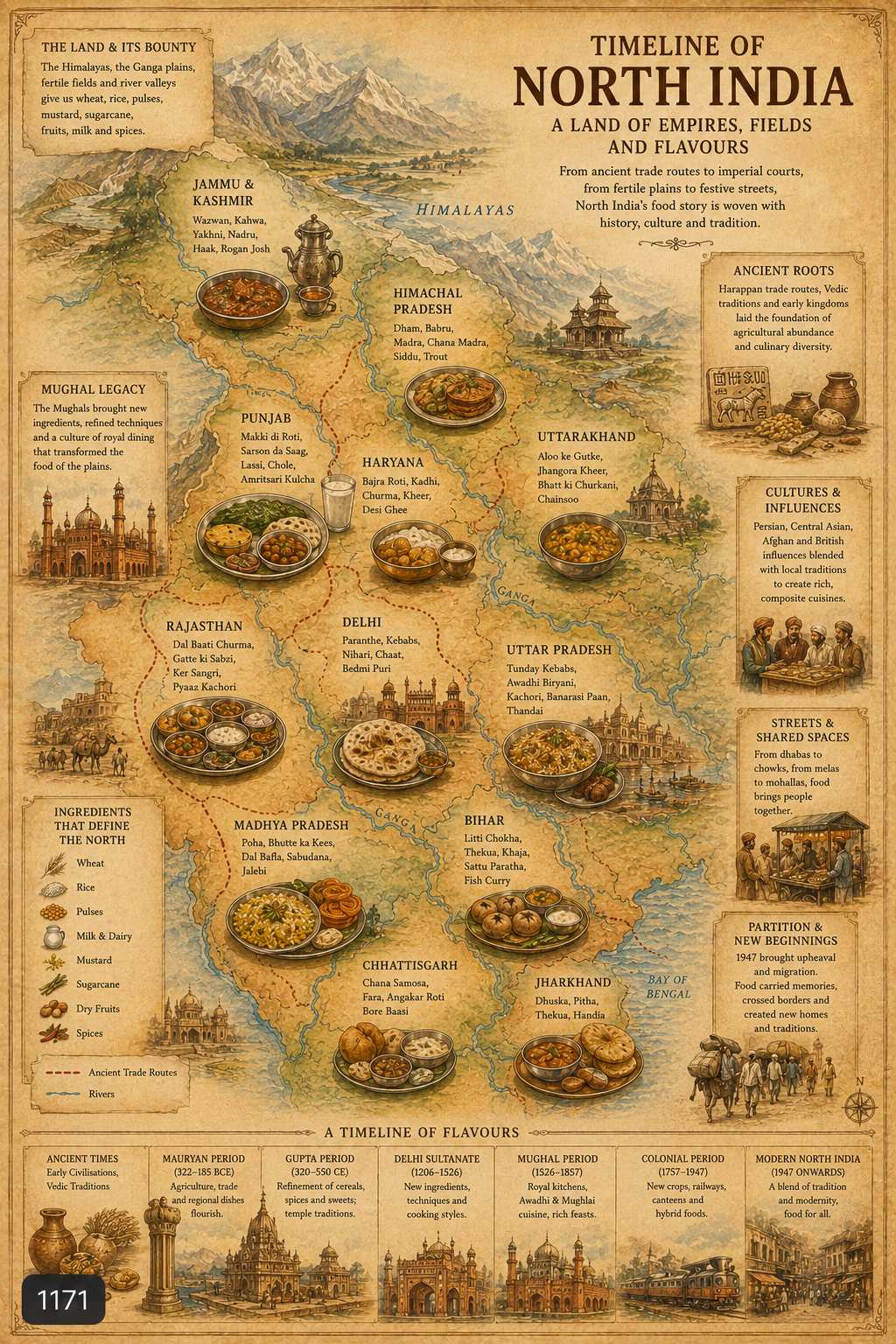
The Rigveda describes a diet of barley, wheat, milk, ghee, and meat (including cattle in specific ritual contexts). Soma drink (identity debated) as ritual preparation. The foundation of North Indian food culture in pastoral-agricultural community.
800-400 BCE
Upanishadic and Buddhist Period
Increasing vegetarianism in Brahmin and Buddhist philosophy. The Chandogya Upanishad discusses food as the source of prana (life force). The Buddha born in what is now Bihar/Nepal — his dietary teaching (moderation, non-violence) begins reshaping food culture.
300 BCE
Maurya Empire and Ashoka
Arthashastra (Kautilya's governance manual) describes food systems, market regulation, and grain storage. Ashoka converts to Buddhism — his edicts restrict animal sacrifice and encourage vegetarianism across the empire.
700-1200 CE
Rajput Period
The Rajput warrior tradition develops specific food culture — game, specific meat preparations, the beginning of the distinctive Rajasthani cooking tradition. Dal baati as the field food.
1206-1526
Delhi Sultanate
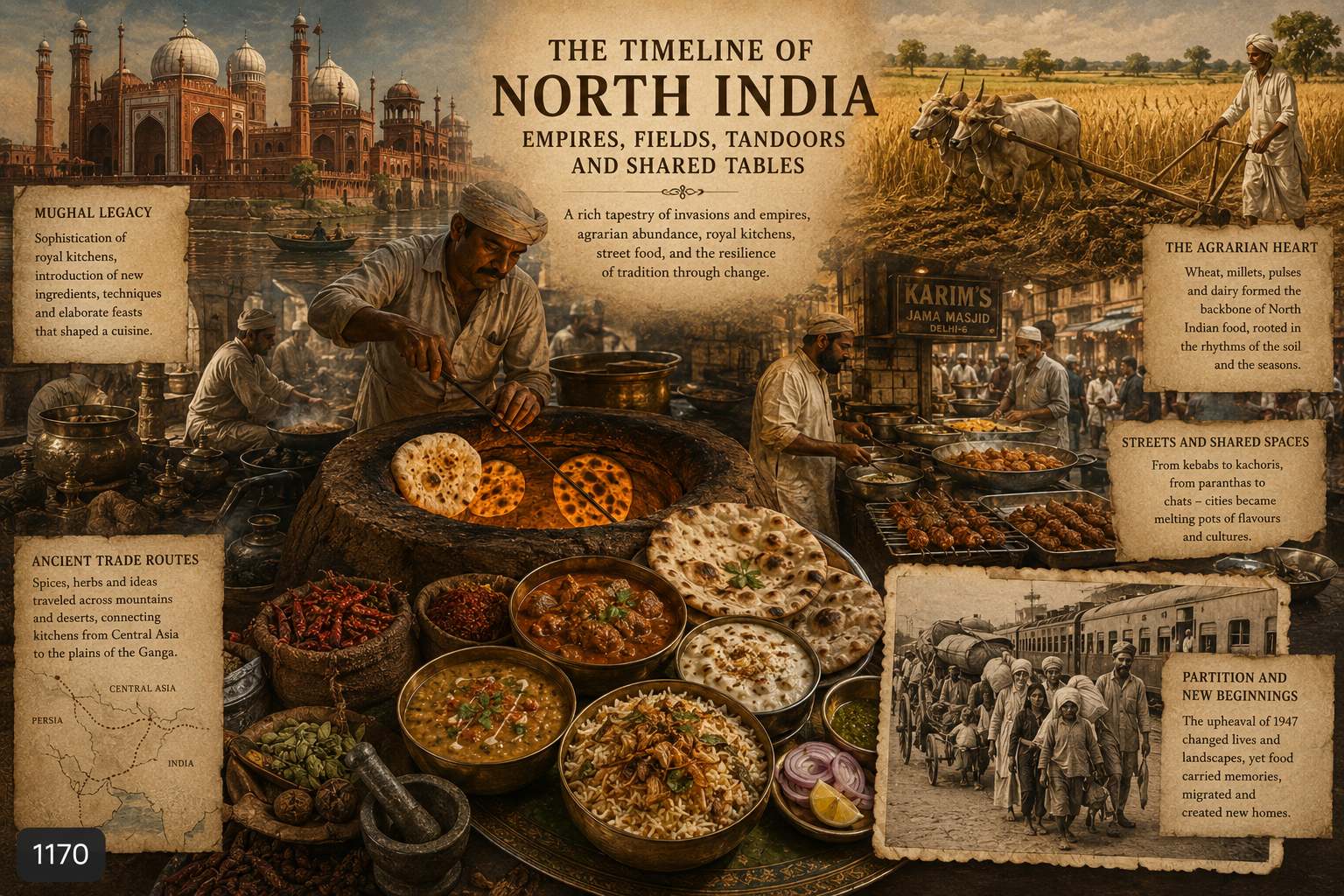
Muslim court food culture arrives — the first major wave of Persian and Central Asian culinary influence. Kebab tradition, rice and meat combinations, the samosa appears (13th century documentation). The dum technique begins development.
1526-1707
Mughal Empire — Peak Period
The dum technique systematised. Biryani tradition developed and refined. Kebab vocabulary expanded. The court cooking of Akbar, Jehangir, and Shah Jahan's era produces the foundation of what is now called North Indian restaurant food globally.
1722-1856
Nawab Period — Awadhi Peak
The Nawabs of Awadh take dum cooking to its extreme — galouti kebab, pakki biryani. Lucknow becomes the most refined food city in India. The era that produces the preparations most associated with North Indian Muslim cooking.
1947
Partition
The most dramatic single event in North Indian food history. West Punjabi communities bring their cooking to Delhi and East India. Butter chicken invented (c.1950). The Punjabi dhaba format develops. The global North Indian restaurant is born.
1966-1970
Green Revolution
High-yield wheat adopted in Punjab and Haryana — India becomes food-secure. The Green Revolution's wheat abundance transforms North Indian food economics and makes the wheat-based dhaba format viable at scale.