The five-river plains that feed India — wheat, dairy, and the tandoor oven as the culinary holy trinity. Butter chicken's birthplace, the dhaba's homeland, and the sarson da saag that defines a Punjabi winter.
⏱ 15 min read🗓 Updated June 2026★ State Food Guide
State Food Guide
Punjab — The Wheat Belt's Robust Kitchen
Punjab means five rivers. Their alluvial plains are among the world's most fertile agricultural land. This abundance shaped a food culture of particular heft and generosity — the feeding culture of a farming community working physically demanding days. The 1947 Partition seeded the Punjabi dhaba tradition that now defines North Indian restaurant food globally.
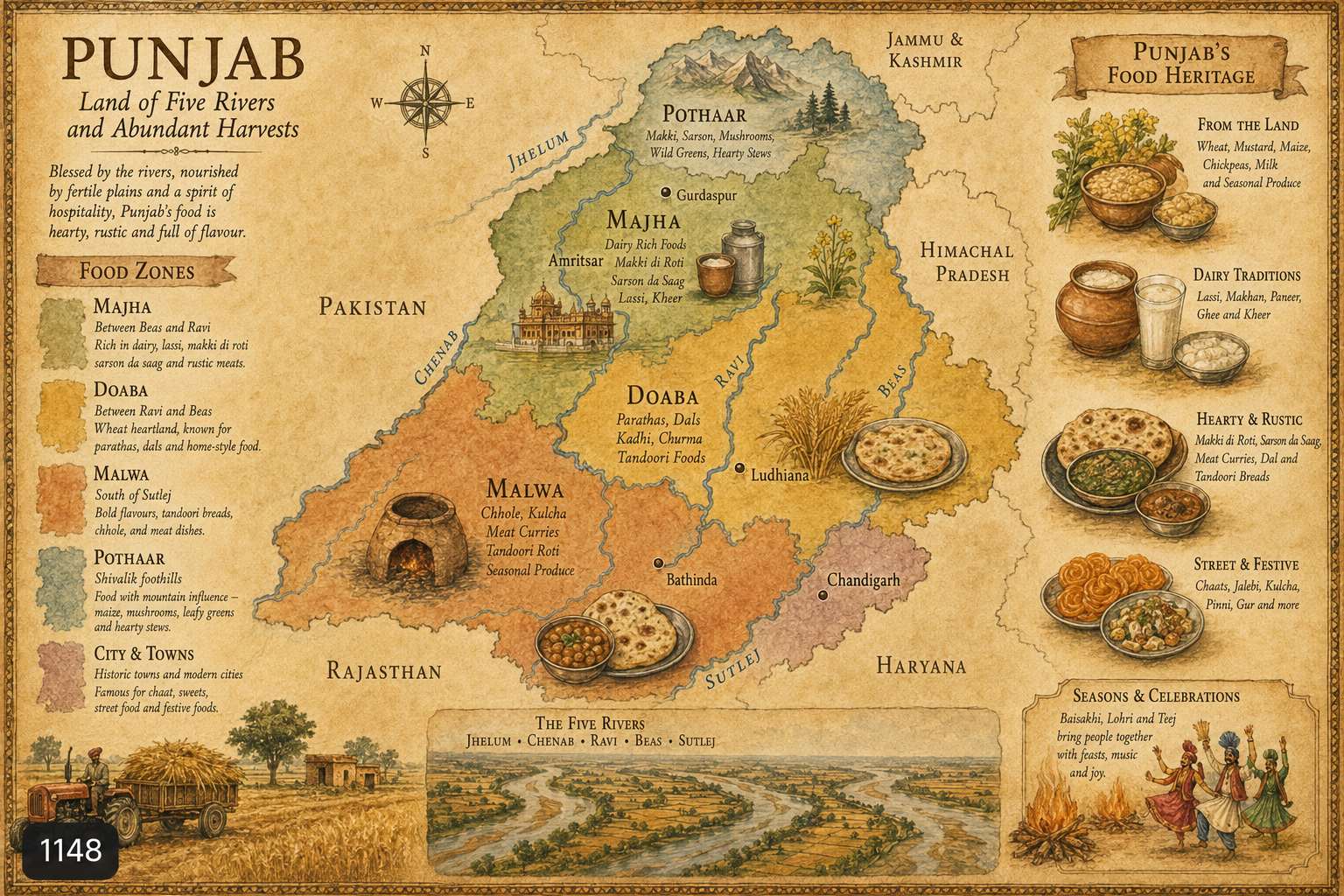
The geographic regions and food zones of Punjab Food Guide.
🗺
Geography & Climate
The land that made this food inevitable
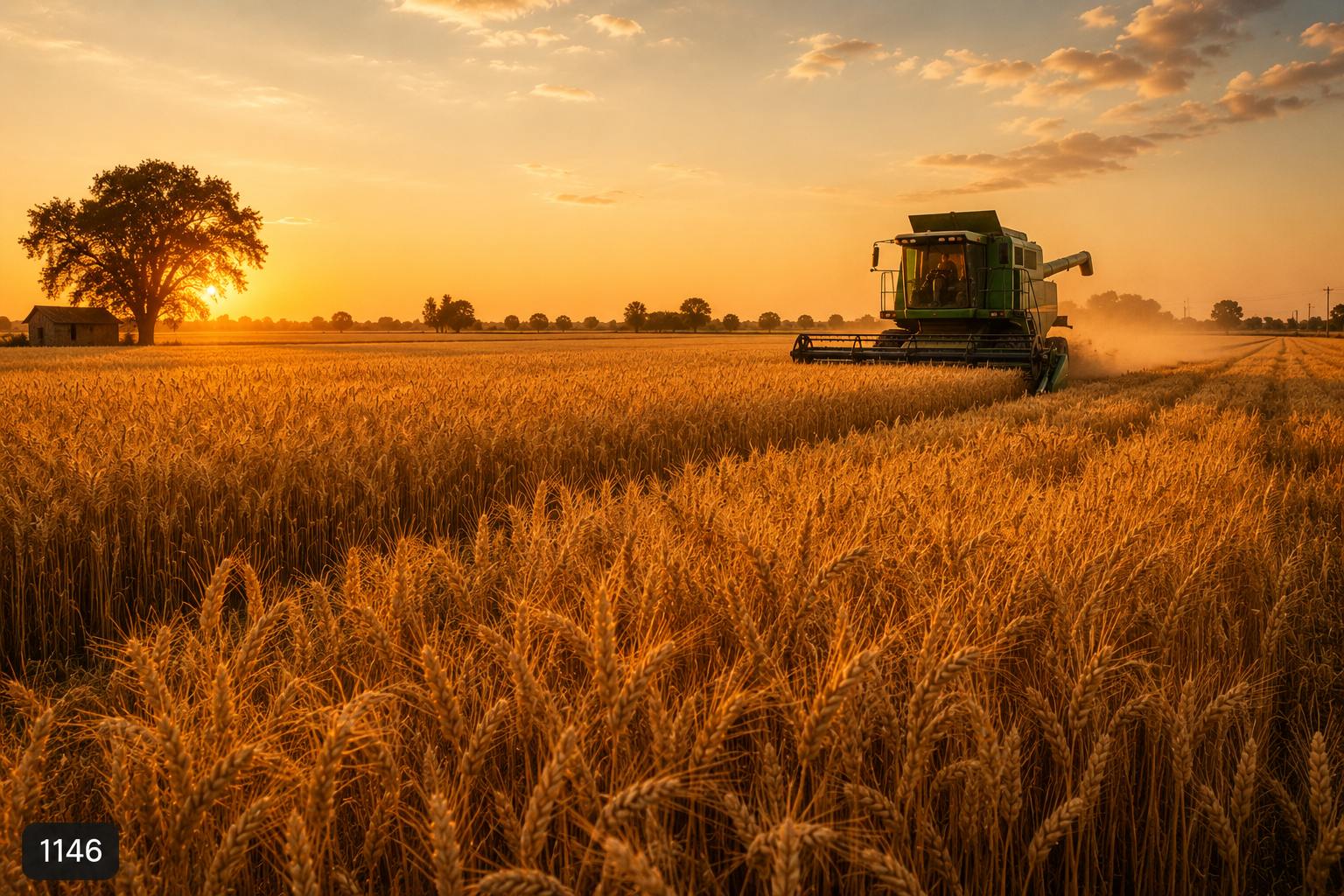
The Punjab plain is flat, deep-soiled alluvial land fed by five Himalayan rivers. Wheat grows in winter with extraordinary yields; rice in summer. The combination of wheat abundance and dairy richness from large cattle herds produced a food tradition built on hearty preparations — dal makhani, sarson da saag, lassi, and the full range of tandoor breads that are now the global default for North Indian food.
The tandoor — clay oven at 400-500°C — is Punjab's defining technology. At these temperatures, bread goes from raw to charred-exterior, soft-interior in 60-90 seconds. The Maillard reaction at high heat caramelises the wheat surface, producing the flavour of tandoori roti and naan that no other method replicates. The tandoor also produces the char on tandoori chicken that defined a new global cuisine category.
The 1947 Partition divided Punjab along religious lines — displacing millions and seeding the Delhi dhaba culture. West Punjabi refugee cooks in Delhi created butter chicken around 1950 at Moti Mahal restaurant — leftover tandoori chicken added to a butter-tomato-cream sauce as a practical solution. The North Indian restaurant format that now dominates globally is, fundamentally, a Punjabi refugee contribution to the world's food culture.
The Langar and Food as Equality
The Sikh langar tradition — free communal meals at gurudwaras, open to anyone — is one of the world's largest organised free food operations. The Golden Temple in Amritsar serves 100,000+ meals daily. Langar food (dal, sabzi, roti, kheer) is deliberately simple and egalitarian. The philosophical principle — all people eat the same food, sitting on the floor together, regardless of religion, caste, or wealth — is the most radical food equality statement in Indian history. The langar tradition shaped Punjabi cooking's philosophy: food as community sustenance, not social distinction.
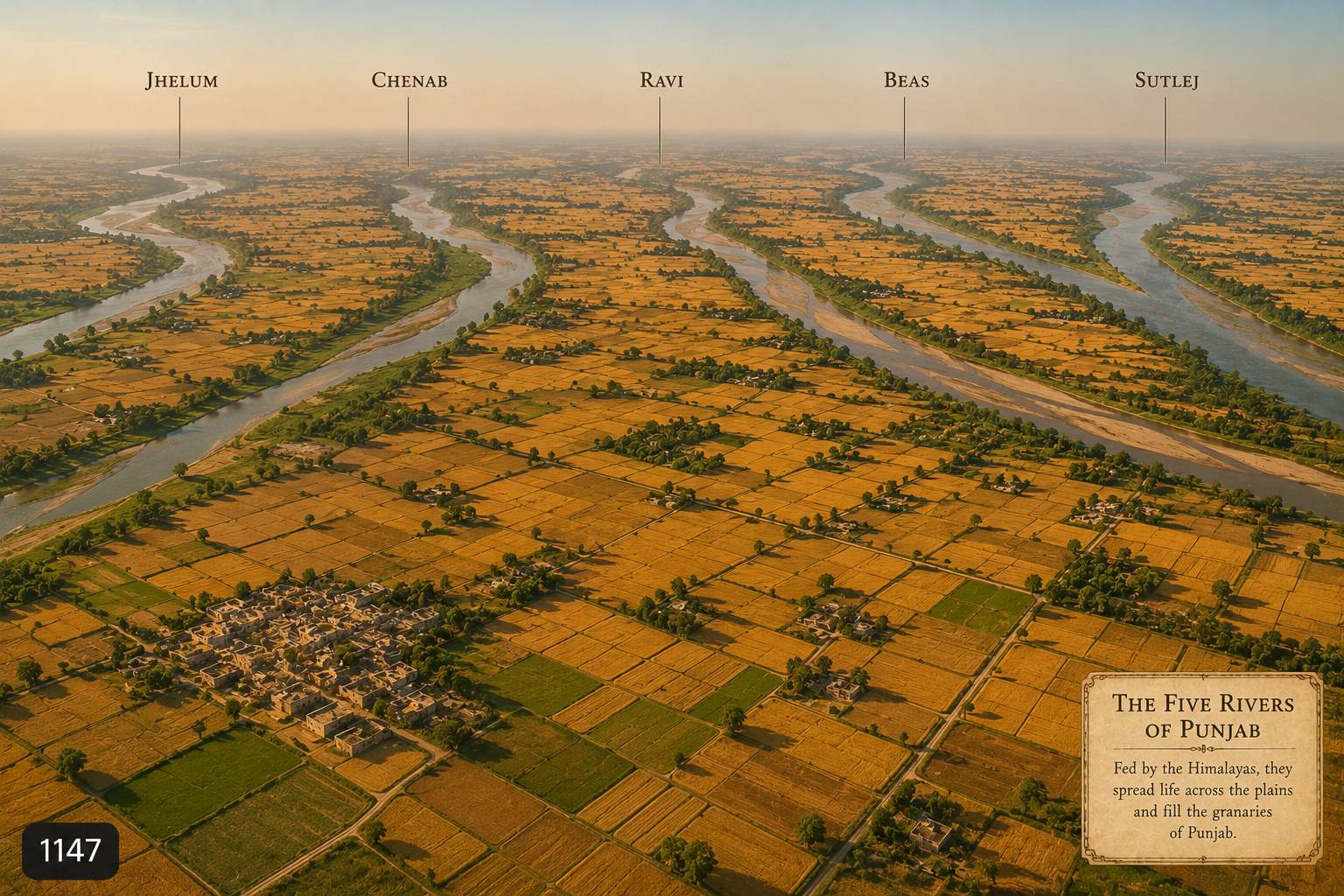
The terrain and agricultural landscape that produces the defining ingredients.
🧬
Food DNA
The flavour architecture
Grains and Bread
Wheat (roti, naan, paratha) — the primary grain — consumed in every meal in multiple forms
Makki di roti — corn flatbread — the winter pairing for sarson da saag
Rice — present but secondary — Punjab is wheat country
Dairy
Ghee — the prestige cooking fat — Punjabi cooking is generous with ghee
Lassi (sweet and salted) — the primary dairy drink — consumed with meals daily
Paneer — fresh pressed cheese — the primary Punjabi vegetarian protein
Legumes
Dal makhani — black lentil slow-cooked overnight with cream — the restaurant standard
Chole — chickpea curry — the street food and daily standard
Rajma — kidney beans — the other Punjabi lentil identity
Vegetables
Sarson (mustard greens) — winter only — the state's identity vegetable
Bathua (chenopodium) — mixed into saag — the wild green that enriches the preparation
Aloo gobi — potato and cauliflower — the dhaba staple
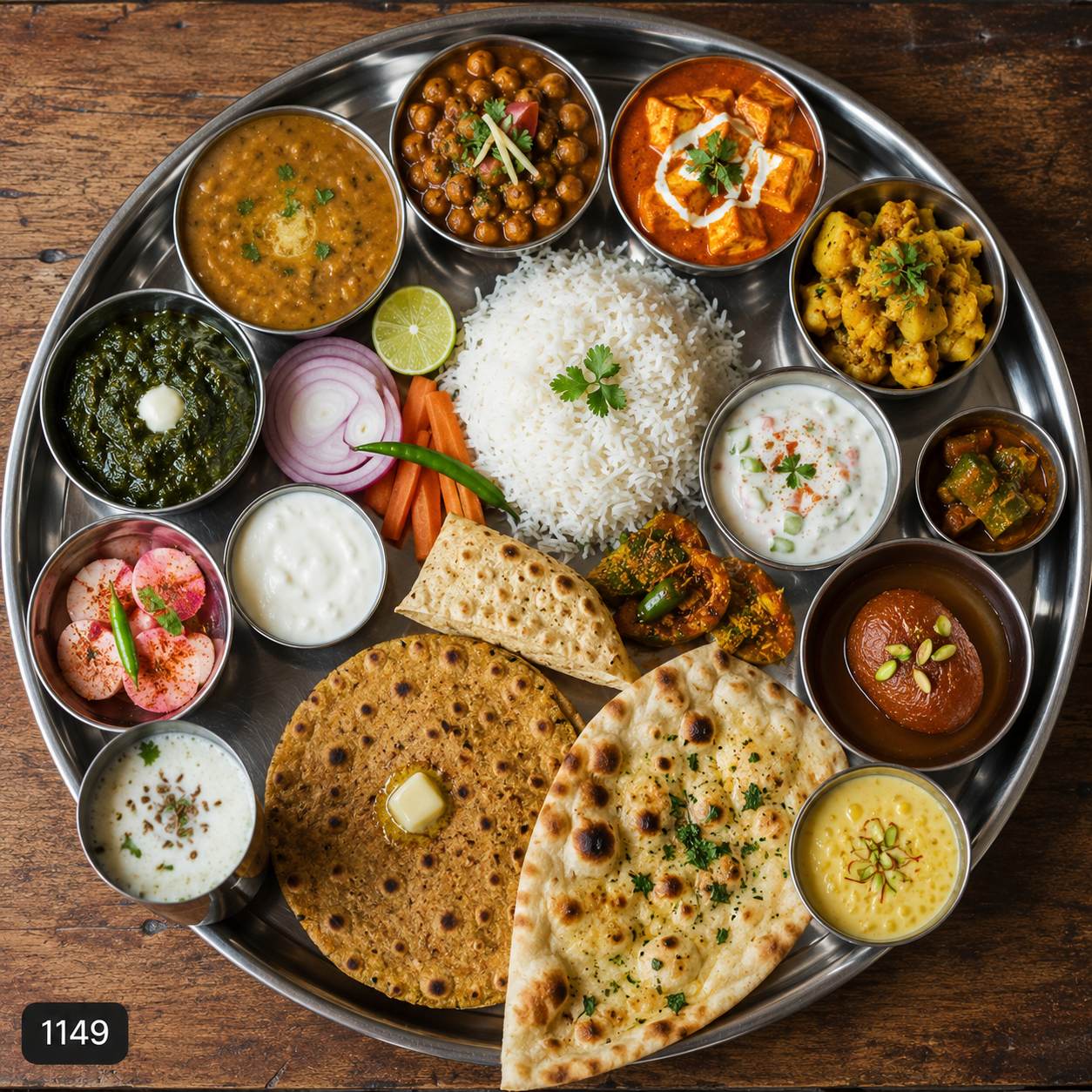
A complete thali representing the full flavour range.
🎉
Festival Foods
When the calendar drives the kitchen
Lohri
Sarson da saag with makki di roti and white butter — the defining Punjabi winter pairing. Also til (sesame) and gur (jaggery) thrown into the bonfire celebration.
Vaisakhi
The harvest festival — langar at Sikh temples; karah parshad (wheat halwa in ghee) distributed as prasad.
Diwali
Pinni (whole wheat and jaggery sweet) and specific Punjabi Diwali mithai — dense, calorie-rich winter sweets.
Gurpurab
Karah parshad — wheat flour, ghee, and sugar as the Sikh temple offering distributed after prayer.
Holi
Thandai and gujiya — the North Indian Holi food tradition in its most Punjabi expression.
🌍
Diaspora & Reach
How this cuisine spread beyond its borders
The Punjabi dhaba — roadside restaurant serving dal, sabzi, roti, and lassi — is the most widely replicated restaurant format in India and appears internationally wherever the Indian diaspora has settled. Created by Punjabi truck-stop restaurants, it became the default model for affordable North Indian food.
The Punjabi diaspora in the UK (Birmingham, Southall, Bradford), Canada (Vancouver, Toronto), and the US established Punjabi cooking as the dominant Indian food culture internationally. The UK's most popular Indian dishes (chicken tikka masala, butter chicken, naan) are all Punjabi or Punjabi-influenced.
Sarson da saag is mustard greens slow-cooked with bathua and spinach until very soft, served with makki di roti (corn flatbread) and white butter. Available only November to February when mustard is in season. The defining Punjabi winter dish.
Where does butter chicken come from?
Butter chicken was created at Moti Mahal restaurant in Delhi around 1950 by West Punjabi refugee cooks from Peshawar. Leftover tandoori chicken was added to a butter-tomato-cream sauce. A post-Partition refugee kitchen solution became the world's most internationally ordered Indian dish.