India's largest state — and its most arid. A cuisine of preservation and ingenuity: baati baked in desert coals, ker sangri from desert plants, laal maas with Mathania chilli, and the Jain vegetarian tradition of the Marwari trading community.
⏱ 14 min read🗓 Updated June 2026★ State Food Guide
State Food Guide
Rajasthan — The Desert's Ingenious Kitchen
Rajasthan is India's most arid state — the Thar Desert occupying its western third, with annual rainfall below 100mm in some areas. The food culture is built around preservation and the intelligent use of what the desert provides: drought-resistant lentils, desert plants (ker and sangri), dried spices, and milk from the camels, goats, and cattle that thrive where agriculture cannot.
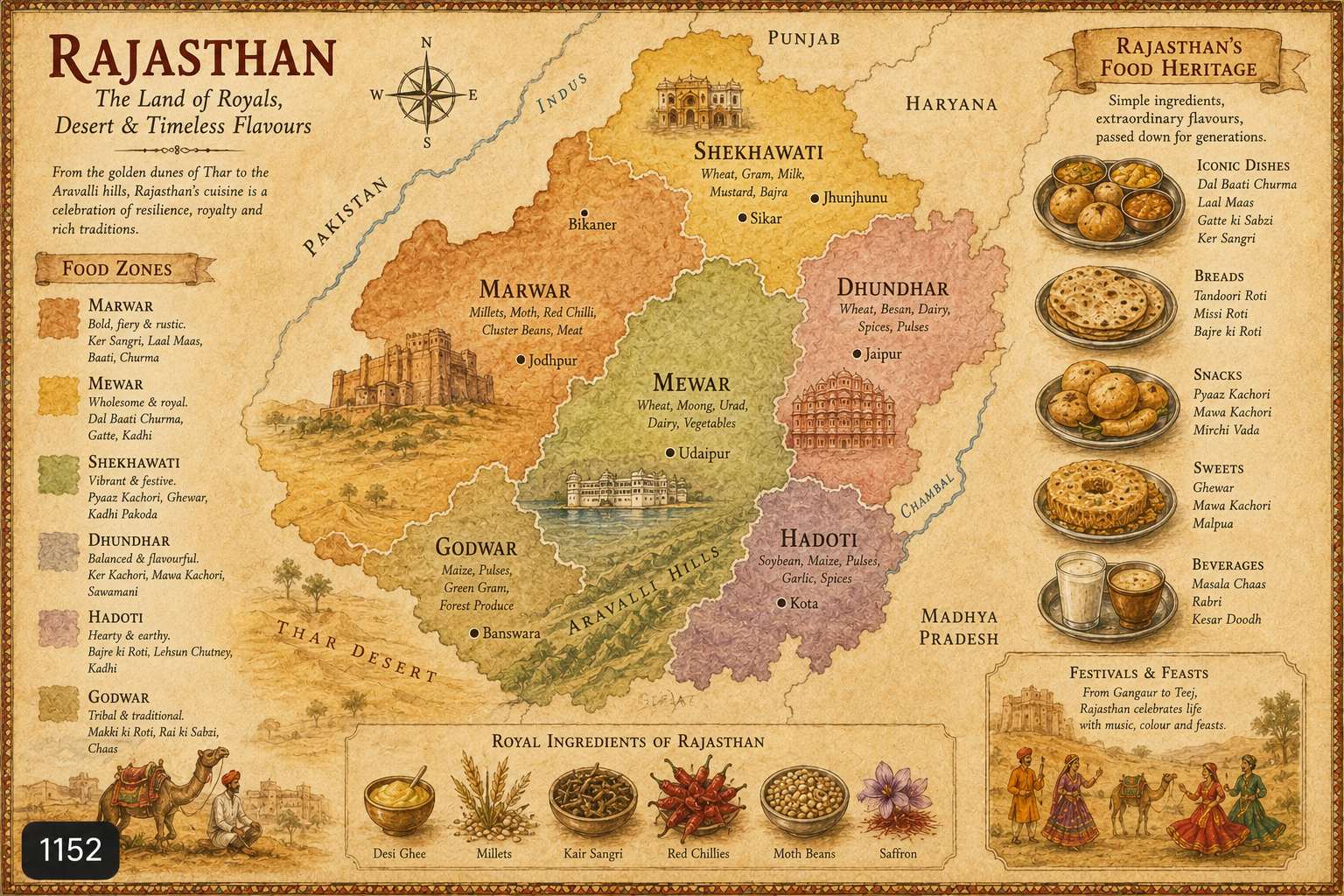
The geographic regions and food zones of Rajasthan Food Guide.
🗺
Geography & Climate
The land that made this food inevitable
The Thar Desert shaped Rajasthani cooking through constraint. When fresh vegetables are unavailable for months and water is too precious to boil food, the kitchen adapts. Baati — dense wheat rolls baked in the dying embers of a cooking fire — requires no water to cook. Ker sangri — the desert berry and desert bean combination — uses plants that grow without irrigation. The dal associated with dal baati churma is made from five different lentils that all store indefinitely in the desert heat.
The Rajput warrior tradition shaped the non-vegetarian half of Rajasthani cooking. Laal maas — red mutton curry with Mathania dried red chilli — is the Rajput hunter's dish, made with game in the field and cooked in a vessel over an open fire. The Mathania chilli variety, grown in the district of the same name near Jodhpur, produces deep colour with moderate heat — making laal maas visually spectacular and gustatively balanced rather than simply aggressive.
The Jain and Marwari vegetarian tradition, developed by the merchant communities of the Shekhawati and Marwar regions, sits alongside the Rajput meat tradition without any contradiction. Rajasthan contains both the most strictly vegetarian cooking tradition in India (Marwari Jain) and one of the boldest meat cooking traditions (laal maas). The state's food range is as wide as its geography.
Why Baati Is Cooked in Embers
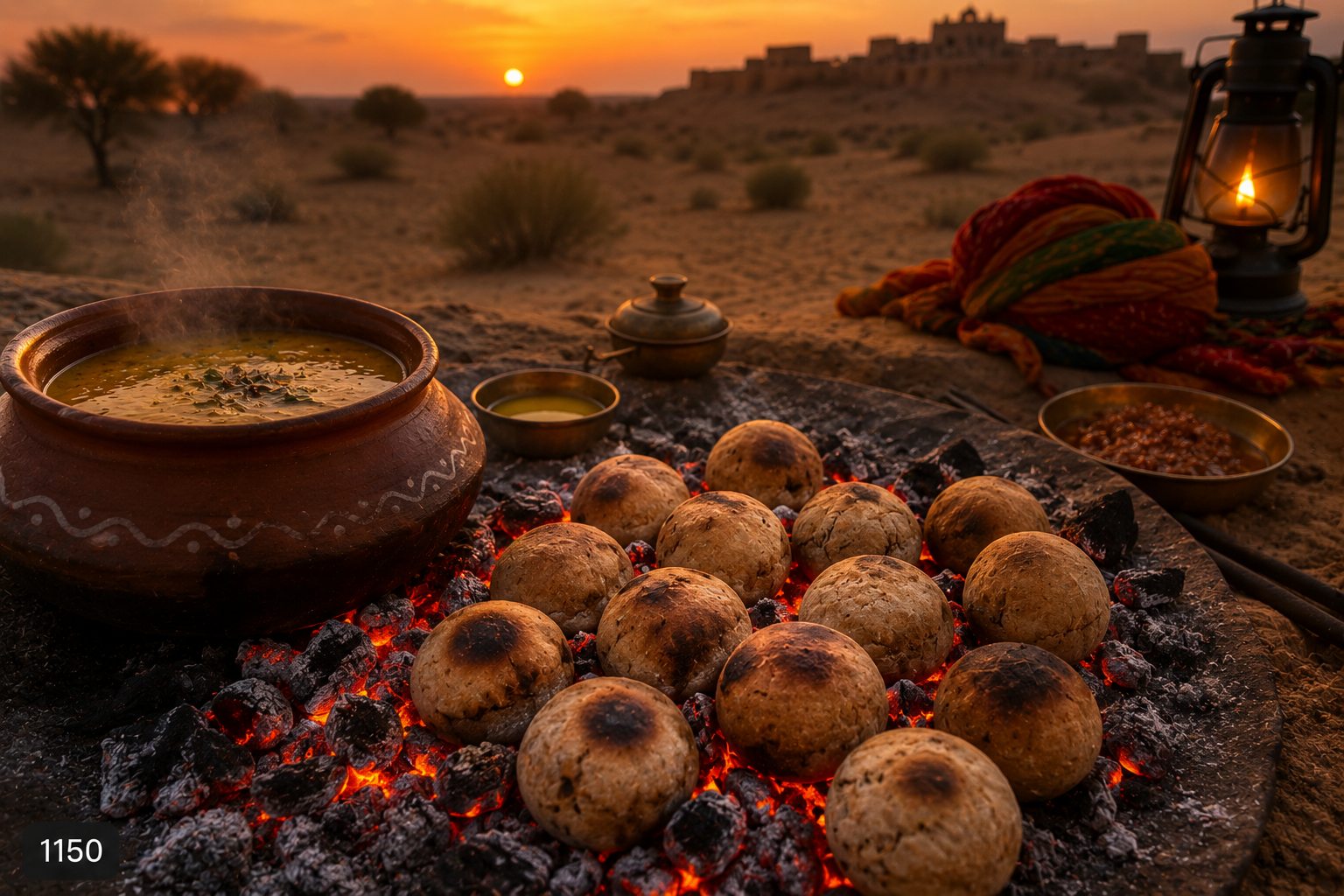
Baati — the dense wheat roll of Rajasthan — is cooked in the dying embers of a fire, not on a flame or in an oven. The ember-baking technique requires no vessels, no fat, and no water. The dense wheat dough ball is placed directly in the glowing embers and turned occasionally until the exterior is baked hard and the interior is cooked through. This technique was the field-cooking method of the Rajput military — fuel (dried dung) was scarce, vessels were heavy, and the ember method needed nothing but the dough and the dying fire. The ghee in which the baati is dipped after baking is the reward after the Spartan cooking process.
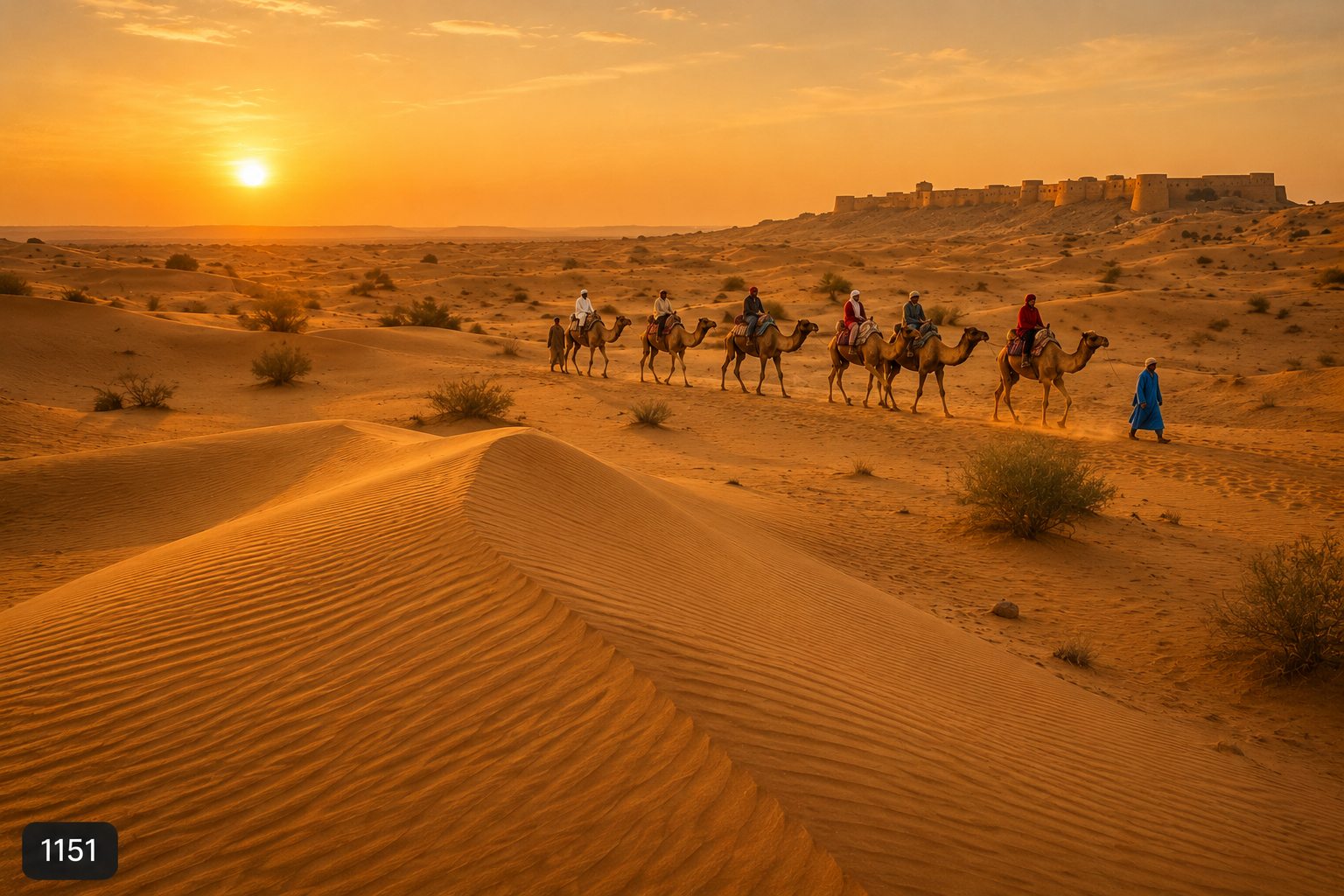
The terrain and agricultural landscape that produces the defining ingredients.
🧬
Food DNA
The flavour architecture
Grains and Bread
Baati — dense wheat roll baked in embers — the desert bread that needs no water to cook
Missi roti — chickpea and wheat flour flatbread — the nutritious daily bread
Bajra (millet) — the dry-zone grain — consumed as roti, rabri, and khichdi
Legumes
Dal baati (five-lentil) — toor, moong, chana, urad, masoor — the five-lentil combination
Ker sangri — desert berry and desert bean — the most specifically Rajasthani vegetable
Gatte — chickpea flour dumplings — no water, no fresh vegetables required
Meat Tradition
Laal maas — mutton in Mathania red chilli — the Rajput dish
Jungli maas — the simplest possible meat preparation — salt, ghee, red chilli, nothing else
Safed maas — white mutton curry in milk and cream — the refined Rajput court version
Sweets and Dairy
Churma — crushed wheat with ghee and jaggery — the sweet component of dal baati churma
Ghewar — lattice-fried festival sweet requiring specialist technique
Makhaniya lassi — the Jodhpur sweet lassi with cream — the city's defining drink
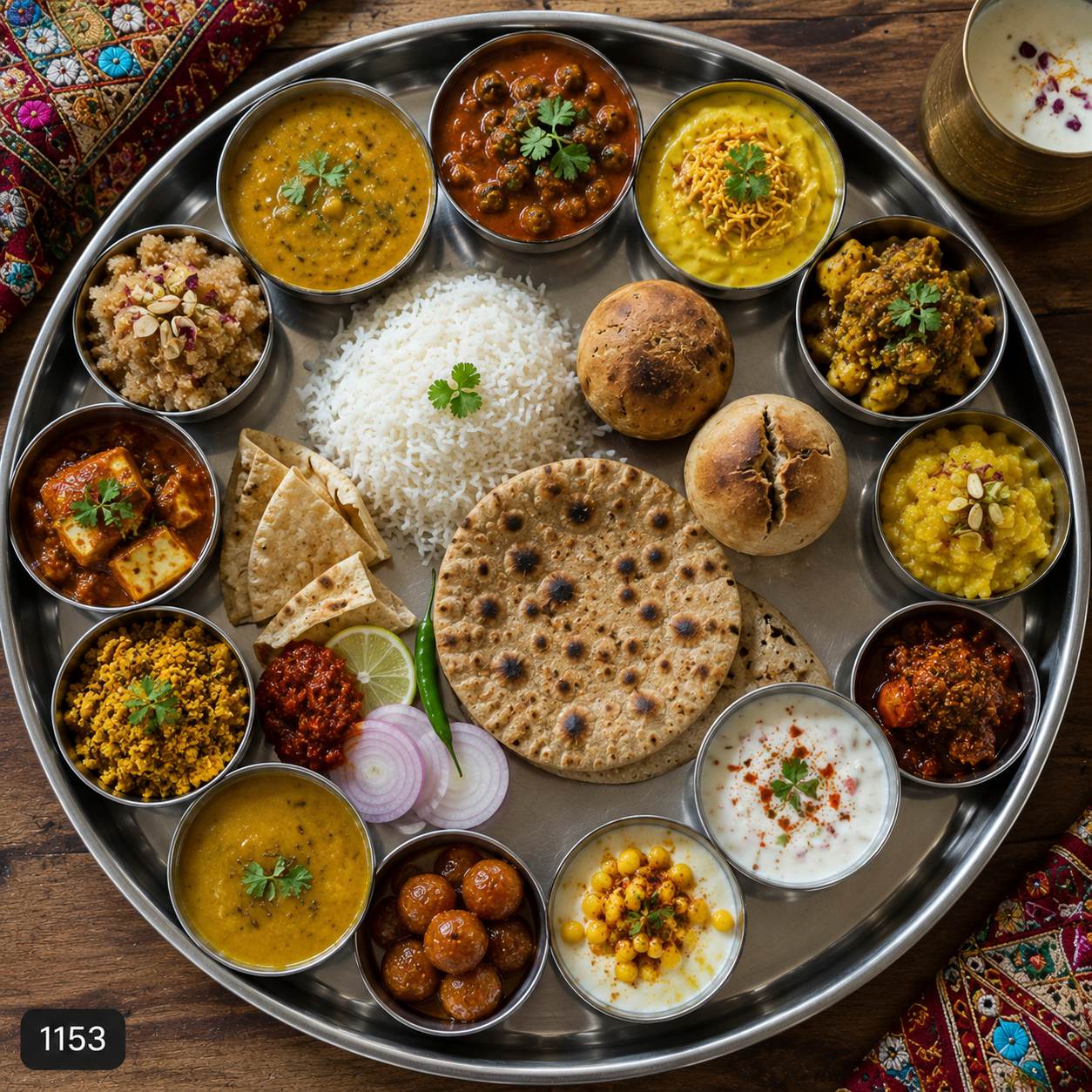
A complete thali representing the full flavour range.
🎉
Festival Foods
When the calendar drives the kitchen
Gangaur
Ghewar and specific Gangaur sweets — the women's festival of Rajasthan with its own distinct sweet tradition.
Teej
Gujiya and specific Teej sweets — the monsoon festival food tradition.
Diwali
Dal baati churma as the celebration meal; specific Rajasthani Diwali sweets including moong dal halwa.
Holi
Thandai and gujiya — Rajasthan's Holi food tradition in its most elaborate expression.
Makar Sankranti
Til (sesame) and gur (jaggery) preparations — the winter harvest festival food tradition.
🌍
Diaspora & Reach
How this cuisine spread beyond its borders
The Marwari trading community spread from Rajasthan across India and internationally, carrying their strictly vegetarian Jain food tradition everywhere they settled. The Marwari halwai (specialist sweet-maker) tradition became the sweet-maker of choice for Hindu festivals nationally.
Rajasthani heritage tourism — the palace hotels and fort stays of the state — has brought royal Rajput cooking (safed maas, royal game preparations) to national and international attention. Laal maas and dal baati churma are now among India's most widely recognised regional dishes nationally.
Dal baati churma is the Rajasthani trilogy — baati (dense wheat rolls baked in embers, dipped in ghee), dal (five-lentil preparation), and churma (crushed wheat with ghee and jaggery, the sweet component). It is the desert adaptation of a complete meal that requires minimal water and ingredients that store indefinitely.
What is laal maas?
Laal maas is Rajasthani mutton curry in Mathania dried red chilli — a chilli variety grown near Jodhpur that produces brilliant red colour with moderate heat. Originally a Rajput hunter's dish made with game, it is now the defining Rajasthani non-vegetarian preparation.