India's most populous state — and the home of its two most different food traditions. Awadhi court cooking (dum, galouti, pakki biryani) at one extreme; Banarasi street food (kachori at dawn, malaiyyo in winter) at the other. Between them, the entire range of North Indian Muslim and Hindu cooking.
⏱ 14 min read🗓 Updated June 2026★ State Food Guide
State Food Guide
Uttar Pradesh — The Gangetic Plain's Two Poles
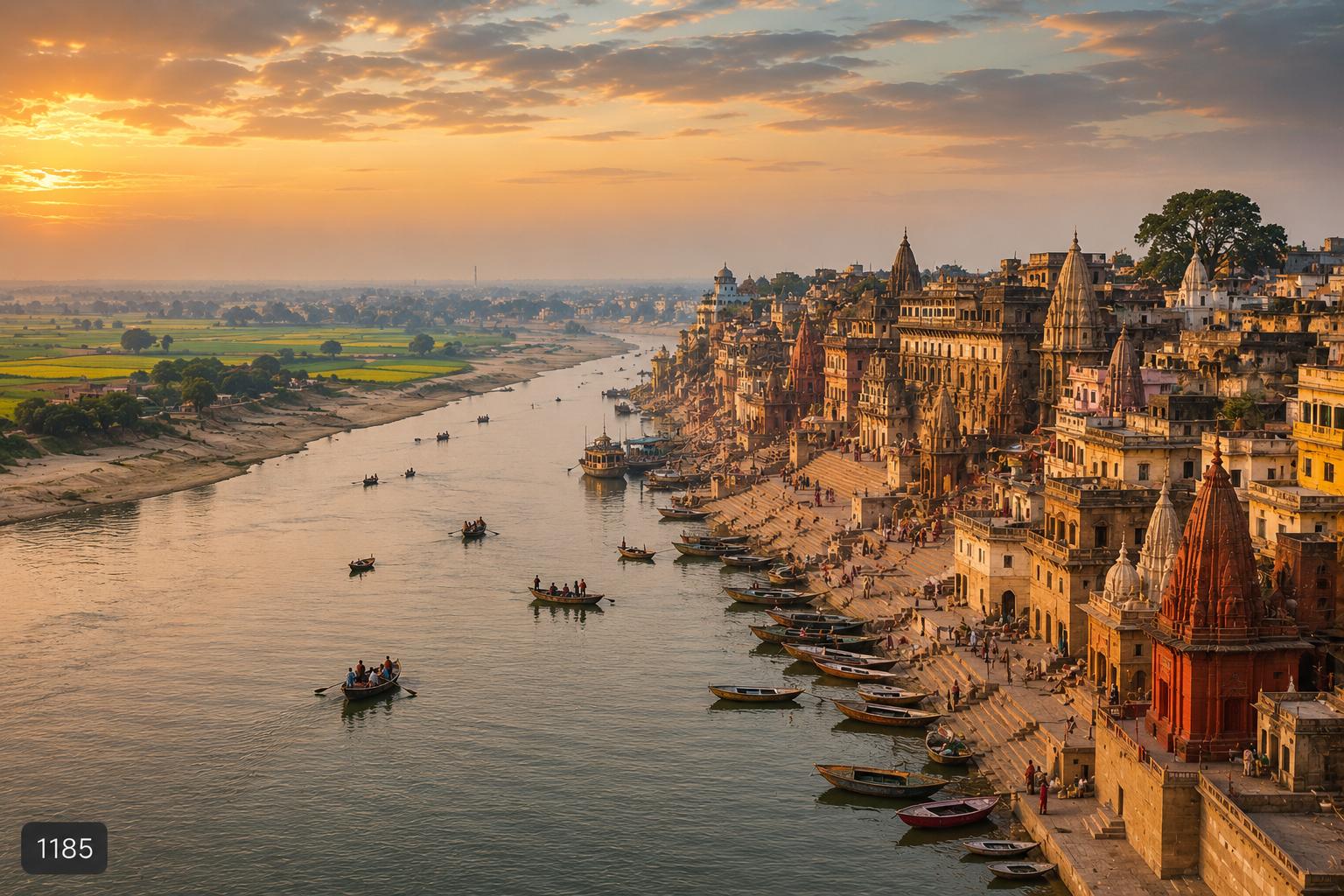
Uttar Pradesh is the Gangetic plain at its most densely populated — the most populous state in India, stretching from the Himalayan foothills in the north to the Vindhya range in the south. The Ganges flows through it from Haridwar to Varanasi, and the food culture tracks the river: wheat and dairy in the west, rice increasing in the east, with Lucknow's court cooking and Varanasi's street food as the two defining cultural poles.
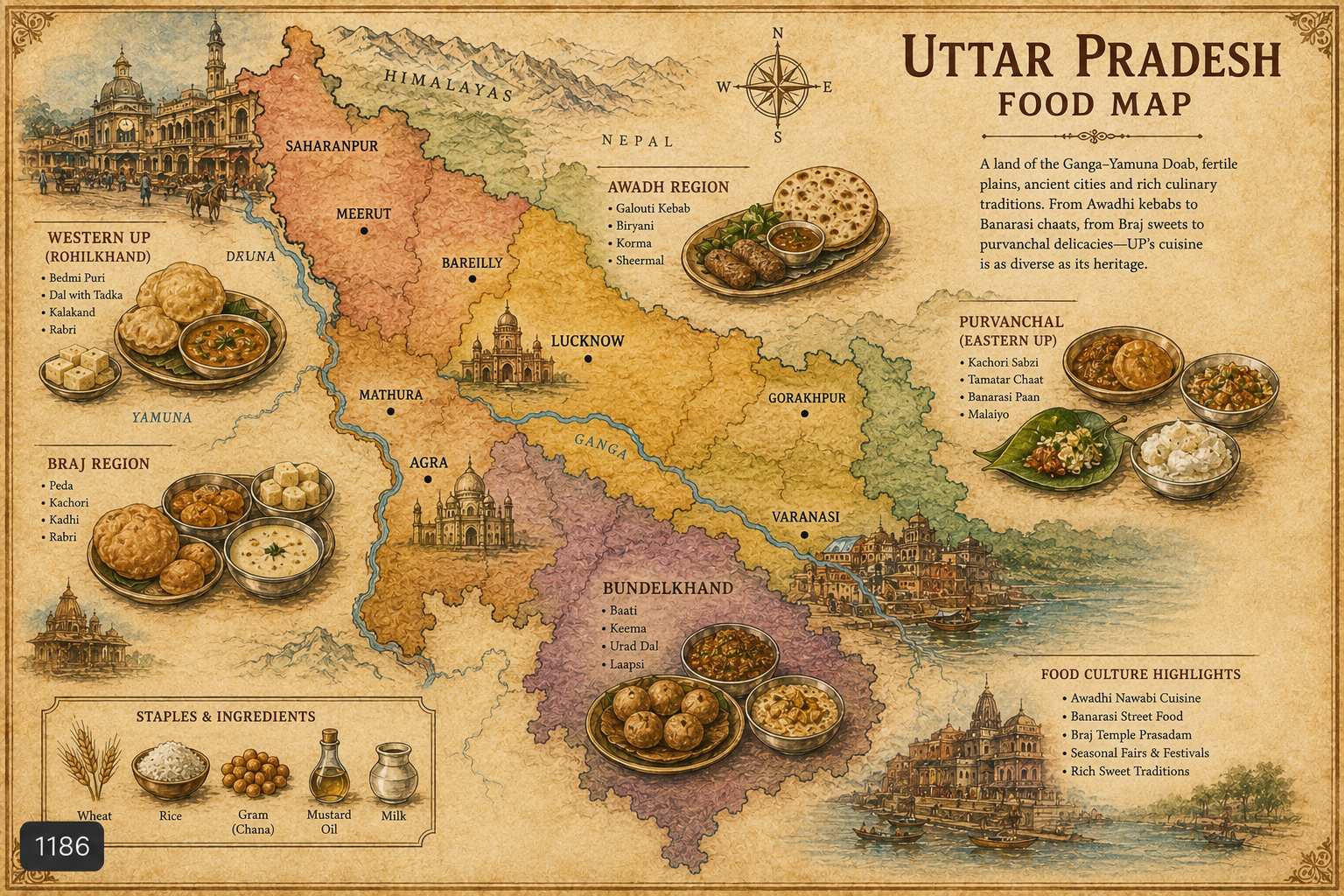
The geographic regions and food zones of Uttar Pradesh Food Guide.
🗺
Geography & Climate
The land that made this food inevitable
Uttar Pradesh contains two food traditions that are as different as any two in India: Awadhi (Lucknow) and Banarasi (Varanasi). Awadhi is elite — created by the Nawabs' court cooks, using imported saffron and kewra, expressing refinement through restraint and dum technique. Banarasi is democratic — created for pilgrims and Sanskrit scholars, built on local lentils and wheat, expressing identity through occasion and season rather than technique complexity. The same state, 300 kilometres apart, producing opposite food philosophies.
The Muslim food tradition of UP — the largest Muslim population of any Indian state — produced the Awadhi court cuisine, the street-level seekh kebab and korma tradition of Lucknow, and the specific nihari and haleem preparations that are the most complex meat cooking in North India. The Indo-Islamic synthesis in UP food is the most elaborate in India — more complex than the Hyderabadi tradition because of the longer continuous period of Muslim political dominance in the region.
Western UP (the Braj region of Mathura and Vrindavan) is vegetarian — the sacred land of Krishna, where the dairy tradition (pedha, khoya-based sweets, mathura ke pede) dominates and meat and fish are minimal. Eastern UP (Purvanchal) trends toward rice and the specific vegetarian tradition of Banarasi Brahmin cooking. Central UP (Lucknow) is the Nawabi meat-cooking tradition. Three food cultures within one state.
The Mathura Pedha — Krishna's Sacred Sweet
Mathura pedha (khoya-based sweet from Mathura, the birthplace of Krishna) is one of India's most specific sacred-food preparations. Made from khoya (reduced milk) and sugar, pressed into specific small rounds, the Mathura pedha is both a commercial sweet and a temple offering — distributed as prasad at the Krishna temple and purchased by pilgrims as a specific Mathura souvenir. The specific khoya used in authentic Mathura pedha comes from the dairy traditions of the Braj region, where Krishna's cowherd mythology embedded dairy as the sacred food. The connection between the mythology, the dairy tradition, and the specific sweet is direct and 2,500 years old.
The terrain and agricultural landscape that produces the defining ingredients.
🧬
Food DNA
The flavour architecture
Awadhi (Lucknow)
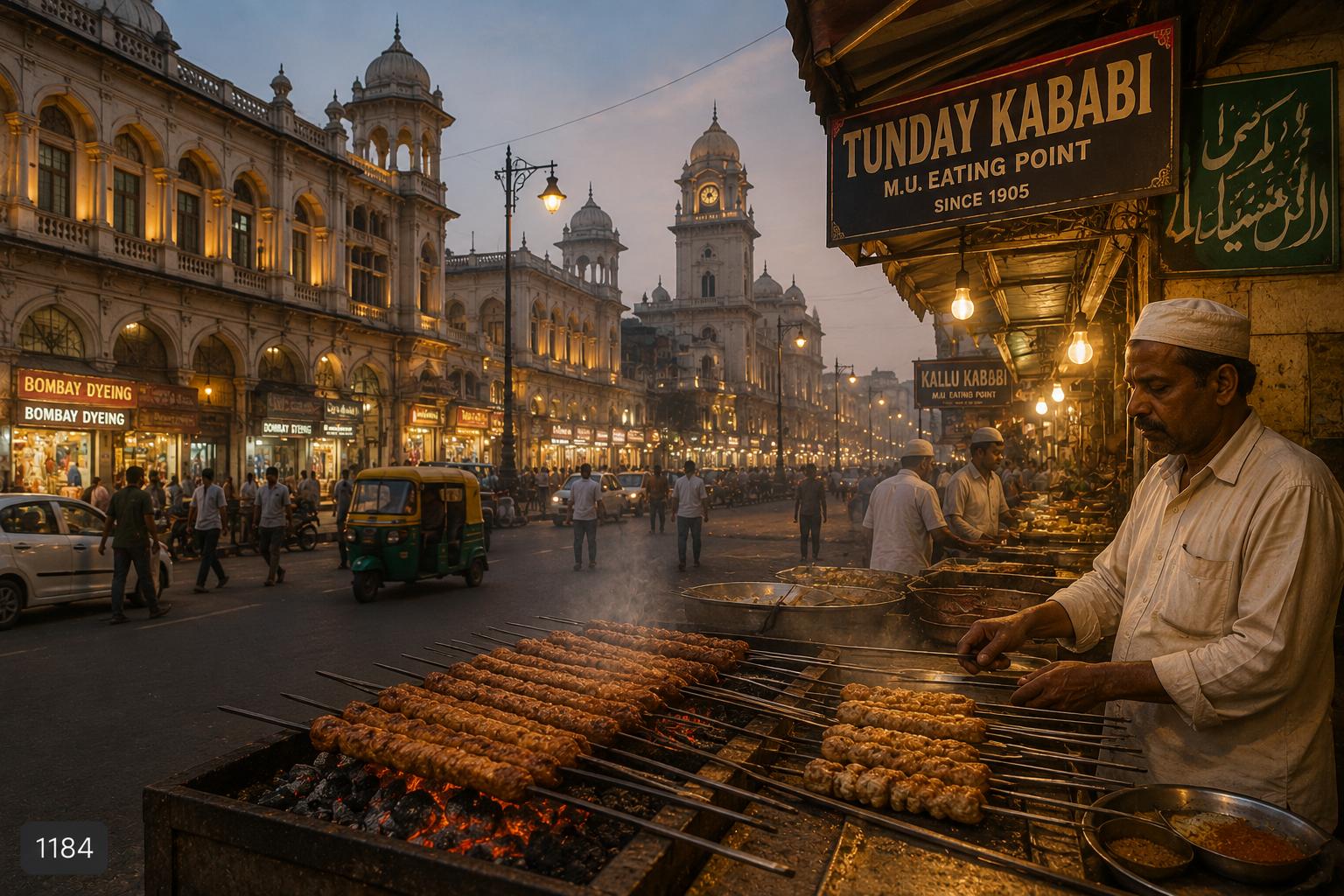
Galouti kebab — stone-ground minced mutton — melts without chewing
Lucknawi biryani (pakki) — fully cooked separately before combining under dum
Nihari — overnight lamb shank — the dawn meal tradition
Banarasi (Varanasi)
Kachori-sabzi at dawn — the most specific food occasion in Indian street food
Milk and dairy tradition — the Braj region's sacred dairy connection to Krishna mythology
Street Food
Chaat — the Lucknow and Allahabad chaat tradition
Samosa — the UP version — the most widely replicated Indian street food globally
Kulfi — dense frozen milk dessert — UP's street sweet
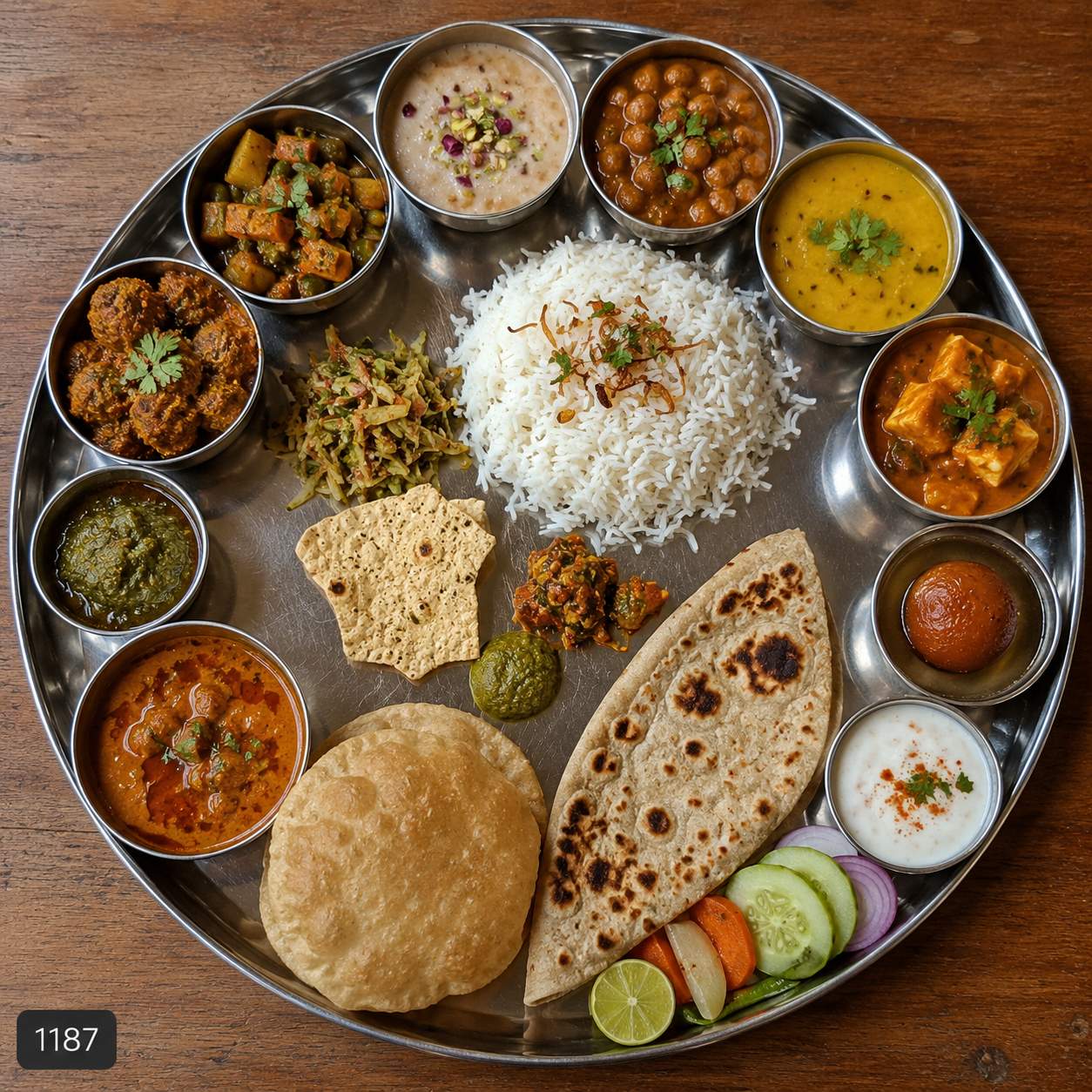
A complete thali representing the full flavour range.
🎉
Festival Foods
When the calendar drives the kitchen
Eid
The Muslim community's most elaborate food occasion — wazwan-influenced preparations in Lucknow, specific Lucknawi Eid sweets.
Diwali
Mathura ke pede and specific Braj region Diwali sweets — the sacred dairy tradition at its festival peak.
Holi (Braj Holi)
The most famous Holi in India — the Braj/Mathura Holi with specific food traditions including thandai and gujiya.
Saraswati Puja
Yellow food tradition — yellow chana dal, yellow sweets — the yellow colour associated with Saraswati.
Banarasi Karthik fair
Specific Varanasi food fair traditions around the Karthik month of the Hindu calendar.
🌍
Diaspora & Reach
How this cuisine spread beyond its borders
Lucknow's Awadhi food tradition has achieved international recognition through restaurant formats in Delhi, Mumbai, and globally — the galouti kebab and Lucknawi biryani appear on high-end restaurant menus internationally.
The UP street food tradition — chaat, samosa, kachori — is the most widely distributed Indian street food internationally. The samosa, which originated in Central Asia and developed its definitive Indian form in UP, is now the most widely available Indian food internationally after curry.
What is the difference between Awadhi and Banarasi food?
Awadhi (Lucknow) is elite court cooking — dum technique, galouti kebab that melts without chewing, restrained fragrant spicing, biryani as ceremony. Banarasi (Varanasi) is democratic street food — kachori at dawn, malaiyyo in winter, thandai at Holi, tied to the pilgrim economy and 3,000-year-old ritual calendar. They represent UP food's two opposite poles.
Why is UP so important to Indian food?
UP contains two of the most influential Indian food traditions (Awadhi and Banarasi), the largest Muslim food culture in India, the sacred dairy tradition of the Braj region, and the origin of many India's most widely distributed street foods (samosa, chaat, kachori). The state's Gangetic plain geography, its Muslim court history, and its sacred Hindu city heritage combined to produce exceptional food culture diversity.