700 years of continuous imperial capital — Mughal biryani, Punjabi refugee cooking, Rajasthani chaats, and the largest wholesale spice market in Asia. Delhi does not have a cuisine; it has everyone else's cuisine, plus the specific street food that emerged from every wave of migration.
⏱ 14 min read🗓 Updated June 2026★ State Food Guide
State Food Guide
Delhi — Seven Empires, One Table
Delhi has been the capital of multiple empires — the Delhi Sultanate, the Mughal Empire, the British Raj, and now the Republic of India. Each imperial period added food traditions that accumulated without displacing what came before. Modern Delhi's food is the sum of 700 years of court cooking, migration, trade, and street food evolution.
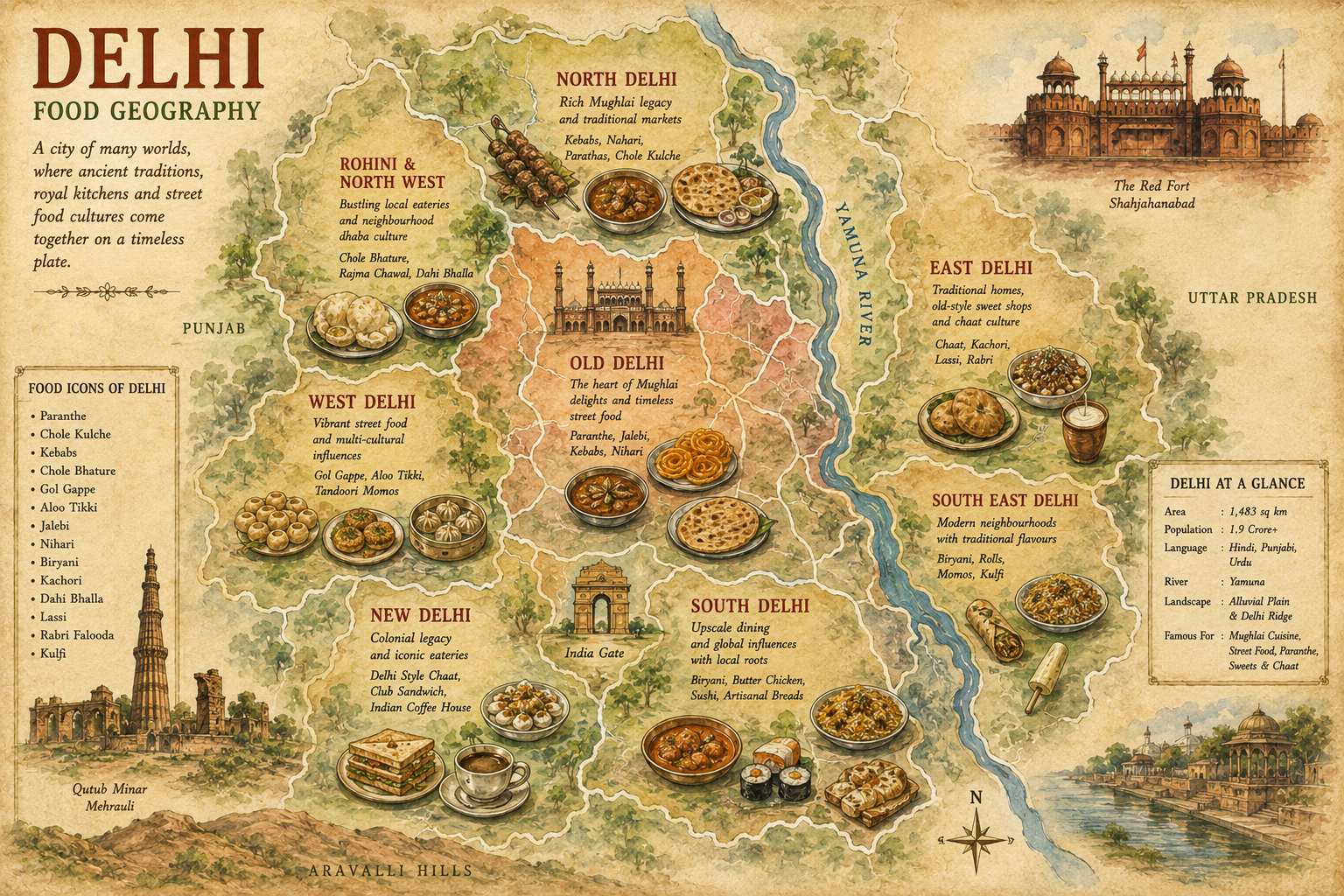
The geographic regions and food zones of Delhi Food Guide.
🗺
Geography & Climate
The land that made this food inevitable
Delhi is a city of layers — seven historical cities built on and around the same site, each adding its own food culture to the accumulation. The oldest layer is the Mughal court food tradition of Shahjahanabad (Old Delhi) — biryani, nihari, seekh kebab, and the refined Muslim cooking of the walled city that still operates from the same addresses it has occupied for 350 years. Above this, the Punjabi refugee cooking layer of 1947 — which seeded the North Indian restaurant format globally. Above this, the South Indian and Bengali and Rajasthani migration layers of the post-Independence period. Delhi is not a cuisine; it is a compression of all of India's cuisines into one urban environment.
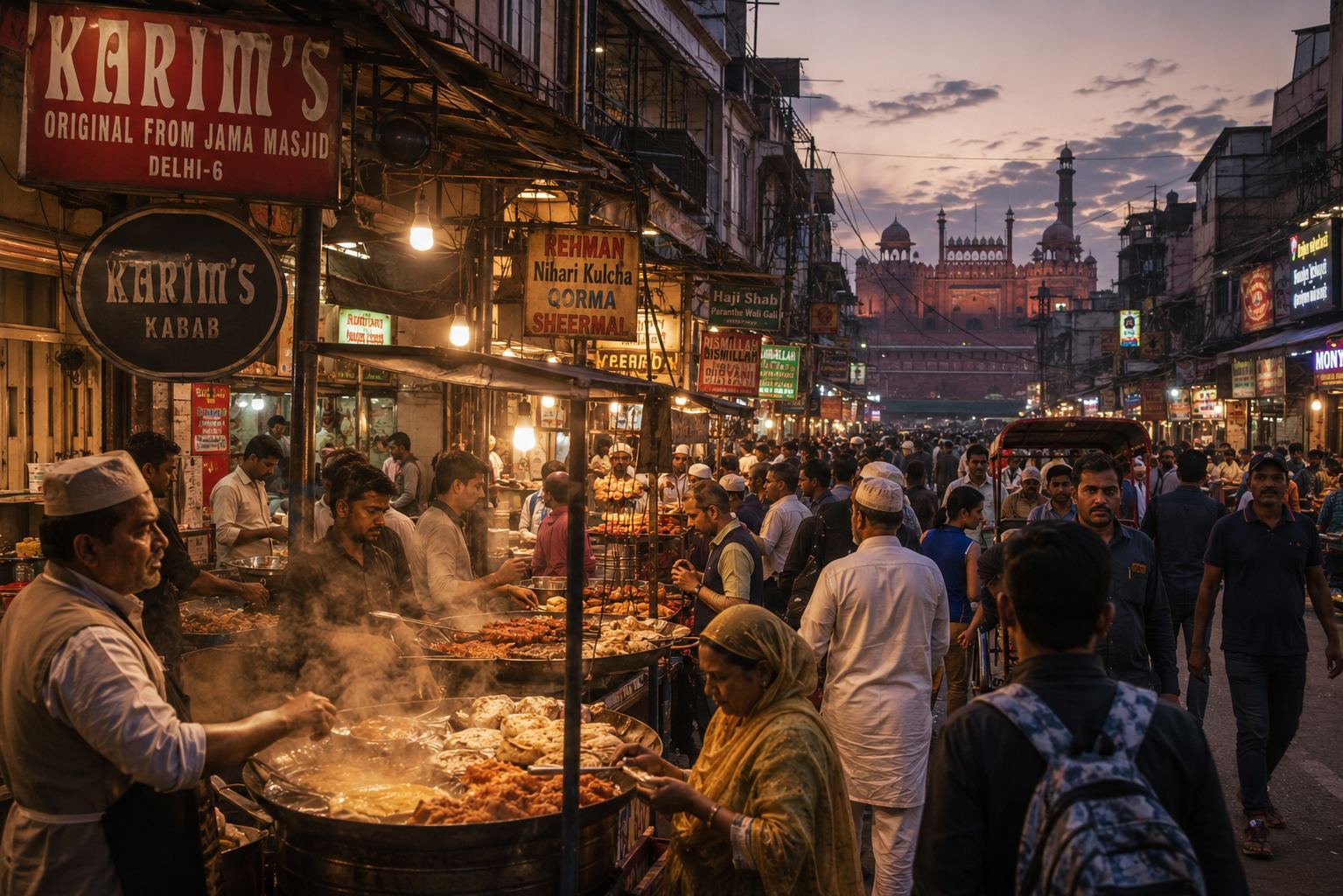
Chandni Chowk — the main street of Old Delhi, built by Shah Jahan in 1648 alongside the Red Fort — is the densest food street in the world. Paranthe wali gali (the alley of stuffed flatbreads) has been frying stuffed paranthas continuously for at least 150 years. Karim's restaurant has served Mughal-style food since 1913. The Jama Masjid area's nihari breakfast — lamb slow-cooked overnight, eaten before dawn — is one of Delhi's most specifically timed food occasions.
The 1947 Partition remade Delhi's food culture as fundamentally as any single event in the city's history. West Punjabi refugees from Lahore and Peshawar settled in Lajpat Nagar, Karol Bagh, and other neighbourhoods and recreated their food culture — the Punjabi dhaba, the tandoor bread tradition, the specific kebab culture of Lahore. Butter chicken was created in this context, at Moti Mahal in Daryaganj, around 1950.
Old Delhi's All-Night Nihari
Nihari — lamb shank slow-cooked overnight in a deeply spiced, collagen-rich broth — is traditionally served at dawn, having cooked through the night. In Old Delhi's Jama Masjid area, nihari restaurants open at 6am (some at 4am) and sell out their entire night's cooking within 2-3 hours. The preparation is made once daily; when it is gone, the restaurant closes. The specific time of service, the overnight cooking, and the sell-out by 9am are not incidental — they are part of the preparation's identity. Nihari eaten at 6am from a vessel that has cooked for 8 hours is a different experience from nihari reheated at 1pm.
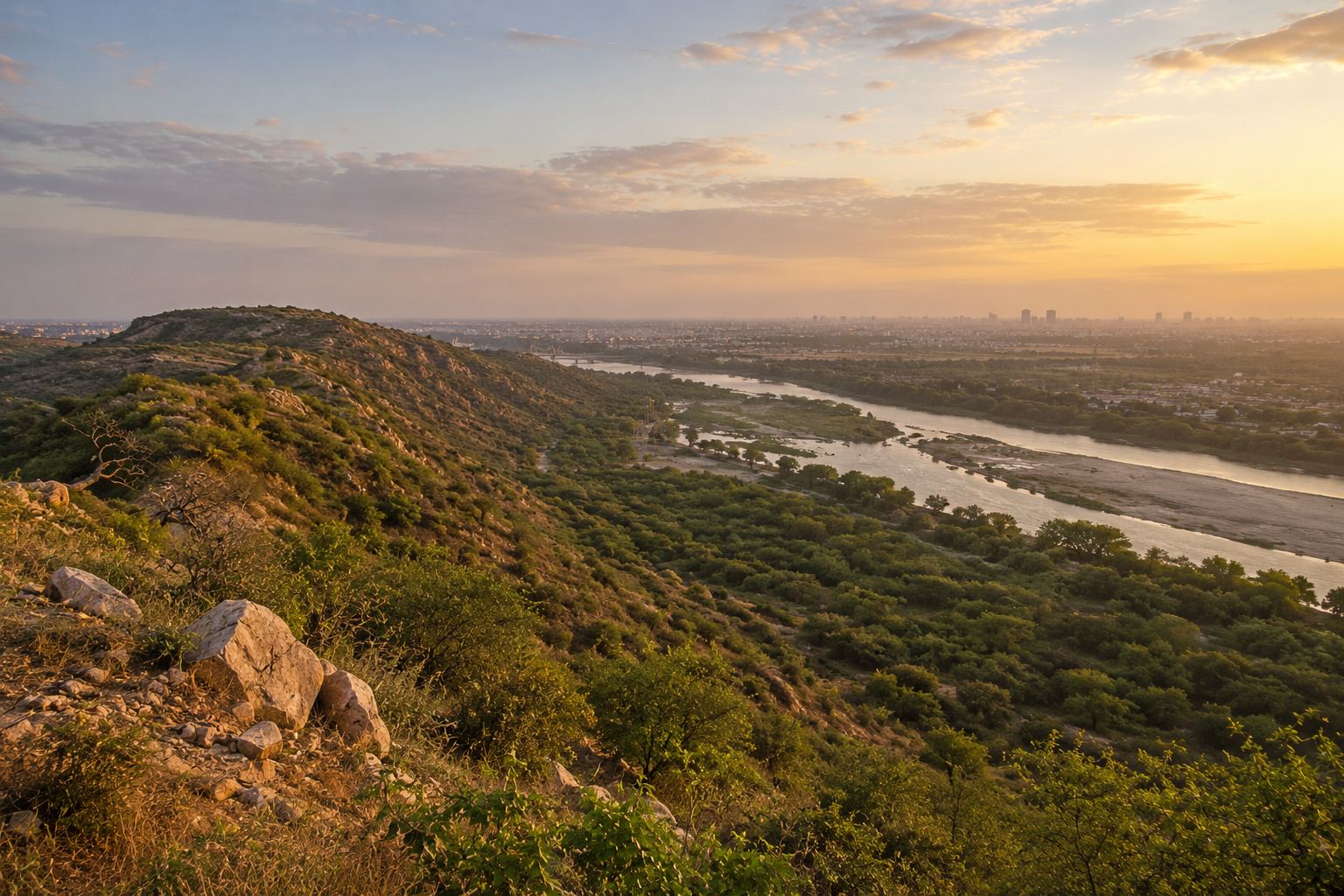
The terrain and agricultural landscape that produces the defining ingredients.
Naan — the Mughal court bread — now the global default for North Indian bread
Kulcha — leavened bread of the Old Delhi tradition
The Mughal Heritage
Biryani (Delhi style) — different from Hyderabadi or Lucknowi — Old Delhi's specific tradition
Nihari — overnight lamb shank — the Old Delhi dawn food
Seekh kebab — minced lamb on skewers — the street-grill standard of Old Delhi
Punjabi Layer
Butter chicken — created in Delhi 1950 — the refugee kitchen's most famous product
Dal makhani — black lentil slow-cooked — the Punjabi contribution that became the restaurant standard
Chole bhature — the Punjabi-Delhi combination that defines Delhi street food
Chaat Culture
Gol gappa (puchka) — the most contested street food — Delhi vs Kolkata vs Varanasi versions
Dahi bhalla — lentil dumplings in yoghurt and tamarind
Aloo chaat — potato with chaat masala — the simplest Delhi street food
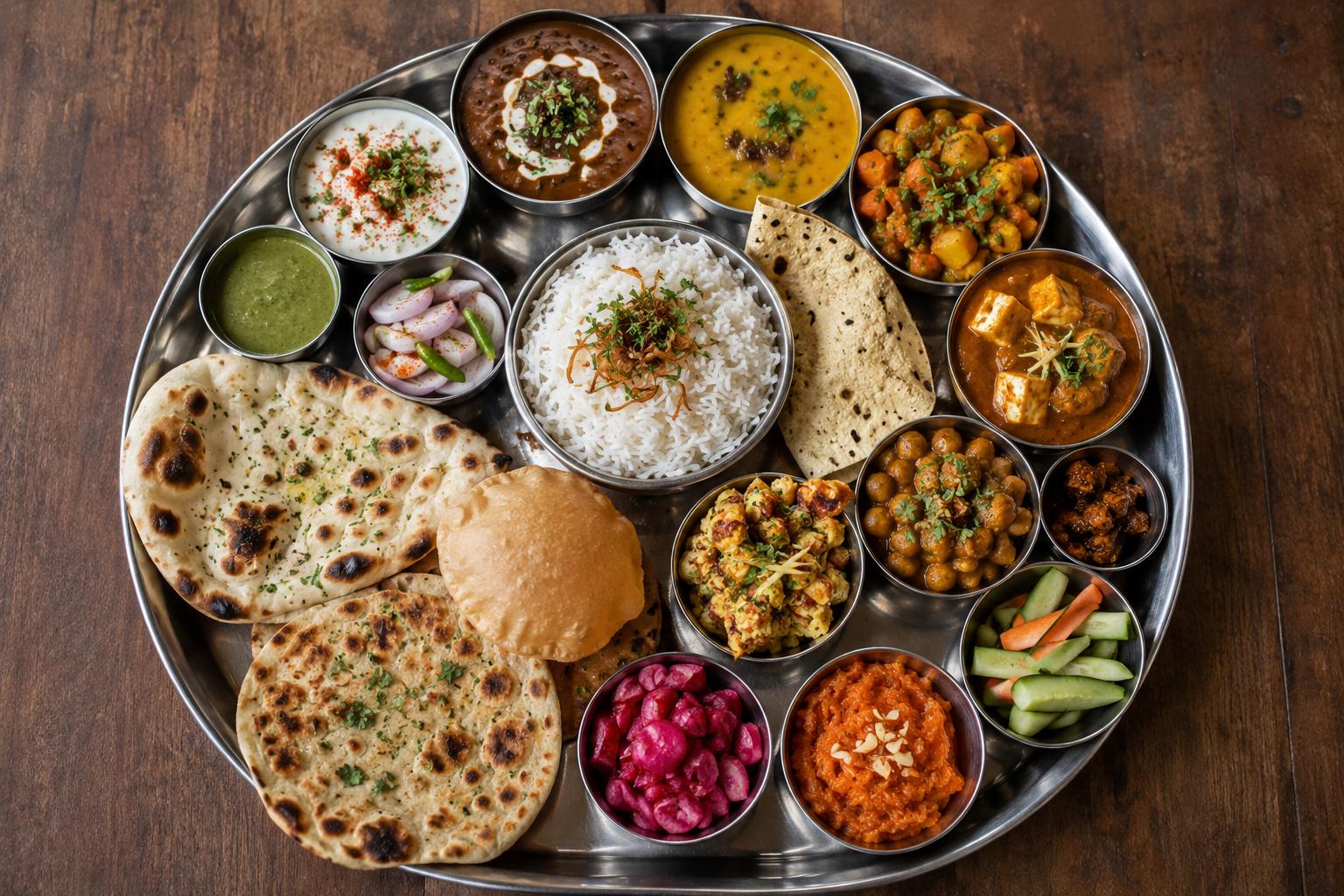
A complete thali representing the full flavour range.
🎉
Festival Foods
When the calendar drives the kitchen
Diwali
Old Delhi's mithai market lights up — the largest concentration of sweet shops in India. Karachi halwa, sohan halwa, and specific Delhi sweets.
Id-ul-Fitr
Old Delhi's Eid — the Jama Masjid area's most elaborate food occasion. Sevaiyan, sheer khurma, and the breaking of the Ramadan fast.
Lohri
Punjabi winter festival transplanted to Delhi — revdi, gajak, and rewari distributed as the bonfire burns.
Holi
Thandai and gujiya — Delhi's Holi food tradition combining the Punjabi and UP food cultures.
Karwa Chauth
The festival that drives Delhi's mithai and special food purchasing — the fasting-and-feasting cycle.
🌍
Diaspora & Reach
How this cuisine spread beyond its borders
Delhi's position as India's capital means that every Indian state's food culture is represented here — through embassies, state bhavans (state government guesthouses that often serve their state's food), and the continuous migration of people from every state. The diplomatic community has also made Delhi India's most internationally food-diverse city.
Old Delhi's food culture has become a culinary tourism destination — food walks through Chandni Chowk are one of Delhi's most popular tourist activities. The specific Mughal food of the walled city (nihari, korma, shahi tukda) has achieved international recognition through food tourism.
Delhi does not have a single native cuisine — it is a 700-year accumulation of the food cultures of every empire and migration wave that has passed through it. The most 'Delhi-specific' foods are the Mughal-influenced preparations of Old Delhi (nihari, korma, Dilli biryani) and the specific chaat and street food culture (gol gappa, dahi bhalla, aloo chaat) that developed from the city's diverse food market.
What happened to Delhi food after Partition?
The 1947 Partition brought hundreds of thousands of West Punjabi refugees (from Lahore, Peshawar, and the Punjab plains) to Delhi. Their food culture — the tandoor bread tradition, the Punjabi dhaba format, and their specific kebab and curry preparations — remade Delhi's food landscape. Butter chicken was created in this context by West Punjabi refugee cooks.