700 years of continuous imperial capital. Old Delhi's nihari at dawn and seekh kebab by night. The Punjabi refugee cooking that created butter chicken. The state bhavans that serve every Indian state's food within 10 kilometres of each other.
⏱ 13 min read🗓 Updated June 2026★ City Food Guide
City Food Guide
Delhi — Seven Empires at One Table
Delhi does not have a cuisine — it has the accumulated food culture of every empire and migration wave that has used it as a capital for 700 years. The Mughal walled city food, the Punjabi refugee contributions of 1947, the South Indian, Bengali, and Rajasthani migration layers of the post-Independence period, and the diplomatic community that made Delhi India's most internationally diverse food city.
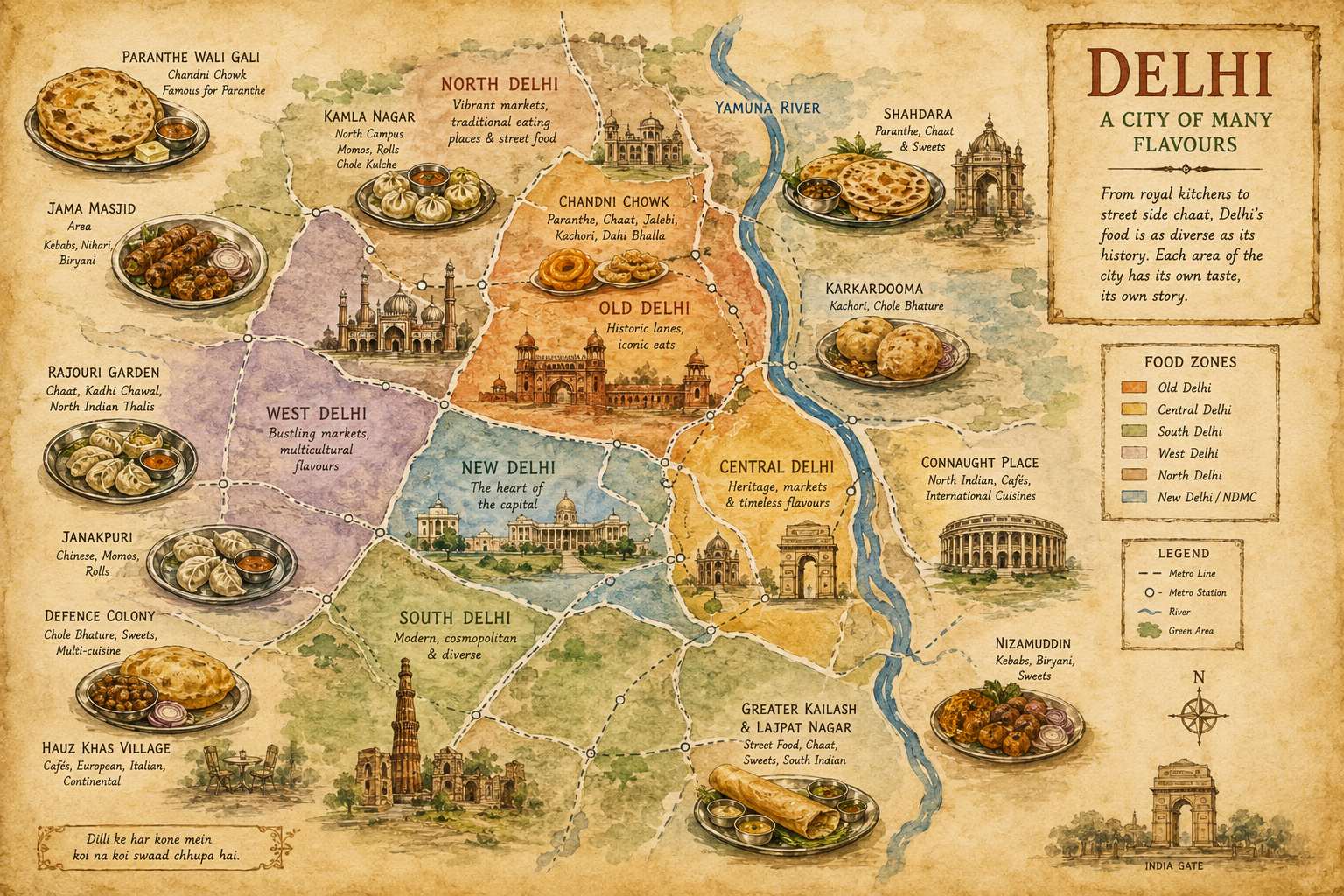
The food neighbourhoods and defining streets of this city's culinary geography.
🏙
City Food Identity
What this city defines itself by
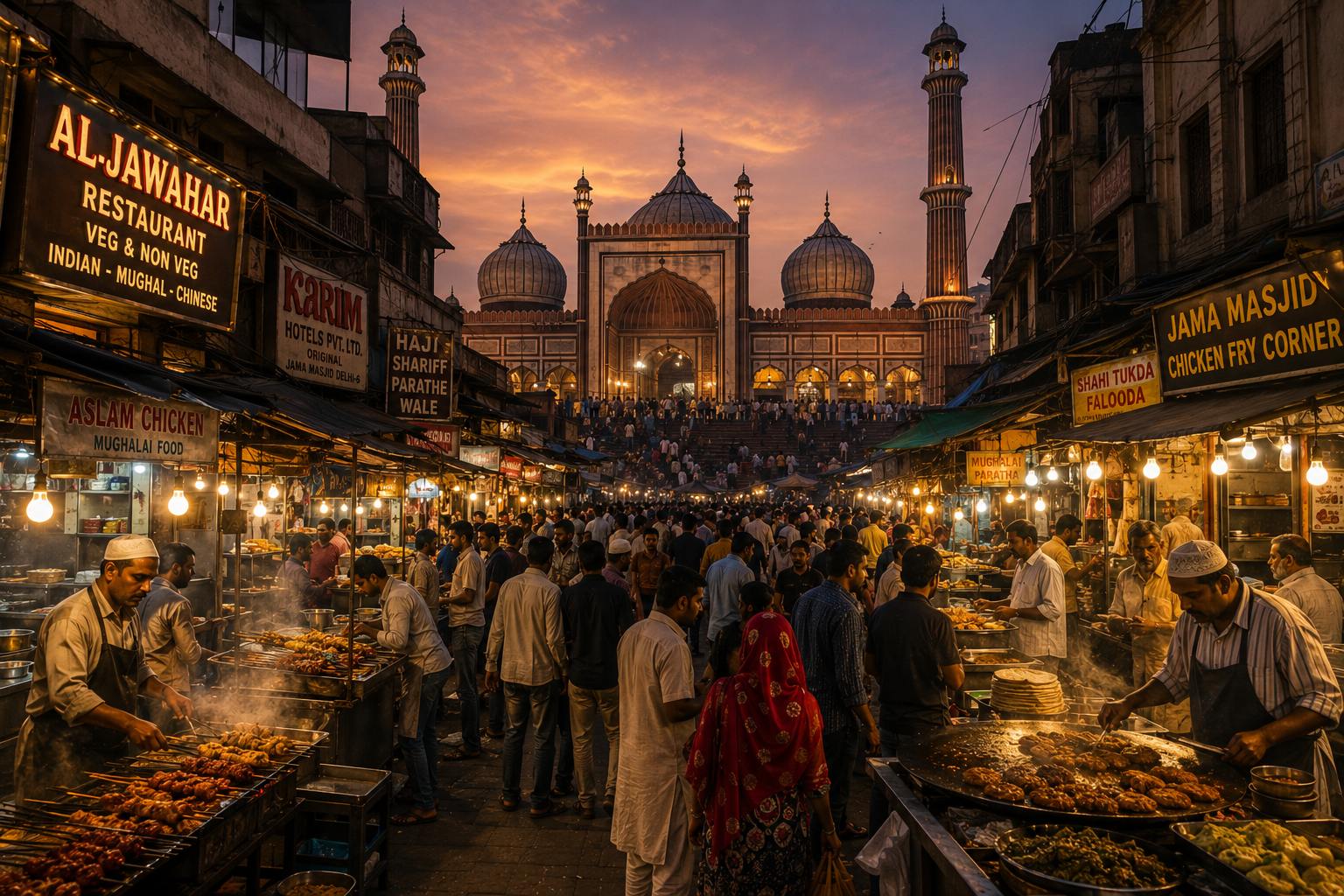
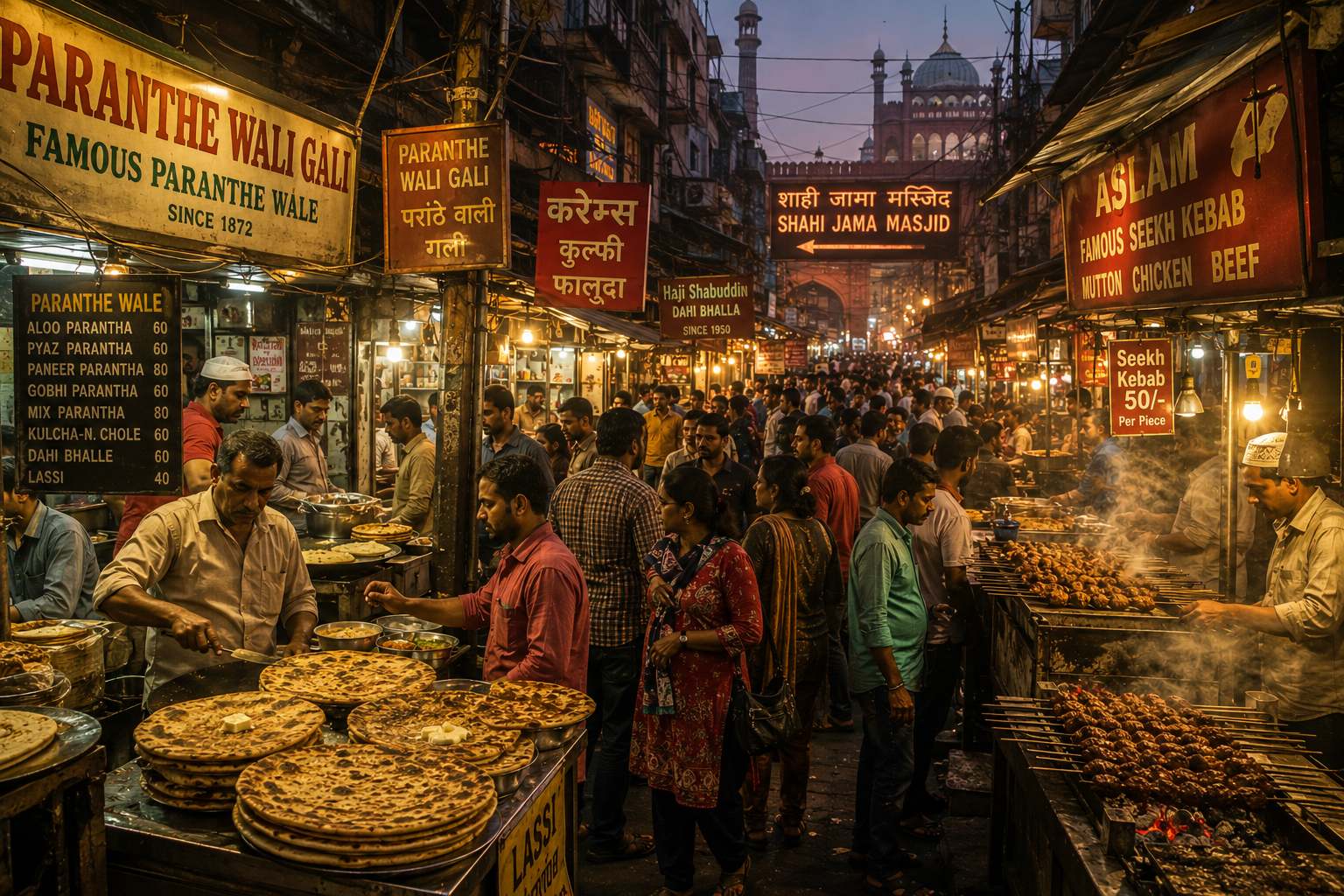
Old Delhi (Shahjahanabad) is the most condensed food heritage in any Indian neighbourhood — the preparations served at the same addresses they have occupied for 300+ years. Karim's restaurant has served Mughal-style food from the same Jama Masjid lane since 1913. The Paranthe Wali Gali has been frying stuffed flatbreads for at least 150 years. The nihari restaurants of the Jama Masjid area open at 4-6am and sell out by 9am, having cooked through the night. This is not nostalgia — it is a living food culture in continuous operation.
Why Old Delhi's Food Has Not Changed
The food businesses of Old Delhi's Chandni Chowk operate on hereditary family lines — the same family running the same preparation at the same address for 3-8 generations. This hereditary continuity, combined with a specific customer base that comes from across Delhi for specific preparations, creates extraordinary conservatism. Karim's does not modernise its rogan josh because the people who come to Karim's come specifically for Karim's rogan josh — not for a contemporary interpretation of it. The restaurant's value is its continuity. Innovation would be self-destruction.
The street food culture that defines daily eating in this city.
🥘
Street Food
The preparations you eat standing up
Nihari
Old Delhi dawn food — lamb shank slow-cooked overnight. Restaurants open at 4-6am, sell out by 9am.
Lentil dumplings in spiced yoghurt — the Delhi chaat tradition at its most refined.
Paranthe Wali Gali
Chandni Chowk alley of stuffed flatbreads — 150+ years in continuous operation.
Kebab (Old Delhi)
Seekh, shammi, galouti from the Old Delhi Mughal tradition — the original North Indian kebab street.
Kulfi Faluda
Dense frozen milk kulfi on vermicelli — the Old Delhi summer dessert tradition.
🍽
Restaurant Culture
How this city eats out
Delhi's restaurant range encompasses the oldest continuously operating Mughal food restaurants in India (Karim's, 1913) and the country's most ambitious modern Indian restaurants. The state bhavans — government guesthouses maintained by each Indian state in Delhi — many serve their state's specific food, making Delhi the only city where you can eat authentic food from every Indian state within a single day.
🌍
Diaspora
How this city's food travelled
Delhi's Punjabi refugee community spread the dhaba format nationally — the road-side restaurant serving dal, roti, sabzi became the default model for affordable North Indian food. Butter chicken and dal makhani, created in this community's post-Partition restaurants, are now the world's most internationally ordered Indian dishes.
Delhi does not have a single native cuisine — it has 700 years of accumulated imperial and migration food cultures. The most Delhi-specific foods are Old Delhi's Mughal preparations (nihari, korma, Dilli biryani) and the chaat and street food culture (gol gappa, dahi bhalla, aloo chaat) that developed from the city's diverse food market.
What is nihari and when is it served?
Nihari is lamb shank slow-cooked overnight in a deeply spiced, collagen-rich broth. In Old Delhi, nihari restaurants open at 4-6am and sell out by 9am — the preparation is made once, cooked through the night, and sold at dawn. Eating nihari at 6am from a pot that has cooked for 8 hours is a different experience from nihari reheated at 1pm.