Sikh Food — Langar, Karah Parshad, and Food as Equality
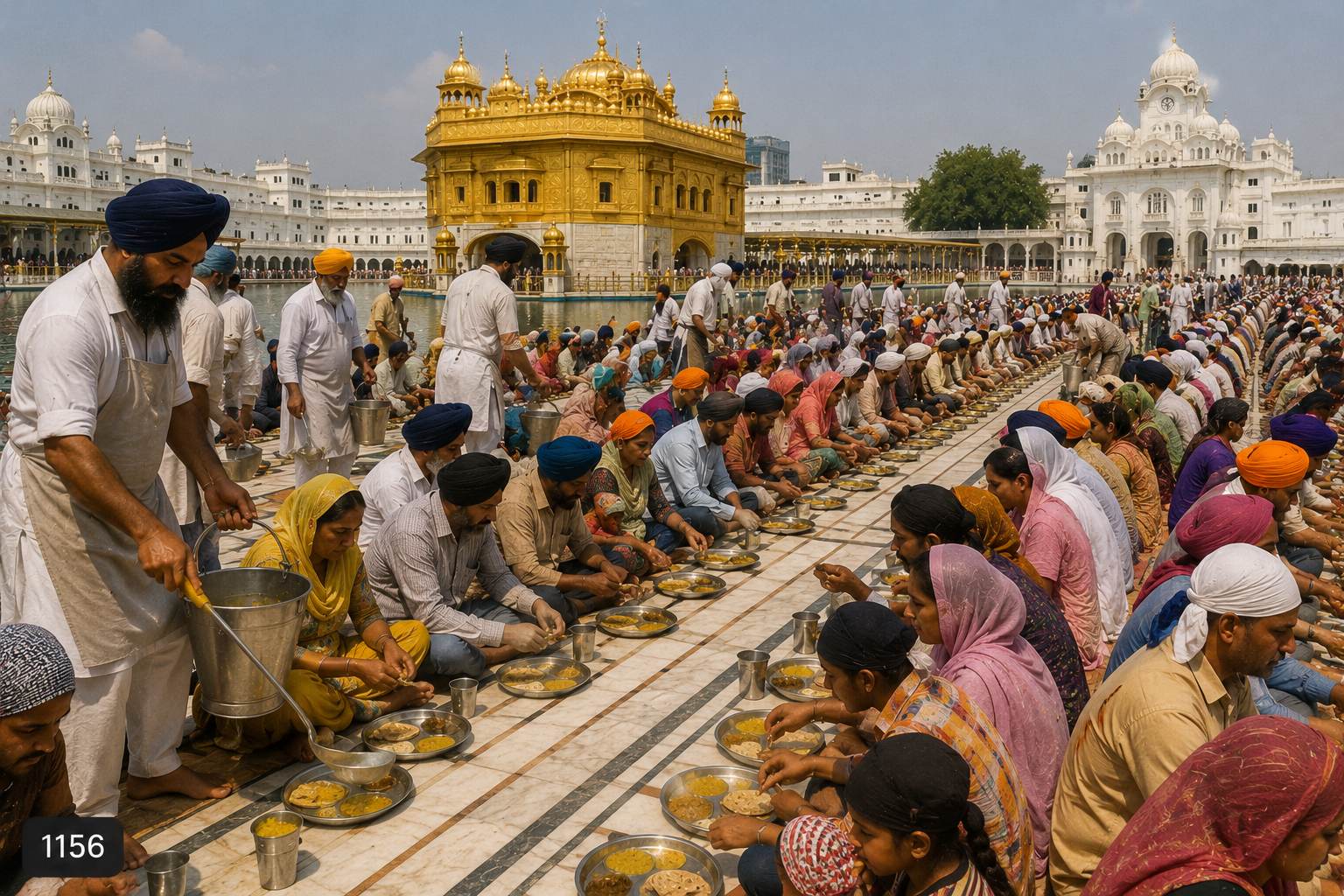
The Golden Temple serves 100,000 free meals daily. The langar — free community kitchen, open to all regardless of religion or caste, everyone sitting on the floor together — is the most radical food-equality statement in world religious history.
⏱ 11 min read🗓 Updated June 2026★ Food Story
The Core Principle
Why Sikh food is inseparable from equality
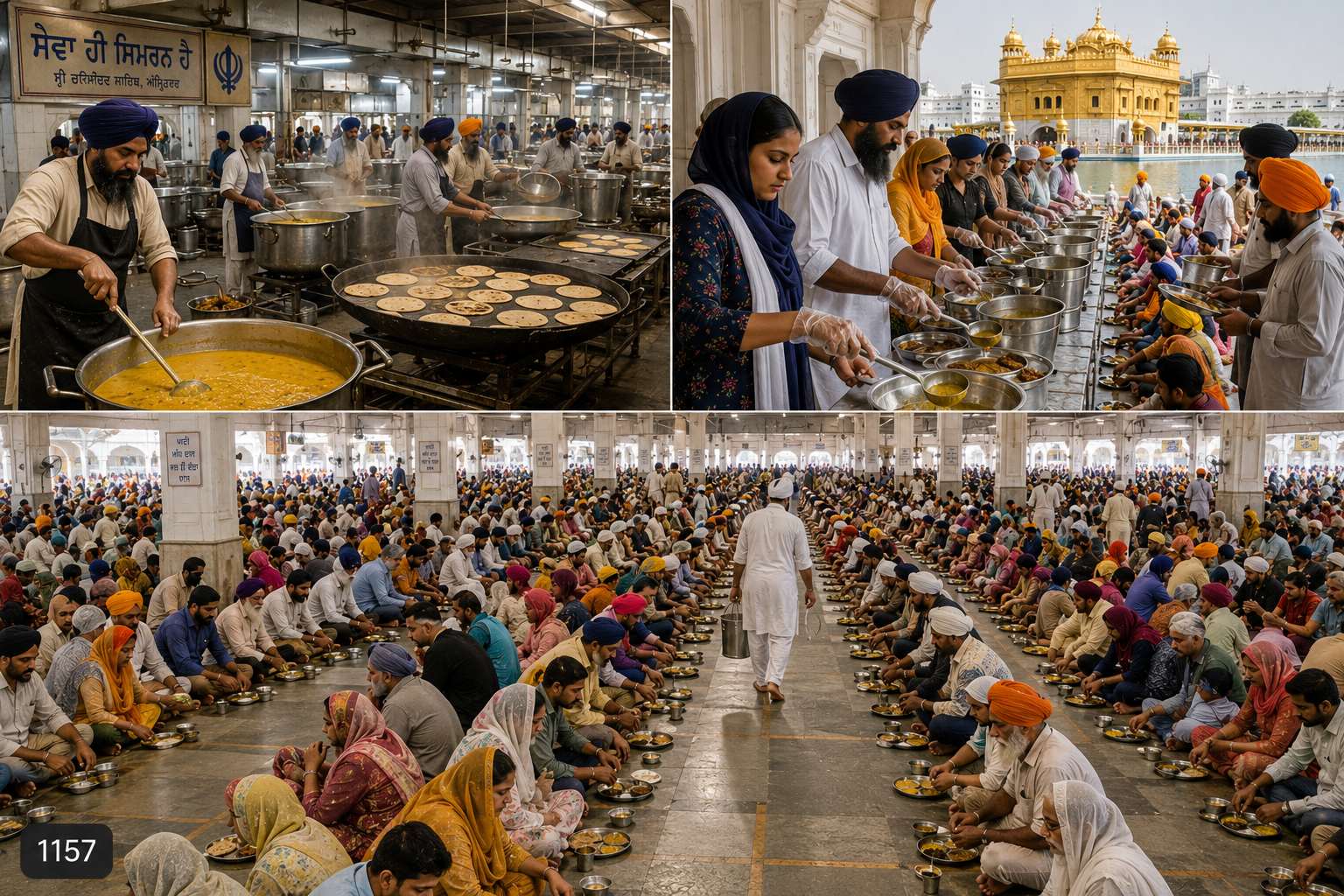
The langar was established by Guru Nanak (1469-1539) as a direct challenge to the caste-based food hierarchy that defined medieval Indian society. In a culture where who you ate with, what you ate, and who prepared your food were all determined by caste, the langar insisted: everyone eats the same food, prepared together, sitting together on the floor, regardless of religion, caste, or social status. The food itself (dal, sabzi, roti, kheer) is deliberately simple — the simplicity is not poverty but philosophy. No food is more prestigious than any other when everyone eats the same thing.
The Golden Temple Langar — Scale and Philosophy
The Harmandir Sahib (Golden Temple) in Amritsar serves 100,000 meals daily — rising to 150,000+ on Gurpurab (Guru birthday) celebrations. The kitchen operates 24 hours, 365 days. Volunteers (sewadars) prepare and serve the food as an act of service rather than employment. The langar at scale proves a philosophical point: that feeding 100,000 people the same simple meal, prepared by volunteers, with no hierarchy in the kitchen or the dining hall, is both practically possible and spiritually meaningful. It is one of the world's largest voluntary food service operations.
The community kitchen that feeds everyone equally — the most radical food equality practice in world religion.
Karah parshad is the other defining Sikh food — the temple offering of wheat flour, ghee, sugar, and water, cooked in a specific sequence and proportion and distributed to every person who attends the gurudwara service. The karah parshad is made in the same quantity regardless of who attends; no one is excluded from receiving it. The equality principle of the langar is concentrated into a single sweet preparation that is simultaneously food, offering, and statement.
Langar is the free community kitchen maintained at every Sikh gurudwara — open to all people regardless of religion, caste, or social status, serving the same simple meal (dal, sabzi, roti, kheer) with everyone sitting on the floor together. The Golden Temple in Amritsar serves 100,000+ free meals daily. Established by Guru Nanak as a direct challenge to the caste-based food hierarchy of medieval India.
What is karah parshad?
Karah parshad is the Sikh temple offering — wheat flour, ghee, sugar, and water cooked in a specific proportion and distributed to every person who attends the gurudwara service. It is simultaneously food, offering, and theological statement: the same preparation given to every person equally, without distinction of caste or status.