The Street Food Map of India — 100 Cities, 500 Preparations
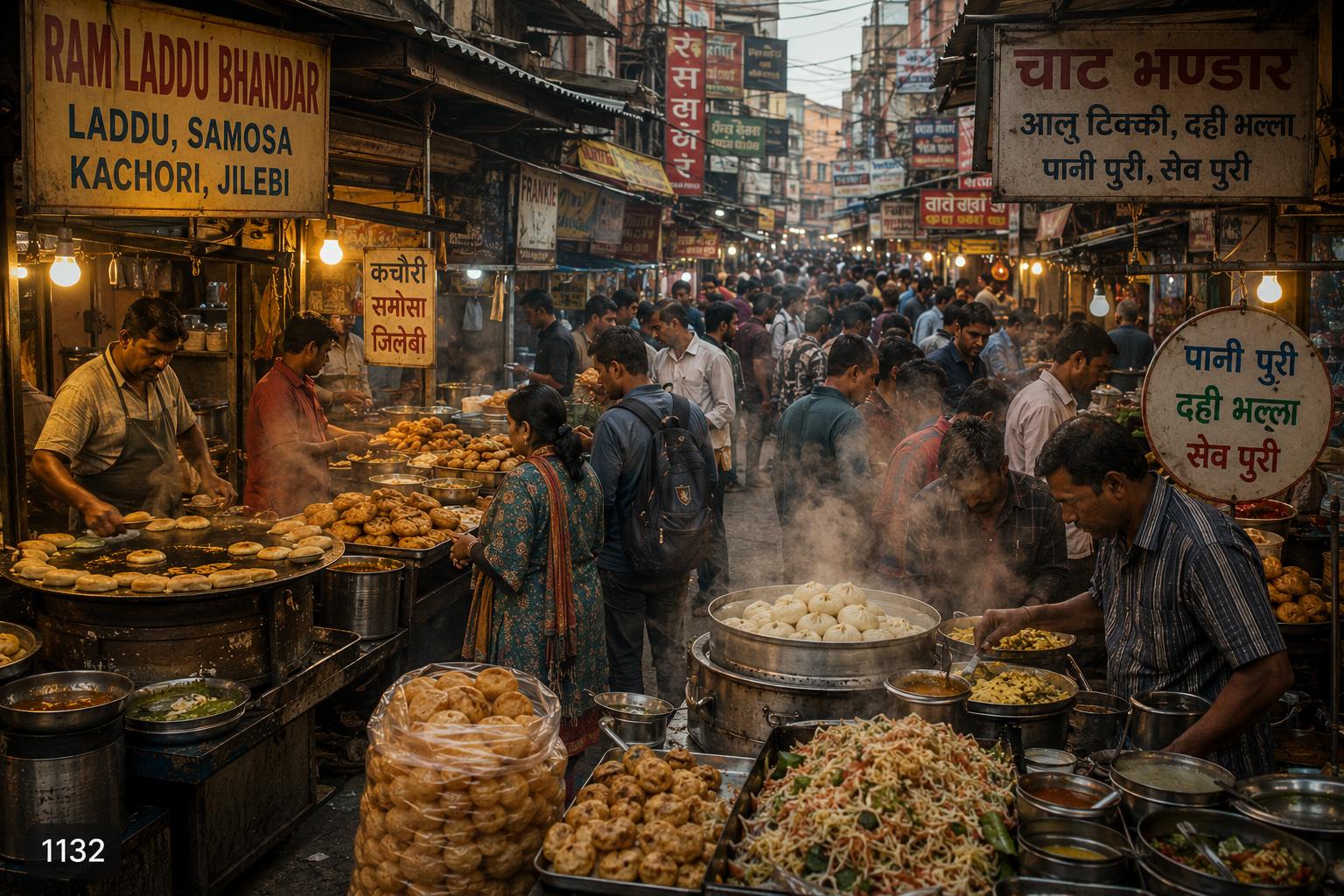
Vada pav in Mumbai, puchka in Kolkata, chole bhature in Delhi, bun maska at Irani cafes, kulfi from the Mathura vendor. India's street food is its most democratic and most diverse food culture.
⏱ 13 min read🗓 Updated June 2026★ Food Story
The Great Cities
What each city defines itself by
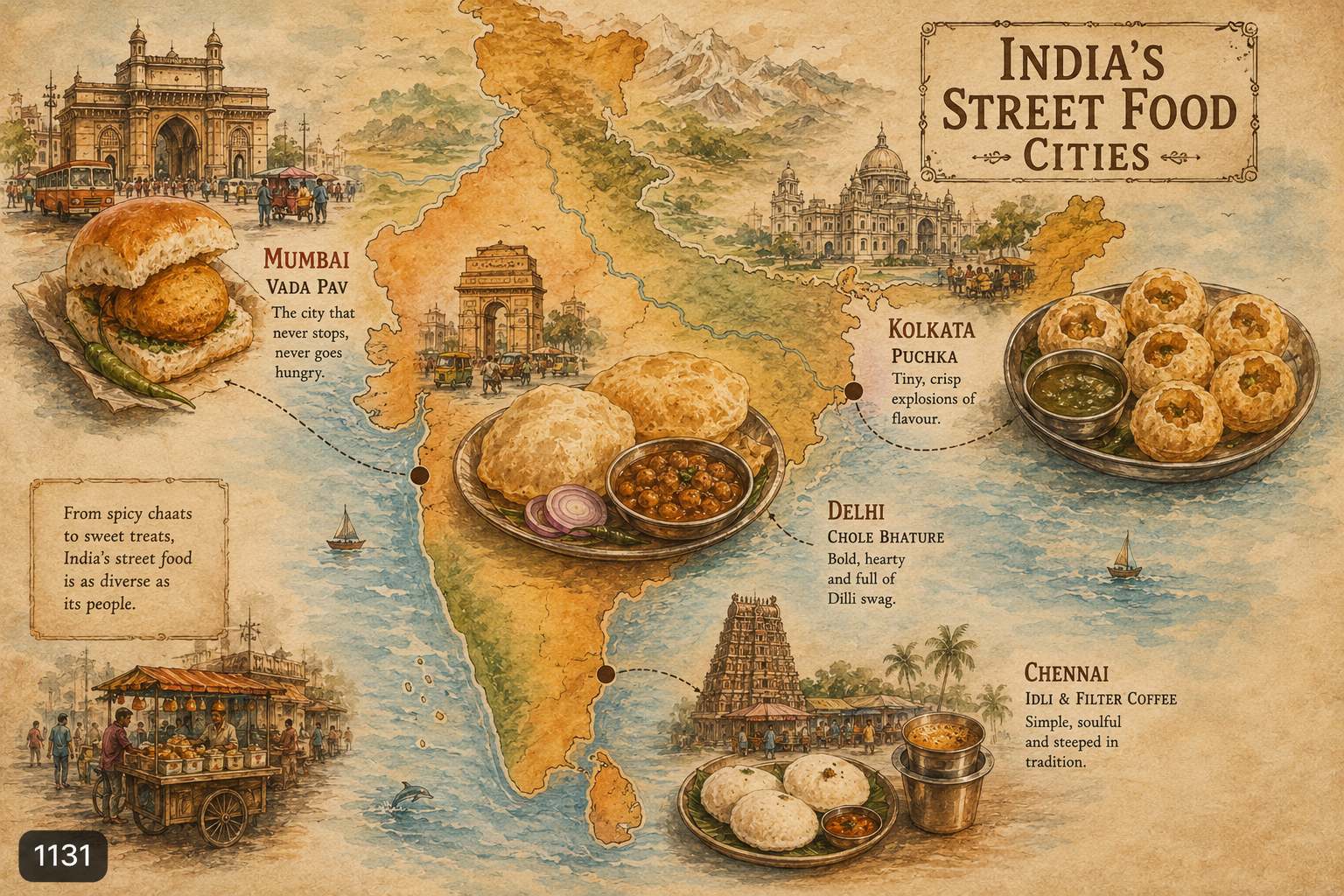
Every Indian city has a defining street food that is as specific to its location as its architecture or language. The preparation is inseparable from its specific geography, its specific community of vendors, and its specific time of day. Remove it from its context and it changes — not just in quality but in meaning.
The geographic diversity of India's most democratic food culture.
City
Defining Street Food
When
Why It Defines the City
Mumbai
Vada Pav
All day
Created for mill workers 1971 — now on 20,000+ stalls
Kolkata
Puchka
Afternoon-evening
The most fiercely contested version of the water ball
Delhi
Chole Bhature
Breakfast-lunch
Punjabi refugee cooking that became the capital's signature
Chennai
Filter Coffee + Idli
Morning
The Udupi tradition's most complete expression
Hyderabad
Irani chai + Osmania biscuit
All day
The Irani cafe culture of the Nizam's city
Lucknow
Nihari at dawn
Pre-dawn to 9am
The walled city's overnight-cooked lamb at its moment
Varanasi
Kachori-sabzi at ghats
Before sunrise
The pilgrim city's dawn food ritual
Ahmedabad
Fafda-jalebi
Sunday morning
The Gujarati sweet-savoury simultaneous combination
Jaipur
Pyaaz kachori
Morning
The onion-filled kachori specific to Rajasthan's capital
Amritsar
Kulcha + Dal
Breakfast
The tandoor city's most specific morning preparation
Why Indian Street Food Is Seasonal
The best Indian street food is deeply seasonal — the bhutta (corn) vendor appears only when monsoon corn is ready; the sugarcane juice stall operates only when the harvest permits; Varanasi's malaiyyo is available only on cold winter mornings when the dew conditions are right. This seasonality is not nostalgic or artisanal — it is the direct consequence of vendor economics. When the seasonal ingredient is available and cheap, the vendor produces it; when it is unavailable or expensive, the stall closes. The rhythm of Indian street food is the rhythm of Indian agriculture.
There is no single answer — each city has its definitive preparation. Mumbai has vada pav (over 20,000 stalls). Kolkata has puchka (gol gappa). Delhi has chole bhature. Chennai has filter coffee with idli. Varanasi has kachori-sabzi before dawn at the ghats. Each is inseparable from its city and its specific community of vendors.
Is Indian street food safe to eat?
The safety of Indian street food varies significantly by vendor, location, and preparation. High-volume stalls with rapid turnover are generally safer than low-volume stalls where food sits. Fried preparations at high heat are generally safer than raw or room-temperature preparations. Eating where locals eat in volume is the best practical guide.