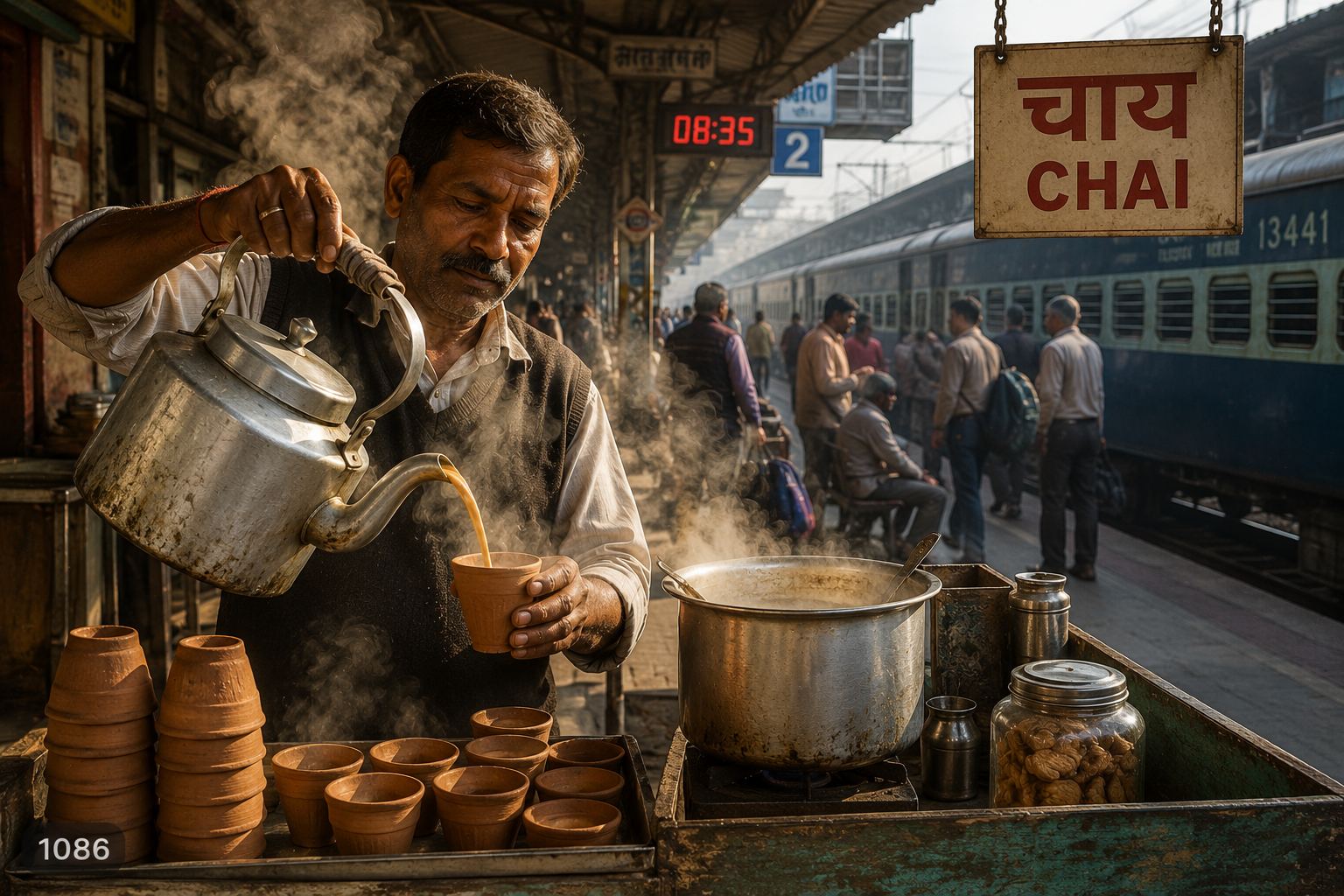
India grows the world's largest volume of tea — yet barely drank it before the 20th century. The British planted tea in Assam to break China's monopoly, then had to market it to Indians. The result was chai: spiced, milky, sweet, and more Indian than anything the British intended.
⏱ 11 min read🗓 Updated June 2026★ Food Story
Origin
Before chai was Indian
India did not drink tea in significant quantities before the 20th century. Tea was grown in India — in Assam from 1838, in Darjeeling from the 1850s — specifically to break China's monopoly on global tea supply. The British planted the tea, the British built the railways to move it, and then the British had to sell it to the people who lived where it was grown.
The Indian Tea Association began a deliberate campaign in the early 20th century to create a domestic Indian tea market — placing tea vendors on railway platforms, encouraging mills and factories to adopt tea breaks, and actively marketing tea as a modern drink to Indian consumers. The campaign worked — but not in the way the British expected. Indians took tea and made it chai: boiled with milk, sweetened generously, and spiced with ginger, cardamom, and black pepper.
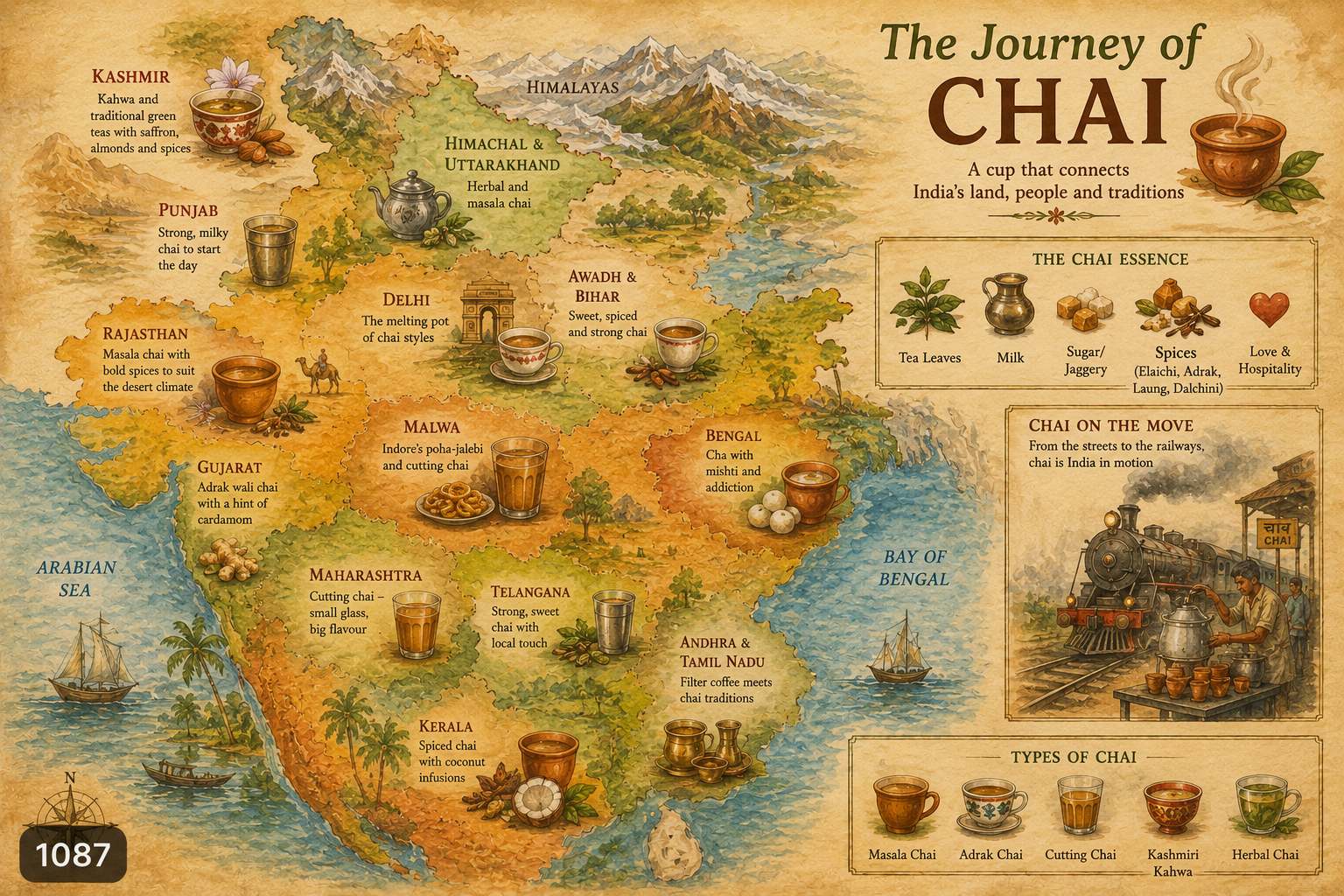
How the same tea plant produces completely different drinks across India's regions.
The Indian Transformation
How masala chai became more Indian than British
1838
Assam Tea — The British Plantation
The British East India Company establishes commercial tea production in Assam. The Camellia sinensis var. assamica (Assam tea) produces a bold, malty brew different from the Chinese varieties.
1850s
Darjeeling Tea — The Himalayan Version
Tea cultivation established in the Darjeeling hills at 2,000m elevation. The specific altitude, soil, and climate produce the 'muscatel' character — a unique floral quality found nowhere else in the world.
Early 20th century
The Marketing Campaign
The Indian Tea Association campaigns to create domestic demand. Tea vendors placed at railway stations; factory tea breaks subsidised. Indians adopt tea — but add milk, sugar, and spices.
North India
Masala Chai — The National Drink
Ginger, cardamom, and black pepper added to tea boiled with milk and sugar. The specific proportions vary by region and by vendor — but the boiling-with-milk method is universal.
Kashmir
Noon Chai — The Pink Tea
Gunpowder green tea with salt and bicarbonate of soda, producing a pink colour. Served with milk. The only savoury tea tradition in India — as different from masala chai as possible.
South India
Filter Coffee vs Tea
South India, particularly Tamil Nadu, Karnataka, and Kerala, resisted the tea campaign and maintained filter coffee as the daily drink. The filter coffee tradition pre-dates the colonial tea campaign.
Why Indian Chai Is Boiled, Not Steeped
The British way of making tea — steeping a teabag or loose leaves in hot water — extracts tannins gradually without bitterness. The Indian way — boiling milk, water, sugar, and tea leaves together — extracts tannins rapidly and intensely. The result is a different drink: richer, more bitter, requiring more sugar to balance, and with a creaminess from the hot milk proteins that steeped tea does not have. The Indian method was not ignorance of the British method — it was a deliberate adaptation that produced a different and preferred result.
India did not drink tea in significant quantities before the 20th century. Tea was grown in India specifically to break China's monopoly, then actively marketed to Indian consumers by the British Indian Tea Association from the early 20th century. Indians adopted tea but transformed it into chai — boiled with milk, sweetened, and spiced — a different preparation from the British model.
What makes masala chai different from regular tea?
Masala chai is tea boiled together with milk, sugar, and spices (ginger, cardamom, black pepper, sometimes cinnamon and cloves). The boiling method extracts tannins rapidly and produces a different result from the British steeping method — richer, more bitter, requiring more sugar, with creaminess from hot milk proteins. The spices were added by Indian consumers, not prescribed by the Tea Association.