Punjab means five rivers. Those rivers created the most fertile alluvial plains in India, which supported the largest cattle herds, which produced the most milk. The result: a food culture where ghee is added by the ladle, lassi is a meal, and dairy is identity.
⏱ 11 min read🗓 Updated June 2026★ Why This
The Agriculture
Five rivers, alluvial plains, and the most cattle in India
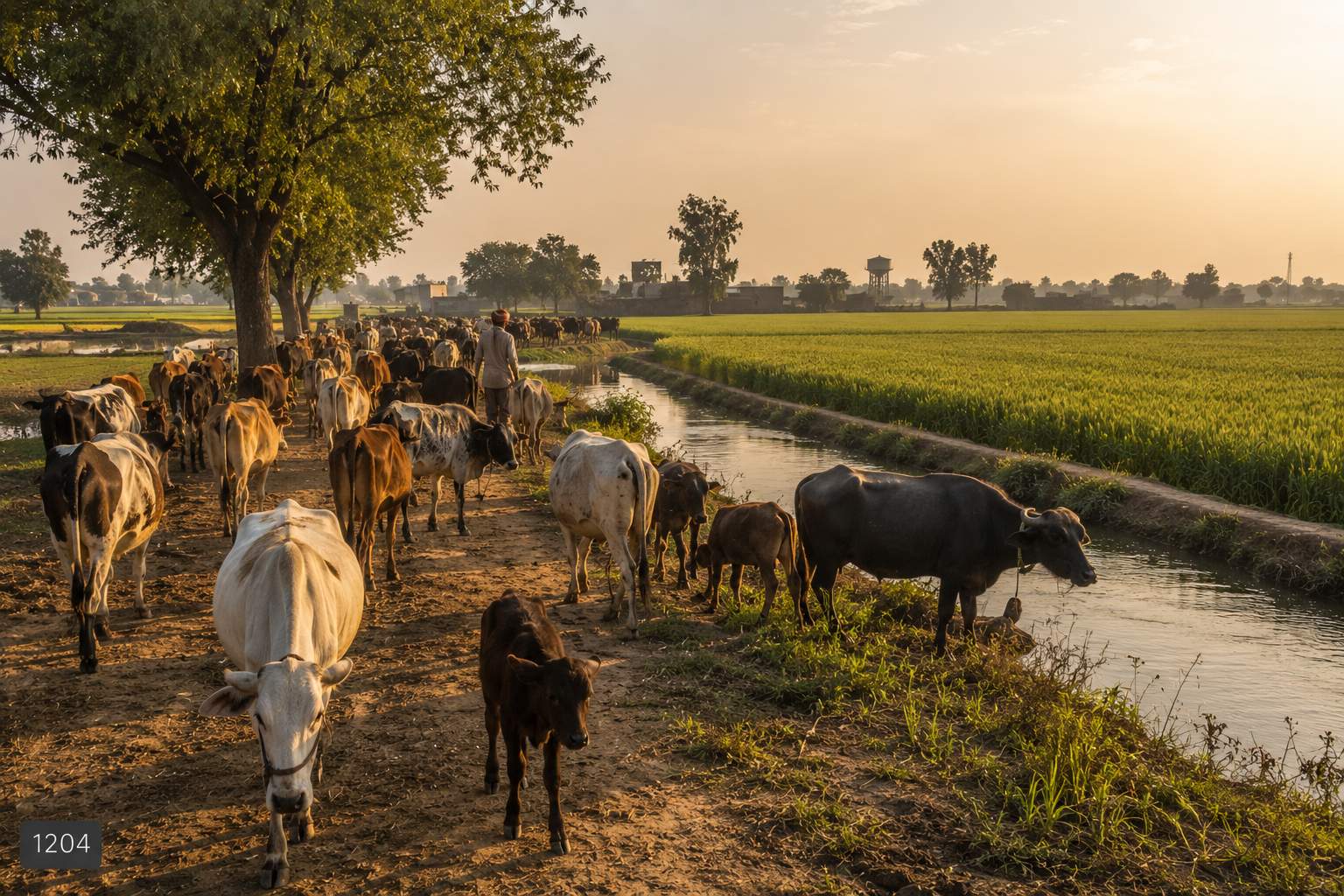
The Punjab plain is built from alluvial silt deposited by five Himalayan rivers over millions of years. This deep, flat, extraordinarily fertile plain supports wheat and rice cultivation at industrial scale — and the same fertility that feeds crops feeds cattle. Cattle herds on the Punjab plain historically had access to crop residue (wheat straw, rice straw) as fodder, to the rich grass of the canal-irrigated margins, and to the unirrigated grazing land between cultivated plots. More cattle, better fed, producing more milk per animal than in most other regions of India.
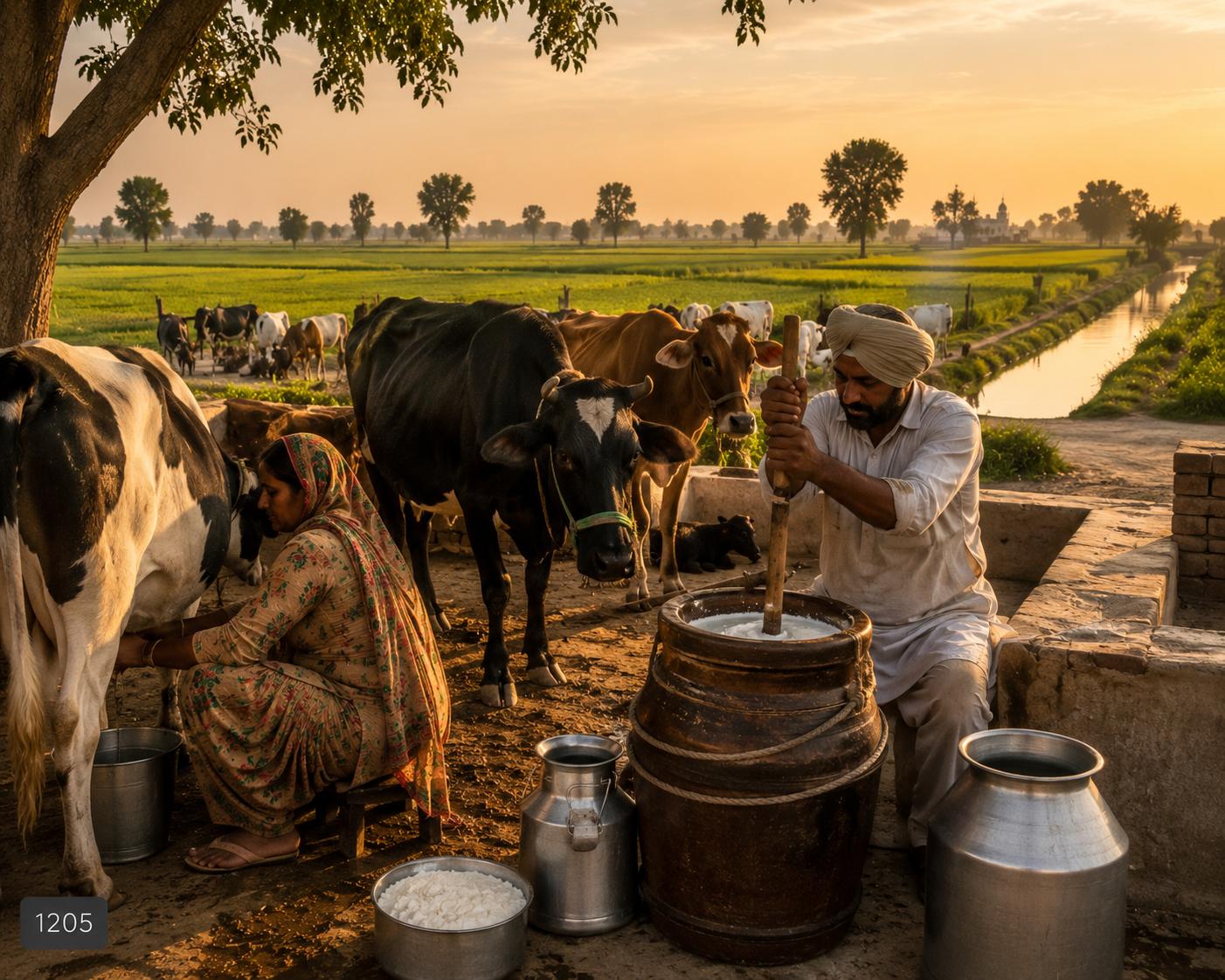
The specific dairy products of Punjab — ghee (clarified butter), lassi (churned yoghurt diluted with water), makhan (white butter), paneer (pressed fresh cheese) — are all products of the large-scale milk surplus that the alluvial plain's cattle herds produce. Ghee is the preserved form of butter fat, indefinitely stable without refrigeration and ideal for the cooking fat needs of a farming community working long days. Lassi is the liquid by-product of churning butter — the practical use of what would otherwise be wasted.
The geography that made dairy Punjab's defining food — the five rivers, the alluvial soil, the cattle.
Why Punjabi Lassi Is Different from All Other Lassi
Lassi exists across North India, but the Punjabi lassi is the original and the benchmark. The Punjabi version is made from the churning by-product of butter-making — the true buttermilk — and is thicker, more sour, and more nutritionally complete than the blended yoghurt-and-water version served in most restaurants outside Punjab. The real Punjabi lassi — made in a large clay pot or wooden vessel, churned with a wooden churner (mattha), diluted and seasoned — is a different product from what the restaurant menu calls lassi. The clay vessel's trace minerals, the wooden churner's specific action, and the raw milk's bacterial culture all contribute to a specific flavour that stainless steel and blenders cannot reproduce.
The Sikh langar tradition reinforced the dairy emphasis. Langar food is deliberately nourishing — the dal, sabzi, and roti that sustain community meals require the most available high-quality fat, and in Punjab that fat is ghee. The generous use of ghee in langar cooking is not profligacy — it is the appropriate use of the most abundant, high-quality, storable fat that the Punjab dairy system produces. The langar's philosophical generosity and the Punjab plain's dairy abundance reinforced each other.
Punjab's five-river alluvial plains historically supported the largest cattle herds in India, producing a surplus of milk that was preserved as ghee — butter fat clarified and stabilised for indefinite storage without refrigeration. Ghee was the most abundant high-quality cooking fat available. Its generous use in Punjabi cooking (in langar, in dal makhani, on roti) reflects the historical surplus rather than deliberate flavour choice.
What is real Punjabi lassi?
Traditional Punjabi lassi is made from the churning by-product of butter-making — true buttermilk — in a clay pot with a wooden churner (mattha), then diluted and seasoned. It is thicker, more sour, and more nutritionally complete than the blended yoghurt-and-water version served in most restaurants. The clay vessel's minerals, the wooden churner's action, and raw milk's bacterial culture all contribute to a specific flavour that modern equipment cannot replicate.