The Bread Map of India — 50 Breads Across 28 States
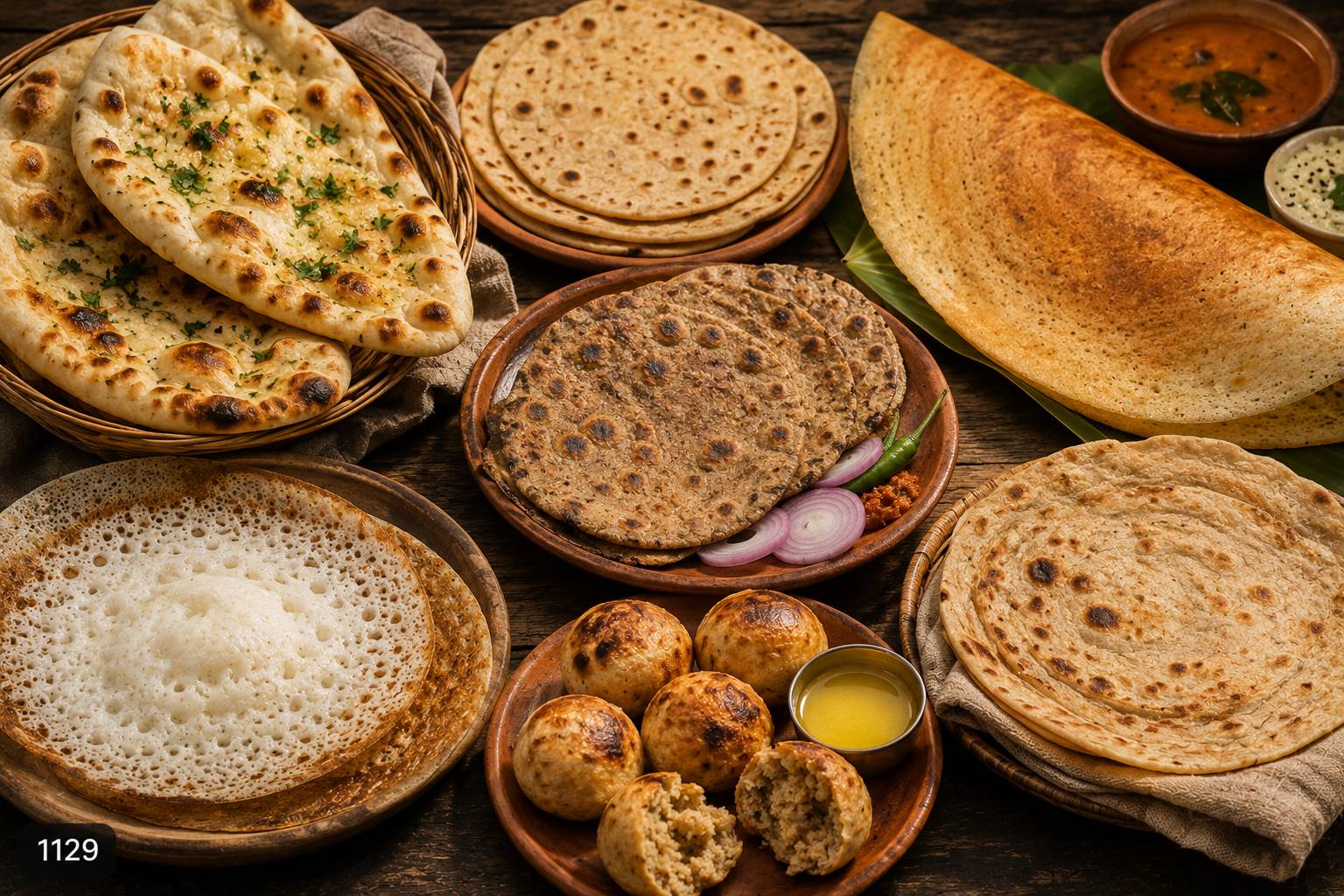
India's bread diversity is extraordinary — roti to appam, naan to bhakri, paratha to dosa. Every state has its specific bread tradition tied to its specific grain. The bread map of India is the grain map of India.
⏱ 12 min read🗓 Updated June 2026★ Food Story
North India
The Wheat Belt's bread tradition
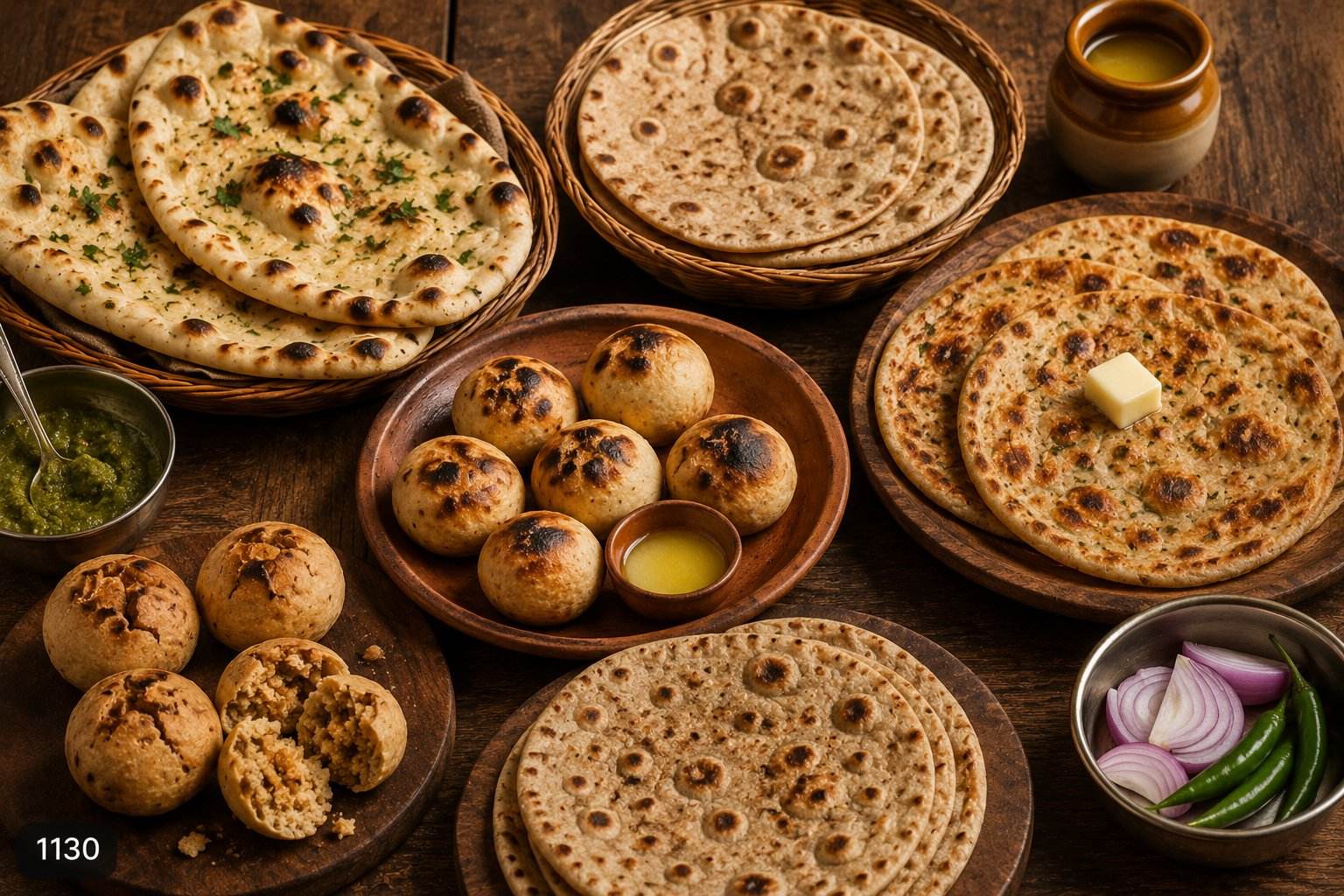
North India's wheat belt (Punjab, Haryana, UP, Rajasthan) produces the breads most internationally associated with Indian food: roti, naan, paratha, kulcha. The tandoor — the clay oven at 400-500°C — is the defining North Indian bread technology, producing bread in 60-90 seconds through high-heat Maillard reaction. Roti on the tawa is the daily home bread; naan in the tandoor is the restaurant and celebration bread.
The wheat belt's diverse bread traditions — from Punjab's tandoor naan to Rajasthan's baati.
South India
The Rice Belt's fermented tradition
South India's rice belt produces an entirely different bread tradition built on fermented rice-lentil batters rather than wheat doughs. Idli, dosa, appam, and uttapam are all products of the same basic fermentation process — soaked rice and urad dal ground, mixed, and fermented overnight before cooking. The fermentation provides lift (from lactic acid bacteria and wild yeasts), sourness, and the specific nutritional transformation that makes the batter's protein more bioavailable than the raw ingredients.
Bread
State/Region
Grain
Technique
Naan
North India
Wheat
Tandoor-baked, leavened
Roti
Pan-India
Wheat
Tawa-cooked, unleavened
Paratha
North India
Wheat
Tawa-fried, layered
Appam
Kerala, Tamil Nadu
Rice
Fermented, wok-cooked
Dosa
South India
Rice+Lentil
Fermented, tawa-spread
Bhakri
Maharashtra, Gujarat
Jowar/Bajra
Tawa-cooked, thick
Baati
Rajasthan
Wheat
Ember-baked, dense
Litti
Bihar
Wheat
Ember-baked, filled
Akki roti
Karnataka
Rice flour
Tawa-pressed
Neer dosa
Karnataka
Rice
Water-batter, lacy
Why South India Ferments and North India Does Not
The fermentation tradition of South Indian bread is climate-determined. The 28-32°C ambient temperature of the South Indian coastal zone produces optimal lactic acid bacteria fermentation in 8-12 hours. In North India's colder climate (particularly in winter, when temperatures can drop below 10°C), the same fermentation takes 24+ hours or fails entirely. The tandoor was the North Indian solution to the same problem the fermented batter solves in the South: producing a light, aerated bread from a grain that does not naturally produce rise. The solutions are different; the underlying question is the same.
India's bread diversity reflects its grain diversity — each major grain produces a different bread tradition. Wheat (North India) produces roti, naan, and paratha. Rice (South India) produces fermented dosa and idli. Sorghum/jowar produces bhakri. Bajra produces bajra roti. Finger millet produces ragi mudde. The bread is the grain's most complete expression.
What is the difference between roti and naan?
Roti is unleavened whole wheat bread cooked on a flat tawa — no yeast, no leavening, no fat in the dough. Naan is leavened (yeast and yoghurt), made from refined flour, cooked in the tandoor at 400-500°C. Roti is the everyday home bread; naan is the tandoor-restaurant bread. Roti is from the daily home fire; naan requires a tandoor.