The land that built the global spice trade — pepper, cardamom, and cloves from the Western Ghats — meeting the Arabian Sea's fish abundance. Three food communities, one coast, coconut in every form.
⏱ 16 min read🗓 Updated June 2026★ State Food Guide
State Food Guide
Kerala — The Coconut Coast Kitchen
Kerala sits between the Western Ghats and the Arabian Sea — a narrow coastal strip where three communities (Syrian Christian, Mappila Muslim, and Hindu) developed distinct food traditions from a shared ecology of coconut, backwater fish, and Western Ghats spices.
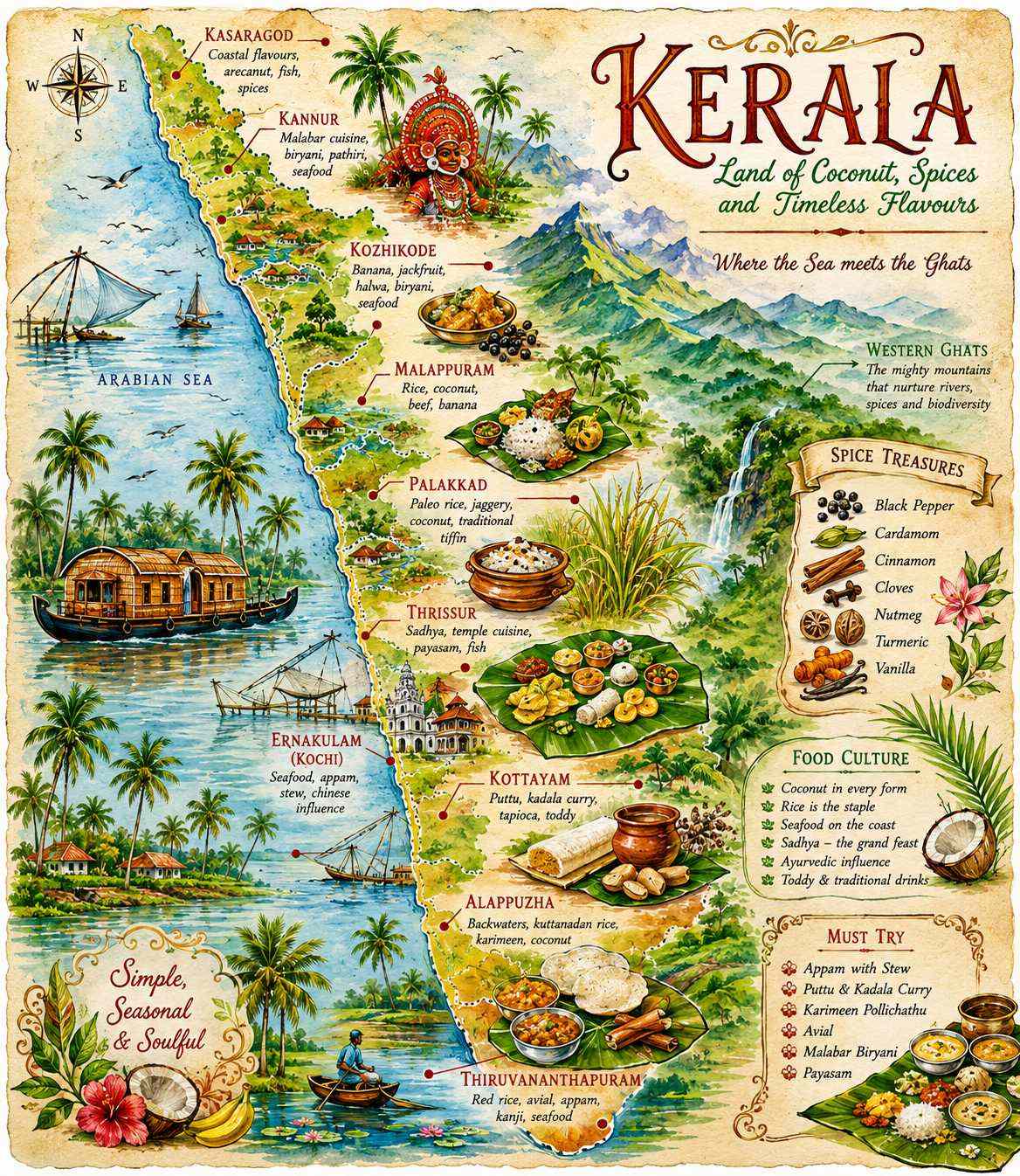
The geographic regions and food zones of Kerala Food Guide.
🗺
Geography & Climate
The land that made this food inevitable
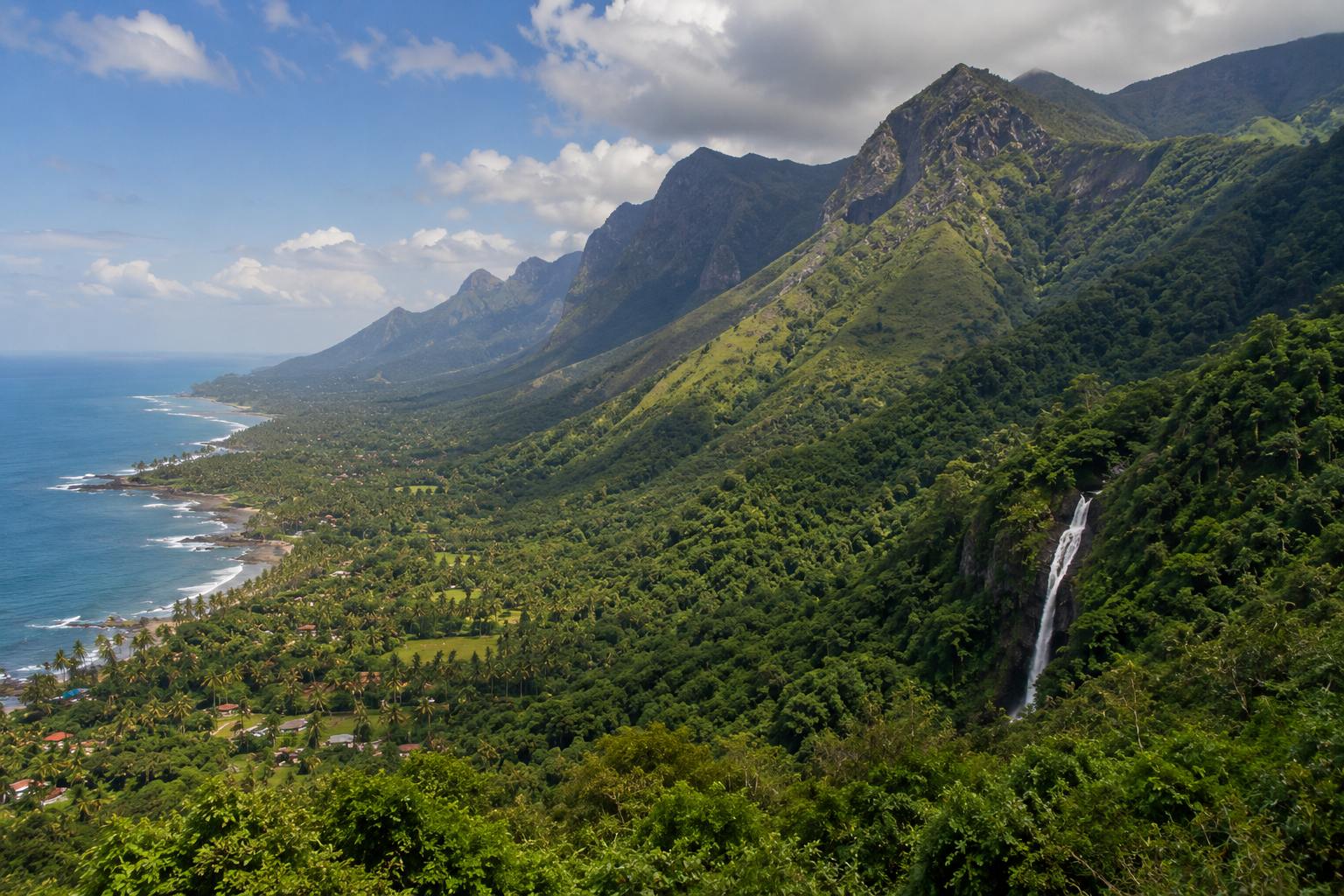
The Western Ghats rise to 2,695 metres less than 100 kilometres from the sea — the compressed ecological gradient that produces black pepper, cardamom, and cloves on the western slopes; coconut and jackfruit in the lowlands; and fish from the backwater lagoons and open sea. No Indian state packs more culinary geography into less physical space.
Coconut defines the architecture — fresh-grated, first-extract milk (reserved for finishing), second-extract milk (for cooking), dried, toasted, and as coconut oil (the primary cooking fat). The first-extract coconut milk, squeezed from freshly grated coconut before any water is added, is the richest element and is always added last. The second extract does the cooking; the first does the finishing.
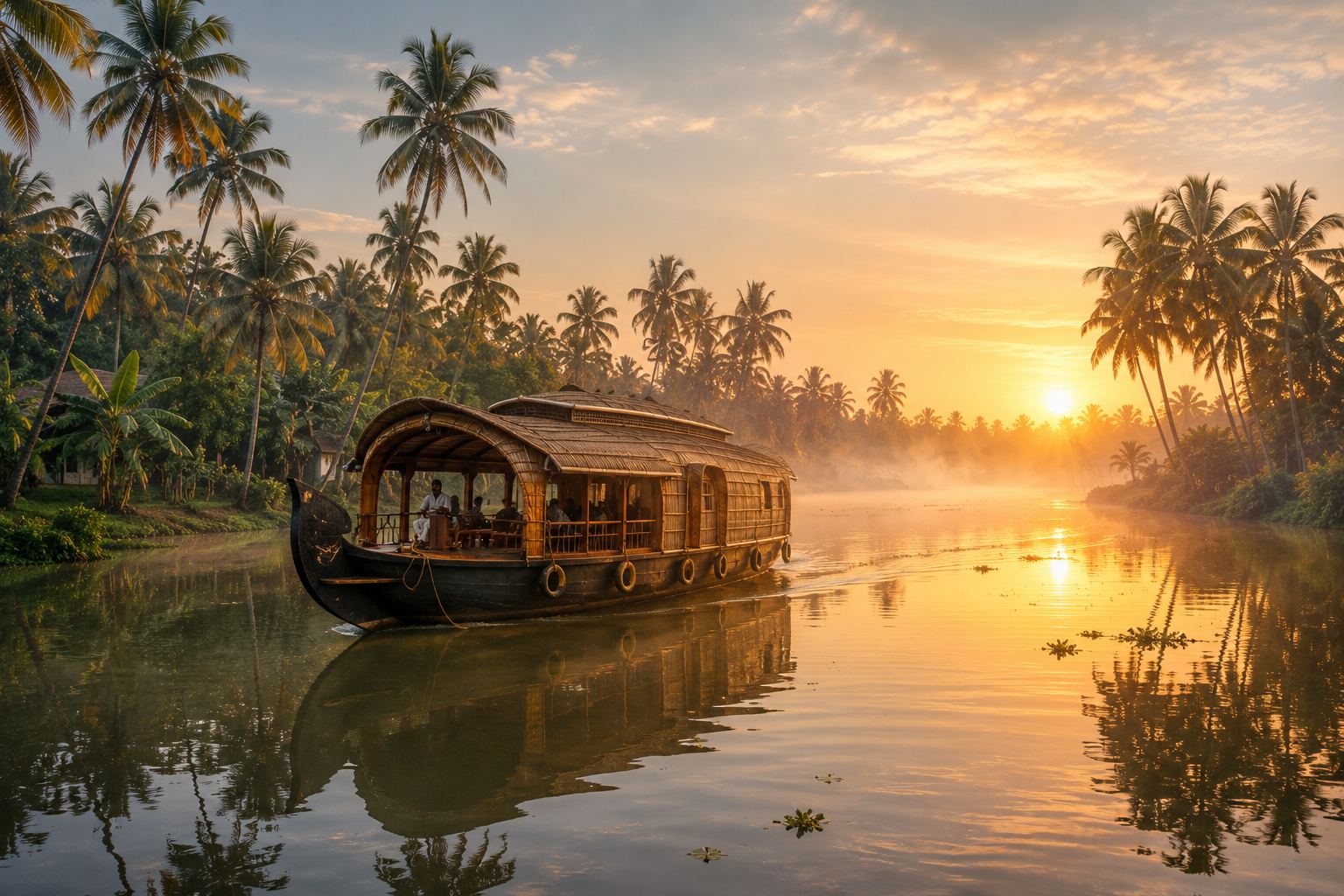
The backwater lagoons of southern Kerala — Vembanad Lake, Ashtamudi, the Kuttanad paddyfields farmed below sea level — produce specific fish (karimeen pearl spot, specific prawn varieties) found in no other Indian coastal tradition. The three communities who share this coast each developed distinct preparations from these shared ingredients, producing India's most internally diverse coastal cuisine.
The Syrian Christian Beef Tradition
Kerala's Syrian Christians trace their community to the apostle Thomas in 52 CE — among the world's oldest Christians. Their food includes beef without the Hindu taboo. Kerala's beef curry tradition — the dry, rich ularthiyathu and the black pepper curry — is a Syrian Christian contribution now part of Kerala's broader food identity. Beef, pork, fish, and strict Brahmin vegetarian food coexisting in one small state is remarkable in Indian food geography.
The terrain and agricultural landscape that produces the defining ingredients.
🧬
Food DNA
The flavour architecture
Grains and Starch
Red rice (Palakkadan matta) — traditional Kerala rice — nutty, earthy, more nutritious than white
Tapioca (kappa) — introduced by Portuguese; now a staple in northern Kerala
Appam — fermented rice crepe — the lightest bread in South India
Proteins
Fish (karimeen, sardine, mackerel) — daily protein from backwaters and sea
Beef (Syrian Christian tradition) — ularthiyathu and pepper curry — community identity markers
Egg roast — the universal accompaniment across all communities
Fats and Aromatics
Coconut oil — primary cooking fat — its specific flavour defines the entire cuisine
Curry leaves — in every tempering — the aromatic marker
Kokum (kudampuli) — souring agent in fish curry — specific Garcinia variety
Spice Heritage
Black pepper — grown on Ghats — the original global spice trade commodity
Cardamom — Idukki district produces most of India's cardamom
Cloves and nutmeg — Ghats spice crops that drove European trade
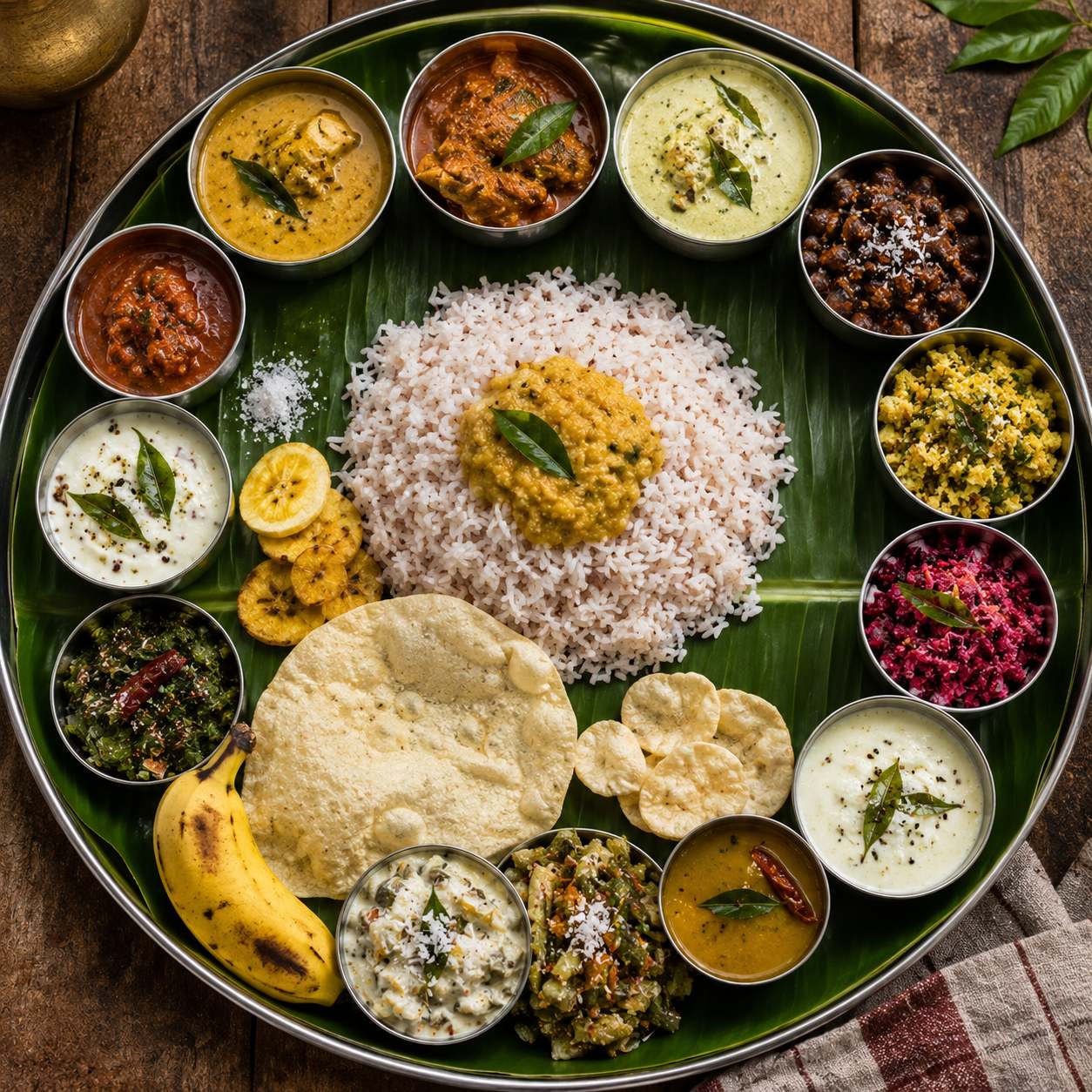
A complete thali representing the full flavour range.
🎉
Festival Foods
When the calendar drives the kitchen
Onam (Sadya)
26 vegetarian dishes on banana leaf — every dish in a specific position, eaten in a specific sequence. The most elaborate vegetarian feast in India.
Eid
Malabar biryani (Kaima rice) and Mappila sweets — the Muslim community's most elaborate celebration.
Christmas
Kerala Christian fruit cake and duck curry — the Syrian Christian celebration food tradition.
Vishu
Vishu kani (first sight of new year) followed by Vishu kanji and specific vegetable preparations.
Thrissur Pooram
Temple festival food — Kerala's most spectacular festival with specific offering traditions.
🌍
Diaspora & Reach
How this cuisine spread beyond its borders
The Kerala diaspora in the Gulf — established since the 1970s oil boom — has made Kerala's food among the most globally distributed. The sadya format has become India's most recognisable elaborate vegetarian feast internationally, served at Onam globally by diaspora communities.
Kerala's filter coffee tradition and specific fish curry vocabulary have found national audiences through tourism and migration. The Kerala hotel format — small affordable restaurants — spread nationally with Keralite workers across India.
Sadya is Kerala's elaborate vegetarian feast — up to 26 dishes on a banana leaf in specific sequence, eaten with the right hand alone. Served at Onam and formal occasions. The sequence moves from pungent through sweet in an order considered the correct way to experience the full meal.
Why does Kerala use coconut oil?
Kerala is the most coconut-cultivated state in India. Coconut oil was historically the most abundant fat and became the defining cooking medium. Its specific flavour and behaviour in cooking shape the entire tradition.