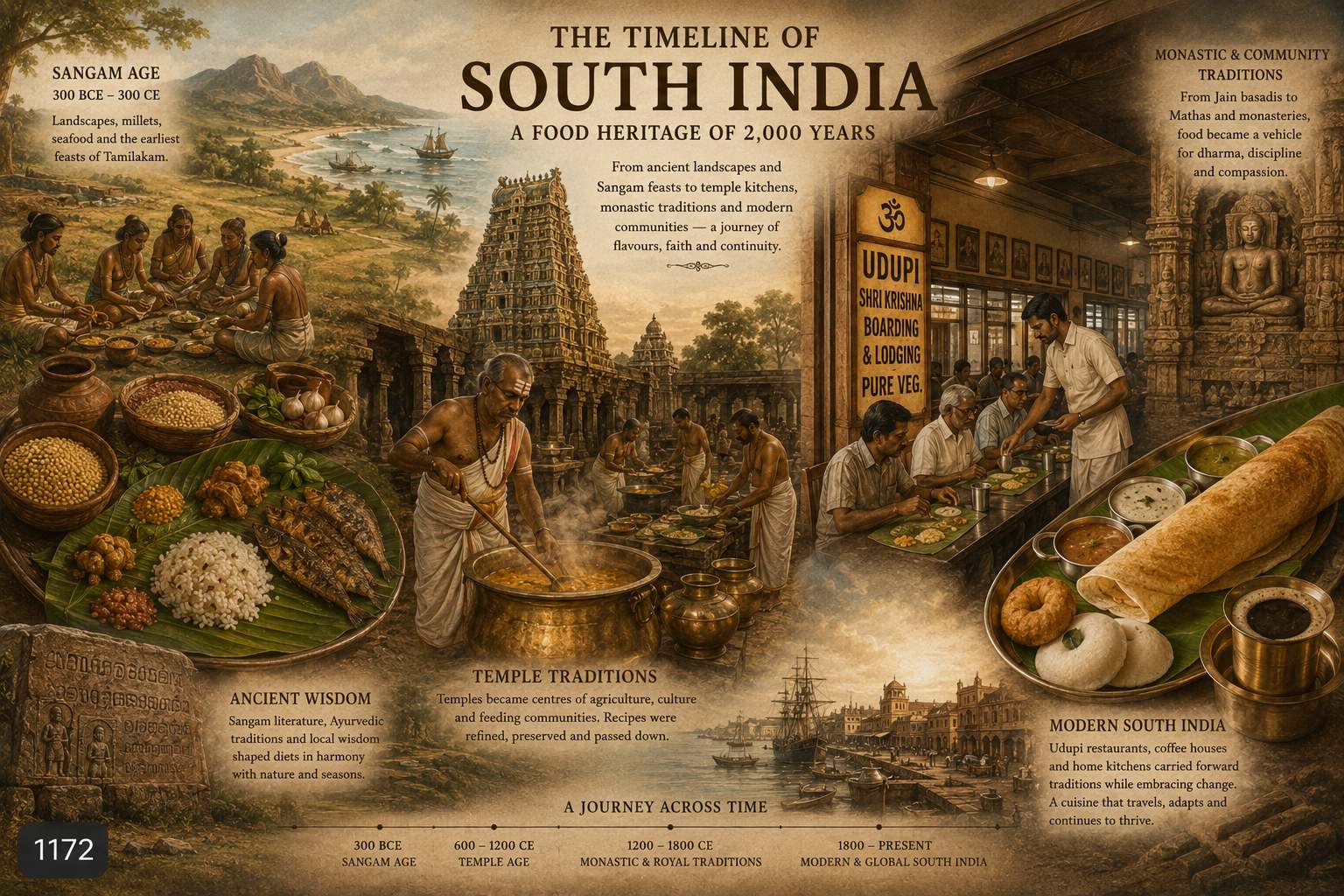
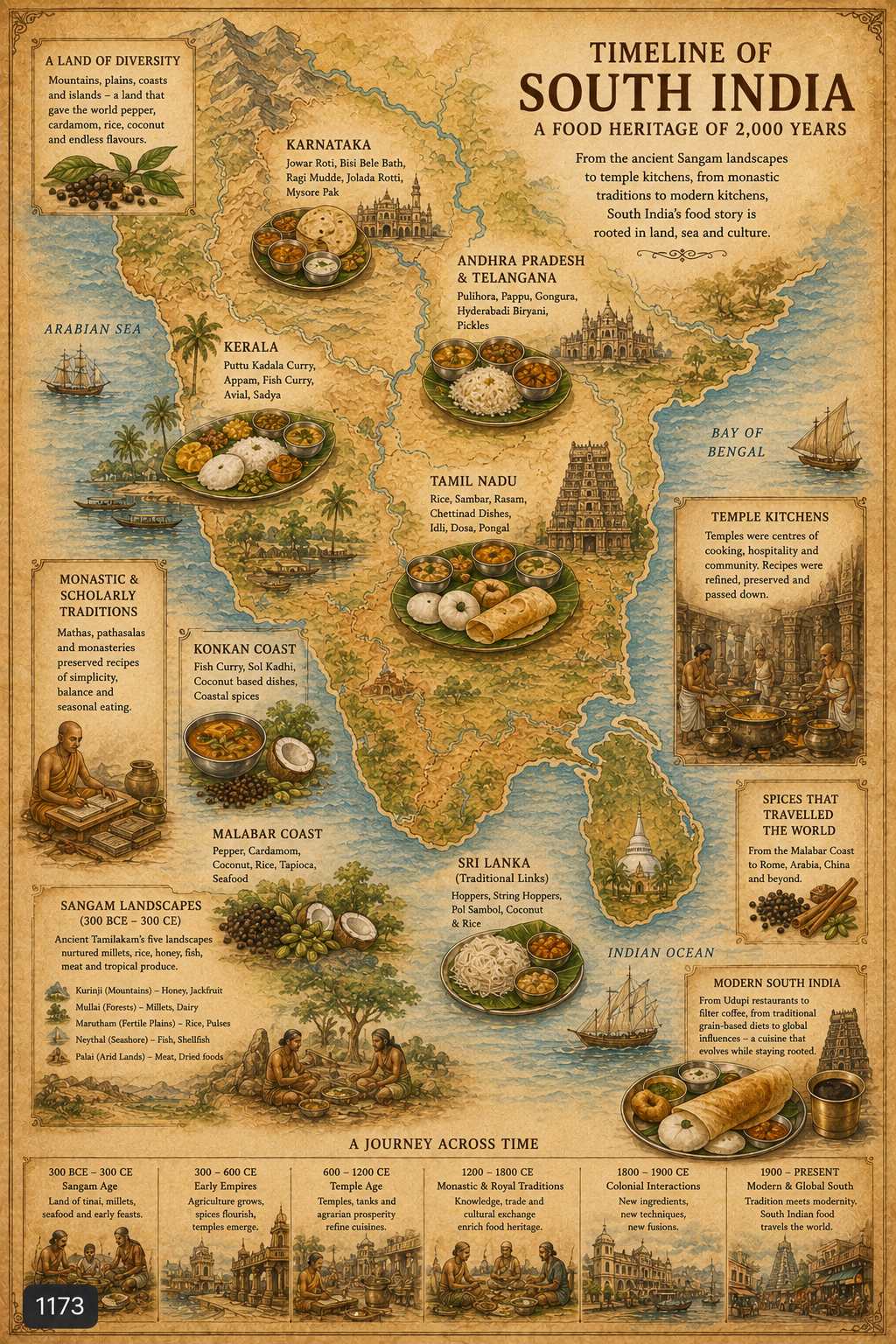
300 BCE-300 CE
Sangam Period — The Five Tinai
Sangam literature classifies the Tamil landscape into five ecological zones (tinai), each with specific food. This ancient framework maps exactly onto modern Tamil Nadu's food geography — an unbroken 2,000-year continuity.
300-900 CE
Pallavas and Early Chola — Temple Food
The great temple construction era in Tamil Nadu. Temple kitchens develop — the tradition of cooking for thousands of pilgrims systematises what becomes the South Indian vegetarian cooking format. Rice and tamarind as the festival food base.
900-1200
Chola Empire — The Spice Trade
The Chola naval empire controls the spice trade routes between Southeast Asia and Arabia. Tamil merchants in Southeast Asia take South Indian food traditions with them — the earliest version of the Tamil diaspora food tradition.
1336-1646
Vijayanagara Empire
The largest Hindu empire in India at its peak. The Portuguese encounter Vijayanagara at its height in the early 16th century — both the chilli and the tomato enter South India through this encounter. The Udupi kingdom is a tributary of Vijayanagara.
1500s-1600s
Portuguese Contact
The chilli arrives (c.1510) and begins its replacement of black pepper as the primary heat source. Cassava (tapioca) introduced — initially as a curiosity, later a staple in Kerala. Goan Catholic food culture begins forming.
1600s-1800s
Nayak Period — Madurai
The Madurai Nayak kings (from Andhra) patronise non-Brahmin food culture. The parotta tradition develops in Madurai — creating the non-Brahmin food identity that contrasts with the Brahmin idli-dosa tradition.
1940s
Udupi Restaurants in Bombay
The Udupi restaurant format is invented in Bombay's Matunga by Udupi Brahmin cooks — the global template for South Indian food. Masala dosa, idli, sambar, coconut chutney become the world's definition of South Indian food.
Present
South Indian Food Global
The Udupi restaurant format exists in every country with significant Indian diaspora. The masala dosa is arguably the world's most internationally recognised Indian vegetarian preparation.