India's second largest state by population — from the Konkan coast's coconut seafood to Vidarbha's bold kala masala, from Mumbai's global street food culture to the Marathwada drought belt's millet tradition. Five food zones, one state.
⏱ 14 min read🗓 Updated June 2026★ State Food Guide
State Food Guide
Maharashtra — From Coast to Deccan Plateau
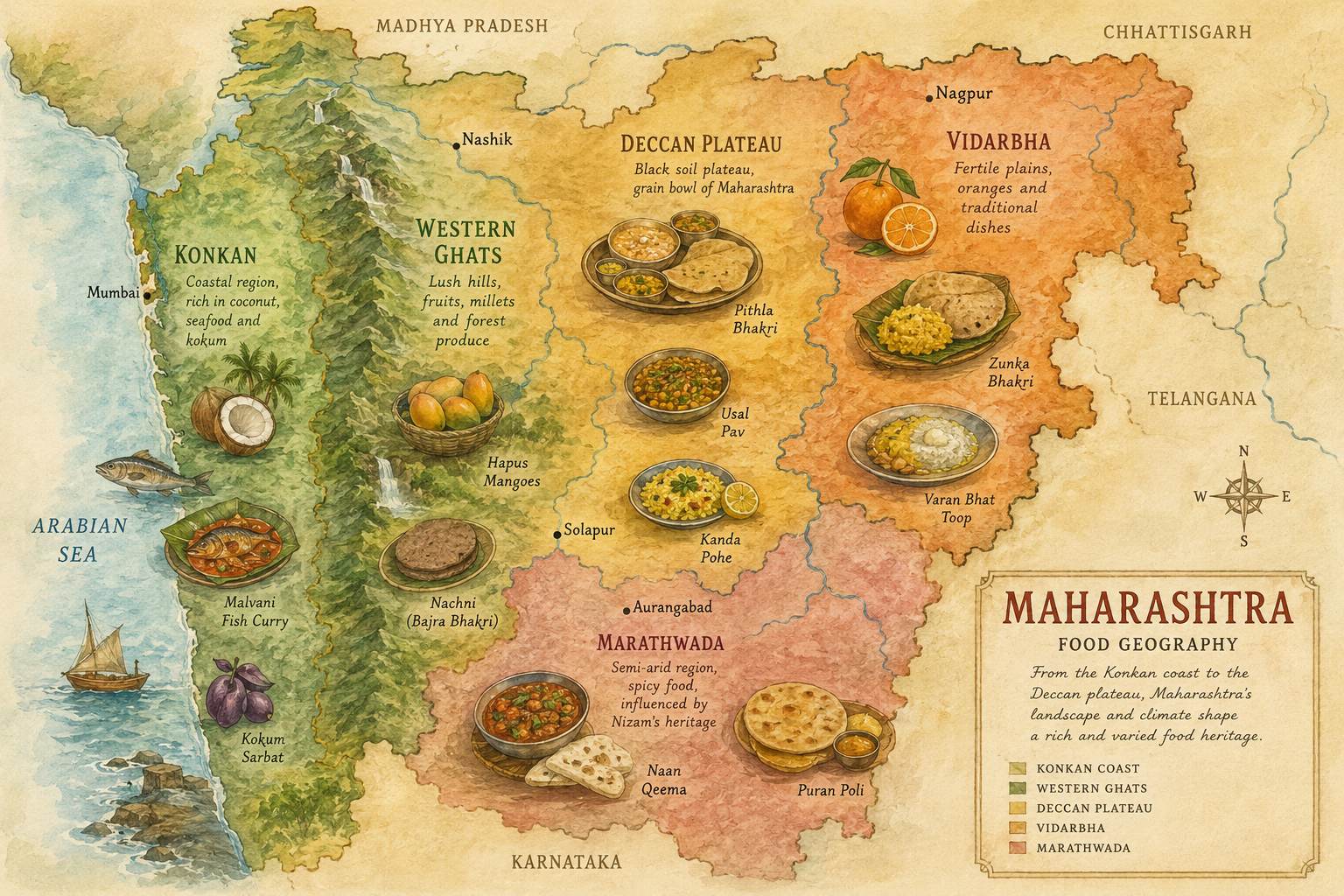
Maharashtra spans from the Arabian Sea coast to the semi-arid Vidarbha plateau — a geographic range of nearly 1,000 kilometres that produces five distinct food zones. The Konkan coast uses fresh coconut and kokum in seafood preparations. The Western Deccan (Pune-Nashik) is the wheat and onion belt. The Marathwada plateau is millet and pulse country. Vidarbha is the dry cotton belt with Nagpur Saoji spicing. And Mumbai is everything at once.
The geographic regions and food zones of Maharashtra Food Guide.
🗺
Geography & Climate
The land that made this food inevitable
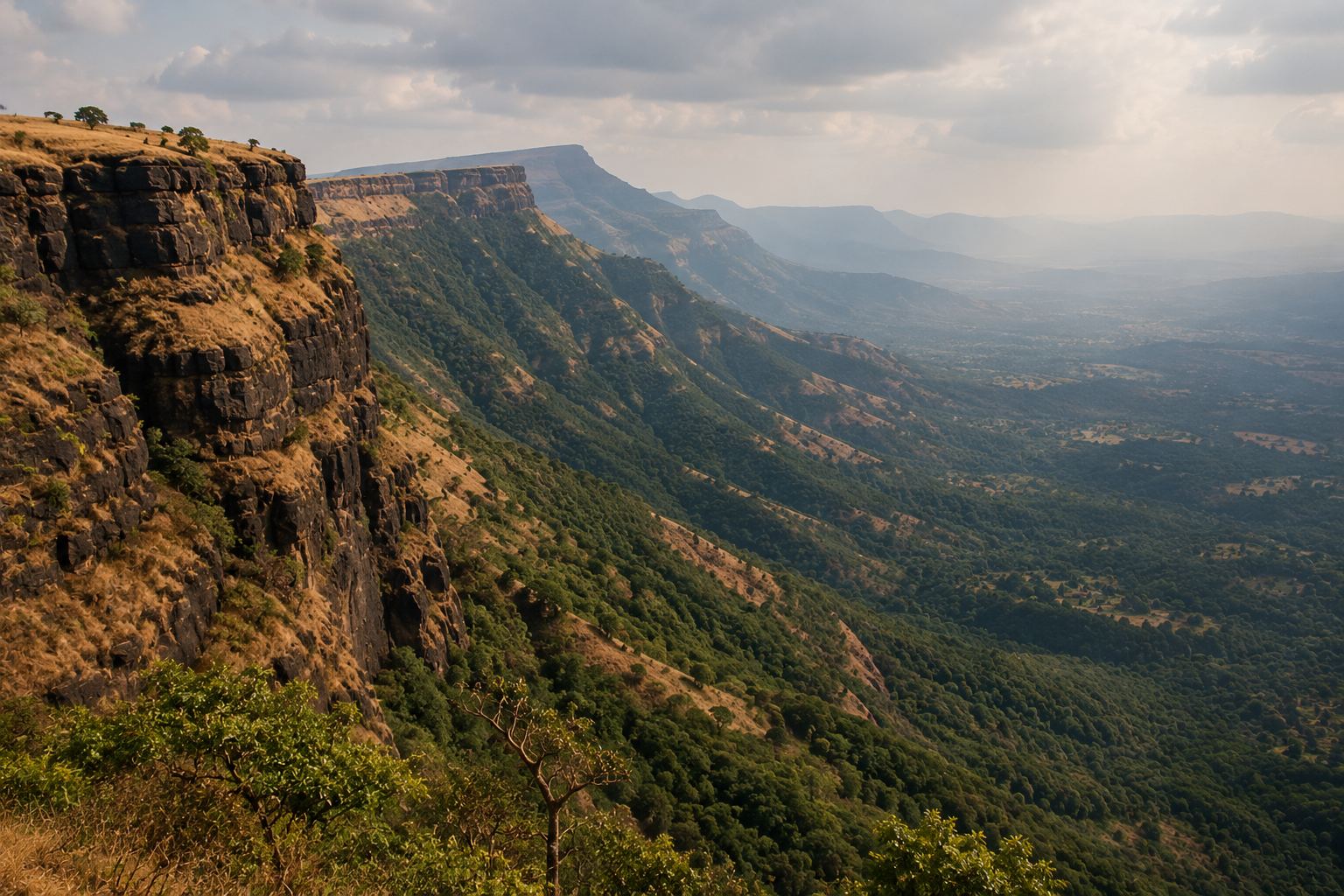
Maharashtra's geography is the Sahyadri (Western Ghats) range that divides the state vertically — the lush, wet Konkan coast to the west, and the rain shadow Deccan plateau to the east. The Konkan receives 3,000mm of monsoon rainfall; parts of Vidarbha receive under 600mm. This divide in rainfall creates entirely different food cultures within a single state: coconut-oil-and-kokum on the wet coast; peanut-and-jowar on the dry interior.
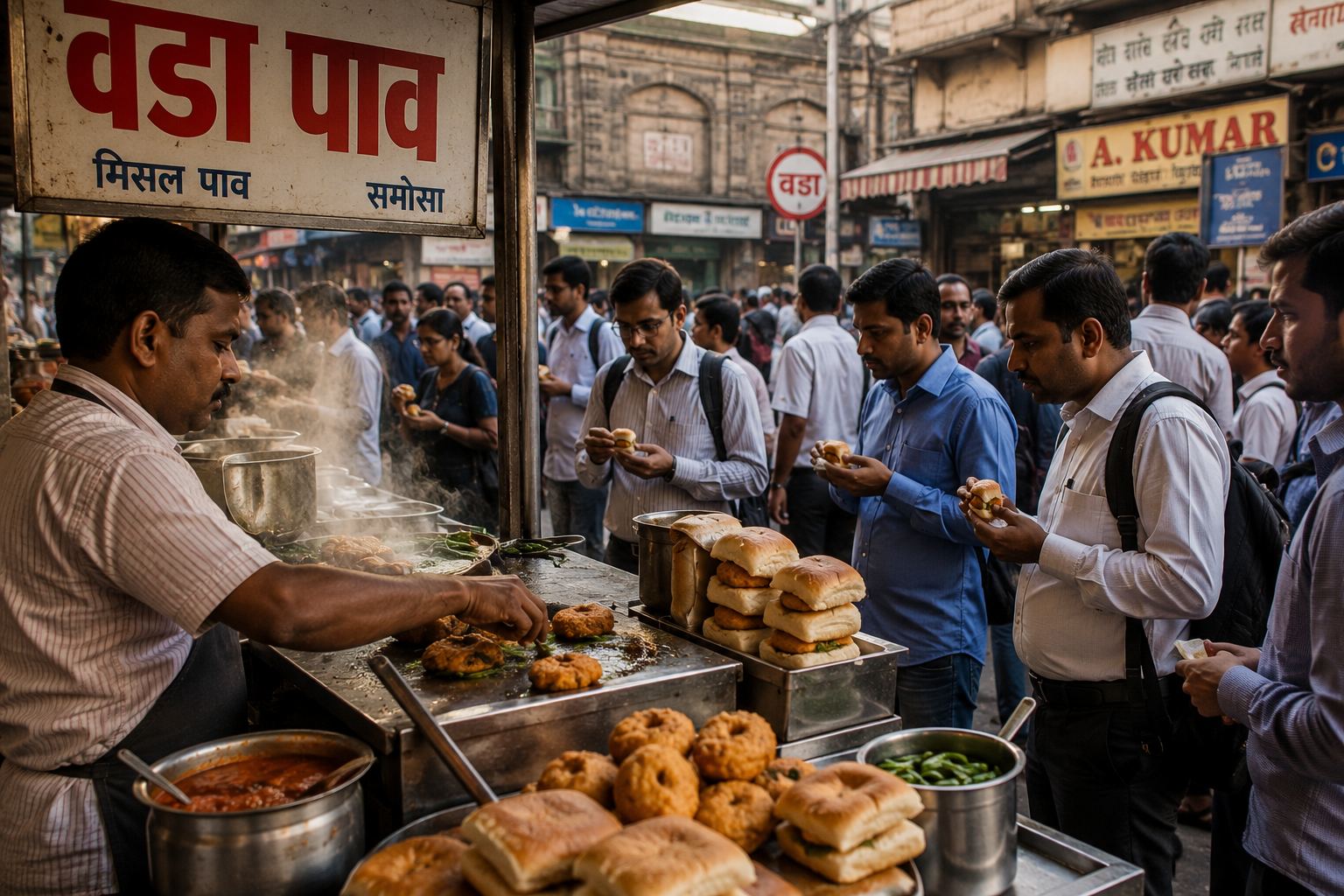
Mumbai is the exception to every food geography rule. As India's commercial capital and the destination for migration from every state, Mumbai's street food culture is a compression of all Indian food traditions into one dense urban environment. The vada pav — a deep-fried potato patty in a bread roll, the city's defining street food — was created in the 1970s and is now considered as emblematic of Mumbai as the Gateway of India.
The Maratha warrior tradition, which built an empire from the Deccan Plateau in the 17th century under Chhatrapati Shivaji Maharaj, produced a specific food culture: bold, sustaining, meat-forward in its non-vegetarian form, and built on the agricultural crops of the semi-arid plateau. The goda masala of Maharashtra — the aromatic sweet spice blend that defines most of the state's cooking — is the culinary expression of this Maratha agricultural tradition.
Vada Pav — Mumbai's Accidental Burger
Vada pav was created in 1971 by Ashok Vaidya at a stall outside Dadar railway station as an affordable, filling snack for mill workers commuting between shifts. A deep-fried spiced potato patty (vada) inside a pau (bread roll) with dry garlic chutney. The timing was perfect: the 1970s textile mill closures displaced thousands of workers who needed the cheapest possible filling food. Vada pav at 25 paise was the answer. The economic necessity of displaced mill workers produced Mumbai's most iconic food — now served from over 20,000 stalls across the city.
The terrain and agricultural landscape that produces the defining ingredients.
🧬
Food DNA
The flavour architecture
Grains and Bread
Jowar (sorghum) — the plateau staple — bhakri consumed throughout non-coastal Maharashtra
Bhakri (sorghum/wheat flatbread) — the daily bread of the semi-arid interior
Pav (bread roll) — the Mumbai-Goa bread introduced by Portuguese — now essential to vada pav and pav bhaji
The Masala Tradition
Goda masala — the aromatic sweet spice blend — coriander, coconut, sesame, star anise
Kala masala — Kolhapur's dark-roasted masala — smoky, hot, complex
Malvani masala — coastal Sindhudurg — different from both goda and kala
Proteins
Fish (Konkan coast) — surmai, pomfret, bombil — the coastal Maharashtra prestige
Mutton — Kolhapuri and interior Maharashtra — tambda rassa as the bold standard
Peanuts — the interior substitute for coastal coconut — in gravies and chutneys
Fats and Souring
Coconut oil (Konkan) — the coastal cooking fat
Peanut oil (interior) — the dry-land fat where coconut doesn't grow
Kokum — the Konkan souring agent — Garcinia indica
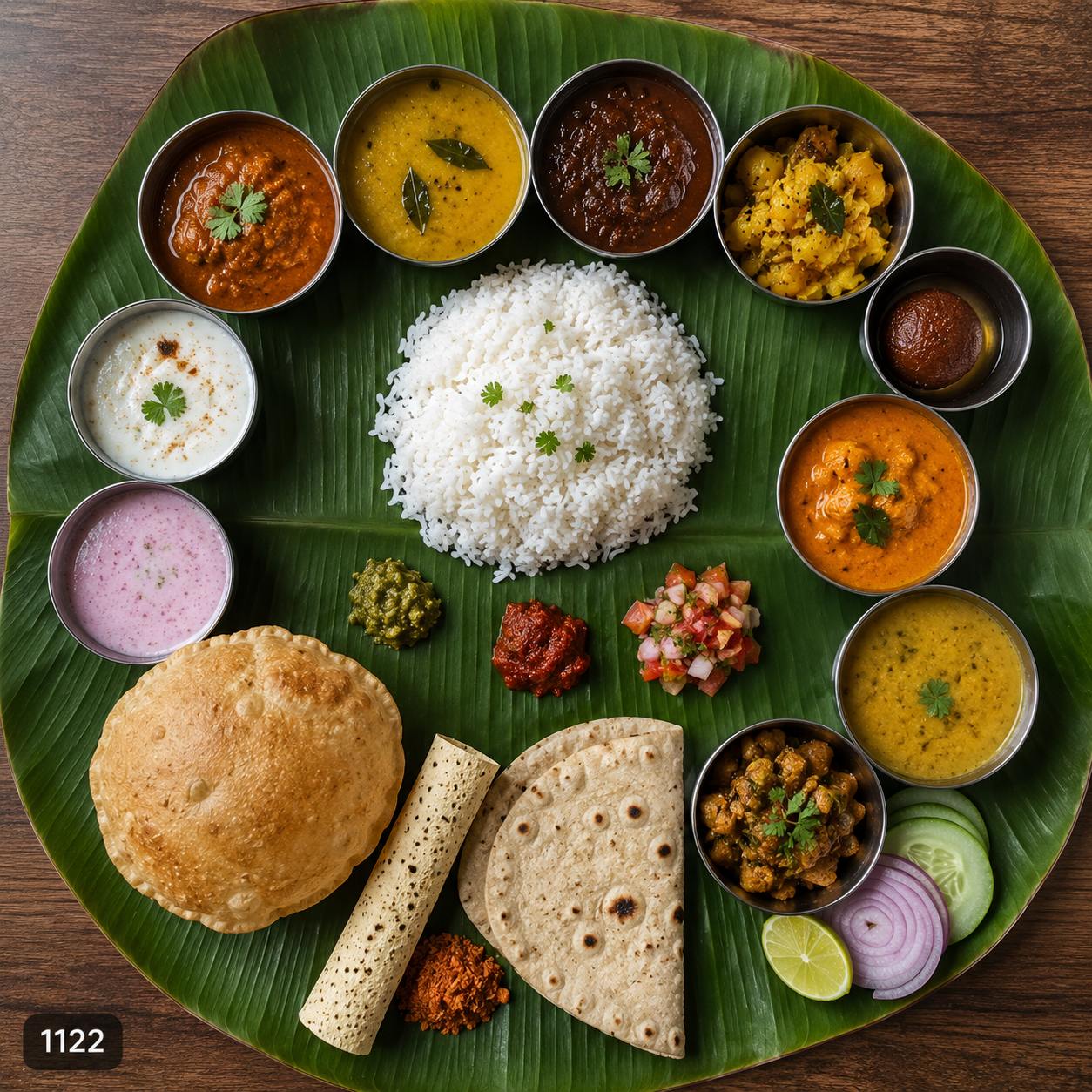
A complete thali representing the full flavour range.
🎉
Festival Foods
When the calendar drives the kitchen
Ganesh Chaturthi
The biggest festival in Maharashtra — modak (steamed rice flour dumplings with coconut-jaggery filling) as the sacred offering to Ganesha. Every household makes modak.
Gudi Padwa (Marathi New Year)
Puran poli (sweet lentil-stuffed flatbread) as the new year meal — the defining Marathi celebration food.
Makar Sankranti
Tilgul (sesame and jaggery sweet) — exchanged as gifts with the phrase 'tilgul ghya, god god bola' (take sesame-jaggery, speak sweetly).
Diwali
Chakli (spiral fried snack), karanji (sweet-filled pastry), and ladoo — the Maharashtra Diwali faraal (festive snack) tradition.
Holi
Puran poli and specific Holi preparations — the spring festival food of Maharashtra.
🌍
Diaspora & Reach
How this cuisine spread beyond its borders
Mumbai's role as India's commercial capital made its food culture a national and international ambassador for Indian food. The dabbawallahs — tiffin delivery workers — supply over 200,000 home-cooked lunches daily to Mumbai offices, maintaining Maharashtra's home cooking tradition within the urban environment.
The Marathi diaspora in Pune, Nagpur, and internationally has maintained food traditions through community organisations. Mumbai's restaurant scene — from the high-end to the street level — exports Maharashtrian food culture nationally through the media and entertainment industries based in the city.
Maharashtra spans five distinct food zones: the Konkan coast (coconut, kokum, seafood), Western Deccan (goda masala, wheat, onions), Marathwada (millet, pulse), Vidarbha (peanut-based interior, Nagpur Saoji spicing), and Mumbai (cosmopolitan compression of all). Each zone has a distinct food vocabulary from the same state.
What is goda masala?
Goda masala is Maharashtra's defining aromatic spice blend — different from North Indian garam masala in using dried coconut, sesame, star anise, and specific dried flower. It produces a sweet, aromatic, complex base that is the foundation of most Maharashtra non-Kolhapuri cooking. 'Goda' means sweet — the masala's character is warming rather than hot.