The chilli is not native to India. It arrived from the Americas via Portuguese traders around 1498-1510. Within 200 years it had replaced black pepper as India's primary heat source. One of the fastest and most complete ingredient adoptions in culinary history.
⏱ 12 min read🗓 Updated June 2026★ Food Story
Before the Chilli
What India used for heat before 1500
Before the chilli arrived, India's heat came from black pepper (Piper nigrum), long pepper (Piper longum), ginger, and asafoetida. The Arthashastra (4th century BCE) and Ayurvedic texts describe these as the primary pungent agents. The original black pepper of the Kerala Ghats was one of the most valuable commodities in world trade — the spice that drove the Europeans to find a sea route to India. When Vasco da Gama arrived in Calicut in 1498, the black pepper trade was what he came for.
The chilli arrived with the Portuguese who came after Vasco da Gama — a Capsicum annuum or Capsicum frutescens from the Americas, which had reached Portugal through the Spanish colonial network. The Portuguese planted it in their coastal settlements (Goa, Calicut, Cochin) and it spread inland with remarkable speed.
From Portuguese coastal settlements to every Indian kitchen within 200 years — one of the fastest culinary adoptions in history.
The Conquest
How a foreign plant replaced a native one
Pre-1500
Before: Black Pepper Era
Heat from black pepper, long pepper, ginger. Black pepper so valuable it drove the European spice trade. The entire global exploration era was motivated partly by pepper.
1498-1510
Portuguese Arrival
Vasco da Gama lands in Calicut. Portuguese establish coastal settlements. The chilli arrives — initially as a curiosity, then as a garden crop.
1530s-1600s
Coastal Adoption
Goa, the Konkan coast, and Kerala adopt the chilli first. The Portuguese-Indian communities of the coast begin cooking with it. Goan vindaloo — originally vinegar-and-garlic pork — becomes vinegar-and-chilli.
1600s-1700s
The Interior Spread
Trade routes carry the chilli inland. By 1700 it has reached most of India. The speed is remarkable — no other foreign plant adopted into Indian cooking spread this fast.
1700s-1800s
Regional Adaptation
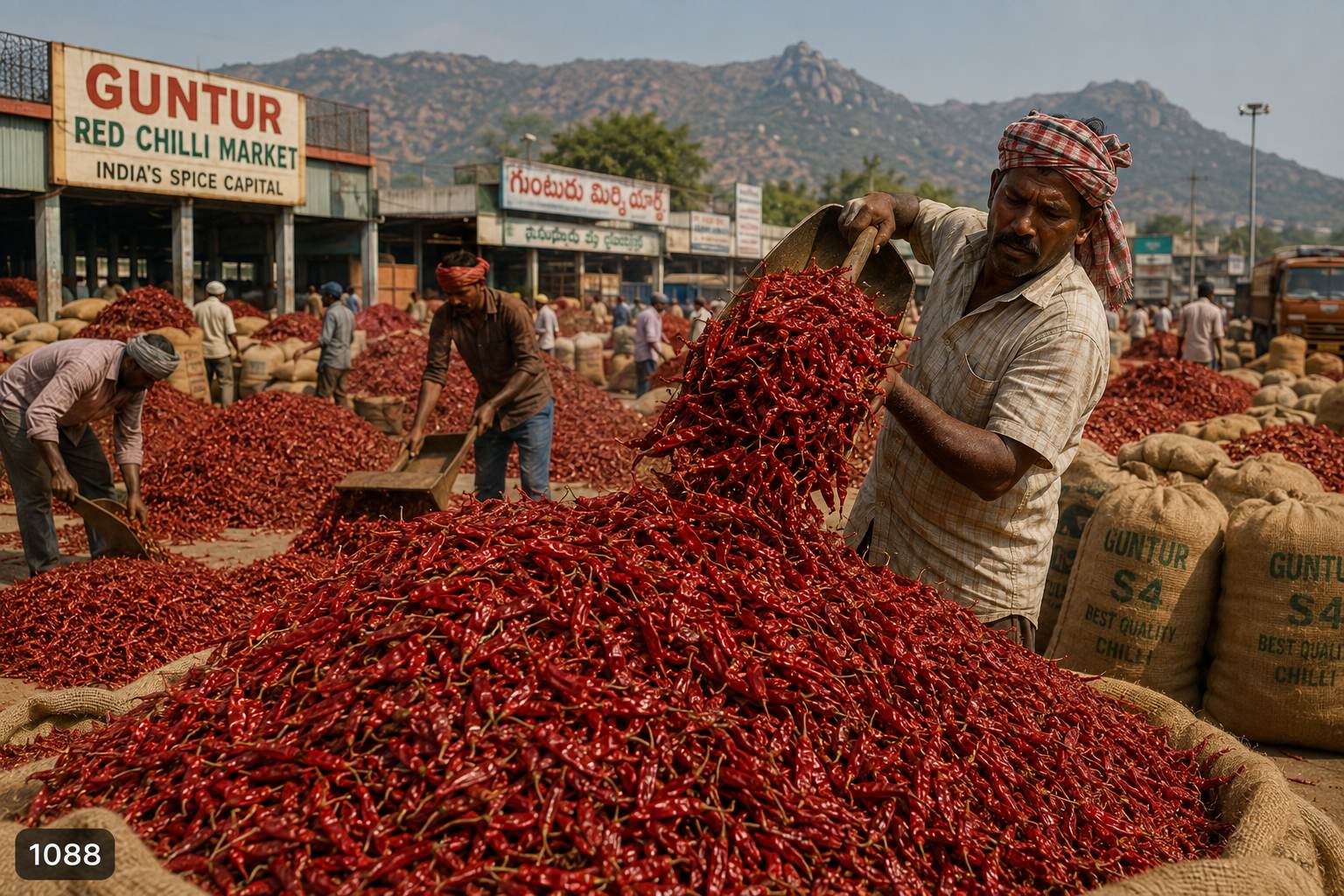
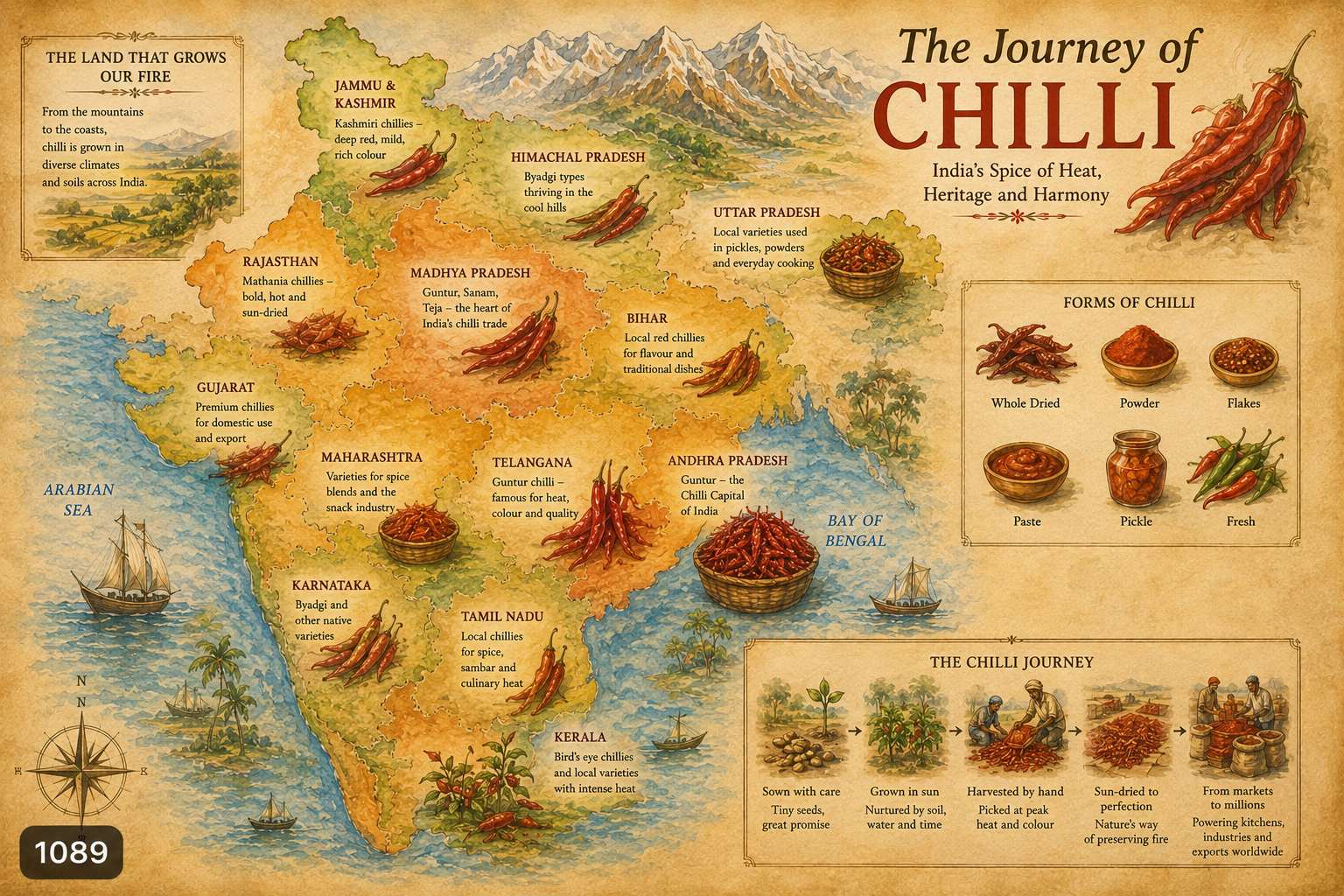
Different regions select different chilli varieties for different characters. Guntur (Andhra) for heat; Kashmiri for colour; Byadgi (Karnataka) for colour and mild heat; Mathania (Rajasthan) for colour and moderate heat.
Present
The Chilli is Now Indian
India is the world's largest producer and consumer of chillies. The chilli has been in India for 500 years — longer than many 'traditional' Indian preparations. The black pepper it largely displaced now commands premium prices as the original Indian spice.
Why Did the Chilli Spread So Fast?
The chilli's adoption into Indian cooking was one of the fastest ingredient adoptions in culinary history. The reasons are practical: chillies grow easily in India's climate (they thrive in the same conditions as many native crops); they are cheaper to produce than black pepper (which requires specific growing conditions and complex harvesting); and they provide more consistent, controllable heat. Black pepper heat is warm and diffuse; chilli heat is sharp and immediate — and in cooking, the immediate heat was more useful for certain preparations. The economics and the culinary utility both favoured the chilli.
No. The chilli is native to the Americas and arrived in India via Portuguese traders around 1498-1510, after Vasco da Gama's voyage established the sea route. Within 200 years it had replaced black pepper as India's primary heat source — one of the fastest ingredient adoptions in culinary history.
What did India use for heat before the chilli?
Before 1500, India's heat came from black pepper (Piper nigrum), long pepper (Piper longum), ginger, and asafoetida. Black pepper was so valuable it drove European exploration — the entire age of discovery was partly motivated by the pepper trade. The chilli largely displaced black pepper within 200 years of its arrival.