Christian Food in India — The Syrian and Goan Traditions
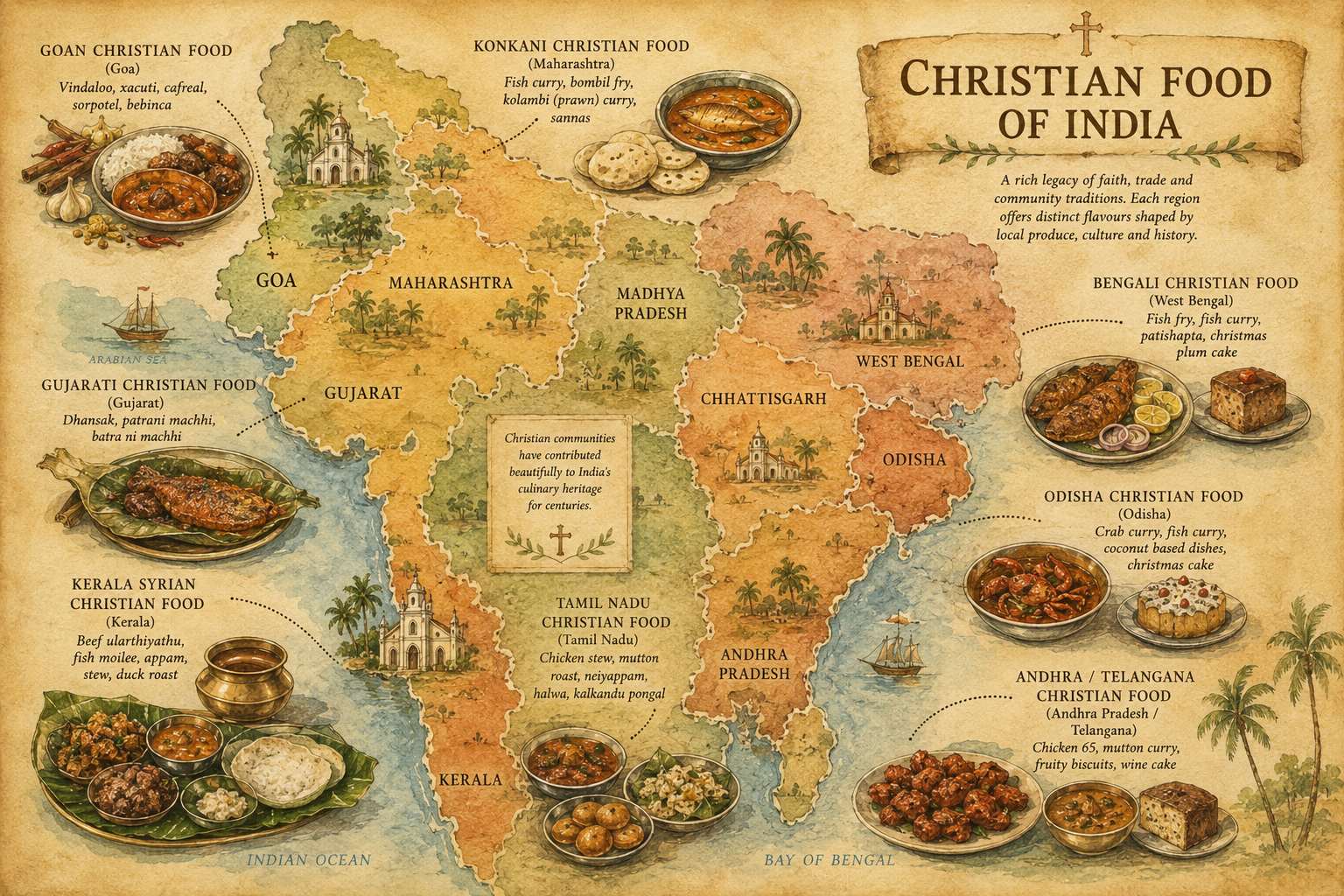
India has 30+ million Christians representing some of the world's oldest Christian communities. The Syrian Christians of Kerala (possibly 52 CE) and the Goan Catholics (16th century) developed food traditions as distinct from each other as from mainstream Hinduism or Islam.
⏱ 11 min read🗓 Updated June 2026★ Food Story
Two Major Traditions
India's Christian food is not one thing
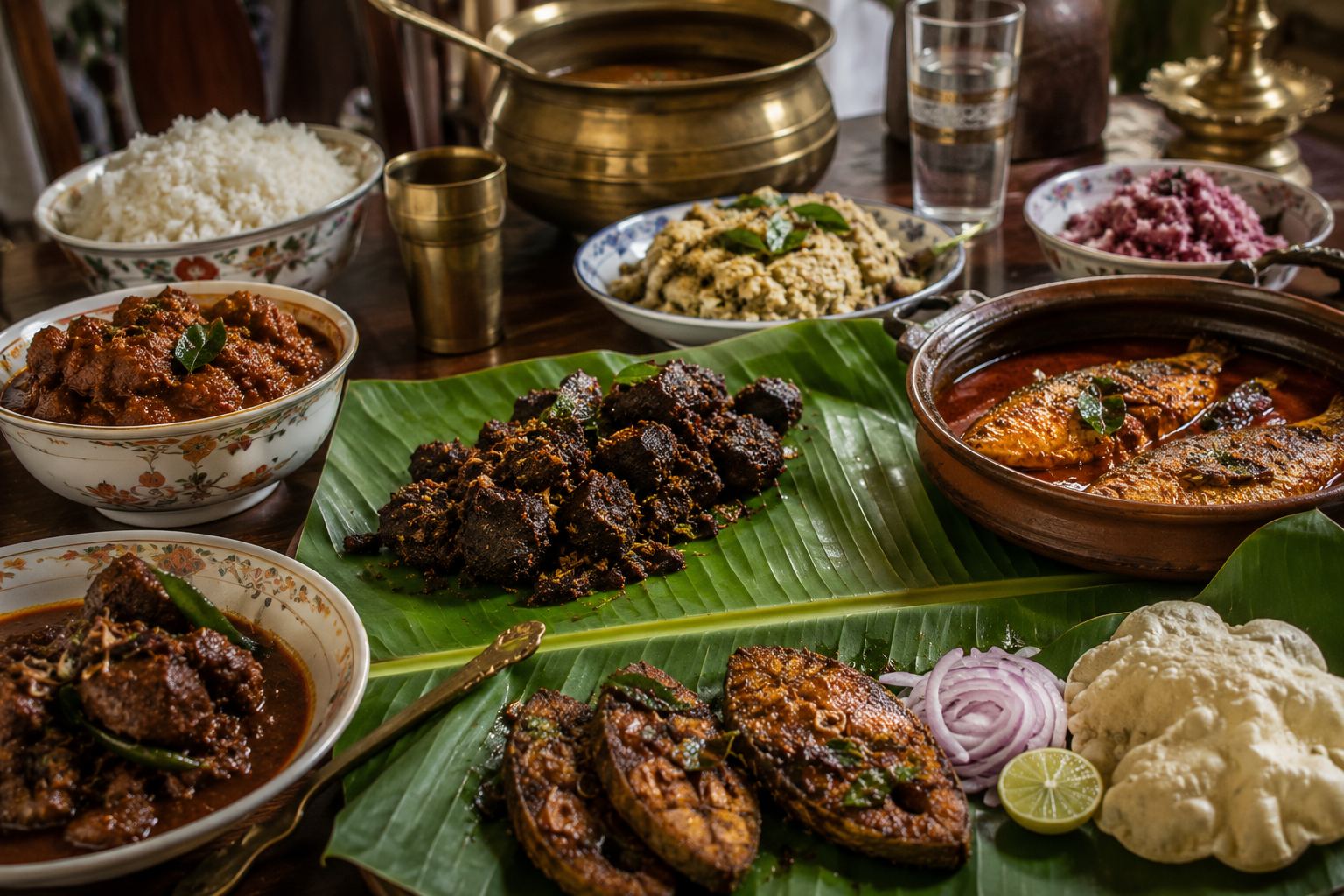
India has two historically distinct Christian food traditions that are as different from each other as they are from non-Christian Indian food. The Syrian Christians of Kerala trace their community to the apostle Thomas in 52 CE — making them among the world's oldest Christians, predating European Christianity. Their food tradition includes beef (without the taboo that exists in most of Hindu India) and a specific fish curry tradition built on the Kerala coast's specific ecology. The Goan Catholics developed their distinct tradition under Portuguese influence from the 16th century — pork as the prestige meat (in a Hindu-majority territory), vinegar as a souring agent, and the specific bafat masala that exists nowhere else.
Syrian Christian Kerala and Goan Catholic traditions — same religion, entirely different food cultures.
Vindaloo — A Portuguese Dish That Became Indian
Vindaloo is often assumed to be an ancient Goan preparation. It is, in fact, a direct adaptation of the Portuguese carne de vinha d'alhos — meat marinated in wine vinegar and garlic. The Portuguese dish arrived in Goa in the 16th century; the Goan Catholics adapted it with local ingredients (replacing wine vinegar with toddy vinegar and later palm vinegar, adding Kashmiri chillies for colour). The word vindaloo is a corruption of vinha d'alhos (wine and garlic). The dish is Portuguese-origin, Goan-adapted, and is now considered the global archetype of a hot Indian curry — which it is, but one whose origin is a Portuguese wine-and-garlic marinade.
The Northeast Indian Christian communities — the Naga, Mizo, Meitei Christian, and others — represent a third Christian food tradition entirely: fermented bamboo, smoked pork, specific tribal food traditions baptised rather than replaced by Christianity. The church calendar provides the festival structure but the specific food remains the specific tribal tradition.
What is special about Kerala's Syrian Christian food?
Kerala's Syrian Christians trace their community to 52 CE — among the world's oldest Christians. Their food includes beef without the Hindu taboo (producing the specific beef ularthiyathu and black pepper curry traditions), and a specific fish curry tradition built on Kerala's coastal ecology. The community predate Portuguese Christianity in India by 1,500 years.
What is vindaloo originally?
Vindaloo is a direct adaptation of the Portuguese carne de vinha d'alhos — meat marinated in wine vinegar and garlic. The Portuguese brought it to Goa in the 16th century; Goan Catholics adapted it with toddy vinegar and Kashmiri chillies. The word vindaloo is a corruption of vinha d'alhos (wine and garlic). It is Portuguese-origin, Goan-adapted, and now the global archetype of a hot Indian curry.