Monsoon and Indian Food — How Rain Defines What India Eats
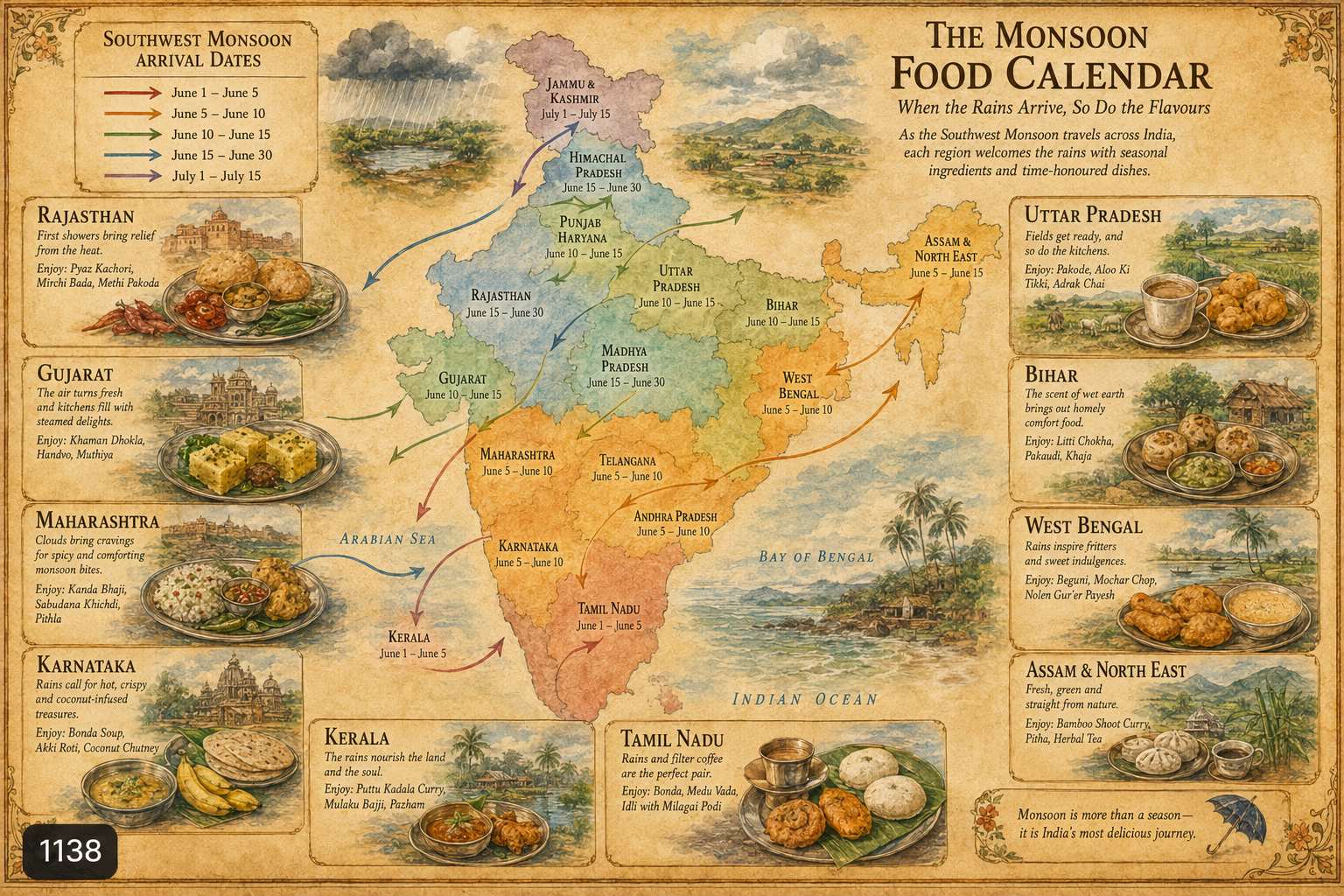
The southwest monsoon arrives in Kerala in early June and sweeps north and east across India. It delivers 80% of India's annual rainfall in 4 months. The monsoon does not just bring rain — it brings a specific food season.
⏱ 12 min read🗓 Updated June 2026★ Food Story
The Arrival
When the monsoon lands — what immediately changes
The southwest monsoon arrives in Kerala around June 1 — then sweeps north and east across India over the next 4-6 weeks. The arrival is not gradual: it announces itself with specific atmospheric conditions (the petrichor, the specific humid-electrical smell of rain on dry earth) and specific food responses. The first rains trigger the planting season; specific monsoon fish begin moving differently; specific green vegetables appear; the street food changes.
How the monsoon's progression across India changes what each region eats month by month.
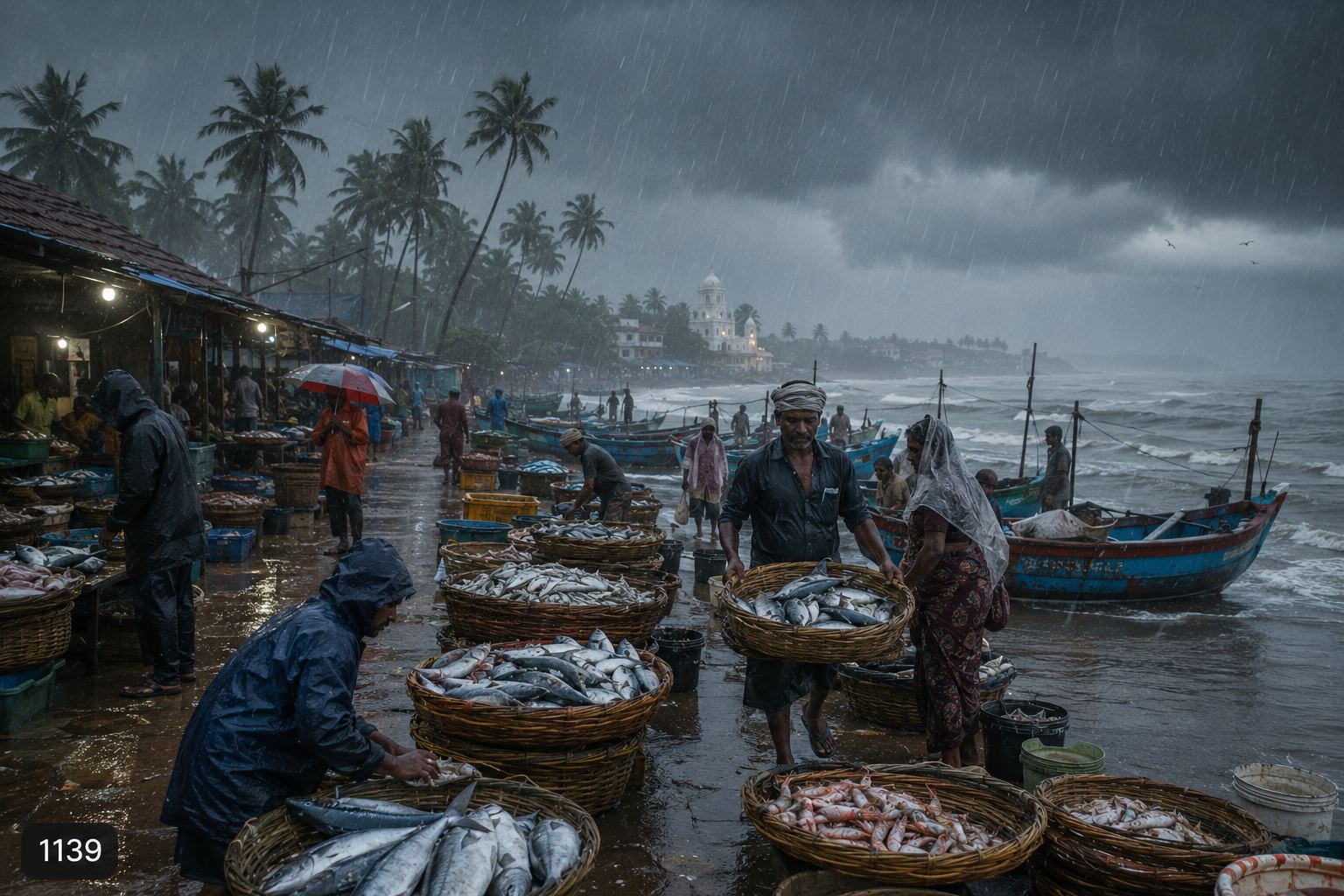
The monsoon food calendar is one of the most complex and regionally differentiated in the world. In Kerala, the Malabar coast fish begin their monsoon migration and the specific monsoon fish (sardine, mackerel) appear in abundance. In Maharashtra, the Alphonso mango season ends as the monsoon begins — the rains that end the mangoes bring the kokum season, the turmeric harvest, and the specific rains-arrived street food (bhutta — monsoon corn, roasted over coal). In Bengal, the hilsa begins its monsoon migration upriver — the single most eagerly anticipated seasonal food event in India.
The Hilsa Migration — Bengal's Monsoon Festival
The Bangladeshi and West Bengali fishing communities track the hilsa (Tenualosa ilisha) migration with a precision that rivals modern meteorology. The fish migrates from the Bay of Bengal into the river system to spawn — ascending the Padma, Ganges, and Brahmaputra against the monsoon currents. The fatter the river (the stronger the monsoon), the more the hilsa migrates, the fatter the fish. Good monsoon = good hilsa. Poor monsoon = poor hilsa. The monsoon's agricultural significance and the hilsa's cultural significance converge in the same annual event. The relationship between rain and fish is so precise that hilsa prices in Kolkata markets are a reliable monsoon indicator.
June
Monsoon arrives — Kerala
Sardine and mackerel season. Bhutta (corn) appears. The specific Kerala Onam preparation begins its 4-month countdown.
July
Monsoon reaches North India
Hilsa migration begins. Karhi-pakora in North India (the monsoon comfort food). Bhutta everywhere.
August
Peak monsoon
Peak hilsa migration. Janamashtami food traditions. Lentil-based monsoon comfort food across North India.
September
Monsoon retreats from North
Navratri fasting begins. Pomegranate season. The post-monsoon harvest preparations.
October
Monsoon exits India
Dasara and Diwali — the first post-monsoon celebration foods. Winter crops planted.
The southwest monsoon delivers 80% of India's annual rainfall in 4 months (June-September) and determines the entire agricultural calendar. Specific foods are directly tied to monsoon timing: Kerala sardines and mackerel begin their season with the first rains; Bengal's hilsa migration tracks the monsoon river height; Maharashtra's bhutta (monsoon corn) appears with the first rains. The monsoon is the food calendar.
What is monsoon food in India?
Monsoon food varies by region. In Bengal: fresh hilsa from the river migration. In Maharashtra: bhutta (roasted corn), karhi-pakora. In Kerala: specific monsoon fish (sardine, mackerel). In North India: karhi, pakora, and specific lentil-based comfort food. The specific monsoon fish and monsoon vegetables that appear with the first rains are the most direct monsoon food expressions.