Kolkata — The Food City That Argues About Everything
The city where food is argument, argument is identity, and identity is the question of whose puchka is real. The Bengal sweet tradition. The Mughlai paratha at 2am. The hilsa debate that never ends.
⏱ 13 min read🗓 Updated June 2026★ City Food Guide
City Food Guide
Kolkata — The Food City That Argues About Everything
Kolkata is the city where food is a form of intellectual activity. The adda (the Bengali tradition of extended conversation in tea shops and street corners) is as much about food as about politics and literature. The question of which preparation is authentic, which vendor is the original, which hilsa is superior — these are not trivial questions in Kolkata. They are the substance of daily cultural life.
Colonial Calcutta was the capital of British India until 1911, and the city's food culture reflects that cosmopolitan history: Armenian merchants, Chinese traders, British civil servants, and the Bengali intellectual elite all left food traces that remain distinct. The Chinese community of Tangra (Kolkata's Chinatown) developed a specifically Kolkata-Chinese food tradition — Hakka noodles, chilli chicken, Manchurian — that is different from Chinese food anywhere else and is now a nationally popular food category.
Kolkata Chinese — A Cuisine That Exists Nowhere Else
The Chinese community that settled in Kolkata from the early 19th century developed a food tradition that adapted Chinese cooking techniques to Indian spices and Indian ingredients. Chilli chicken — the most widely ordered 'Chinese' dish in India — was invented in Kolkata by Nelson Wang at a Chinese restaurant in the 1970s. It is neither Chinese nor Indian in any traditional sense — it is Kolkata Chinese. The entire Indo-Chinese cuisine category (Manchurian, Hakka noodles, chilli paneer) that now appears on menus across India was invented in Kolkata's Tangra neighbourhood.
The defining street food culture.
🥘
Street Food
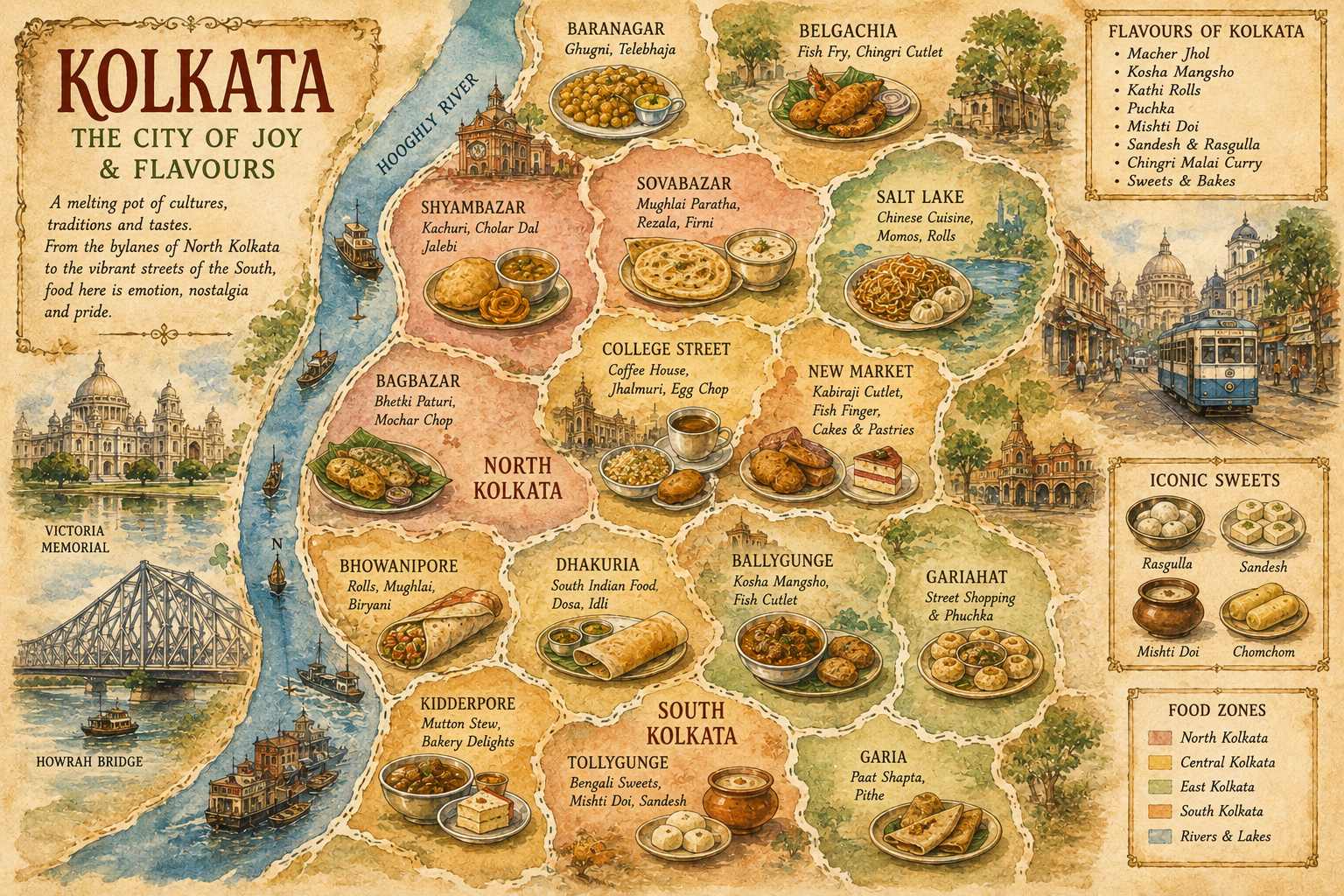
The preparations you eat standing up
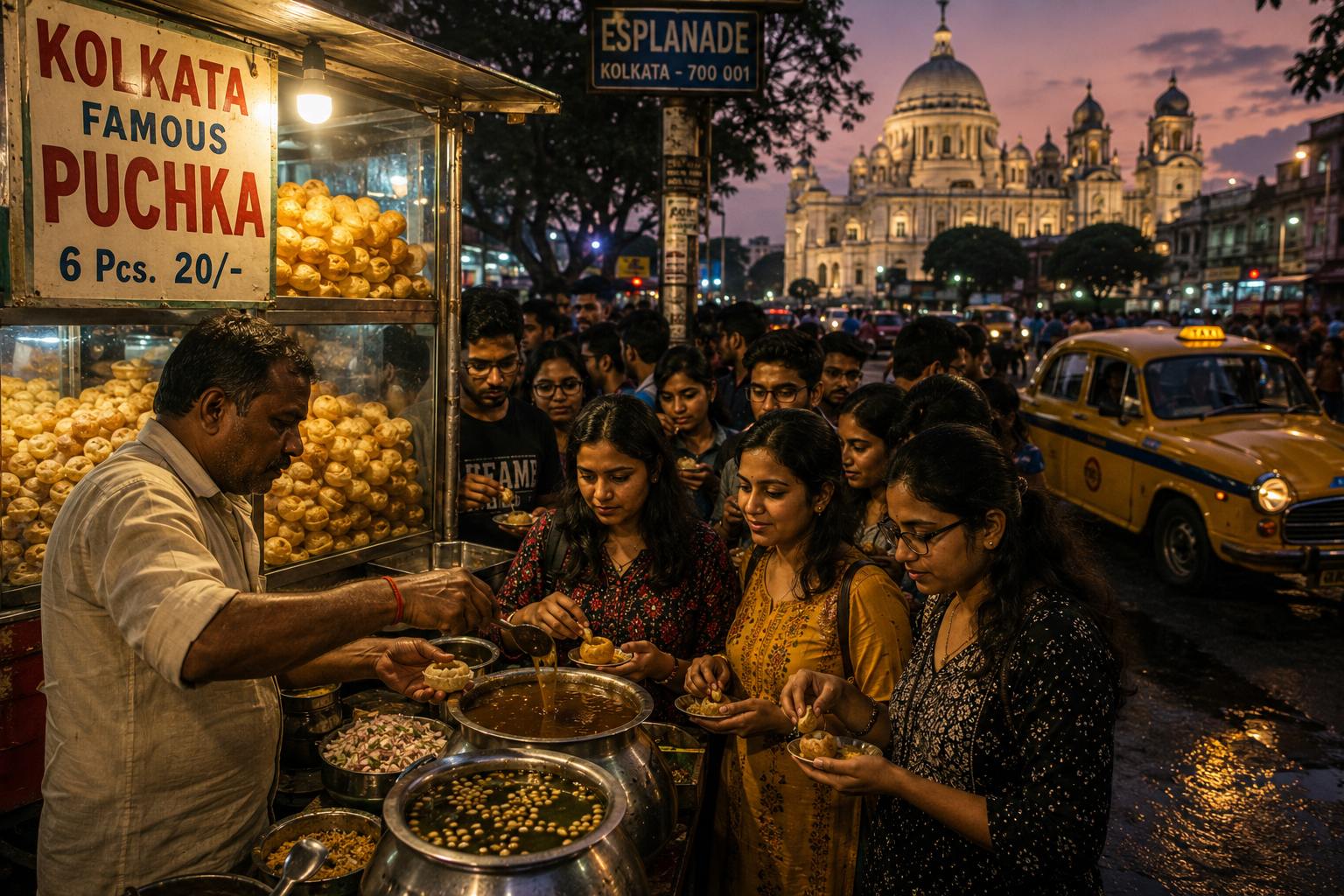
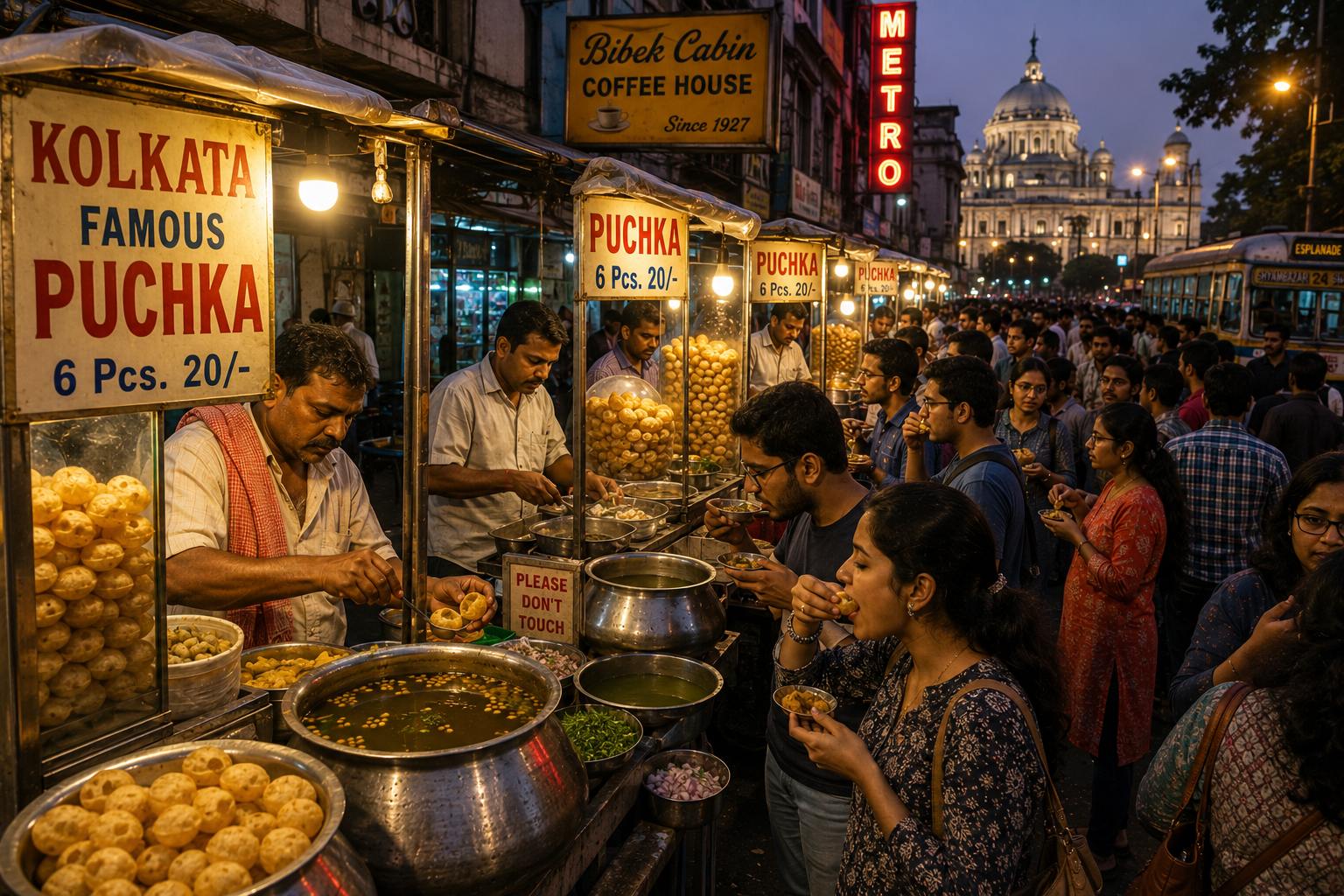
Puchka
Kolkata's version of gol gappa — smaller, crispier, with a more sour tamarind water. The subject of the most heated Indian food argument.
Kathi Roll
Egg-coated paratha wrapped around kebab filling — invented at Nizam's restaurant, 1932. Now a national category.
Mughlai Paratha
Egg-stuffed layered flatbread, deep-fried — the most specific Kolkata non-street food preparation.
Jhalmuri
Puffed rice with mustard oil, onion, green chilli, and spices — the cheapest and most democratic Kolkata street food.
Mishti Doi
Sweetened yoghurt set in terracotta — the Bengali specific sweet that is also a standard street purchase.
Biryani with Potato
Kolkata biryani has potato — the Nawab of Awadh's exile contribution. No argument accepted.
🍽
Restaurant Culture
How this city eats out
Kolkata's restaurant culture ranges from the old establishment (Peter Cat, Flury's, Mocambo — the European-influenced restaurants from colonial times) to the sweet shops (Bhim Chandra Nag, Ganguram, KC Das for rasgulla) to the Muslim restaurants of the Park Circus and Metiabruz areas. The city does not have a single dominant new-wave restaurant scene — its food conservatism is a point of pride.
🌍
Diaspora
How this city's food travelled
The Bengali diaspora in Delhi, Mumbai, and the major Indian cities established Bengali restaurants that introduced the sweet tradition and the fish culture to non-Bengali audiences. The kathi roll format has spread nationally as a fast food category. Indo-Chinese (Kolkata Chinese) food is now the second most popular cuisine in India after North Indian food.
Yes — significantly. Kolkata puchka uses a smaller, crispier shell than Delhi gol gappa. The filling uses spiced mashed potato. The water (pani) is different — Kolkata's uses tamarind with more sourness and less mint. The size, the texture, and the specific water flavour are all different. This is the most heated regional food argument in India and no resolution is acceptable to either side.
What is the kathi roll?
The kathi roll was invented at Nizam's restaurant on Kolkata's New Market area in 1932 — an egg-coated paratha wrapped around a kebab filling, creating a portable meal. It is now a national food category (kathi roll chains exist across India) but the Kolkata original remains the standard against which all versions are measured.