The Ganges-Brahmaputra delta produces 700 freshwater fish species. The Bengal coast opens onto the Bay of Bengal. And the Bengali community built its entire cultural identity around fish — more thoroughly than any other fish-eating culture in India. Here is why.
⏱ 12 min read🗓 Updated June 2026★ Why This
The Geography
The delta that made fish inevitable
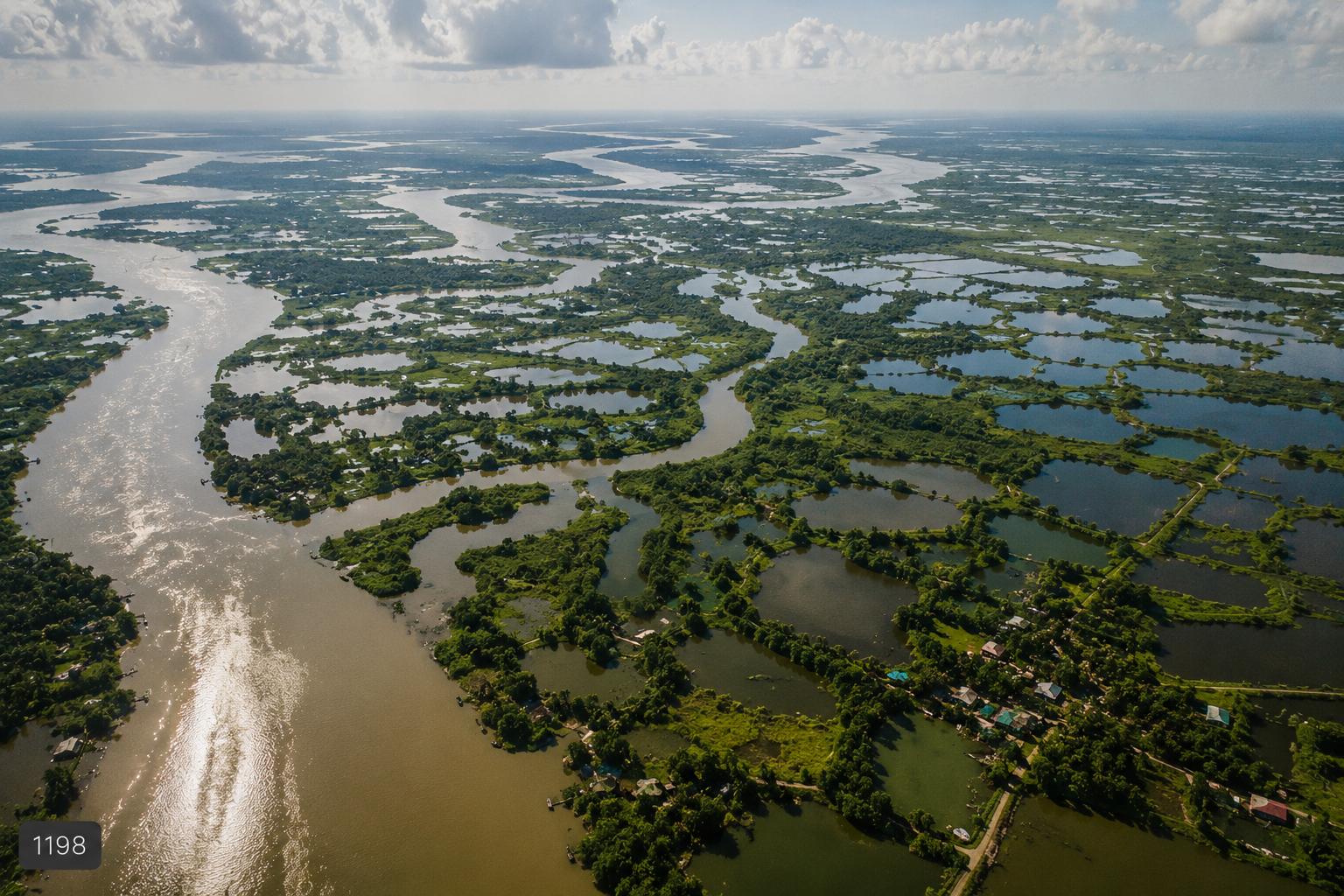
The Bengal delta is the world's largest river delta — the combined outflow of the Ganges, Brahmaputra, and Meghna river systems across a 350-kilometre front. This delta ecology produces approximately 700 species of freshwater fish plus the coastal species of the Bay of Bengal. In no other region of India is the fish supply so abundant, so diverse, and so accessible to so many communities simultaneously. Fish was not a luxury in Bengal — it was the default protein of an ecology that produced it in extraordinary quantities.
The jheels (wetlands), the beel (oxbow lakes), the nadi (rivers), and the pukur (village ponds) that cover the Bengal landscape each produce specific fish at specific seasons. The annual flood cycle replenishes the ponds and wetlands with fish fry from the main rivers. The result: every village in rural Bengal had direct access to fish as a primary food source throughout recorded history — something no other Indian state can claim with equal certainty.
The world's largest river delta — the geography that made fish Bengal's defining food.
The Cultural Construction
How fish became identity, not just food
The Bengali relationship with fish goes beyond nutrition. The Bengali term for fish-eating community is machhe-bhate Bangali — "the Bengali who eats fish and rice" — which is simultaneously a description of diet and a statement of identity. The Brahmin vegetarian tradition that is powerful in other parts of India never achieved the same dominance in Bengal because fish was available everywhere and defined social normalcy rather than social distinction.
The Ilish as Religion
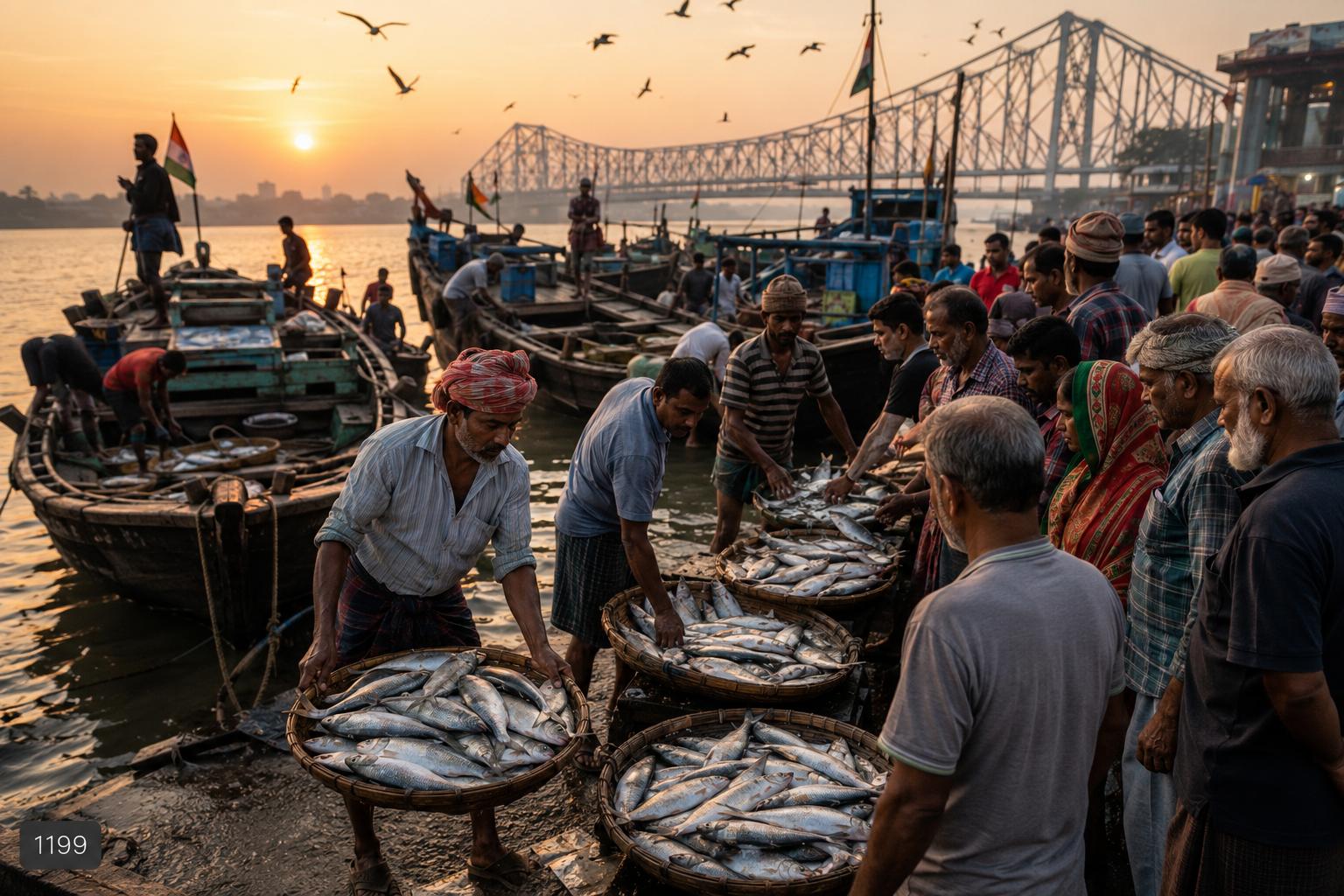
The hilsa (Tenualosa ilisha) migrates from the Bay of Bengal into the delta rivers during the monsoon to spawn. At its fattest, in the Padma and Ganges monsoon currents, it is the most celebrated fish in India. The Bengali relationship with the hilsa is the closest thing to a secular religion around a single food item anywhere in the world. Poets write about it. Families argue about which river's hilsa is superior (Padma vs Ganges — the Ghoti-Bangal argument). Prices spike 10x when the season peaks. The fish is worshipped by a people who would reject the word worship.
The Bengali linguistic evidence is striking: Bengalis have approximately 700 words for different types of fish preparation methods — many of them for the same fish prepared in different ways at different stages of its lifecycle. The jhol (thin curry), the jhaal (sharp and hot), the kalia (rich and reduced), the bhapa (steamed), the paturi (leaf-wrapped and steamed), the doi maach (in yoghurt) — each is a specific technique producing a specific result, and each has a specific occasion and prestige level in the Bengali meal structure.
Why do Bengalis eat fish when many other Hindus don't?
The Bengal delta produces approximately 700 freshwater fish species in extraordinary abundance. Fish was the default protein of the ecology rather than a luxury. The Brahmin vegetarian tradition never achieved the same dominance in Bengal because fish was available to every social class and defined cultural normalcy. The Bengali Brahmin fish-eating tradition (classified under specific religious loopholes) reflects how thoroughly the ecology overrode the vegetarian philosophy.
What is the hilsa and why is it so important to Bengalis?
The hilsa (Tenualosa ilisha) is a monsoon-migrating fish that ascends the delta rivers from the Bay of Bengal. At its fattest during the monsoon migration, it is considered the most flavourful fish in India. The Bengali relationship with hilsa — the poetry written about it, the Ghoti-Bangal argument over Padma vs Ganges hilsa, the price spikes when the season peaks — represents the most intense cultural relationship with a single food item in Indian food culture.