The food of East Bengal — what is now Bangladesh — carried to West Bengal by Partition refugees from 1947. Larger river fish, more forward mustard, bolder spicing, and the fierce allegiance to Padma hilsa that defines one half of Bengal's most beloved culinary argument.
⏱ 13 min read🗓 Updated June 2026★ Sub-Regional Guide
Sub-regional identity
Bangal Cuisine — The East Bengali Food Tradition
The food of East Bengal — what is now Bangladesh — carried to West Bengal by Partition refugees from 1947. Larger river fish, more forward mustard, bolder spicing, and the fierce allegiance to Padma hilsa that defines one half of Bengal's most beloved culinary argument.
East Bengal (now Bangladesh) — carried to West Bengal by Partition refugees from 1947
Key difference
Padma river fish vs Ganges fish; more pungent mustard; bolder preparations
The great debate
Whether Padma ilish (hilsa) or Ganges ilish is superior — the argument that defines Bangal-Ghoti identity
Fish preference
Larger river fish — Padma hilsa, boal, chital — vs Ghoti preference for smaller sweet fish
Mustard use
More forward — raw mustard oil applied to fish before cooking, mustard paste in higher proportion
Character
Bold, pungent, certain of its superiority — the Bangal self-description
Partition legacy
4+ million East Bengali migrants brought a distinct culinary tradition to West Bengal in 1947
River allegiance
The Padma river — the food geography claim at the heart of Bangal identity
🗺
Geography
The place that made this food inevitable
Bangal refers to East Bengali communities — those whose families originated in what became East Pakistan (now Bangladesh) after the Partition of British India in 1947. The Partition of Bengal created two distinct food cultures within the Bengali language community: Ghoti (native West Bengalis) and Bangal (East Bengali migrants). The geography that separated them — the Padma river vs the Ganges and Hooghly — produced measurably different fish varieties, different agricultural conditions, and different food traditions that Bengali communities are still arguing about 75 years later.
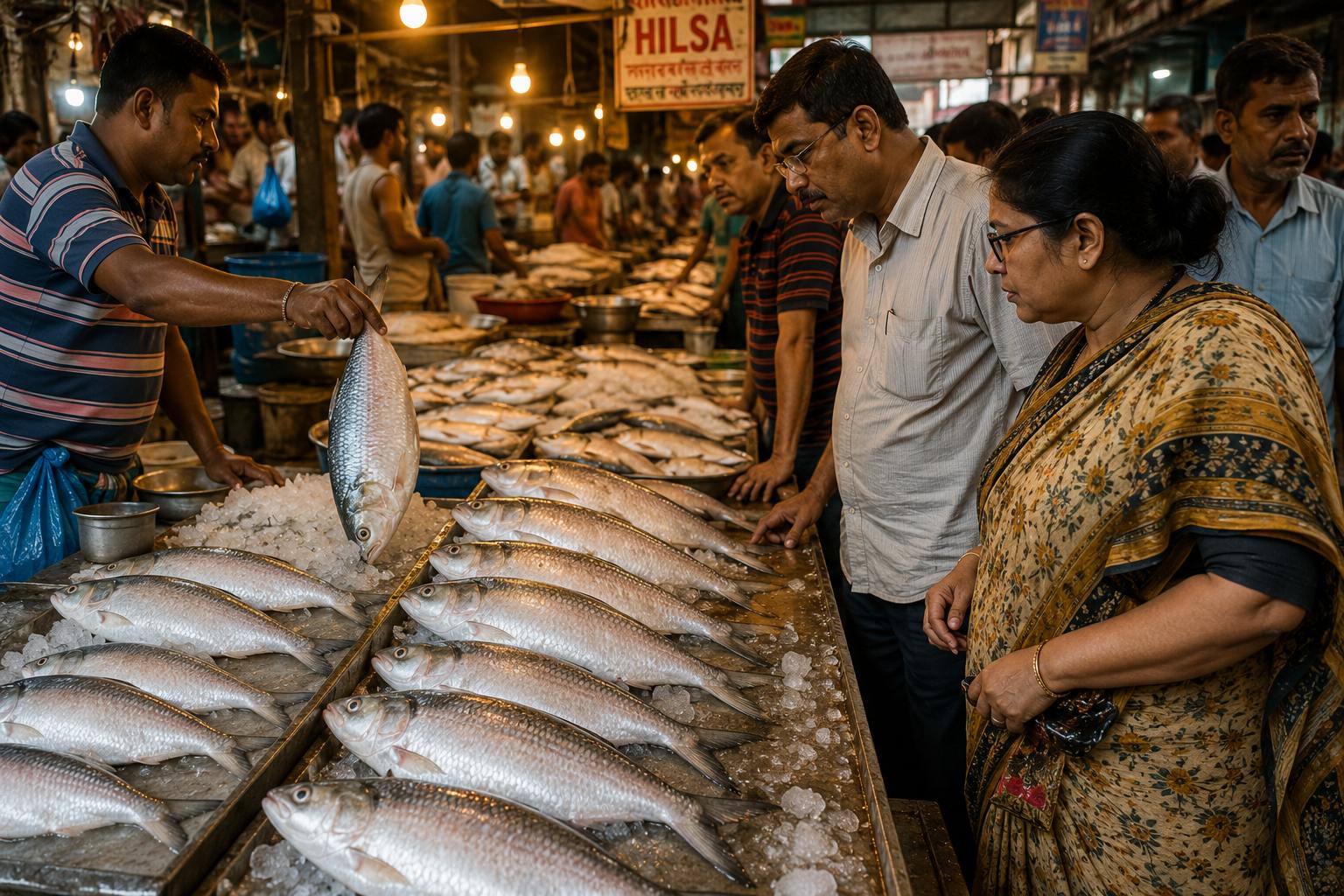
The Padma river is one of the main distributaries of the Ganges as it flows through Bangladesh — a large, fast-moving river whose specific water chemistry, temperature, and current produce hilsa (ilish) fish with a different fat content and flavour profile from those caught in the slower-moving Ganges and Hooghly that serve West Bengal. Whether this difference is as significant as Bangals claim is a matter of genuine debate. That the difference exists is not.
The East Bengali agricultural landscape also differs: different varieties of mustard were grown in the Padma delta, the fish available were different species or different sizes of the same species, and the food traditions developed in relative isolation from West Bengali (Ghoti) cooking before Partition brought the two communities into the same territory. Four million people carrying a distinct culinary tradition into a new geography produced one of India's richest intra-community food dialogues.
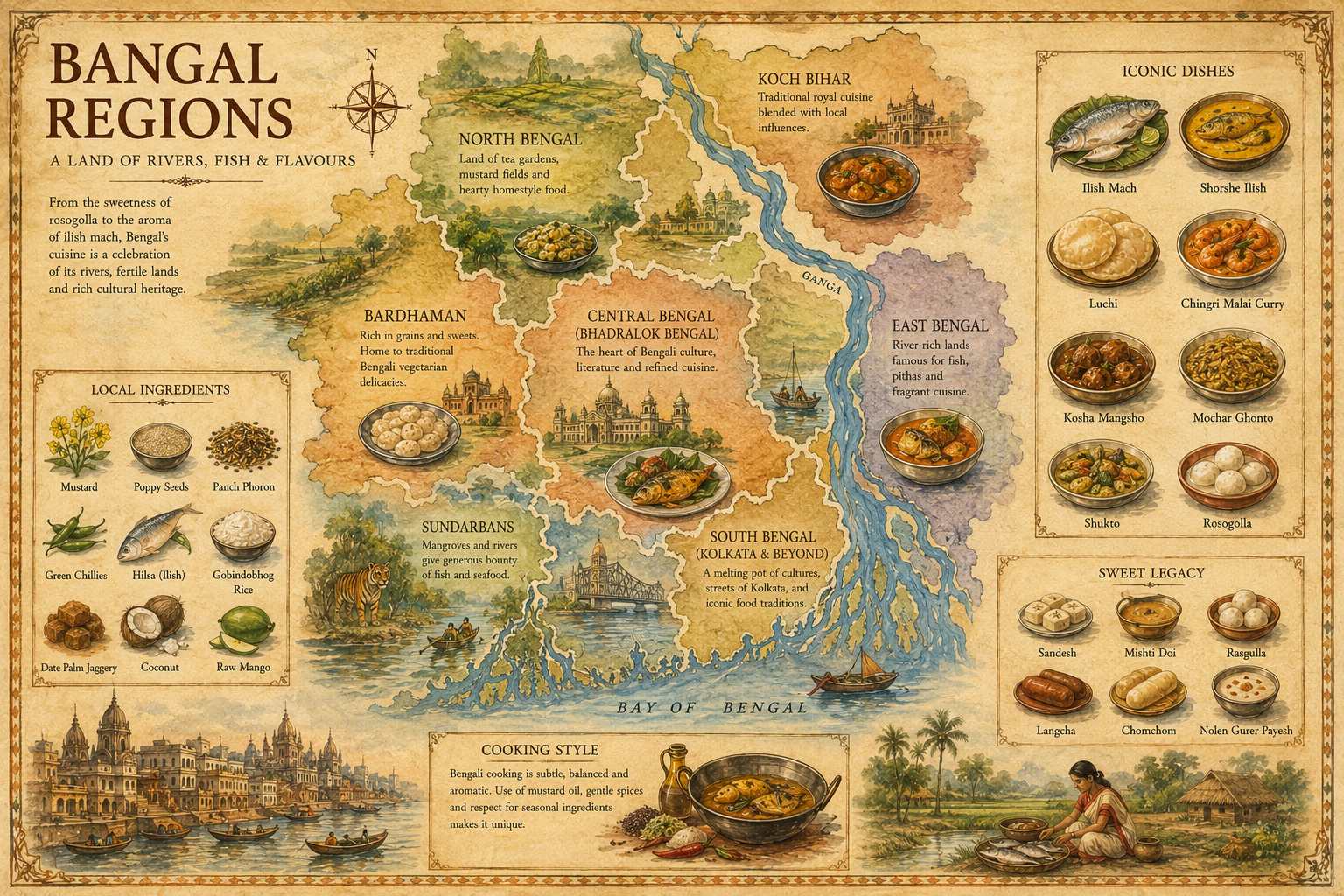
Location and regional context of Bangal Cuisine within its parent state.
📜
Historical Origins
How this cuisine became distinct from its parent
When British India was partitioned in August 1947, the province of Bengal was divided along religious lines — creating East Pakistan (now Bangladesh) for the Muslim majority and West Bengal (India) for the Hindu majority, with enormous population movements in both directions. Approximately 4–6 million East Bengalis (Bangal community) migrated to West Bengal in 1947 and in subsequent years, particularly after 1971. They arrived with their food traditions intact — the specific fish preferences, the more pungent mustard use, the specific preparations from the Padma delta.
The Ghoti-Bangal culinary rivalry began almost immediately. Both communities agreed on the fundamentals — fish and rice, mustard oil, the bitter-to-sweet meal sequence — but disagreed on everything specific. Which hilsa was superior (Padma vs Ganges)? Which mustard ratio was correct? Which was more refined (Ghoti claimed themselves; Bangals claimed boldness was the higher value)? These arguments were conducted in kitchens, at dining tables, in markets, and — as both communities became increasingly intermarried across generations — within single households.
Within one generation, the two traditions began merging. The resulting merged Bengali cuisine is richer than either alone — Bangal fish preparations appearing on Ghoti family tables, Ghoti's sandesh and mishti doi tradition incorporated into Bangal households. The argument continues precisely because the merger has made it affectionate rather than hostile. The Ghoti-Bangal debate is now one of Bengal's most beloved cultural institutions — conducted with passion but without rancour.
The Padma Hilsa Claim
Bangals insist that Padma hilsa is categorically superior to Ganges hilsa, and there is some scientific basis for the claim. The Padma river's faster current, different water chemistry, and the fish's specific migration patterns through it produce hilsa with a measurably higher fat content during the monsoon migration season. Higher fat in hilsa means more of the specific omega-3 oils that produce the fish's distinctive flavour. Whether this difference justifies the Bangal claim of absolute superiority is debated by Ghotis — but the difference itself is measurable, not imagined.
🧬
Food DNA
The flavour architecture
Preferred Fish
Padma ilish (hilsa) — the Bangal gold standard — the argument-starter, the identity marker
Boal (wallago fish) — large oily river fish — Bangal preference over the smaller Ghoti fish
Chital (clown knifefish) — specific to East Bengali tradition — produces the specific dumpling preparation muitha
Mustard (more forward)
Mustard oil (raw) — applied to fish before cooking in traditional Bangal style — pungent, assertive
Mustard paste (higher proportion) — used more generously in Bangal preparations than Ghoti cooking
Kasundi — fermented mustard condiment — a Bangal creation more developed than in Ghoti cooking
Bangal-specific preparations
Shukto (Bangal version) — more pungent and bitter than Ghoti shukto — the bitter opening course with Bangal character
Paturi — fish in banana leaf — more elaborate and fragrant than Ghoti version
Kalia — richer, darker fish preparation — the Bangal preference for bolder flavour
Partition-specific dishes
Macher kalia (Padma style) — the richer, darker fish preparation specific to East Bengali tradition
Chitol maacher muitha — fish dumplings from a species associated with the Padma delta
Narkel diye dal — coconut lentil preparation more common in East Bengal than West Bengal
🌿
Signature Ingredients
The ingredients that define this cuisine
Ingredient
What It Is
Flavour Character
Availability
Padma ilish (hilsa)
Hilsa fish (Tenualosa ilisha) from the Padma river — migratory, caught during monsoon ascent
Richer fat content from the Padma's specific conditions — more intense flavour than Ganges hilsa
Technically only available in Bangladesh; imported or smuggled into West Bengal and sold at premium
Kasundi
Fermented mustard condiment — the Bangal version developed more fully than in Ghoti cooking
Sharp, pungent, complex — the fermentation adds sourness to the mustard bite
Available in Bengal more broadly but the most developed kasundi tradition is Bangal-associated
Chital fish
Clown knifefish (Chitala chitala) — a large, bony river fish requiring specific preparation
Rich, white flesh — the bones are numerous and small, requiring skill to navigate or grind
Specifically associated with East Bengali delta waterways; less common in West Bengal rivers
Shorshe paste (stronger proportion)
Freshly ground yellow and black mustard in Bangal proportion — more black mustard than Ghoti ratio
More pungent, more assertive — the Bangal ratio is designed to be noticed, not to recede
Fresh grinding available wherever mustard seeds are sold; the proportion is the Bangal secret
🍽
Signature Dishes
The dishes that cannot exist elsewhere
Dish
What It Is
Why It Matters
Shorshe Ilish (Padma style)
Padma hilsa in raw mustard paste — the Bangal gold standard
The Bangal cook insists Padma hilsa produces a categorically different result from Ganges hilsa. The oil content, the flavour, the texture are all claimed to be superior. The claim has some scientific basis.
Ilish Paturi
Hilsa wrapped and cooked in banana leaf with mustard and green chilli
The banana leaf seaming concentrates the mustard paste and the hilsa's natural oils. The Bangal version is more aggressively mustard-forward than Ghoti paturi.
Chital Maacher Muitha
Chital fish dumplings in gravy — a preparation specific to East Bengali tradition
The chital's large bony structure is scraped, the flesh ground into dumplings — a labour-intensive preparation that exists essentially only in Bangal cooking tradition.
Boal Maacher Kalia
Large river boal fish in a rich dark gravy
The Bangal preference for larger, oilier fish — boal is too large and strong-flavoured for Ghoti taste. The kalia preparation's richness suits the fish's assertive character.
Kasundi with mustard greens
Fermented mustard condiment with sarson — the Bangal condiment tradition
Kasundi is used as a condiment, dipping sauce, and cooking ingredient. The East Bengali fermented mustard tradition produces a more developed kasundi than West Bengali practice.
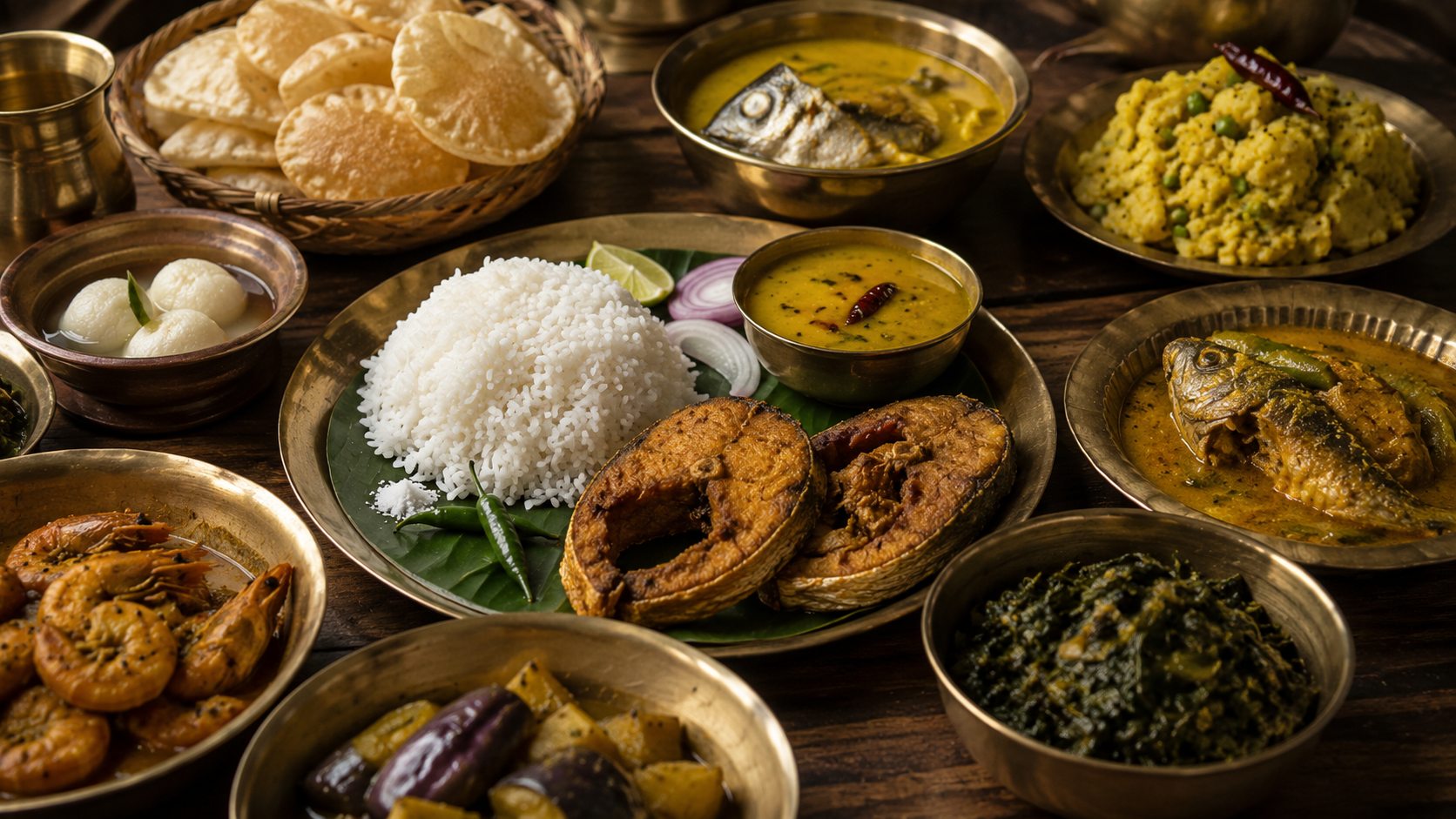
The defining preparations of Bangal Cuisine.
⚙️
Unique Techniques
What this cuisine does that others do not
The defining Bangal philosophy is assertiveness — more mustard, more pungency, larger fish, bolder preparations. This is not aggression for its own sake but the expression of a specific food culture where the Padma river provided large, oily, assertive fish that benefited from bold preparation rather than delicate treatment. Small sweet Ghoti fish and large assertive Bangal fish require different cooking philosophies, and the philosophies that developed were appropriate to their respective ingredients.
The raw mustard oil application technique is specific to Bangal cooking — massaging raw mustard oil into fish before any other preparation, allowing the pungent oil to penetrate the flesh for 15–30 minutes before cooking. This is not Ghoti practice. The technique produces a more deeply flavoured fish preparation — the pungency penetrates rather than coating. Combined with mustard paste in the gravy, the result has a mustard character that runs through the preparation rather than sitting on its surface.
The paturi technique — wrapping fish in banana leaf, sealing it, and cooking over direct heat or steam — concentrates the mustard paste and the fish's own oils within a sealed microenvironment. The Bangal version tends toward more mustard and more chilli than the Ghoti version of the same preparation, producing a more assertive result from the same technique. The technique is shared; the philosophy that drives ingredient proportions is not.
Is Padma Hilsa Actually Better?
The Bangal claim that Padma hilsa is superior to Ganges hilsa is the oldest and most persistent culinary argument in Bengali food culture. The scientific basis: the Padma's faster current and different water chemistry produce hilsa with measurably higher fat content during the monsoon migration. Higher fat means more of the omega-3 oils that give hilsa its distinctive flavour. The Ghoti counterargument: the difference is overstated by nostalgia, and good Ganges hilsa is equal to average Padma hilsa. The honest answer: Padma hilsa at peak season probably does have more fat and more flavour. Bangals are probably right. But they are also insufferable about it.
🔗
Relationship to Parent Cuisine
How Bangal Cuisine differs from Bengal
Element
Bengal
Bangal Cuisine
Fish preference
Smaller, sweeter fish — parshe, bele, mourola (Ghoti)
Larger, oilier fish — Padma hilsa, boal, chital
Mustard use
Present but moderate — controlled in Ghoti cooking
More forward — raw oil applied to fish before cooking, higher paste proportion
Kasundi tradition
Present but less developed
More developed fermented mustard condiment tradition
Overall character
Subtle, refined — the Ghoti self-description
Bold, pungent, assertive — the Bangal self-description and the Ghoti accusation
Padma vs Ganges
Ganges/Hooghly hilsa — the West Bengal standard
Padma hilsa — the Bangal claim, with some scientific basis
📅
Timeline
How this cuisine evolved
Pre-1947
East Bengali food culture develops in the Padma delta
The Bangal community in what is now Bangladesh develops their distinct food tradition alongside the Padma river ecosystem — different fish, different mustard variety, different food proportions.
August 1947
Partition — mass migration brings East Bengali food to West Bengal
4–6 million Bangal refugees arrive. Their distinct food tradition encounters Ghoti cooking. The Ghoti-Bangal culinary rivalry begins.
1950s–70s
The two traditions begin to merge and enrich each other
Within one generation, Bangal and Ghoti dishes appear on the same Bengali menu. The merged tradition is richer than either alone.
Present
The rivalry becomes cultural institution
The Ghoti-Bangal argument continues as cultural ritual rather than genuine dispute. Both communities acknowledge the merger while maintaining their claims with great passion.
Ghoti refers to native West Bengal Bengalis; Bangal refers to East Bengali communities who migrated after Partition. Bangals prefer larger fish (Padma hilsa, boal, chital), use mustard more pungently, and have specific preparations (chital muitha, kasundi) not found in Ghoti cooking. The rivalry — conducted primarily through arguments about which hilsa is superior — is one of India's most affectionate and sustained culinary disputes.
Is Padma hilsa really different from Ganges hilsa?
There is some scientific basis for the Bangal claim. The Padma river's faster current and different water chemistry produce hilsa with measurably higher fat content during monsoon migration. Higher fat means more of the specific oils that give hilsa its distinctive flavour. Whether the difference justifies the Bangal claim of absolute superiority is debated. That the difference exists is not.