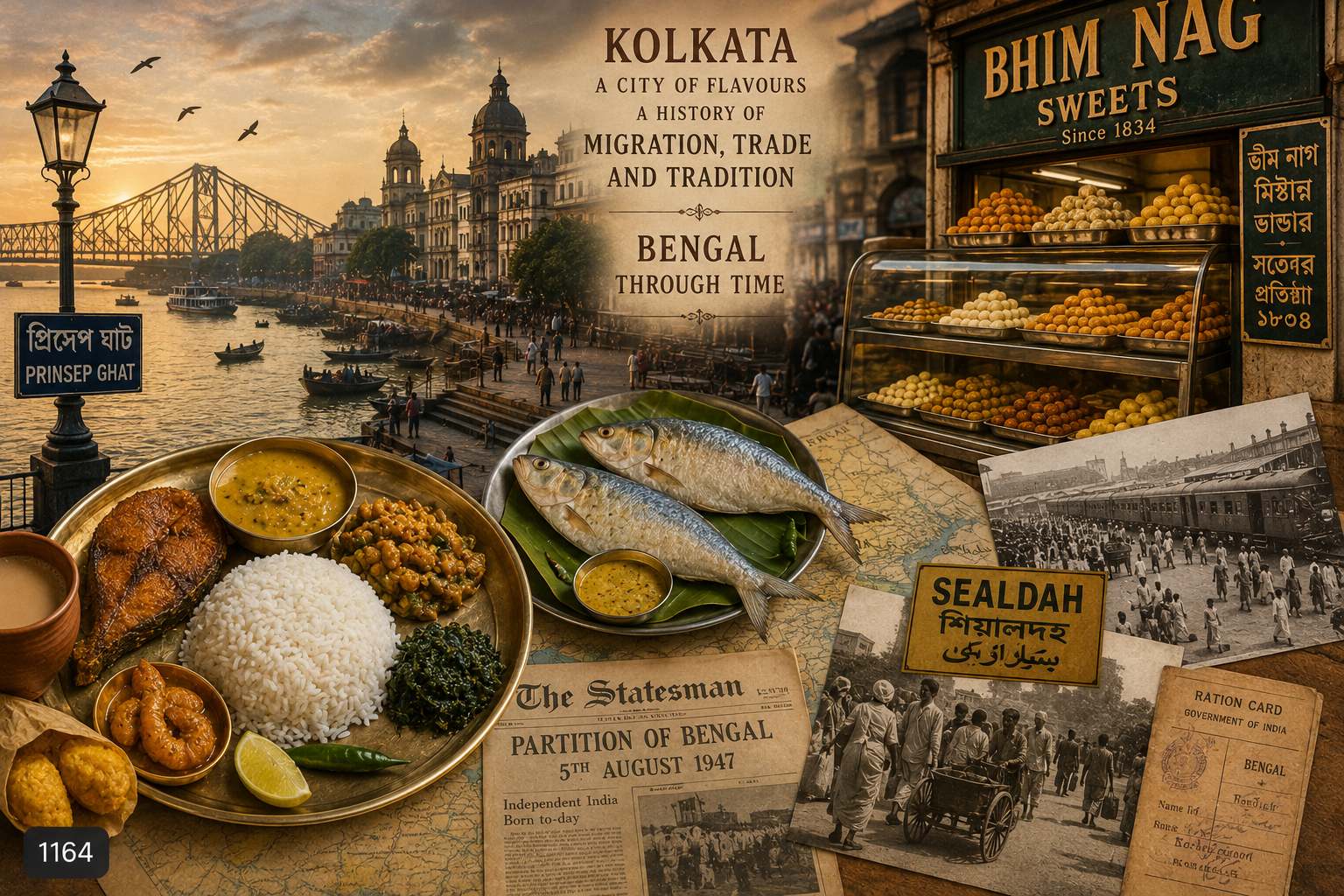
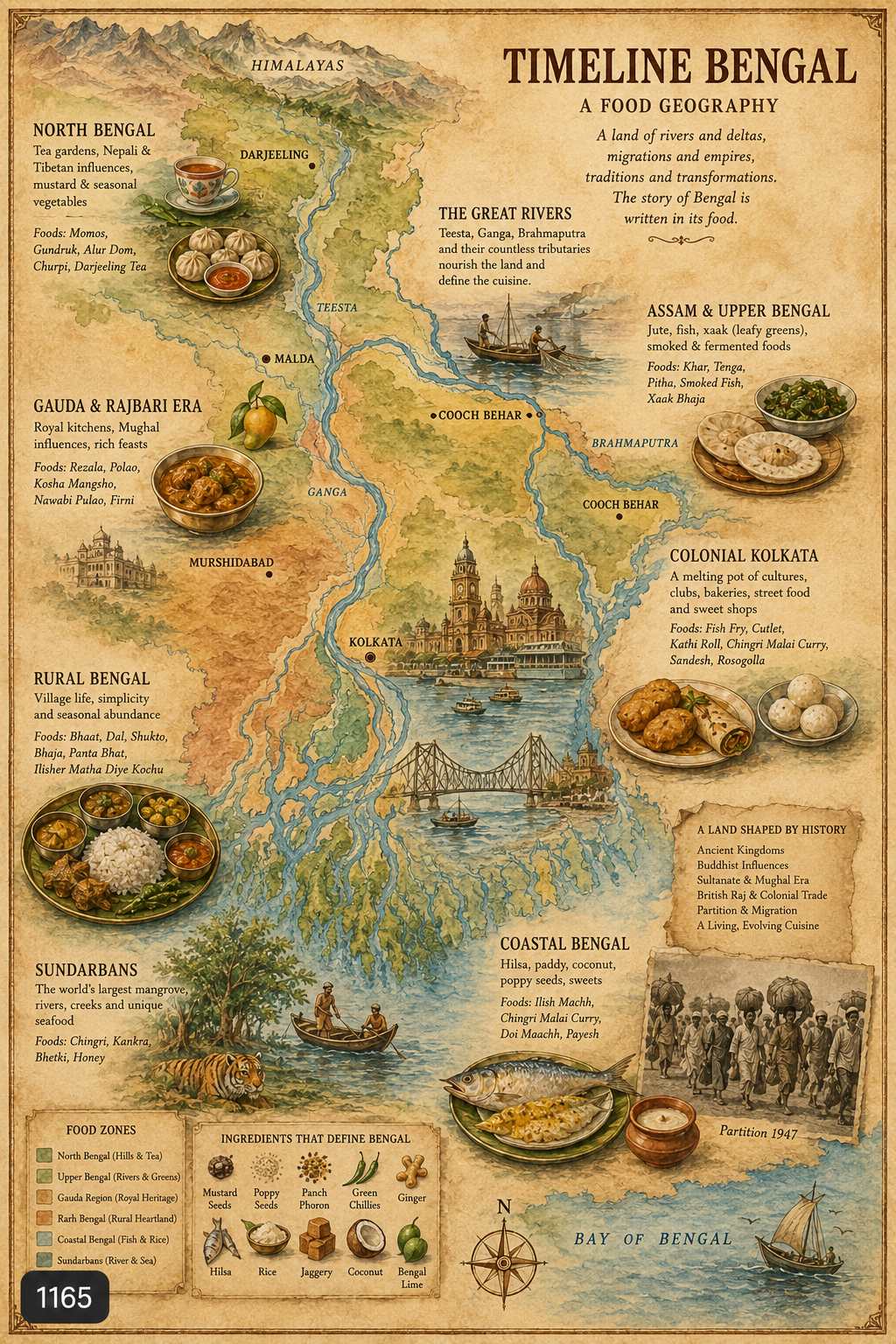
750-1174 CE
Pala Empire — Buddhist Period
The Pala dynasty was Buddhist — vegetarianism had court influence. Fish eating was common in Bengal even in Buddhist period (fish considered a product of the water, not meat by many). The rice and fish tradition established.
1203
Muslim Conquest of Bengal
The Bengal Sultanate begins — Muslim court food culture arrives. The specific Muslim cooking tradition (including the specific mustard use and meat preparations) begins integrating with the existing Bengali food culture.
1575-1757
Mughal Bengal — The Nawabs
Bengal becomes one of the wealthiest Mughal provinces. Dhaka develops as a fine textile and culinary capital. The specific Bengali-Muslim cooking tradition of mustard-fish combinations develops.
1576-1757
Portuguese Contact in Hooghly
Portuguese establish a trading settlement at Hooghly. They introduce fresh cheese making (chhena technique) — the technique that, in the hands of Bengali sweet-makers, eventually produces sandesh and rasgulla. The most consequential culinary introduction in Bengal's history.
19th century
Chhena Sweet Revolution
Bengali sweet-makers adapt the Portuguese chhena technique and develop the sandesh, rasgulla, and mishti doi tradition. The most sophisticated sweet tradition in India emerges from a colonial encounter. Nobin Chandra Das commercialises rasgulla in the 1860s.
1947
Partition — The Ghoti-Bangal Divide
Bengal divided at Partition — East Pakistan (later Bangladesh) and West Bengal. 4-6 million East Bengali (Bangal) refugees arrive in West Bengal. The Ghoti-Bangal culinary debate begins and continues for 75 years.
1971
Bangladesh War — Final Wave
The Bangladesh liberation war produces a final wave of migration. The two communities increasingly intermarry. The merged Bengali food tradition is richer than either tradition alone.