The Sweets Map of India — 300 Mithai Across 28 States
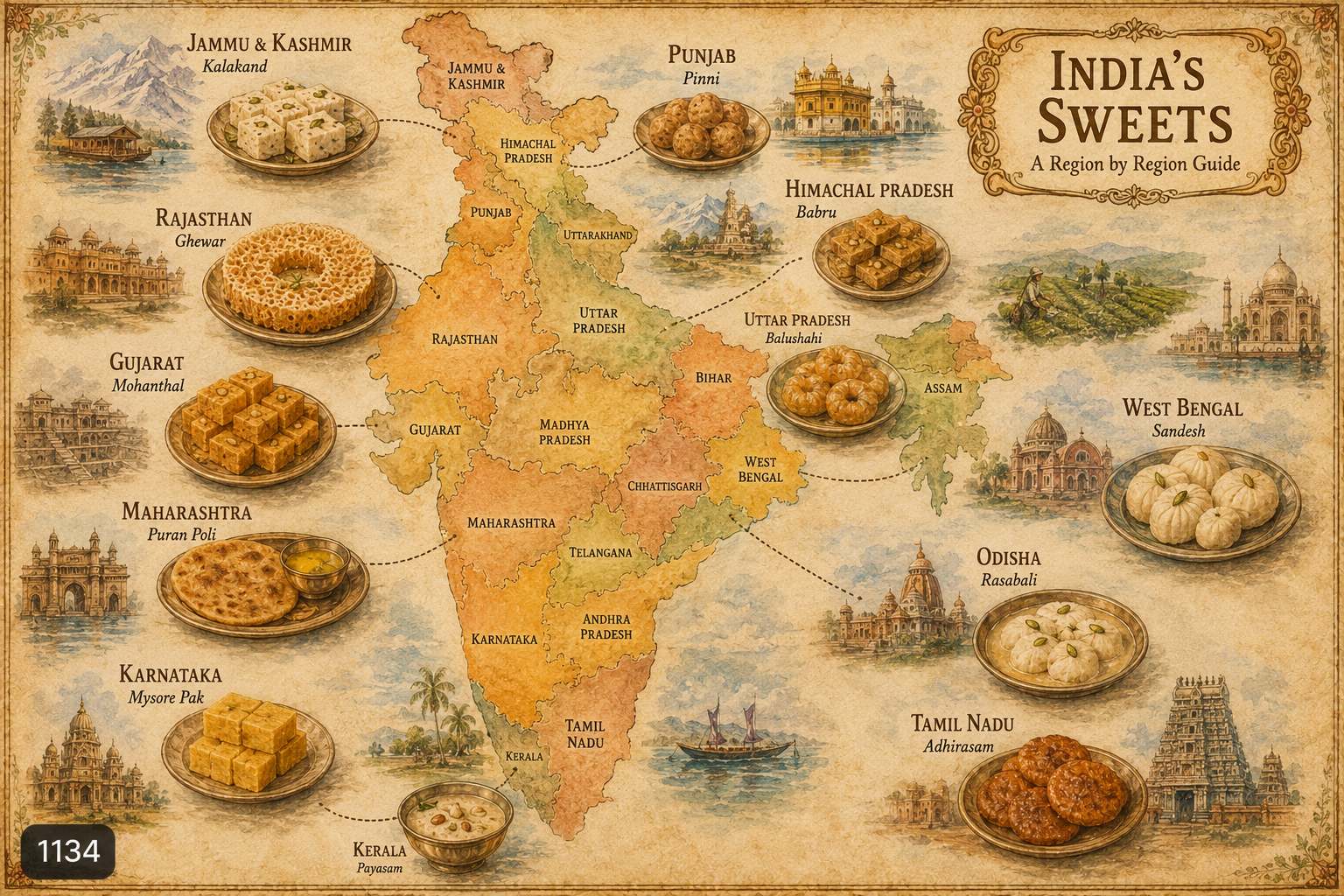
From Bengal's chhena tradition (sandesh, rasgulla) to Gujarat's mohanthal, from Rajasthan's ghewar to Tamil Nadu's mysore pak — India's mithai map is a geography of sugar craft, milk reduction, and regional identity.
⏱ 12 min read🗓 Updated June 2026★ Food Story
The Milk Reduction Tradition
Khoya, rabri, mawa — the dairy sweet foundation
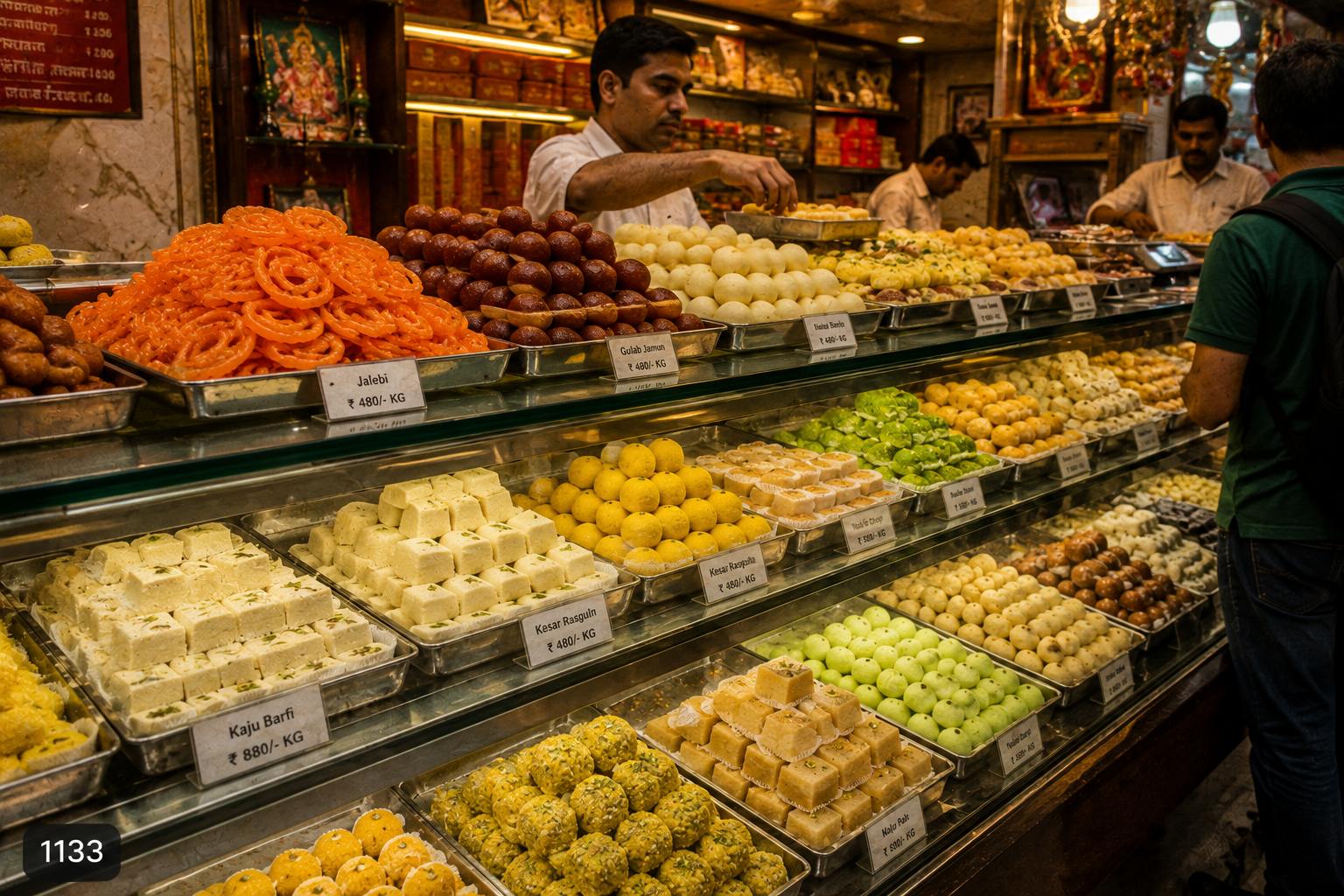
Most North Indian sweets are built on khoya (also called mawa or khoa) — milk reduced by long simmering until most moisture evaporates and a dense, cream-coloured solid remains. This reduction concentrates the milk sugars, proteins, and fats, producing a base of extraordinary richness. Gulab jamun, peda, barfi, and dozens of other North Indian sweets use khoya as their primary ingredient. The quality of the khoya determines the quality of the sweet — this is why the best sweets come from specific dairies in specific places (Mathura pedha, Alwar kalakand).
The geographic diversity of India's mithai — from Bengal's chhena to Gujarat's dry fruit tradition.
State
Defining Sweet
Base
What Makes It Specific
Bengal
Sandesh
Fresh chhena
Portuguese-origin cheese technique adapted by Bengali sweet-makers
Rajasthan
Ghewar
Refined flour + ghee
Lattice-fried festival sweet requiring specialist technique
Gujarat
Mohanthal
Chickpea flour + ghee
The Gujarati besan sweet with cardamom and saffron
Maharashtra
Puran poli
Sweet lentil filling in flatbread
Festival food requiring specific lentil sweetening technique
Karnataka
Mysore pak
Chickpea flour + ghee
Created in the Mysore royal kitchen — specific porous texture
Tamil Nadu
Adhirasam
Rice flour + jaggery
Ancient Tamil sweet — deep-fried, specific jaggery ratio
Kerala
Payasam (ada)
Rice and coconut milk
Temple sweet — multiple varieties for different festivals
UP/Bihar
Tilkut
Sesame + jaggery
Sesame confection specific to Gaya and Patna
Odisha
Chenna poda
Baked chhena
The only baked Indian sweet — caramelised on the outside
Why Bengal Dominates the Chhena Sweet Tradition
Bengal's chhena (fresh pressed cheese) sweet tradition — sandesh, rasgulla, rosogolla, pantua — is the most sophisticated in India. The technique of curdling milk with lemon juice and pressing the curds into fresh cheese was adopted from Portuguese settlers in the 16th-17th century, then developed by Bengali sweet-makers into one of the world's great pastry traditions. Without Portuguese cheese-making contact in Bengal, there would be no sandesh, no rasgulla, and no mishti doi. The world's most celebrated Indian sweet tradition began with a colonial encounter.
What is the difference between North and South Indian sweets?
North Indian sweets are primarily based on khoya (milk reduced to a dense solid) or chhena (fresh pressed cheese). South Indian sweets are primarily based on rice flour, coconut, lentil flour, or jaggery — the dairy reduction technique is less dominant. The distinction roughly follows the grain divide: the North's dairy tradition produces milk-based sweets; the South's rice and coconut tradition produces different bases.
Which state has the best sweets in India?
Bengal has the most sophisticated sweet tradition (the chhena technique producing sandesh, rasgulla, mishti doi). Rajasthan has the most technically demanding festival sweets (ghewar). Gujarat has the most diverse savoury-sweet range. The question of which is best is determined by what you value: Bengali precision, Rajasthani spectacle, or Gujarati diversity.