Why Does Rajasthani Food Rely on Dried Ingredients?
The Thar Desert receives under 100mm of annual rainfall. Fresh vegetables are unavailable for months. Summer temperatures exceed 45°C. Rajasthani cooking is not a tradition of preservation — it is a tradition built entirely around what survives in the harshest food environment in India.
⏱ 11 min read🗓 Updated June 2026★ Why This
The Climate
Under 100mm of rain — and what that means for a kitchen
The Thar Desert in western Rajasthan receives less than 100mm of annual rainfall in the most arid zones — less than a tenth of what Mumbai receives, a fifth of what Delhi receives. This aridity is not a recent development; it has shaped the ecology of the region for thousands of years. No river reaches the sea from this zone. The water table is deep. The seasonal crops that define most of India's food culture (fresh vegetables, leafy greens, specific lentils requiring irrigation) are simply not reliably available for most of the year.
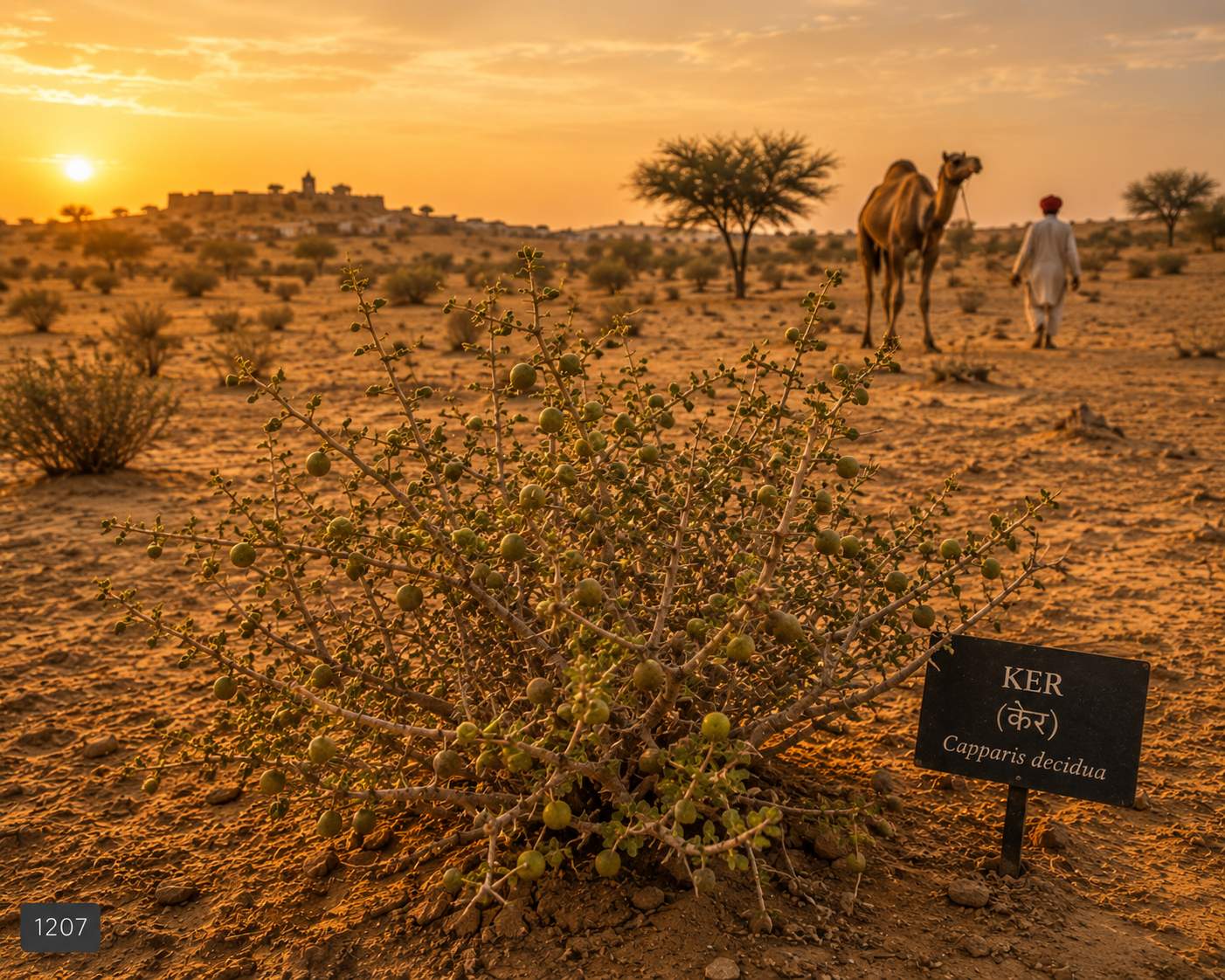
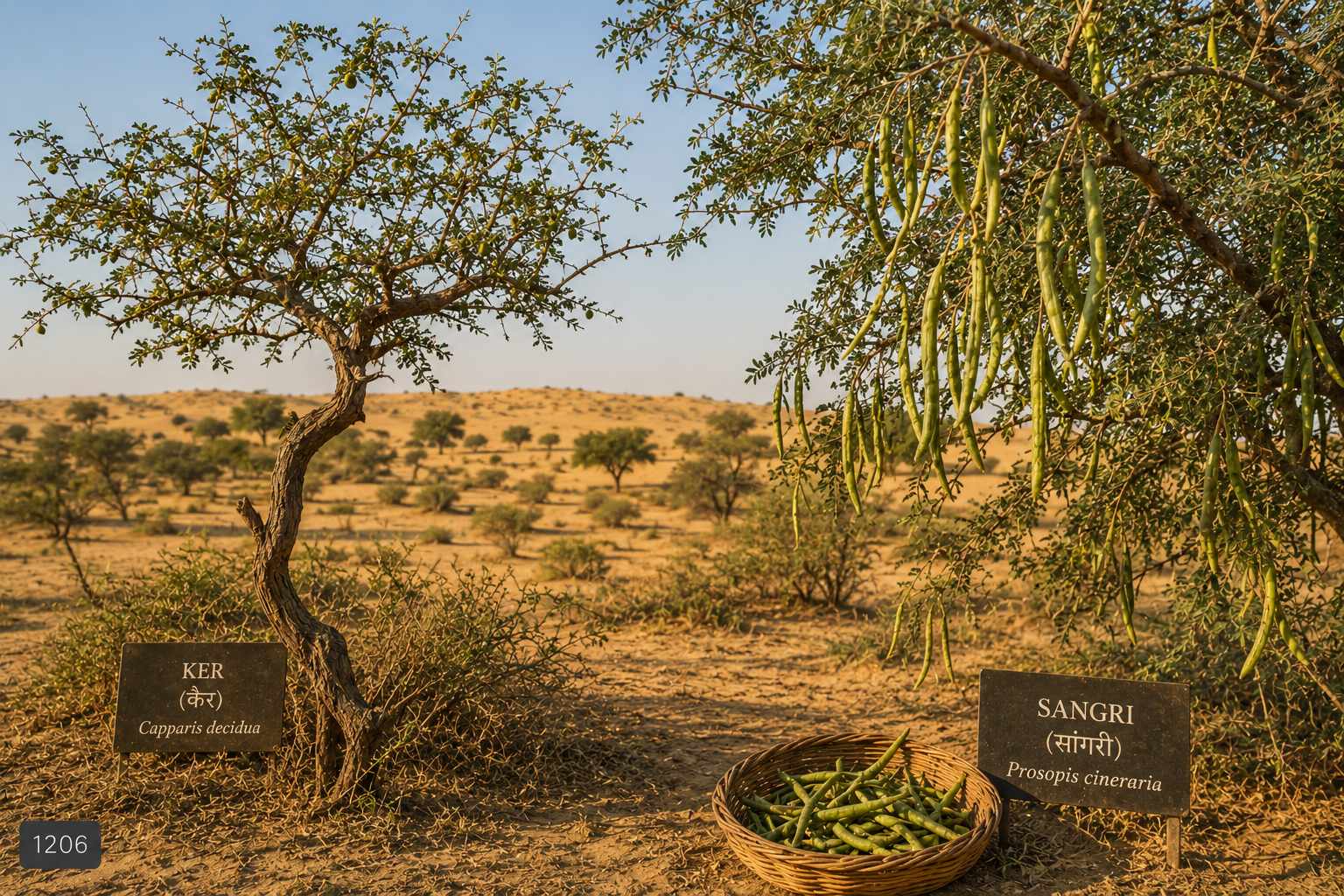
The Rajasthani culinary response to this aridity is not poverty food — it is an intelligent cuisine built around what the desert environment reliably provides. Drought-resistant lentils (moth bean, matki, mixed lentils) that store indefinitely in the dry heat. Desert plants (ker — the desert caper; sangri — the desert bean of the Prosopis cineraria tree) that grow without irrigation. Dried spices and dried chillies (Mathania) that concentrate flavour through dehydration. Dairy from camels and goats that thrive where cattle cannot.
The geography that made preservation the foundation of Rajasthani cooking.
Ker Sangri — The Desert's Most Specific Ingredient
Ker sangri is the most specifically Rajasthani preparation — a combination of ker (the dried berry of Capparis decidua, the desert caper) and sangri (the dried bean of Prosopis cineraria, the khejri tree). Both plants grow in the Thar Desert without any cultivation or irrigation — they are desert-adapted species that thrive in conditions hostile to agriculture. Ker sangri is not a dish invented because of poverty — it is a dish invented because these two desert plants grow abundantly where nothing else does. The preparation's specific tart-sweet-smoky character cannot be replicated with any other ingredient, making it the one Rajasthani preparation that literally cannot be made anywhere else in India.
The baati — the dense wheat roll baked in dying embers — solves the desert kitchen problem with brilliant economy. No water needed for cooking. No fuel needed beyond the dying fire. No vessel needed beyond the dough itself. A farming community in the desert, where fuel (dried dung) is scarce and water is precious, can bake baati from the residual heat of a cooking fire that has already done its other work. The ember-baking technique is not primitive — it is a sophisticated solution to the specific resource constraints of the desert kitchen.
Why does Rajasthani food use so many dried and preserved ingredients?
The Thar Desert receives under 100mm of annual rainfall in the most arid zones. Fresh vegetables are unavailable for months; summer temperatures destroy fresh food in hours; water is too precious for boiling. Rajasthani cooking is built around ingredients that survive the desert: drought-resistant lentils, desert plants (ker and sangri), dried spices, and preserved dairy. The dried ingredient tradition is not poverty cooking — it is ecological intelligence.
What is ker sangri and why can it only be made in Rajasthan?
Ker sangri is a combination of ker (dried berry of the desert caper Capparis decidua) and sangri (dried bean of the khejri tree Prosopis cineraria). Both plants grow in the Thar Desert without irrigation. Neither can be sourced outside the specific desert ecology. The preparation's tart-sweet-smoky character cannot be replicated with substitutes — making it the one Rajasthani preparation that literally cannot be authentically made anywhere else in India.