Tribal Food in India — The Food Before Everything Else
India's 700+ tribal communities (Scheduled Tribes, 8% of India's population) maintain food traditions built on forest ecology, seasonal foraging, and fermentation — the oldest continuous food cultures in India, predating caste, religion, and recorded history.
⏱ 12 min read🗓 Updated June 2026★ Food Story
What Tribal Food Is
Before markets, before temples, there was the forest
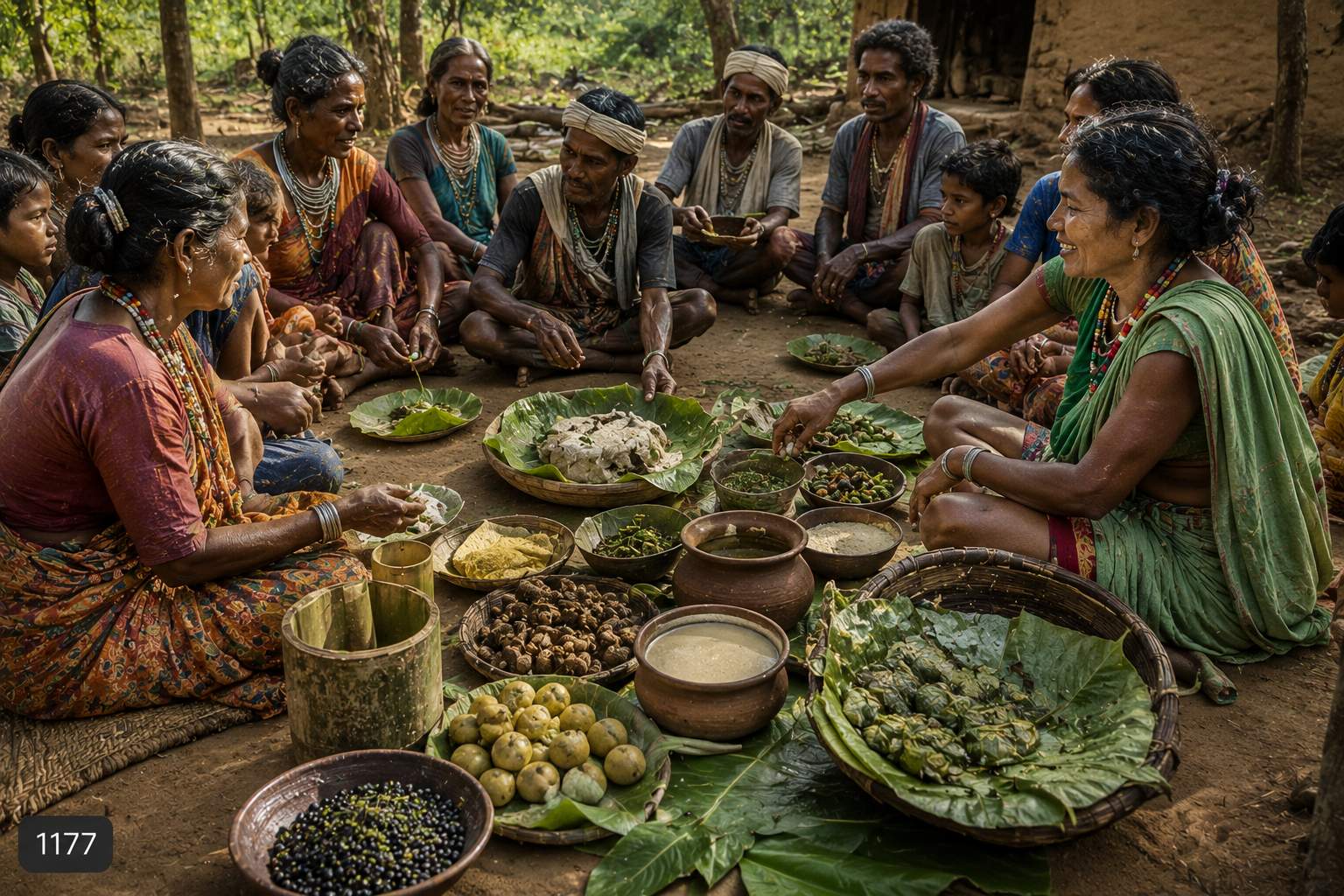
India's tribal communities — 700+ distinct groups, speaking over 500 languages, distributed from the Northeast Himalayas to the Andaman Islands — maintain food traditions built on direct ecological relationships rather than agricultural systems or market economies. The Gond of Central India know 300+ edible forest plants. The Baiga of Chhattisgarh can identify 150+ varieties of wild tuber. The Naga communities of Nagaland ferment over 50 different plant and animal products for long-term preservation. This knowledge is as complex and sophisticated as any Michelin-starred kitchen's expertise — and far more ecologically embedded.
Mahua — The Forest Economy's Foundation
Mahua (Madhuca longifolia) is the single most important plant for tribal communities across Central India — Gond, Baiga, Korku, Bhil, Santali. The flowers are edible and nutritious; the seeds produce cooking oil; the flowers ferment to produce mahua liquor. A single tree provides food, fat, and celebration drink. For communities where the forest is the market, the pharmacy, and the temple, mahua is simultaneously staple food, cash crop, and ceremonial substance. Its partial criminalisation under colonial law disrupted the foundation of tribal food economy — a disruption whose effects continue today.
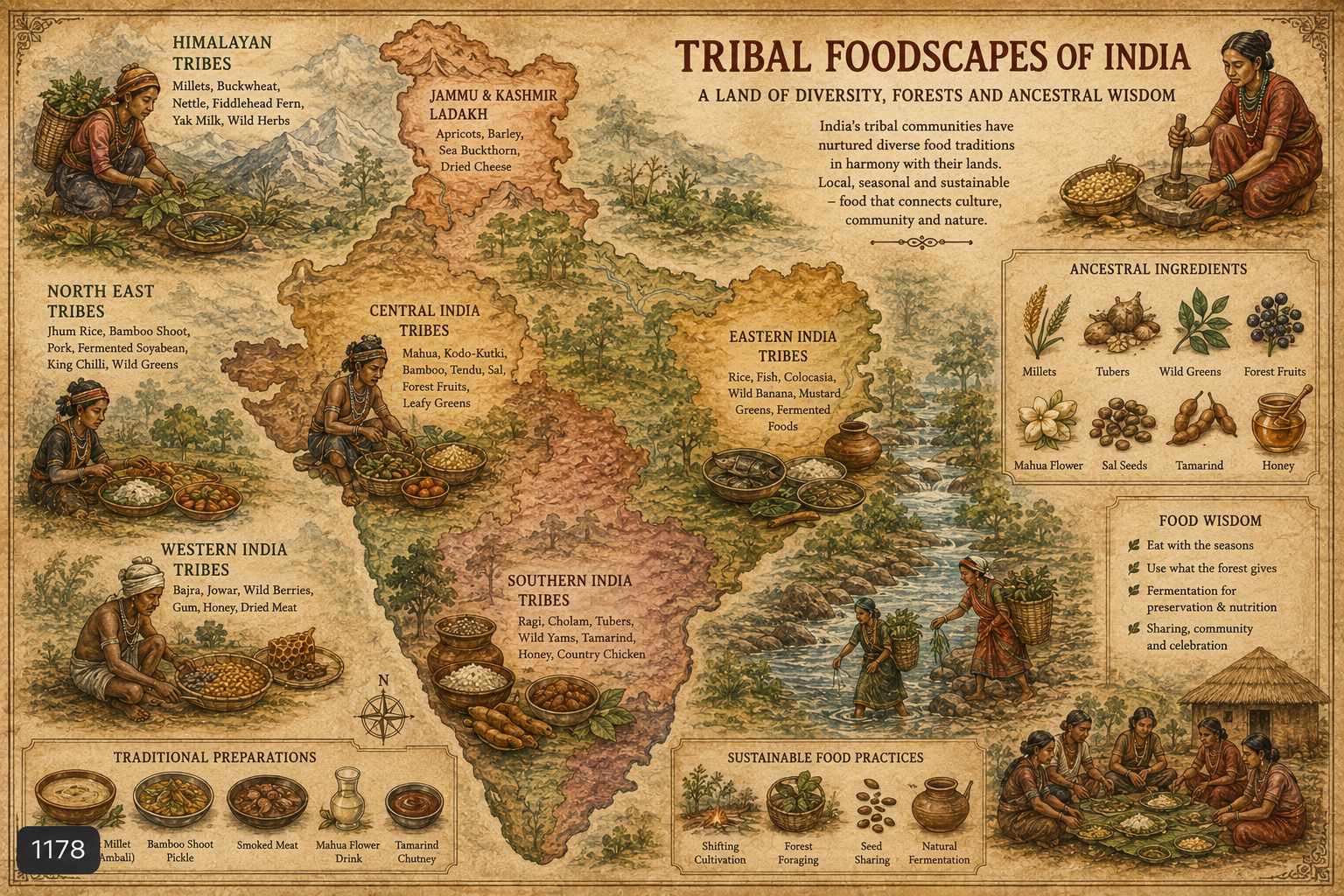
The geographic spread of India's most diverse and ancient food cultures.
The fermentation tradition of tribal communities — particularly in Northeast India — is the most developed in India. The Naga communities produce fermented pork fat (pork smoked and fermented for up to a year); fermented soybean (axone, similar to Korean doenjang); fermented bamboo; and specific fermented fish preparations. These are not survival foods — they are the developed culinary traditions of communities for whom fermentation is both preservation technology and flavour philosophy. The specific umami depth of axone has attracted international chef attention as one of the world's great fermented foods.
What makes tribal food different from mainstream Indian food?
Tribal food is built on direct ecological relationships rather than agricultural or market systems. It centres on forest-foraged ingredients (wild tubers, leafy greens, forest fruits, game), fermented preparations for preservation, and specific community knowledge of edible plants that mainstream Indian cooking has lost. It predates caste, religion, and recorded culinary history.
What is axone?
Axone (also akhuni) is fermented dried soybean from the Naga communities of Nagaland — produced by boiling soybeans, allowing them to ferment for 3-7 days wrapped in banana leaves, then drying or smoking. It has an intensely pungent, umami-rich character similar to Korean doenjang or Japanese miso. It is the defining ingredient of Naga cooking and has attracted international chef interest as one of the world's great fermented foods.