Altitude and Indian Food — From Sea Level to 5,000 Metres
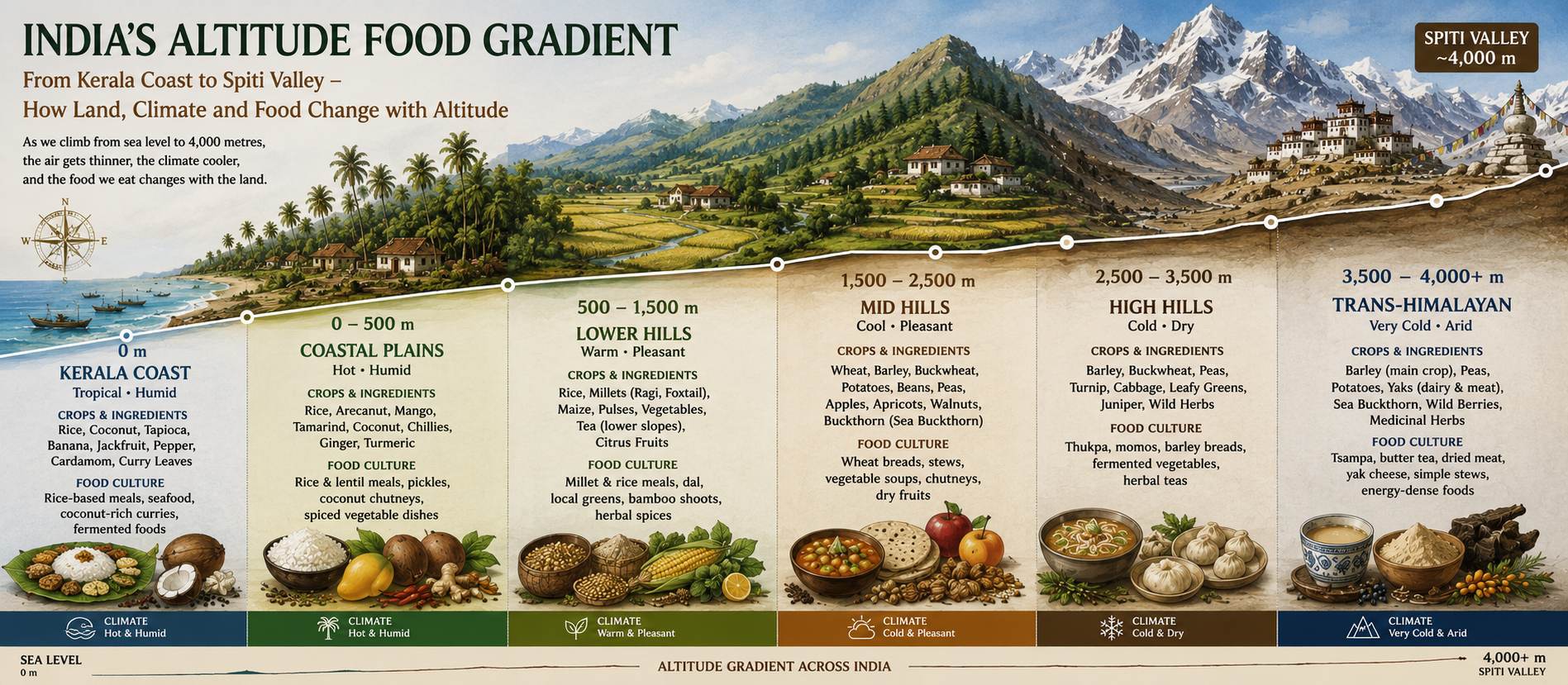
India spans from sea level to 5,000+ metre inhabited settlements. At each altitude, the crops that grow, the preservation methods required, and the food culture produced are different. The altitude gradient is the food gradient.
⏱ 11 min read🗓 Updated June 2026★ Food Story
The Gradient
What grows where — and why it matters
India's altitude range is extraordinary — from the Malabar coast at sea level to the Zanskar and Spiti valleys at 3,500-5,000 metres. At each altitude, the growing season length, the temperature range, and the specific crops that grow produce different food cultures. The altitude gradient is not just a geographic fact but a culinary one: the food of Spiti cannot exist at sea level, and the food of Kerala cannot exist at 4,000 metres.
Altitude Range
Region Examples
Primary Crops
Food Character
0-100m
Kerala coast, Mangalore, Goa
Coconut, rice, fish
Coconut oil, seafood, tropical spice
100-500m
Deccan plateau
Jowar, bajra, peanut
Dry-land millet tradition
500-1500m
Nilgiris, Coorg, Malnad
Coffee, pepper, tea
Highland spice and estate culture
1500-2500m
Himachal valleys, Uttarakhand
Apple, mandua, wheat
Mountain valley transition crops
2500-4000m
Spiti, Ladakh, upper Uttarakhand
Barley, buckwheat
Cold-tolerant ancient grains
4000m+
High Himalayan settlements
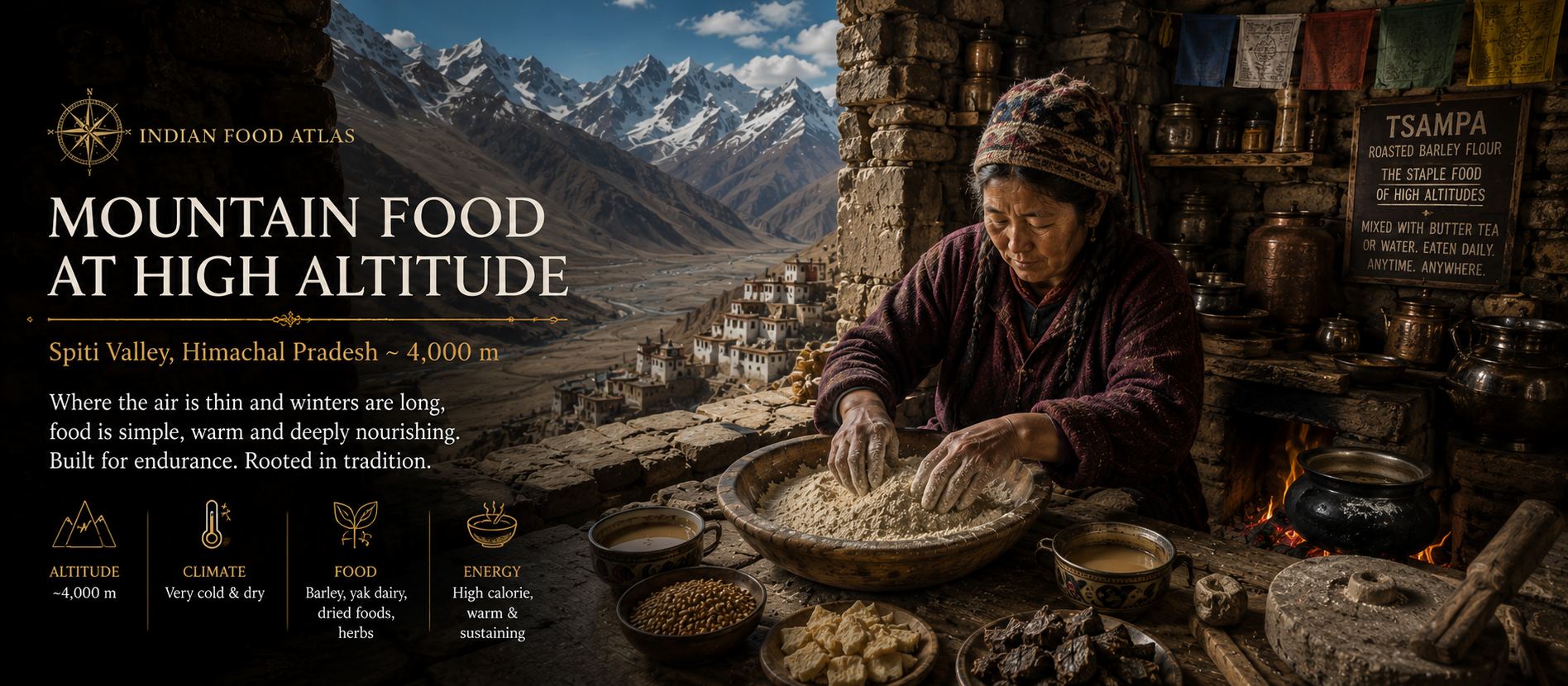
Barley, tsampa, yak products
Extreme altitude — yak butter, tsampa
Why Altitude Changes Food More Than Latitude
India spans from 8°N to 37°N latitude — a range of 29 degrees. This latitude range produces significant climate variation but less extreme food variation than the altitude range. The Kerala coast (8°N, sea level) and Kashmir valley (34°N, 1,600m) differ greatly in food culture. But the Spiti valley (32°N, 3,500-4,500m) differs from both far more than latitude alone would predict. Altitude creates more extreme culinary discontinuity than latitude because it compresses climate zones vertically. A 1,000m ascent in the Himalayas changes the growing season length and crop options as dramatically as a 1,000km journey northward across the plains.
How altitude determines crop, technique, and cuisine across India's mountain zones.
Altitude determines which crops can grow and for how long. At sea level (Kerala coast), tropical crops (coconut, rice, spice) dominate. At 2,500m (Himachal valleys), the growing season shortens and cold-tolerant crops (apple, mandua millet) take over. At 3,500m+ (Spiti, Ladakh), only barley and buckwheat grow reliably — the food culture is built on these grains plus preserved and fermented products.
What do people eat at very high altitude in India?
At 3,500m+ in Spiti, Ladakh, and upper Uttarakhand, the primary food is barley-based (tsampa — roasted barley flour consumed with yak butter tea), dried apricots, peas and specific cold-tolerant lentils, and yak products (butter, cheese, dried meat). The growing season may be as short as 4 months. Preservation through drying and fermentation is essential for the winter months.