The Jagannath temple's mahaprasad — cooked in 752 clay pots, for 100,000 daily — is one of the world's largest sacred kitchen operations. But Odisha is also the Bay of Bengal coast's underrated seafood tradition, mustard-and-turmeric cooking, and the rice culture of the Mahanadi delta.
⏱ 13 min read🗓 Updated June 2026★ State Food Guide
State Food Guide
Odisha — The Temple Kitchen and the Sea
Odisha sits on the Bay of Bengal coast — the Mahanadi river delta creating fertile rice-growing land, the coast providing abundant seafood. The Jagannath temple at Puri is both the state's most sacred site and its most famous kitchen — the mahaprasad cooked there is considered the most sacred food in Vaishnavism.
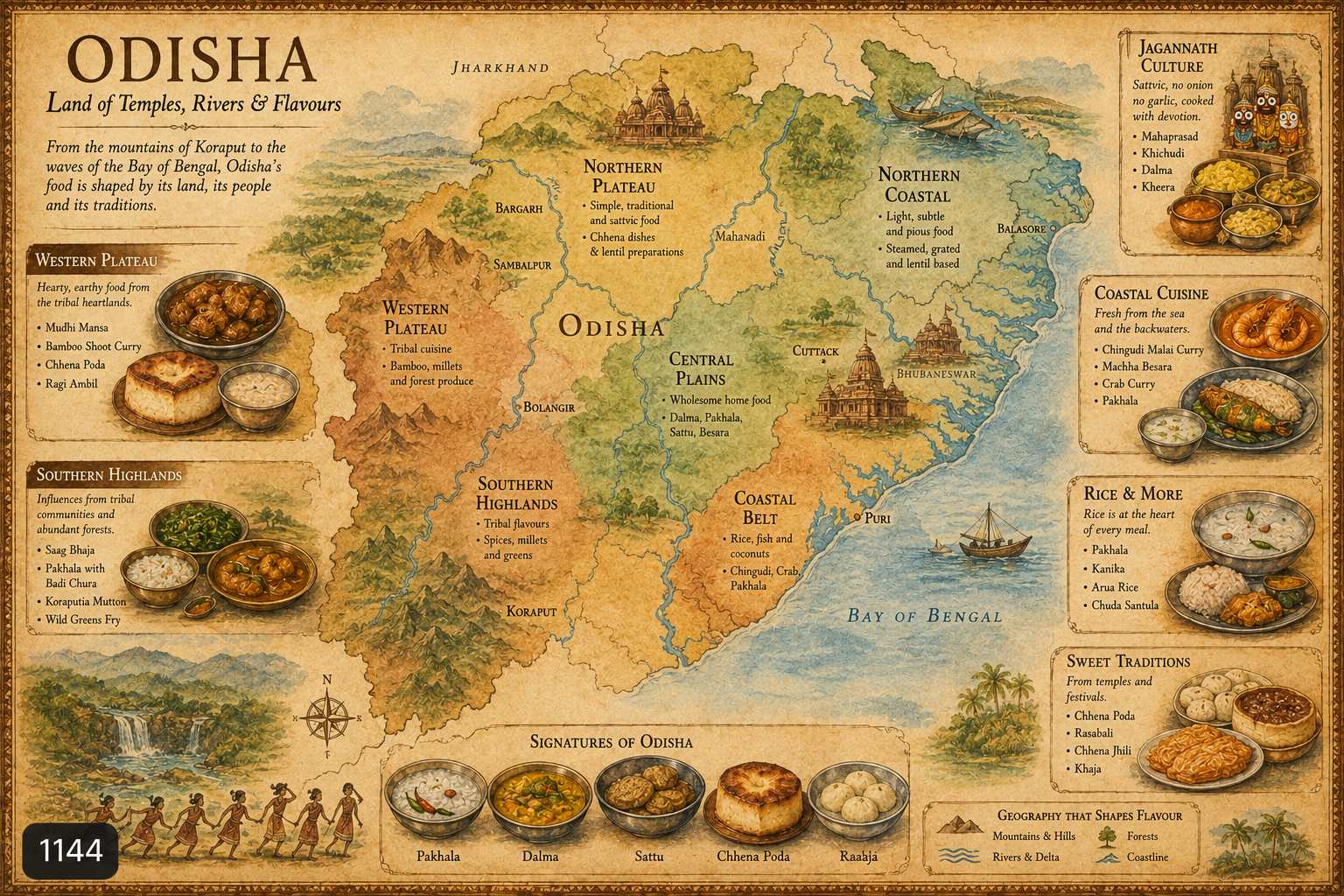
The geographic regions and food zones of Odisha Food Guide.
🗺
Geography & Climate
The land that made this food inevitable
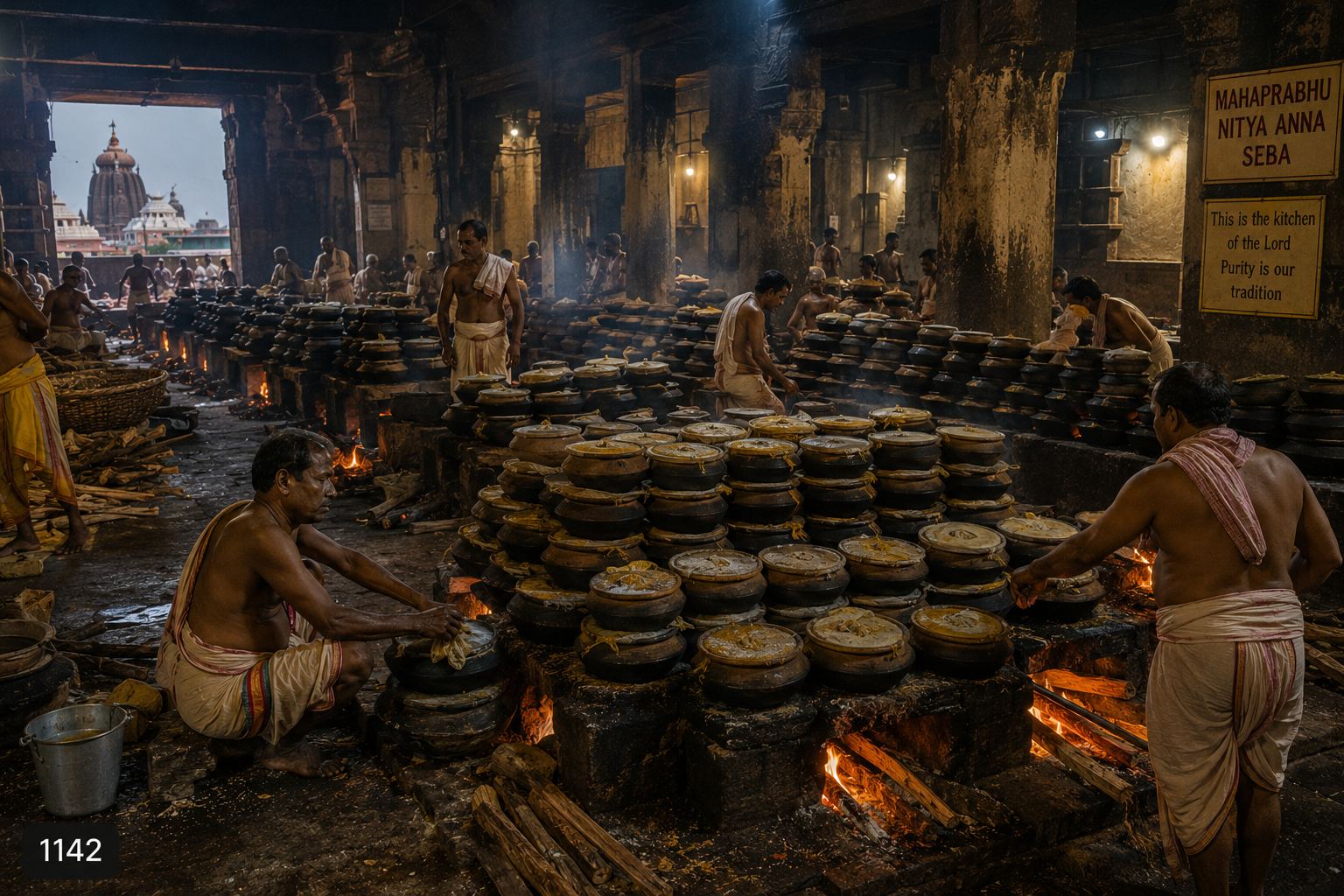
The Jagannath temple at Puri is one of the four dhams (sacred sites) of Hinduism — and its kitchen is one of the most extraordinary cooking operations in the world. 752 clay pots are used simultaneously over 352 wood-fired hearths. The pots are stacked vertically — the top pot cooks by steam from the pots below — and the entire mahaprasad production for 100,000 daily visitors is completed before noon. No other kitchen in the world operates at this scale using exclusively traditional clay vessels and wood fire.
Odisha's secular food tradition is equally specific. The mustard-and-turmeric flavour base that appears in most Odia preparations — fish curry in mustard paste, the pakhala (fermented rice water) tradition, the specific vegetable preparations using panch phutan (Odisha's five-spice tempering) — produces a food character distinct from Bengal to the north and Andhra to the south, despite sharing many ingredients with both.
Pakhala is Odisha's most specifically summer preparation — cooked rice soaked in water overnight, fermenting slightly, served cold with curd and salt. The fermented rice water that results from overnight soaking (the pakhala bata) is consumed as a cooling drink. The preparation requires planning (the overnight soak), has specific summer relevance (the cooling effect in Odisha's hot summers), and is deeply associated with Odia identity — the Pakhala Dibasa (Pakhala Day) is now an annual event celebrating this specifically Odia tradition.
The Mahaprasad's Cooking Paradox
The mahaprasad of Puri Jagannath temple is cooked in 752 clay pots stacked in tiers over 352 hearths — and the top pot is always said to cook first, even though it receives indirect heat. This is claimed as a divine miracle. The scientific explanation: the top pot, cooking by steam from the pots below rather than by direct heat, operates in a more controlled temperature environment and completes cooking at a different rate depending on the contents. The miracle is real in the sense that the specific stacking method does produce cooking behaviour that differs from normal expectations. The temple guards the specific stacking sequence as sacred knowledge.
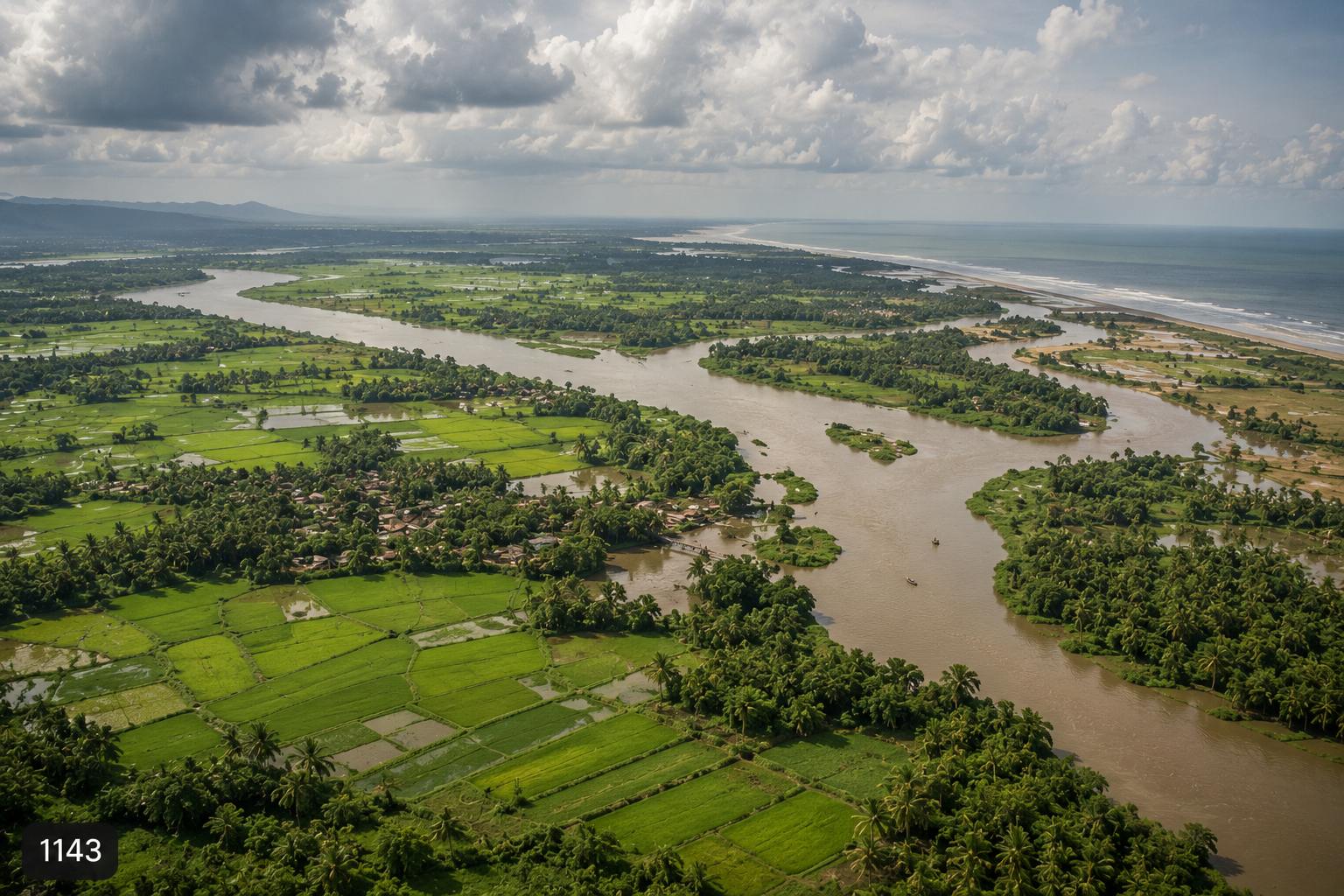
The terrain and agricultural landscape that produces the defining ingredients.
🧬
Food DNA
The flavour architecture
Grains
Rice (multiple varieties) — the absolute centrepiece — pakhala, bhat, specific Odia preparations
Pakhala — fermented rice water preparation — the defining Odia summer food
Rice flours — in pitha (cake) preparations
Protein
Fish (Bay of Bengal) — the daily protein — specific Odia mustard-based fish curry
Mahaprasad (vegetarian) — the sacred kitchen's vegetarian feast — no onion, no garlic
Dalma — lentil and vegetable — the daily Odia dal standard
Mustard paste — in fish and vegetable preparations
Turmeric — generous use — the defining colour of Odia cooking
Temple Tradition
Mahaprasad — the 56-item sacred feast of Jagannath temple — abhada, the offered food
Pitha — rice flour cakes — the festival offering tradition
Khaja — layered sweet — the Puri temple sweet distributed as prasad
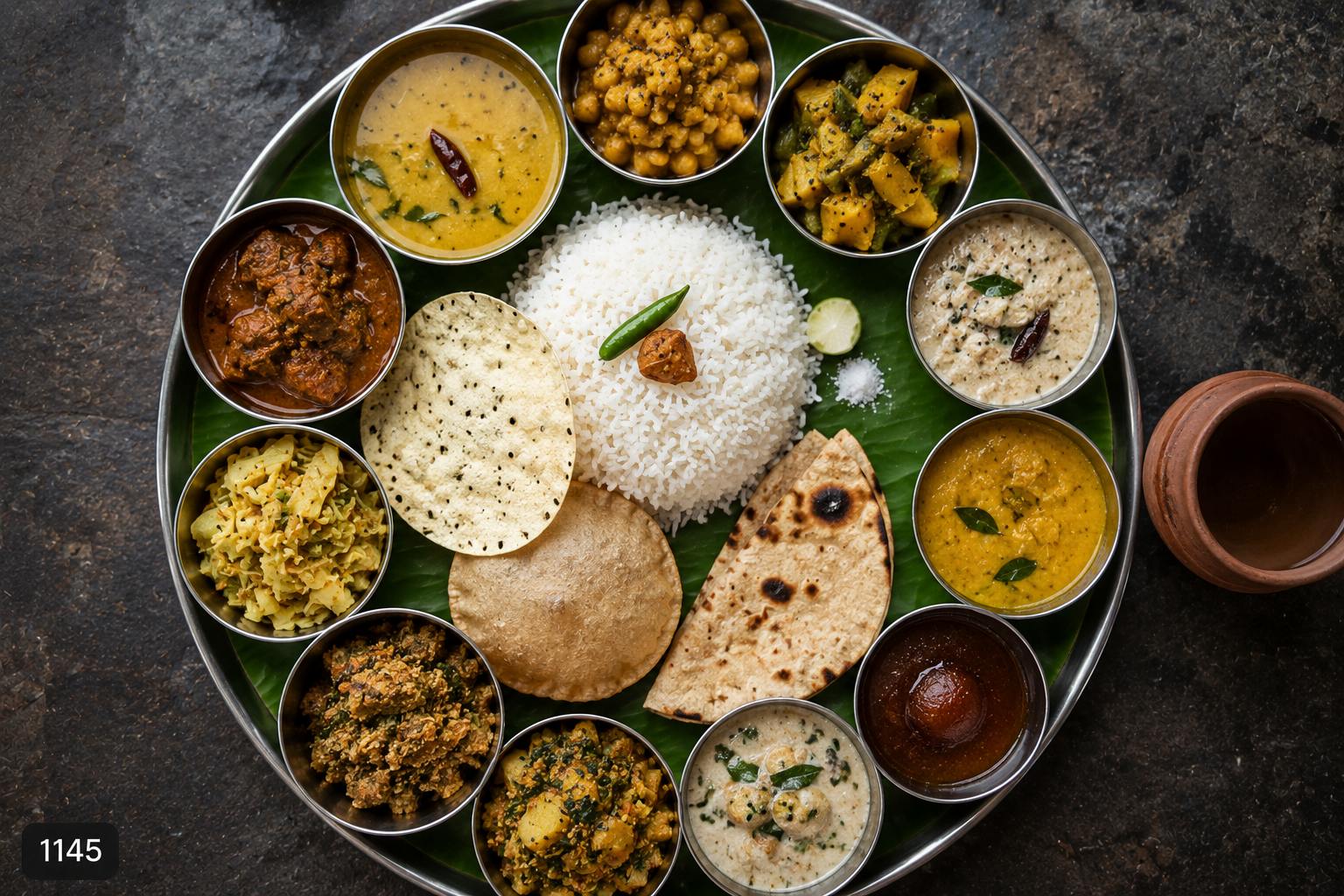
A complete thali representing the full flavour range.
🎉
Festival Foods
When the calendar drives the kitchen
Rath Yatra
The Jagannath chariot festival — the largest religious procession in India; specific mahaprasad distribution and street food around the rath route.
Raja Parba
The Odia women's festival — specific rice preparations, pitha-making, and the festival's food traditions centred on rice.
Kumar Purnima
Rice preparation festival — specific Odia full moon food traditions.
Nuakhai
The harvest festival of western Odisha — new rice eaten in specific sequence as the first harvest offering.
Durga Puja
Odia Durga Puja food traditions — different from Bengali in their specific preparations.
🌍
Diaspora & Reach
How this cuisine spread beyond its borders
The rasgulla origin dispute — whether the sweet was invented in Odisha (at the Jagannath temple, where chhena-based sweets have been documented for centuries) or in Bengal (where the Nobin Chandra Das commercial version was produced in the 19th century) — was officially decided in Bengal's favour by India's GI registry in 2017, then reversed by Odisha receiving its own GI for the Odia version. The dispute reflects how seriously both states treat their culinary heritage claims.
Odisha's food culture remains India's most underrated coastal cuisine internationally — the mahaprasad tradition has some recognition, but the secular Odia food culture (pakhala, dalma, the specific mustard-fish tradition) has limited national restaurant presence compared to its quality and distinctiveness.
Mahaprasad is the sacred food offering of the Jagannath temple at Puri — cooked in 752 clay pots over 352 wood-fired hearths, serving 100,000 daily visitors. The cooking uses no onion or garlic. The stacking of pots in tiers means the top pot cooks by steam from pots below — producing cooking behaviour different from conventional direct-heat methods. It is considered the most sacred food in Vaishnavism.
What is pakhala?
Pakhala is cooked rice soaked in water overnight, fermenting slightly, served cold with curd and salt. Odisha's defining summer preparation — the cooling fermented rice tradition of the Mahanadi delta. The Pakhala Dibasa (Pakhala Day) is now an annual cultural event celebrating this specifically Odia tradition.