The geographic centre of India — where North meets South, wheat meets rice, and the tribal communities of the forest interior maintain food traditions that predate recorded history. Dal bafla over charcoal, the Malwa plateau's specific food, and a tribal food diversity that is India's most overlooked.
⏱ 12 min read🗓 Updated June 2026★ State Food Guide
State Food Guide
Madhya Pradesh — The Heartland Kitchen
Madhya Pradesh is India's second largest state by area — the geographic heartland where the Vindhya and Satpura ranges divide North India's wheat belt from the Deccan's food geography. The Narmada river, flowing west across the state, is the traditional cultural boundary between North and South India. Food north of the Narmada (Malwa, Bundelkhand) is wheat-and-dal; south of it (Mahakoshal, Bastar) trends toward rice and tribal food traditions.
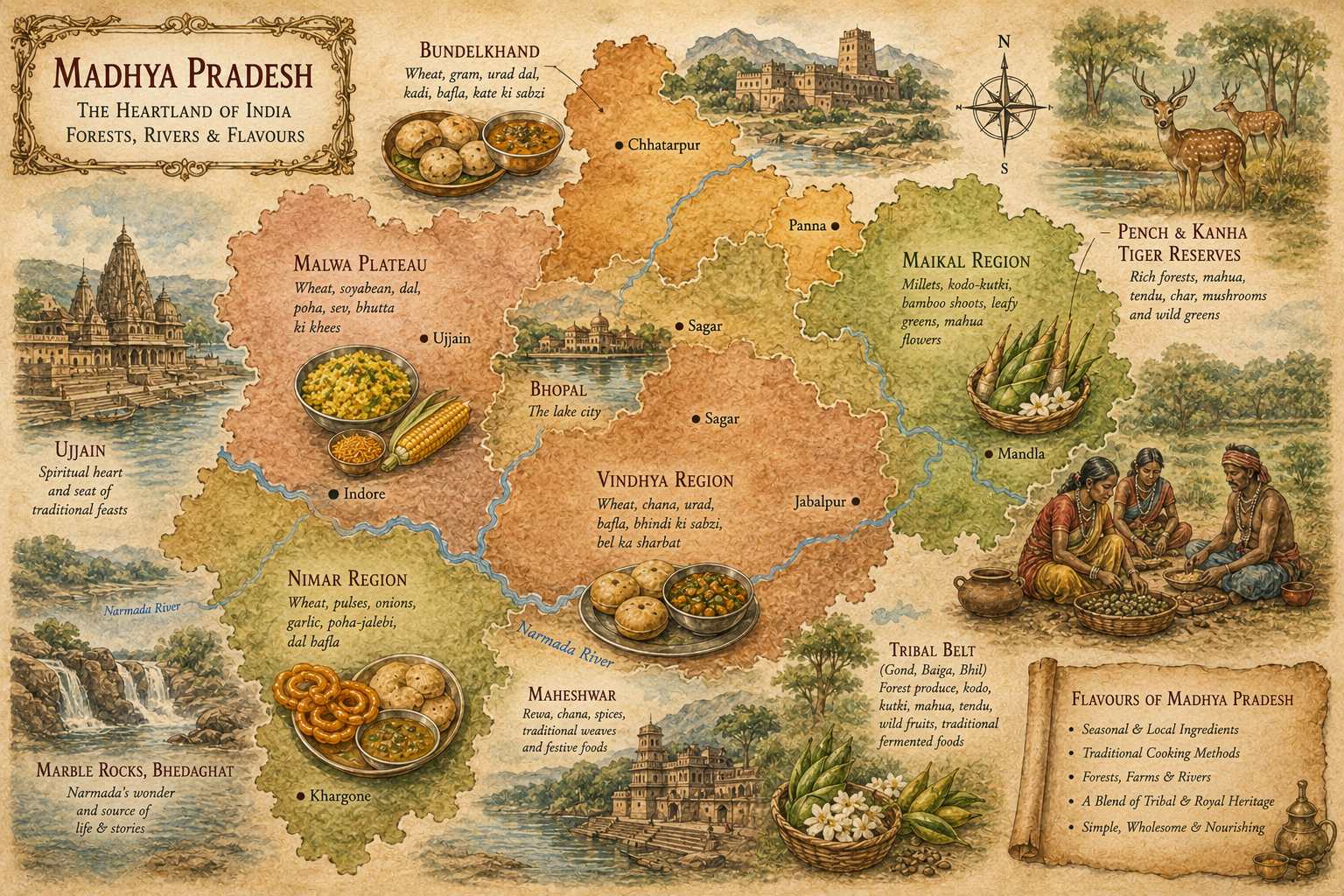
The geographic regions and food zones of Madhya Pradesh Food Guide.
🗺
Geography & Climate
The land that made this food inevitable
Madhya Pradesh contains more forest than any other Indian state — 25% of its area under forest cover. This forest geography supports the largest concentration of tribal communities in India, with their specific food traditions of forest-foraged ingredients, fermented preparations, and the specific game and forest protein traditions that have been maintained for centuries independently of mainstream Indian cooking.
The Malwa plateau in western MP produces the specific food tradition most associated with the state — dal bafla, similar to Rajasthani dal baati but with specific differences. The bafla is first boiled in water (unlike the Rajasthani baati which goes directly to the embers) and then finished in embers or charcoal, producing a slightly softer result. The five-lentil dal accompaniment and the churma sweet component are similar but the bafla technique is distinct.
The tribal food traditions of MP — particularly those of the Gond, Bhil, Korku, and Baiga communities in the forest regions — represent some of India's oldest continuous food cultures. The Baiga community, classified as a particularly vulnerable tribal group, maintains a food tradition built entirely on forest produce: mahua flowers (for food and liquor), tendu leaves, sal seeds, specific wild tubers. This is not poverty food — it is an ancient, sophisticated relationship with a specific forest ecosystem.
Mahua — The Forest Economy's Most Important Plant
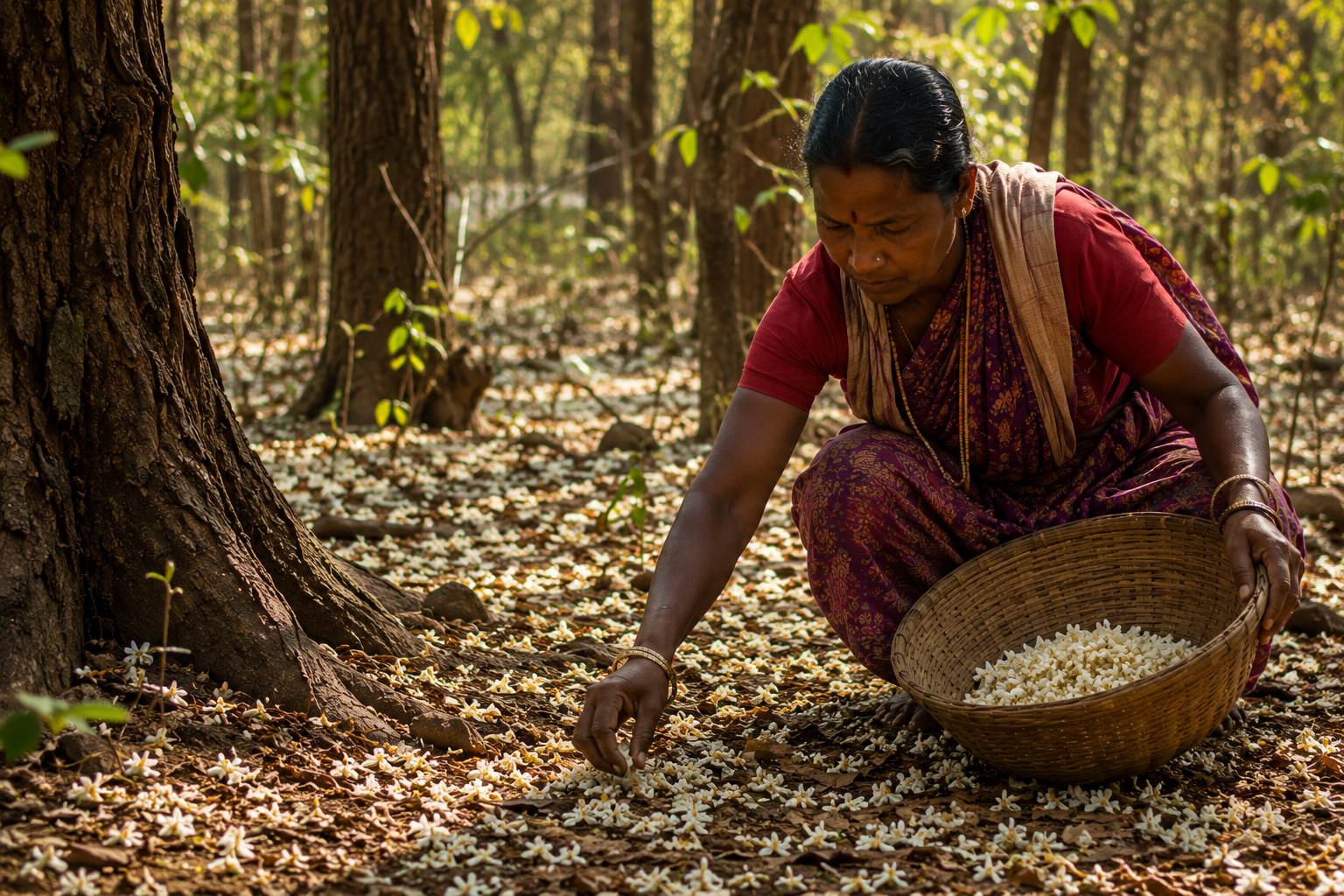
Mahua (Madhuca longifolia) is the most economically and nutritionally important plant for central India's tribal communities. The flowers are edible and nutritious (eaten fresh or dried as a grain substitute); the seeds produce a cooking oil; and the flowers are fermented to produce mahua liquor — one of India's oldest alcoholic traditions. For the Gond, Baiga, and other MP tribal communities, mahua is simultaneously food, fat, and celebration drink — a single plant that provides three of the four basic requirements of the diet. The criminalisation of mahua liquor production under colonial law disrupted this tradition; its partial decriminalisation is an ongoing political issue in tribal areas.
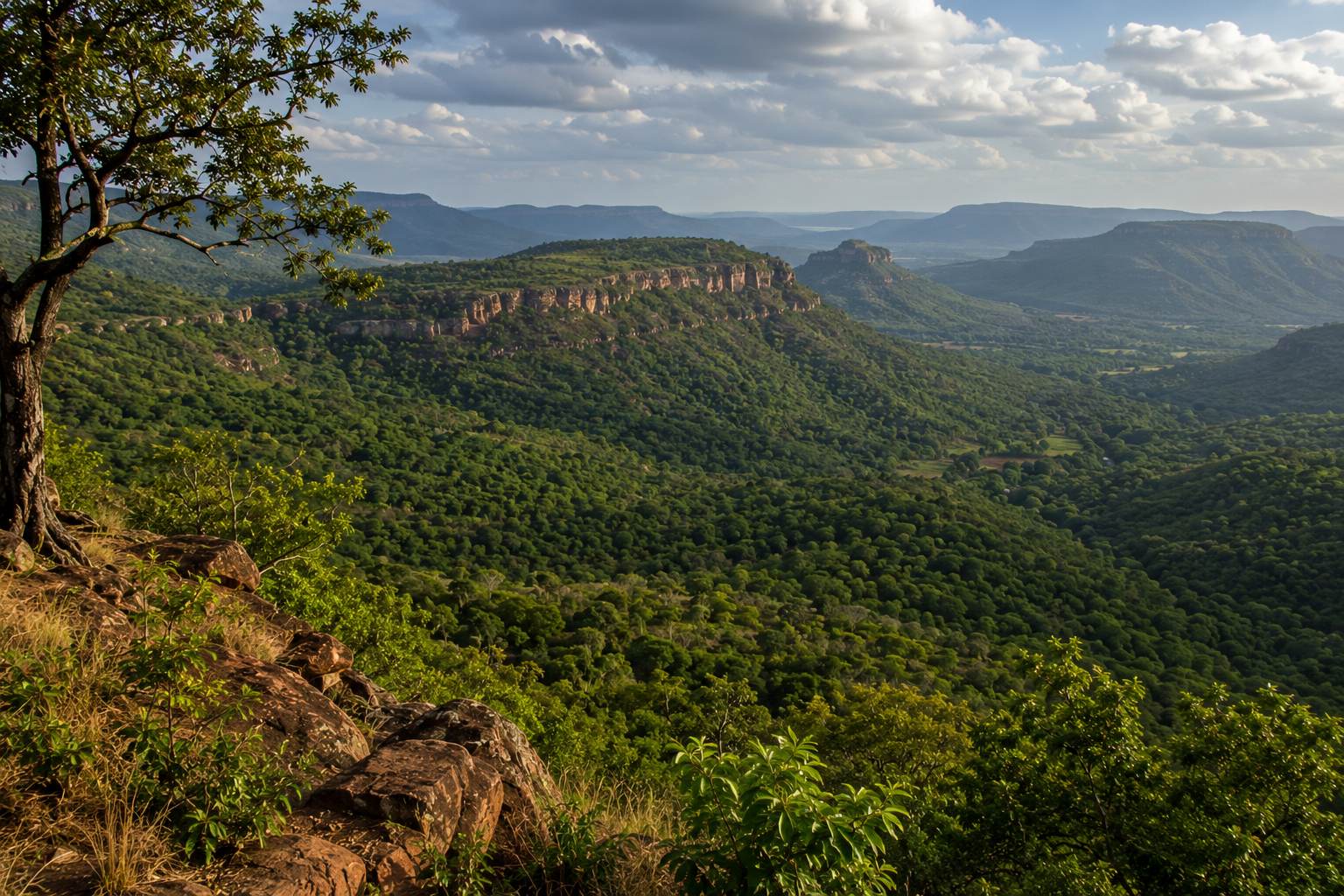
The terrain and agricultural landscape that produces the defining ingredients.
🧬
Food DNA
The flavour architecture
Grains and Bread
Wheat (north MP) — the Malwa and Bundelkhand staple
Rice (south MP) — the Mahakoshal and tribal zone staple
Bajra (millet) — in the drier western regions
Mahua (tribal) — the forest flower used as grain substitute and fermentation base
Dal Bafla Tradition
Bafla — boiled then ember-baked wheat ball — different from Rajasthani baati
Five-lentil dal — the MP version of dal baati's accompaniment
Churma — the sweet component — crushed wheat with jaggery
Tribal and Forest
Mahua flowers — food and liquor — the central tribal forest economy plant
Tendu (bidi leaf) seeds — edible seeds from the bidi leaf tree
Wild tubers and roots — specific tribal foraged food traditions
MP-specific
Bhutte ka kees — grated corn preparation — Indore street food specialty
Chakki ki shaak — grated wheat dumpling sabzi — specific to Malwa
Poha-jalebi — the Indore breakfast combination
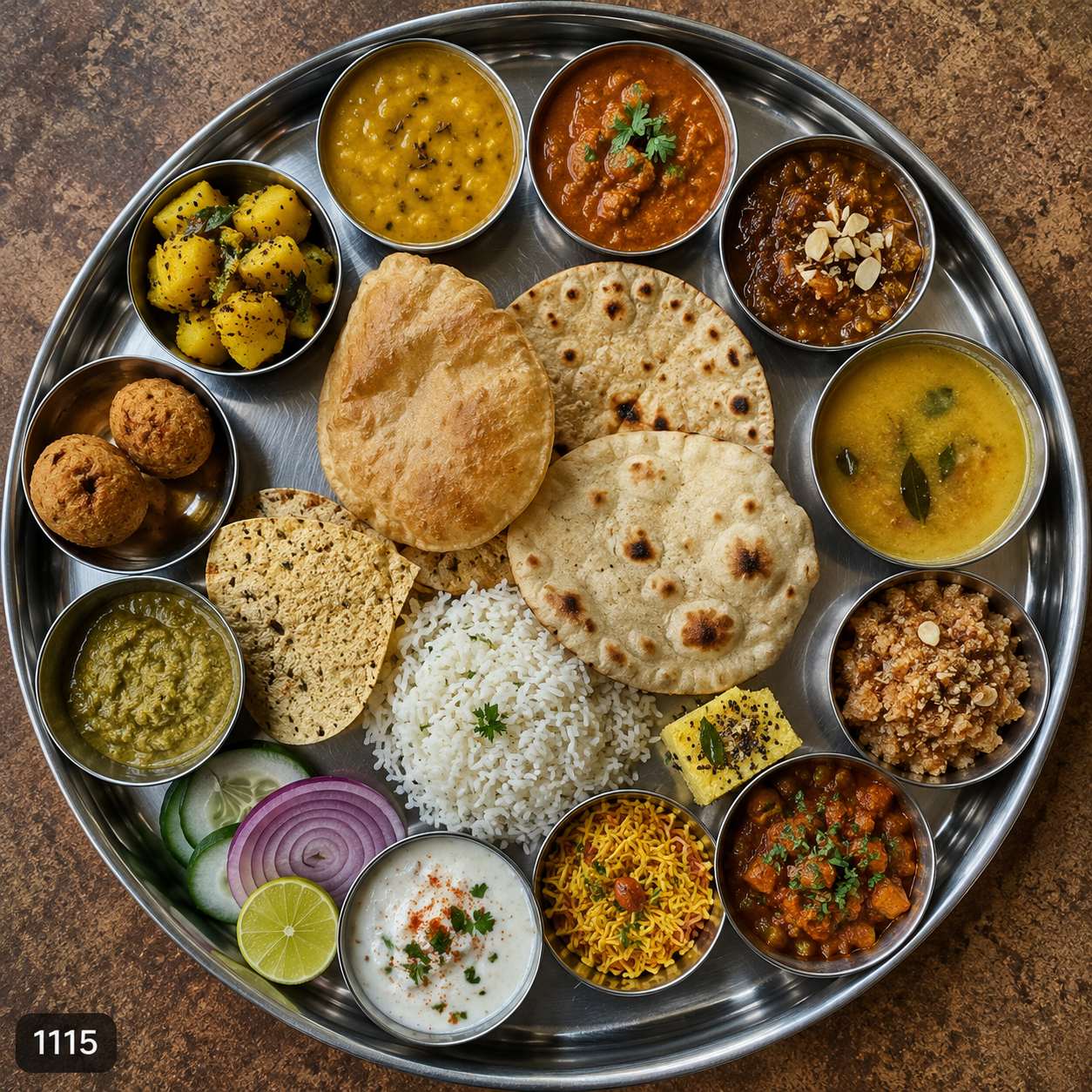
A complete thali representing the full flavour range.
🎉
Festival Foods
When the calendar drives the kitchen
Navratri
Farali preparations across MP — similar to Gujarat's fasting food tradition.
Diwali
Specific Malwa Diwali sweets — khurma (wheat sweet) and specific regional preparations.
Mahua season (tribal)
Spring festival around mahua flower collection — the most important tribal food occasion.
Holi
Bhang thandai and specific MP Holi food traditions — particularly strong in Bhopal and Indore.
Teej
Monsoon festival with specific wheat-based sweets — ghewar and specific MP Teej preparations.
🌍
Diaspora & Reach
How this cuisine spread beyond its borders
Indore has emerged as one of India's most recognised street food cities — the Sarafa Bazaar night market and Chappan Dukan (56 shops) area are nationally known for specific preparations: bhutte ka kees, garadu (winter yam), and the specific Indore poha which is different from all other regional poha preparations.
MP's tribal food traditions have attracted growing interest from food anthropologists and foraging-culture food tourists. The mahua and sal seed traditions are beginning to be recognised as part of India's indigenous food heritage.
Dal bafla is the Madhya Pradesh version of Rajasthan's dal baati — wheat balls first boiled in water, then finished in charcoal embers, served with five-lentil dal and churma (crushed wheat with jaggery). The boiling stage differentiates it from baati and produces a slightly softer interior.
What makes Indore's food culture distinctive?
Indore is considered one of India's top street food cities. Its specific preparations include bhutte ka kees (grated corn curry), garadu (winter yam), and a specific poha preparation (finer, more spiced, with sev and pomegranate) that differs from Maharashtra or Gujarat versions. The Sarafa Bazaar night market — which transforms from a jewellery market to a food market after 9pm — is one of India's most famous food streets.