From the Udupi Brahmin tradition that fed the world's South Indian restaurants to Coorg's pork and kachampuli, Mangalore's three-community table, and the Mysore royal kitchen — Karnataka may be India's most internally diverse state food culture.
⏱ 14 min read🗓 Updated June 2026★ State Food Guide
State Food Guide
Karnataka — The Most Diverse State Kitchen
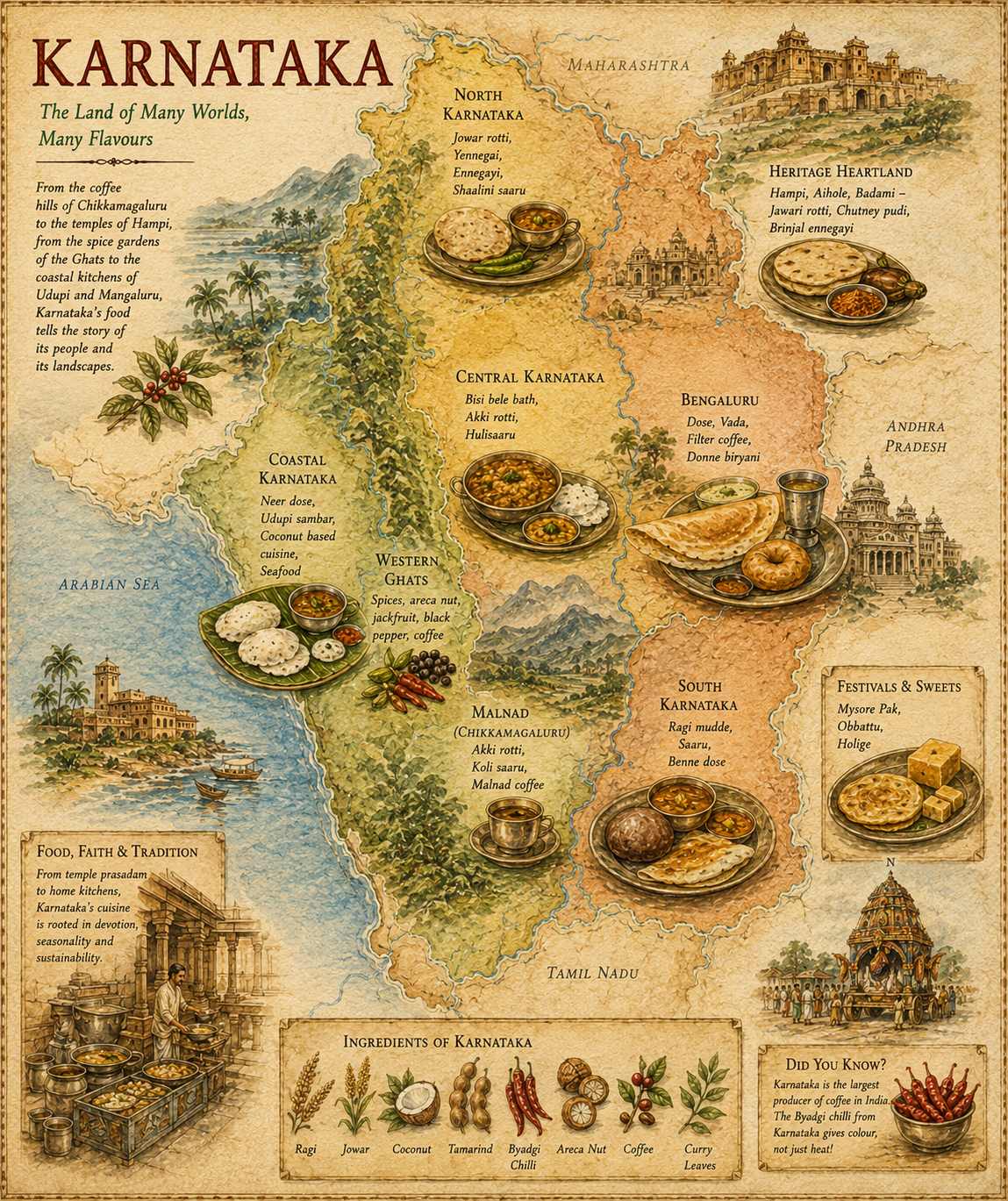
Karnataka spans from the Arabian Sea coast through the Western Ghats highlands (Coorg, Chikkamagaluru coffee country) to the Deccan plateau — three distinct food geographies producing four distinct food traditions. The Udupi coast, the Mangalorean Catholic-Hindu-Muslim table, the Coorg highland, and the Mysore-Dharwad Deccan plateau are as different from each other as any four states in India.
The geographic regions and food zones of Karnataka Food Guide.
🗺
Geography & Climate
The land that made this food inevitable
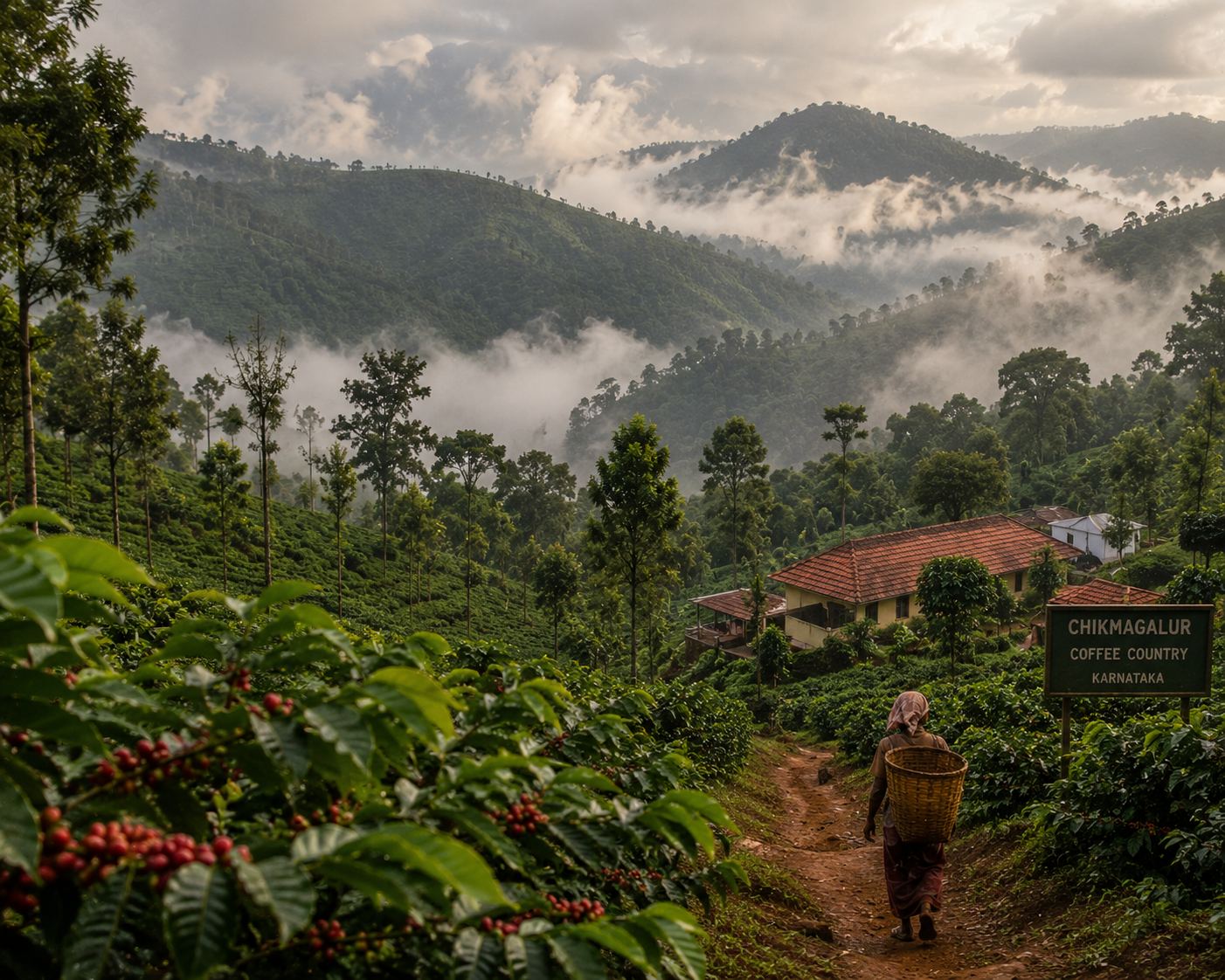
Karnataka's geographical diversity is extreme — from the monsoon-drenched Western Ghats coast (3,000mm+ of annual rainfall) to the semi-arid Deccan plateau (600mm). This rainfall gradient produces entirely different food cultures within a single state: coconut oil and seafood on the coast; jowar and peanut on the interior plateau; coffee and pepper in the Ghats highlands; rice and coconut in the Malnad midlands.
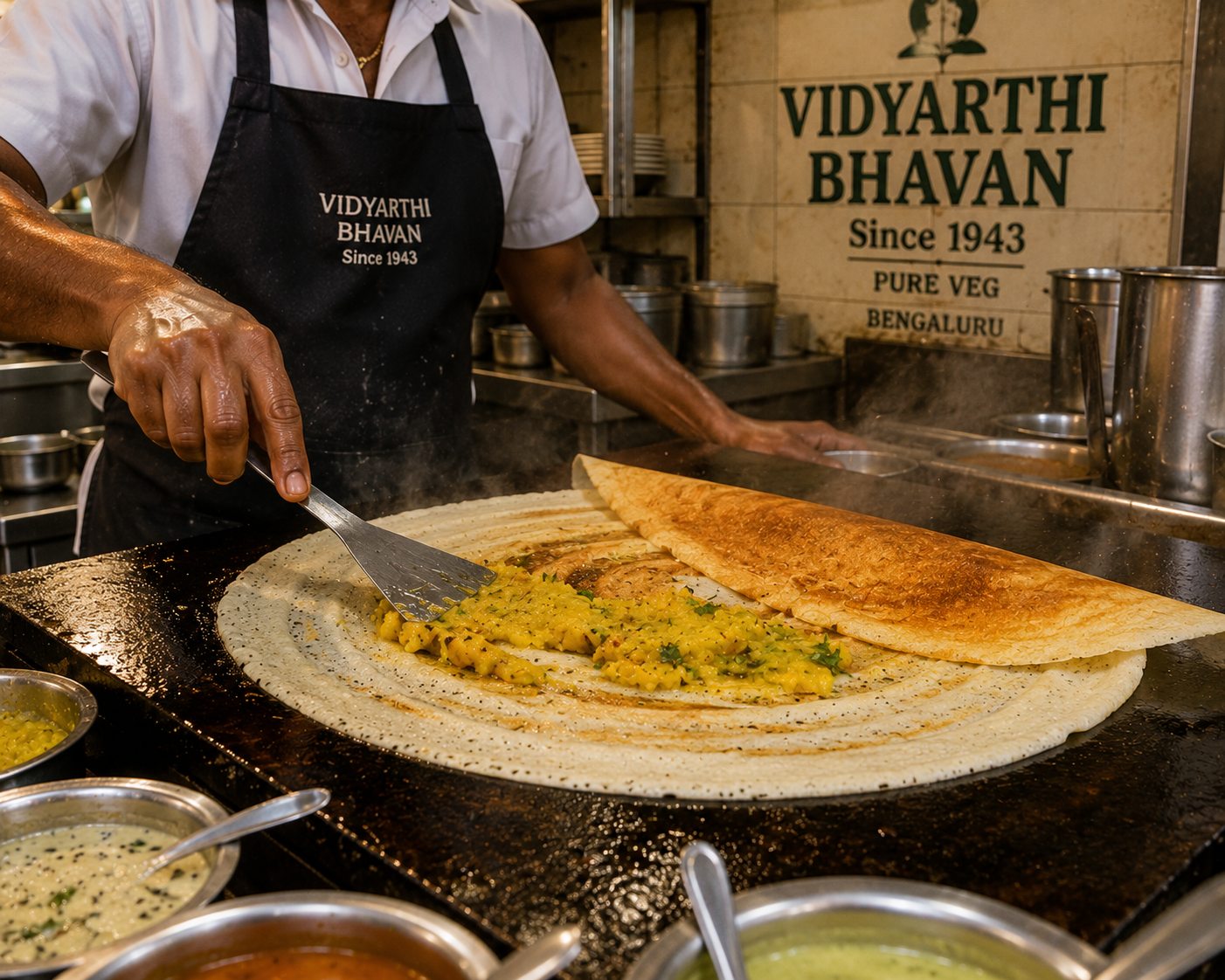
The Udupi tradition — the Madhwa Brahmin temple kitchen of coastal Karnataka — became the global template for South Indian food through the Udupi restaurant format that spread from Bombay in the 1940s. The world's understanding of South Indian food (masala dosa, idli, sambar, coconut chutney) is almost entirely the Udupi tradition. What this means is that one specific sub-regional tradition within one state became the global representative of an entire region's food culture — a remarkable influence disproportionate to Udupi's size.
The Mysore royal kitchen tradition represents the other extreme — the elaborate court cooking of the Wodeyar dynasty, which ruled Mysore for 500+ years. The Mysore pak (a ghee-rich chickpea flour sweet of specific density and fragility) was created in the Mysore royal kitchen and has become Karnataka's most internationally recognised sweet. The Mysore masala dosa — a specific Mysore preparation with red chutney spread on the inside — is the Mysore culinary signature within the dosa tradition.
Byadgi Chilli — Colour Without Aggression
The Byadgi chilli (grown in Haveri district) is Karnataka's most important spice ingredient — a long, wrinkled, deep-red dried chilli that produces brilliant colour with moderate heat. It is the primary ingredient in Bisi Bele Bath masala, in the Karnataka sambar tradition, and in numerous Karnataka preparations where colour is as important as heat. Like the Kashmiri chilli in the north, the Byadgi chilli produces a visual impact that exceeds its capsaicin contribution. Karnataka cooking is often visually vibrant without being aggressively hot — the Byadgi chilli is the reason.
The terrain and agricultural landscape that produces the defining ingredients.
🧬
Food DNA
The flavour architecture
Grains
Ragi (finger millet) — the Deccan plateau staple — mudde (balls) eaten daily in north Karnataka
Rice (coastal) — the coast and Malnad rice tradition
Jowar — in the dry north Karnataka plateau
The Coastal Tradition
Coconut (in all forms) — the defining coastal ingredient — oil, milk, grated, dried
Kokum — the souring agent of coastal Karnataka
Byadgi chilli — colour and moderate heat — the coastal masala foundation
Sub-regional Identity
Kachampuli (Coorg) — the Garcinia vinegar that defines Coorg cooking
Udupi no-onion-no-garlic — the temple kitchen tradition
Mangalorean three-community — Catholic bafat, Hindu GSB fish, Beary biryani
Deccan Plateau
Ragi mudde — finger millet ball — the north Karnataka staple
Jolada rotti — jowar flatbread — the plateau bread
Enne badnekayi — brinjal in peanut masala — the Dharwad preparation
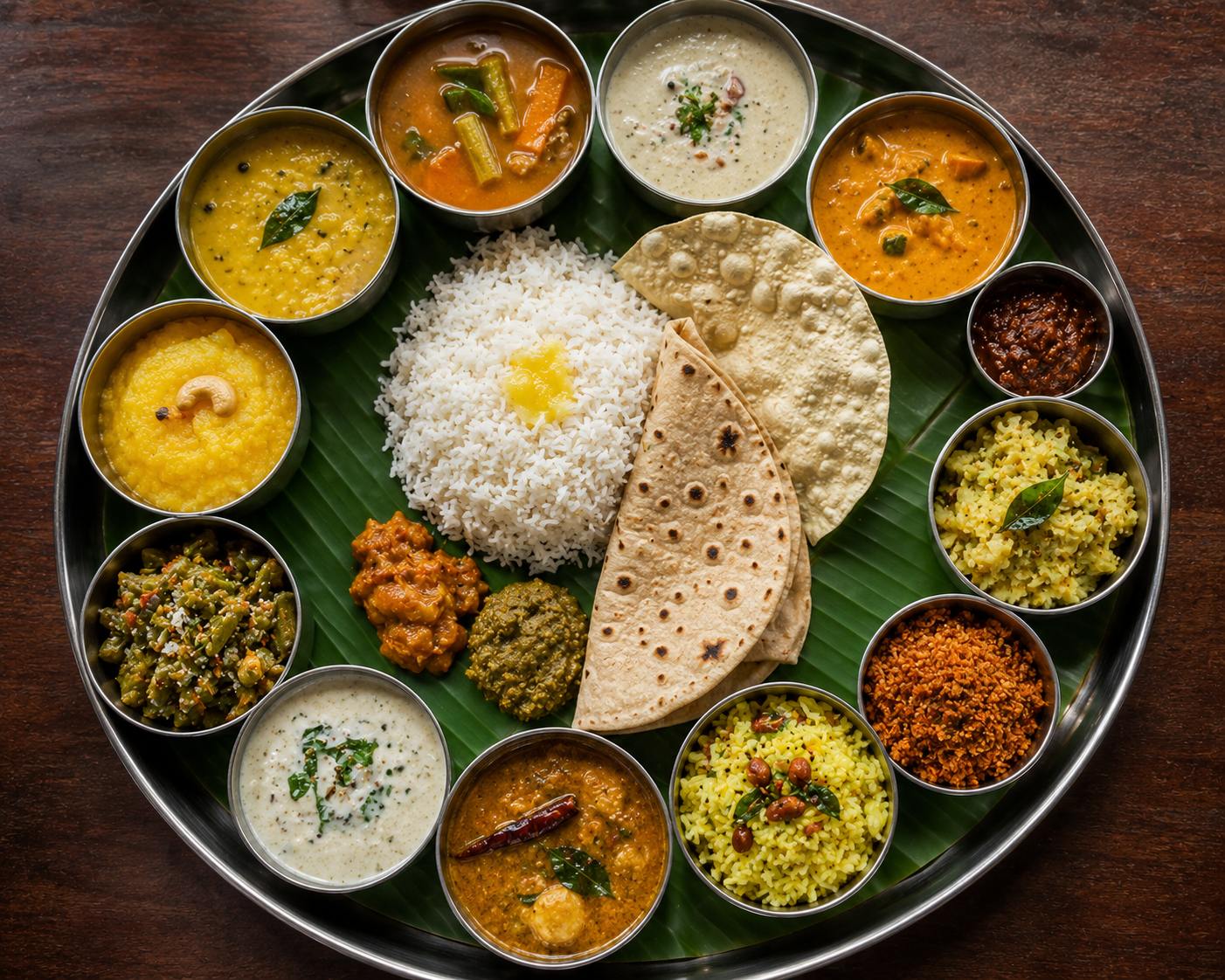
A complete thali representing the full flavour range.
🎉
Festival Foods
When the calendar drives the kitchen
Ugadi (Kannada New Year)
Holige/Puran poli (sweet lentil flatbread) and Ugadi pachadi (six-taste preparation) — the Kannada new year food tradition.
Dasara (Mysore)
The Mysore Dasara is India's most elaborate royal festival — the Mysore royal kitchen's preparations for this 10-day event are the most extensive festival food in Karnataka.
Ganesha Chaturthi
Modak and specific Karnataka Ganesha festival sweets — the coastal Karnataka version differs from Maharashtra's preparation.
Karaga
The Dharmaraya temple Karaga festival of Bengaluru — specific community festival food of the Thigala community.
Sankranti
Yellu bella (sesame and jaggery) exchanged as gifts — and the specific Sankranti preparations of Karnataka.
🌍
Diaspora & Reach
How this cuisine spread beyond its borders
The Udupi restaurant tradition has been Karnataka's most globally significant culinary export — the masala dosa and idli served in restaurants from London to Singapore are almost always prepared in the Udupi tradition, whether or not the restaurant identifies as Udupi.
The Bengaluru technology economy has made the city India's most internationally diverse food market, with global cuisines available alongside Karnataka's regional traditions. The coffee culture of the Chikkamagaluru Ghats has been amplified by the Bengaluru startup culture's coffee shop proliferation.
Karnataka may be India's most internally diverse state food culture — the Udupi Brahmin tradition (no onion-garlic, strictly vegetarian), the Mangalorean three-community table (Hindu, Catholic, Muslim), Coorg's highland pork and kachampuli tradition, and the Mysore-Dharwad Deccan plateau tradition are as different from each other as any four states in India.
What is Mysore pak?
Mysore pak is a dense, ghee-rich chickpea flour sweet created in the Mysore royal kitchen — possibly by Kakasura Madappa, the royal cook, for the Wodeyar king. It has a specific porous, fragile texture from the ghee incorporated at high temperature into the besan-sugar mixture. The original Mysore version is harder and more porous than the softer modern commercial versions.