One of the oldest culinary traditions in India — Sangam literature describes the food culture of 2,000 years ago. Rice, tamarind, and the most diverse state food geography in South India: from Chettinad's 20-spice masala to Udupi's temple cooking.
⏱ 15 min read🗓 Updated June 2026★ State Food Guide
State Food Guide
Tamil Nadu — Rice Country's Ancient Kitchen
Tamil Nadu sits on the southeastern tip of India — the Bay of Bengal to the east, the Western Ghats to the west, the Coromandel Coast producing one of India's most diverse fish traditions. The state spans from the ancient temple city of Madurai in the south to the Nilgiris tea country in the north, with four distinct food sub-regions that share rice and tamarind but diverge in almost everything else.
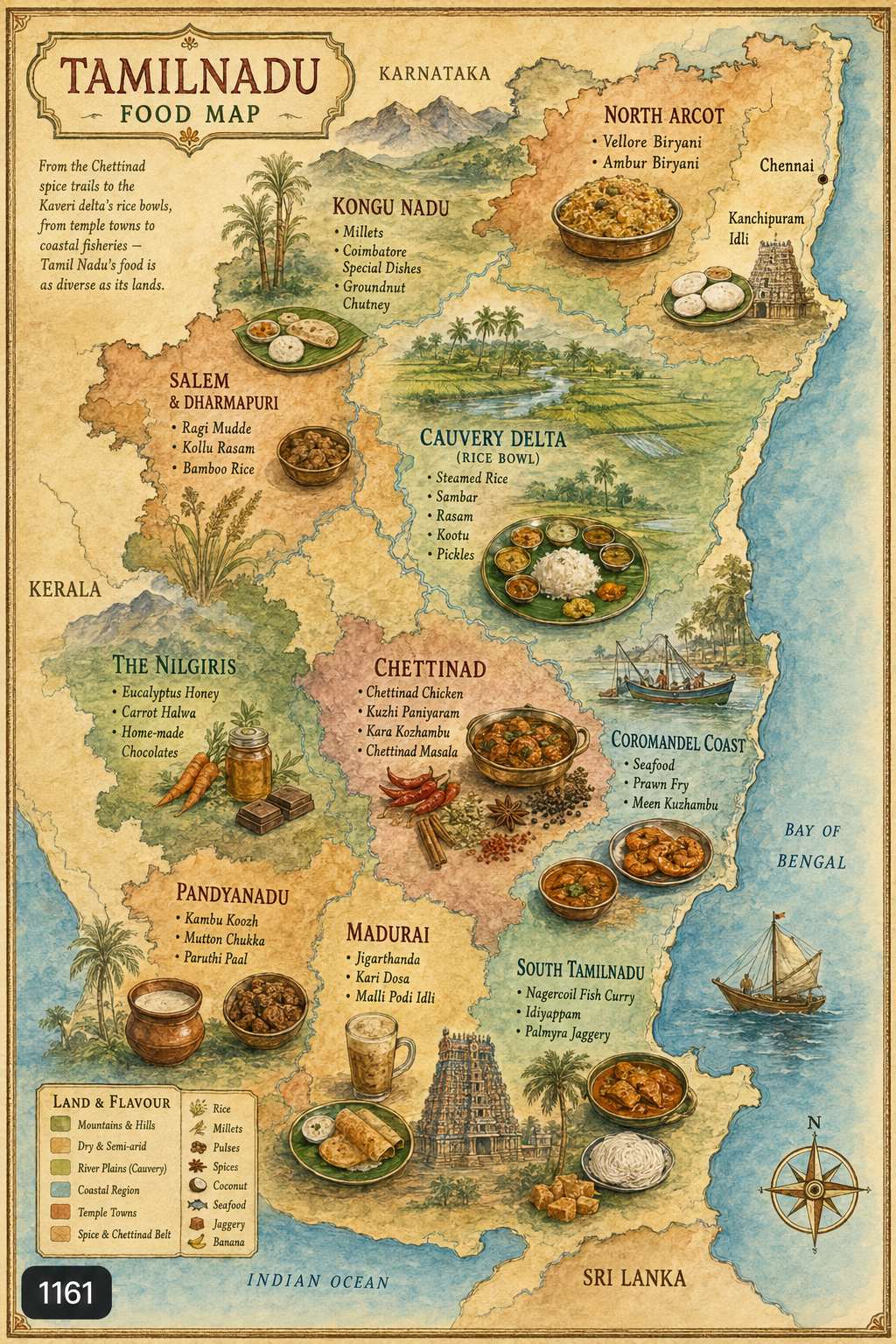
The geographic regions and food zones of Tamil Nadu Food Guide.
🗺
Geography & Climate
The land that made this food inevitable
Tamil Nadu's food culture is among the oldest documented in India — Sangam literature of 2,000 years ago describes five ecological zones (tinai), each with its specific food. The five tinai framework — seashore, pastureland, farmland, mountains, and wasteland — maps exactly onto the food geography of the state today: coastal fish, pastoral dairy, alluvial rice, mountain spice and coffee, and semi-arid interior millet and lentil.
Rice is the central element — consumed three times daily in most Tamil Nadu households, in forms ranging from idli (steamed fermented cake) and dosa (fermented crepe) to the plain rice-and-sambar meal that is the daily default for the majority. The fermented rice-lentil batter tradition (idli and dosa) developed specifically in this climate zone — the 28-32°C ambient temperature produces the optimal fermentation rate, and the specific ratio of urad dal to rice creates the aeration that makes idli light and dosa crisp.
Tamarind is the souring agent that defines Tamil Nadu's flavour profile, appearing in sambar, rasam, fish curry, and the specific sour-hot-savoury combination that distinguishes Tamil cooking from North Indian food. Chettinad cooking uses tamarind in the most complex masala context in India; coastal cooking uses it with fresh fish; the Udupi tradition adapted it for strictly vegetarian temple cooking. One souring agent, four sub-regional philosophies.
The Sangam Tinai System — Ancient Food Geography
Sangam literature (roughly 300 BCE to 300 CE) classified the Tamil landscape into five ecological zones called tinai — each with specific flora, fauna, activities, and foods. The marutham tinai (fertile farmland) produced rice and dairy; the neithal tinai (seashore) produced fish; the kurinji tinai (mountain) produced spice and honey. This 2,000-year-old ecological framework predicts the food geography of modern Tamil Nadu with remarkable accuracy. The state's five food zones today correspond almost exactly to the Sangam tinai classification — an unbroken link between ancient ecology and modern cooking.
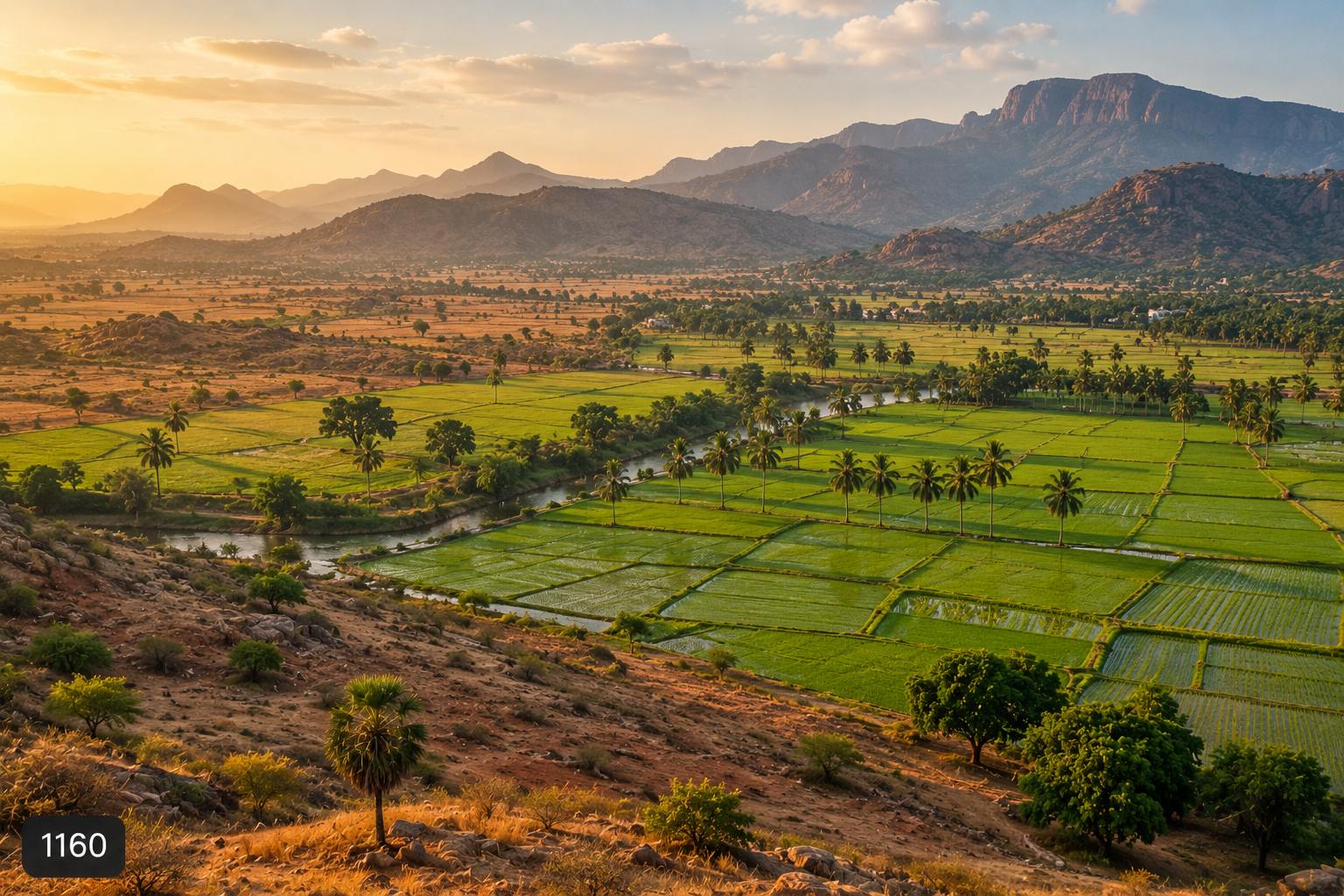
The terrain and agricultural landscape that produces the defining ingredients.
🧬
Food DNA
The flavour architecture
Grains
Rice — the daily staple — consumed in multiple forms from idli to plain rice
Ragi (finger millet) — in Kongunadu and the interior — kali, koozh, and roti
Idli-dosa batter — fermented rice-urad dal — the foundation of South Indian breakfast
Souring and Spicing
Tamarind — the defining Tamil souring agent — in sambar, rasam, fish curry
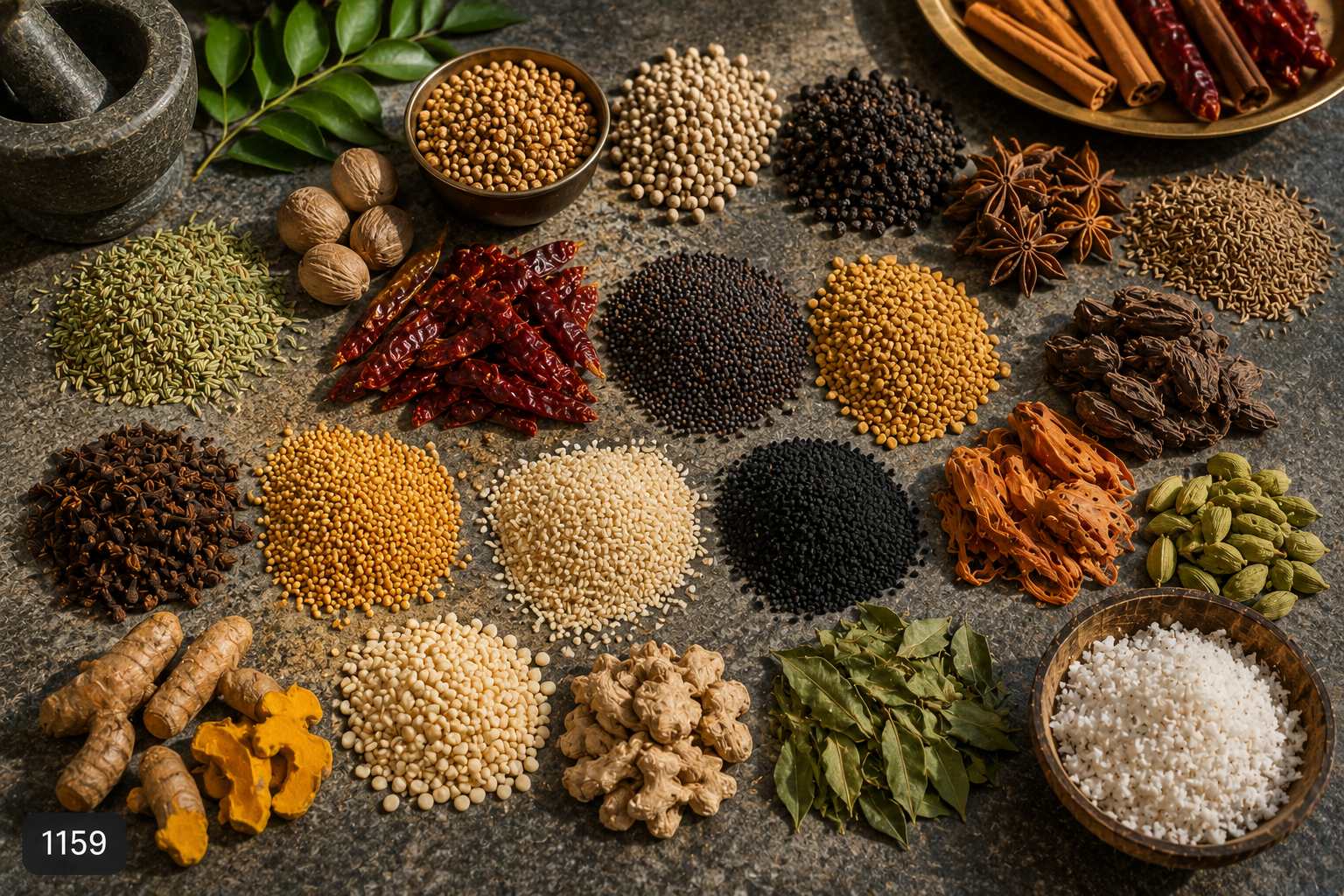
Chettinad masala — 20+ spices — the most complex masala tradition in India
Gundu chilli — the Tamil Nadu round red chilli — different from Guntur or Kashmiri
Proteins
Fish (coast) — the Bay of Bengal and Gulf of Mannar fish tradition
Chettinad chicken — the most internationally known Tamil Nadu non-vegetarian preparation
Urad dal (protein source) — in sambar, kootu, and as the idli-dosa batter's protein foundation
Fats and Aromatics
Sesame oil — the primary cooking fat of Tamil Nadu — different from coconut oil
Curry leaves — in every tempering — the marker of South Indian cooking
Mustard seeds — for tempering — the Dravidian cooking signature
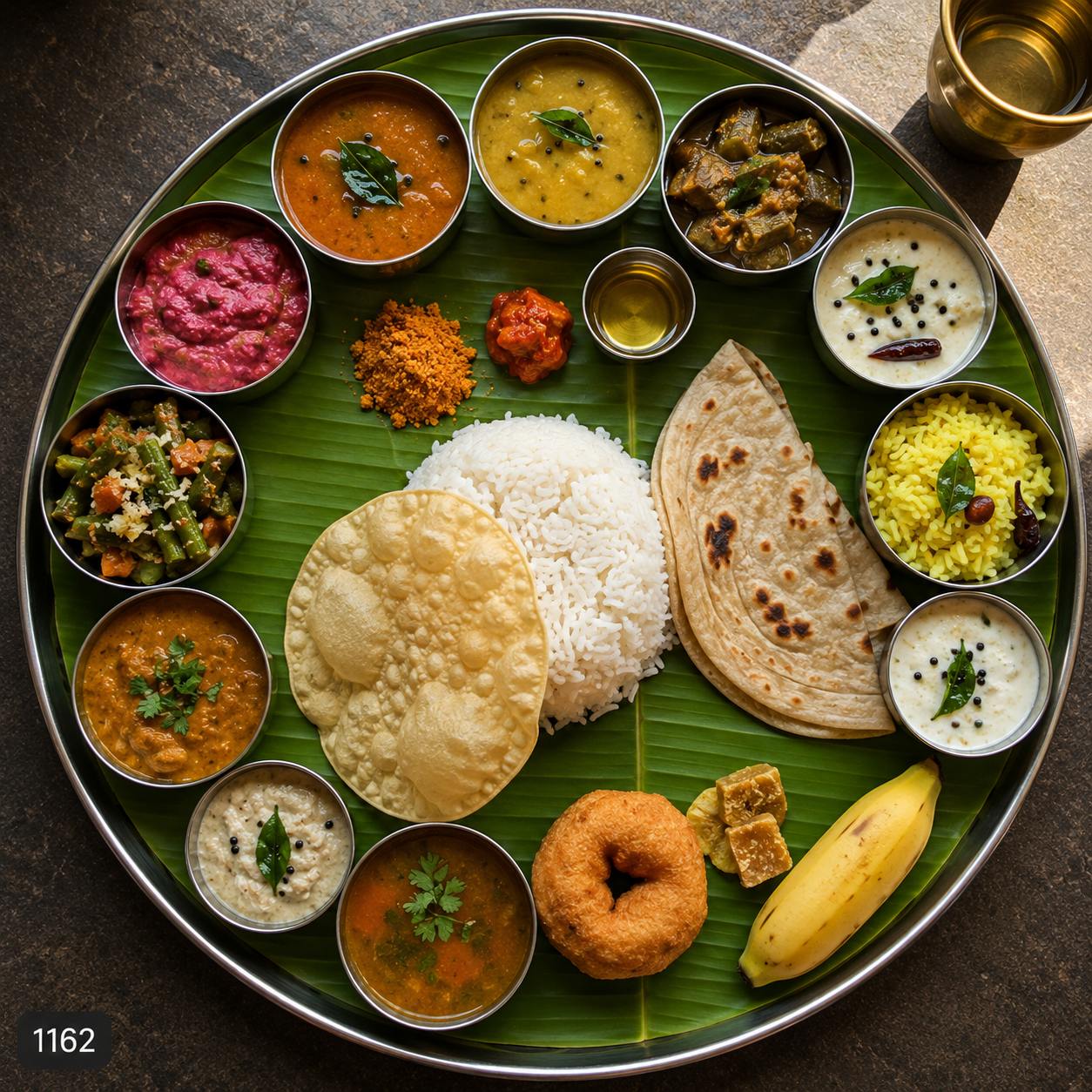
A complete thali representing the full flavour range.
🎉
Festival Foods
When the calendar drives the kitchen
Pongal (harvest festival)
Sweet pongal (rice with jaggery and ghee) and ven pongal (savoury with pepper and ghee) — the defining Tamil festival food. Cooked in new clay pots allowed to boil over as a good omen.
Diwali
Murukku, adhirasam, and specific Tamil Diwali sweets — prepared at home, not purchased.
Karthigai Deepam
Pori (puffed rice) and specific sweets associated with the lamp festival.
Tamil New Year (Chithirai)
Mango pachadi — the six-taste preparation that represents the year's experiences: sweet (jaggery), sour (mango), bitter (neem flowers), hot (chilli), salt, astringent.
Aadi Perukku
Payasam and specific rice preparations for the river festival of the Tamil calendar.
🌍
Diaspora & Reach
How this cuisine spread beyond its borders
The Udupi restaurant format — the global default South Indian restaurant — originated in Tamil Nadu's neighbour Karnataka but spread through Tamil Nadu first before going national. The Tamil Nadu presence of this format standardised South Indian food nationally and internationally.
The Tamil diaspora in Malaysia, Singapore, Sri Lanka, and South Africa established Tamil food cultures that have maintained their identity over 150+ years. The banana leaf rice meal found in Kuala Lumpur and Singapore has direct Tamil Nadu origins.
Sambar is a tamarind and toor dal vegetable soup that accompanies idli, dosa, and rice throughout Tamil Nadu. The specific Tamil Nadu sambar uses a specific sambar masala (coriander, cumin, dried red chilli, pepper, chana dal, curry leaves, dried coconut) that distinguishes it from the Karnataka version used in the Udupi restaurant tradition.
What makes Chettinad cooking different?
Chettinad cooking uses 20+ spices including unique ingredients like kalpasi (stone flower, a lichen), marathi mokku (dried flower pod), and star anise — sourced through the Nattukotai Chettiars' global trading network. The combination produces a masala complexity unmatched anywhere in South India.