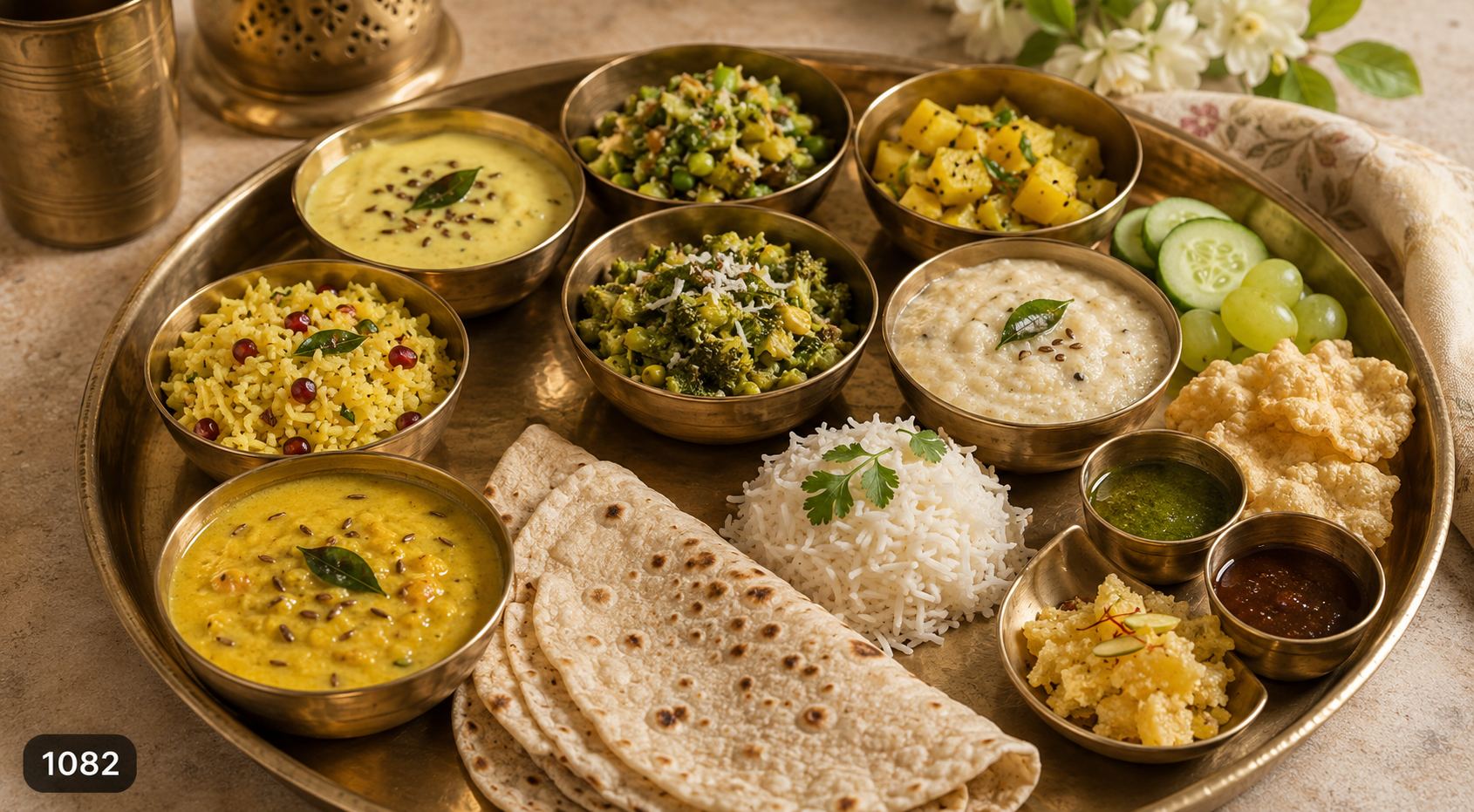
No meat, no fish, no egg, no root vegetables (their harvest kills the plant), no eating after sunset, and specific festival fasts that extend the restriction further. Jain dietary philosophy applied completely — and the culinary ingenuity required to cook deliciously within its limits.
⏱ 12 min read🗓 Updated June 2026★ Food Story
The Philosophy
Why Jain food is the way it is
Jain dietary restrictions are not arbitrary rules but the logical application of ahimsa (non-violence) to every aspect of eating. Meat, fish, and eggs are avoided because their production requires killing animals. Root vegetables (onion, garlic, potato, carrot, radish, beet) are avoided because their harvest kills the entire plant — ripping the root from the ground destroys the organism. Above-ground vegetables (peas, beans, leafy greens, gourds) can be harvested without killing the plant — these are permitted. The restriction is not a tradition but a philosophy applied consistently.
The Five Udumbara — The Fruits Jains Cannot Eat
The five udumbara (cluster figs) — cluster figs, wood apple, breadfruit, jackfruit (the fruit with multiple ovaries), and the specific Indian fig — are avoided by strict Jains because they host large numbers of insects within the fruit clusters. Eating these fruits would involve unintentional insect consumption. The Jain reasoning: if the goal is to minimise harm to all living beings, then eating a fruit that houses hundreds of insects — even unintentionally — is incompatible with ahimsa. This level of philosophical consistency in a dietary rule has no equivalent in any other food tradition.
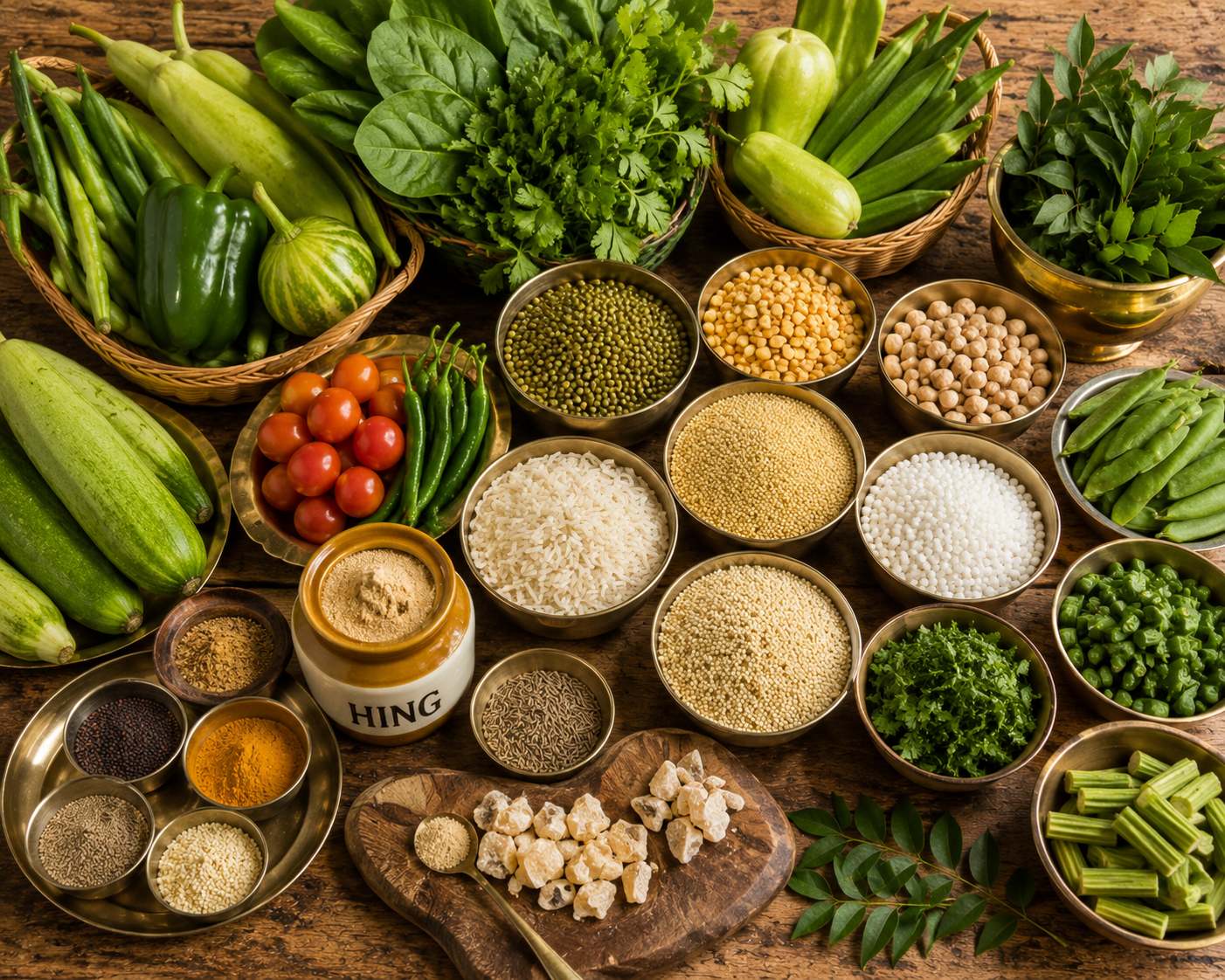
The ingredients available within Jain dietary restrictions — and the culinary ingenuity required to use them.
The Marwari Jain trading community — the most commercially distributed Jain community — spread their dietary restrictions and their specific culinary solutions (hing for onion, gatte for fresh vegetables, khakhra for portable snacks) across India and internationally. The Jain restaurant format — strictly no root vegetables, no meat, no egg — has appeared wherever Jain traders have settled, making Jain food one of India's most globally distributed food traditions despite being followed by only about 0.4% of India's population.
Strict Jains avoid meat, fish, eggs, and all root vegetables (onion, garlic, potato, carrot, radish, beet) because their harvest kills the entire plant. Above-ground vegetables can be harvested without killing the plant and are permitted. Many also avoid eating after sunset and observe specific fasting periods (particularly Paryushana).
What does Jain food use instead of onion and garlic?
Asafoetida (hing) is the primary substitute — a resinous gum that, when cooked in hot fat, produces an onion-like savoury depth. Dried ginger provides warmth without a fresh root. Green stems and leaves of plants (rather than roots) can also provide some aromatic character. The Jain kitchen is built around hing as its primary aromatic foundation.