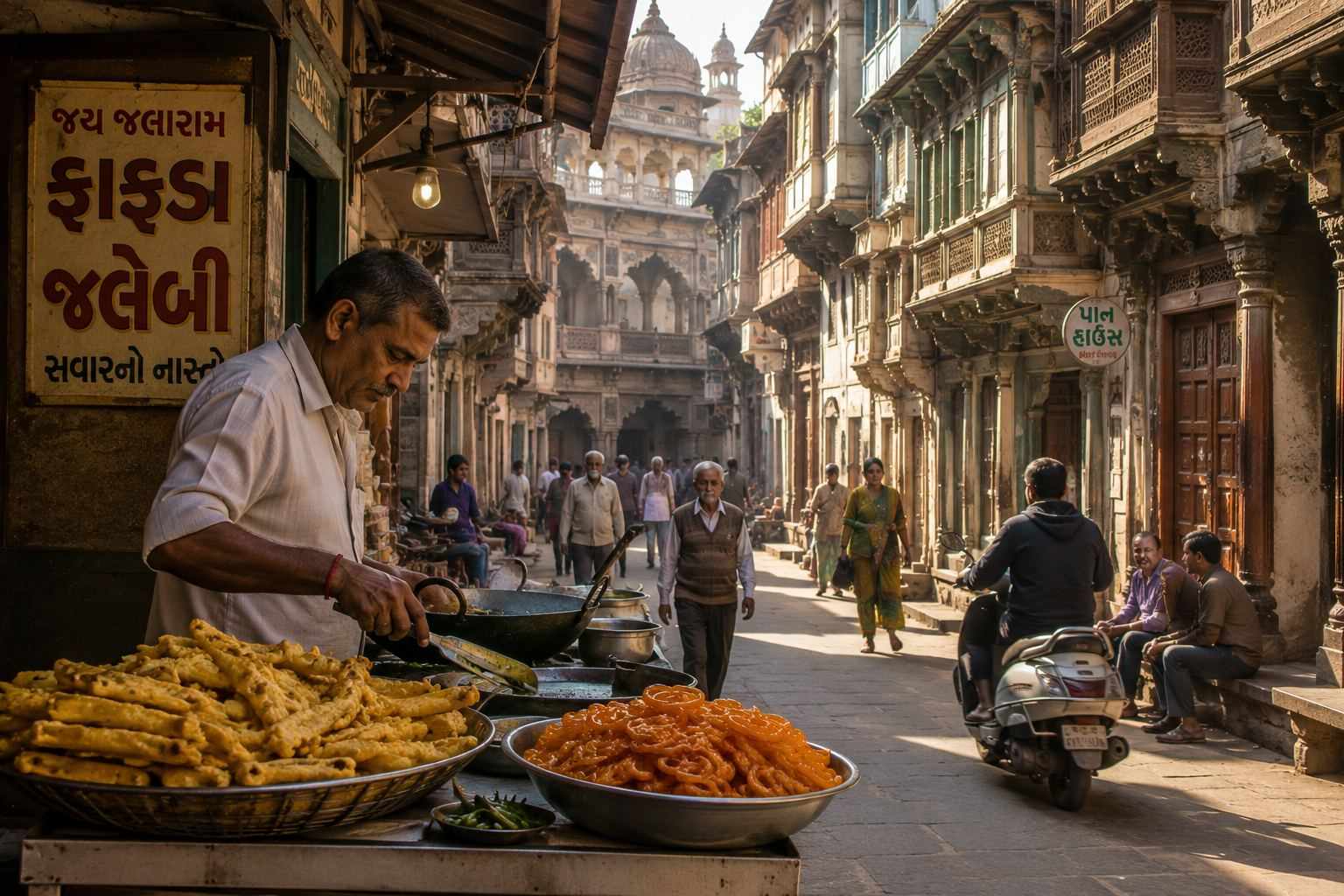
Fafda-jalebi on Sunday mornings. The unlimited Gujarati thali at lunch. Khau Gali at night. Ahmedabad may be India's most vegetarian city and is certainly the city that has done the most with the vegetarian constraint.
⏱ 11 min read🗓 Updated June 2026★ City Food Guide
City Food Guide
Ahmedabad — The Vegetarian Food Capital
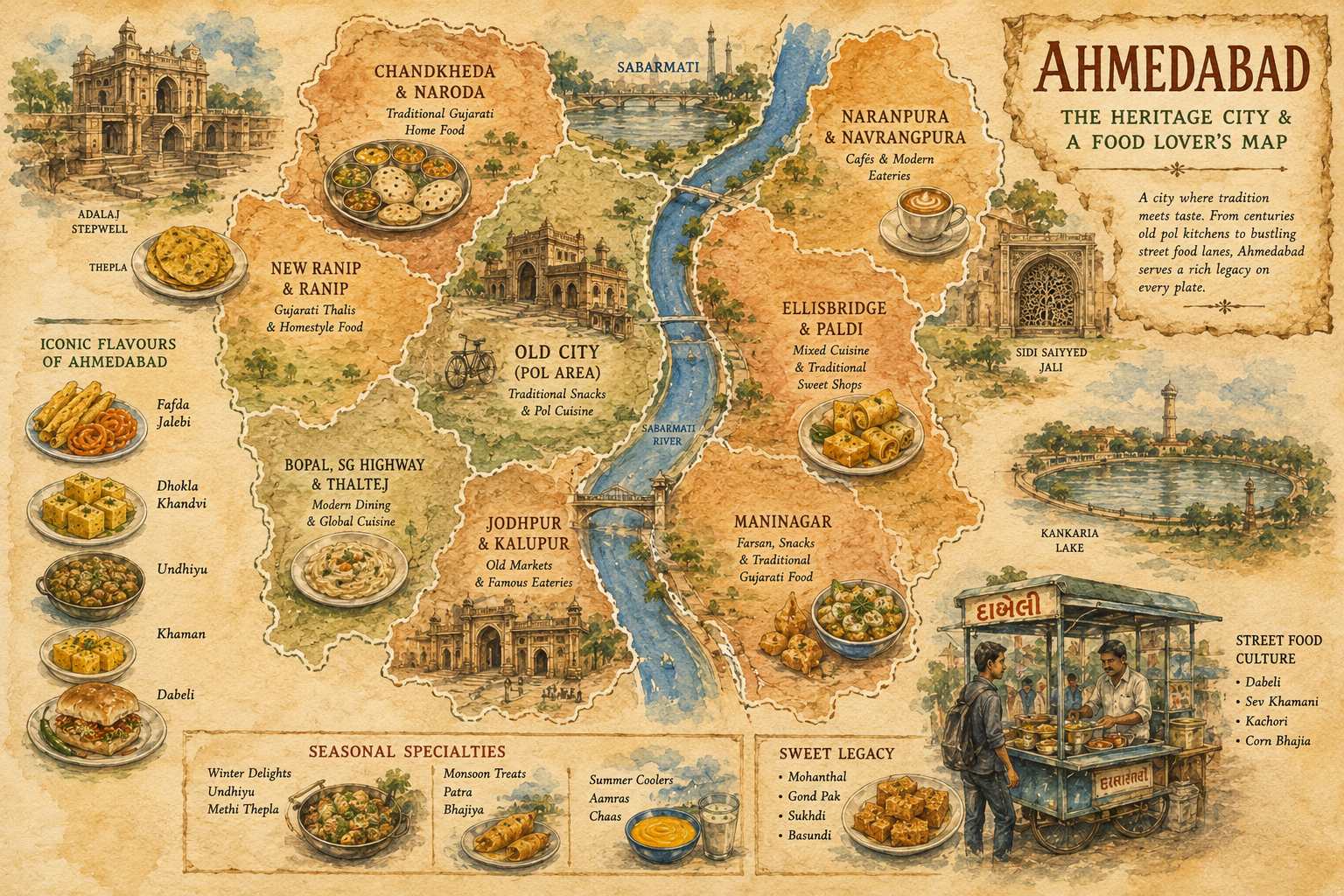
Ahmedabad is built on the Sabarmati river and on centuries of Jain-influenced Gujarati vegetarian cooking. The city's food culture is the most comprehensive expression of the principle that vegetarian cooking is not a constraint but a philosophy — and that the philosophy produces extraordinary food when applied with 2,000 years of accumulated technique.
The Gujarati thali — the unlimited lunch format where a server refills every dish until you refuse — is Ahmedabad's defining eating experience. The thali contains the sweet-salty-spicy balance that is the philosophical foundation of Gujarati cooking: every preparation simultaneously engaging multiple taste registers. The undhiyu (winter only), the dal with jaggery and tamarind, the specific seasonal vegetables — the thali's menu changes by season in ways that few other restaurant formats in the world still do.
Manek Chowk — Three Faces of One Square
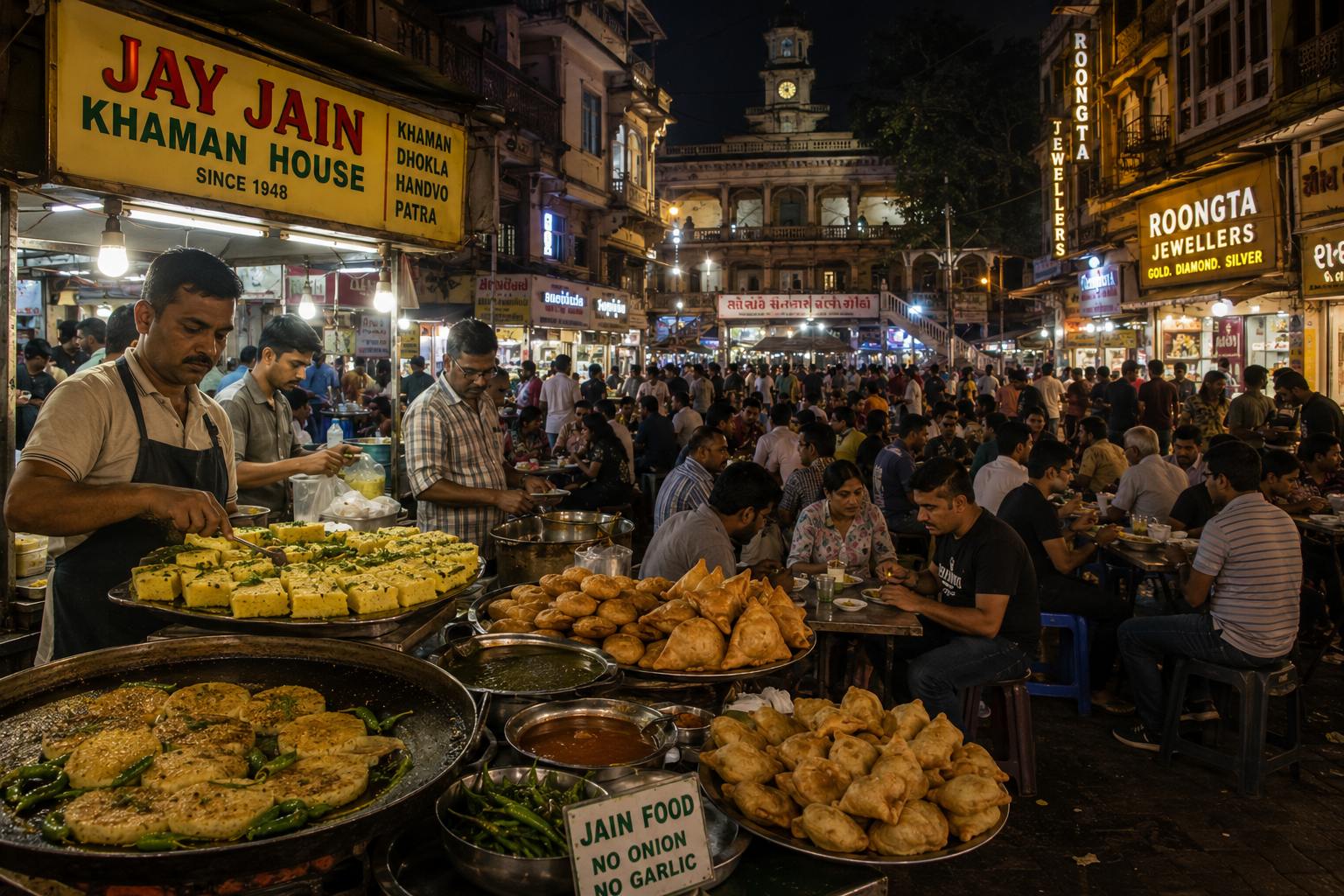
Manek Chowk in the old city of Ahmedabad is a jewellery market by day. From late afternoon it becomes a flower and vegetable market. After 9pm it transforms into a street food market with 30+ stalls serving Ahmedabad's specific street food: Jain pizza (without onion, garlic, or potato — with specific permitted vegetables), khichda, kathiyawadi thali preparations, and the specifically Ahmedabad sweet-savoury combinations. The same physical space functions as three different economies in sequence — jewellery, produce, food. It is the most efficient use of public space for food commerce in any Indian city.
The defining street food culture.
🥘
Street Food
The preparations you eat standing up
Fafda-Jalebi
Sunday morning institution — chickpea-flour fritters with jalebi. Sweet-salty simultaneously.
Dhokla (khaman)
Steamed fermented chickpea cake — Ahmedabad's specific version is lighter and more sour than commercial versions.
Winter only — the most complex Gujarati preparation. Worth visiting Ahmedabad specifically for the winter version.
Khakhra
Crisp thin flatbread — the Jain travel snack. Ahmedabad produces the best commercial khakhra.
Jain Street Food (Manek Chowk)
No onion, no garlic, no potato — the Jain constraint producing creative street food solutions.
🍽
Restaurant Culture
How this city eats out
Ahmedabad's restaurant culture is almost entirely vegetarian — the rare non-vegetarian restaurant is the exception and serves a specific non-Jain clientele. The thali restaurant format (Gordhan Thal, Vishalla, Agashiye) ranges from the simple to the elaborate, but all maintain the unlimited refill principle and the seasonal menu philosophy.
🌍
Diaspora
How this city's food travelled
The Gujarati diaspora from Ahmedabad — particularly in the UK, the US, and East Africa — has established Gujarati vegetarian restaurants internationally. The unlimited thali format appears in Leicester, London, and across the US in cities with significant Gujarati populations.
Ahmedabad is India's most comprehensively vegetarian city — approximately 85% of the population vegetarian, with the Jain community's influence making even onion and garlic uncommon in many restaurants. The city demonstrates that vegetarian cooking is not a constraint but a philosophy, producing extraordinary range and technique within the vegetarian framework.
What is the Gujarati thali format?
The Gujarati thali is an unlimited lunch format — a server brings the complete set of dishes (dal, sabzi, roti, rice, pickle, papad, sweet) and refills every element until you decline. The menu changes seasonally. Every preparation engages the sweet-salty-spicy balance simultaneously. The format is designed to serve the Ayurvedic principle of experiencing all six rasas in one meal.