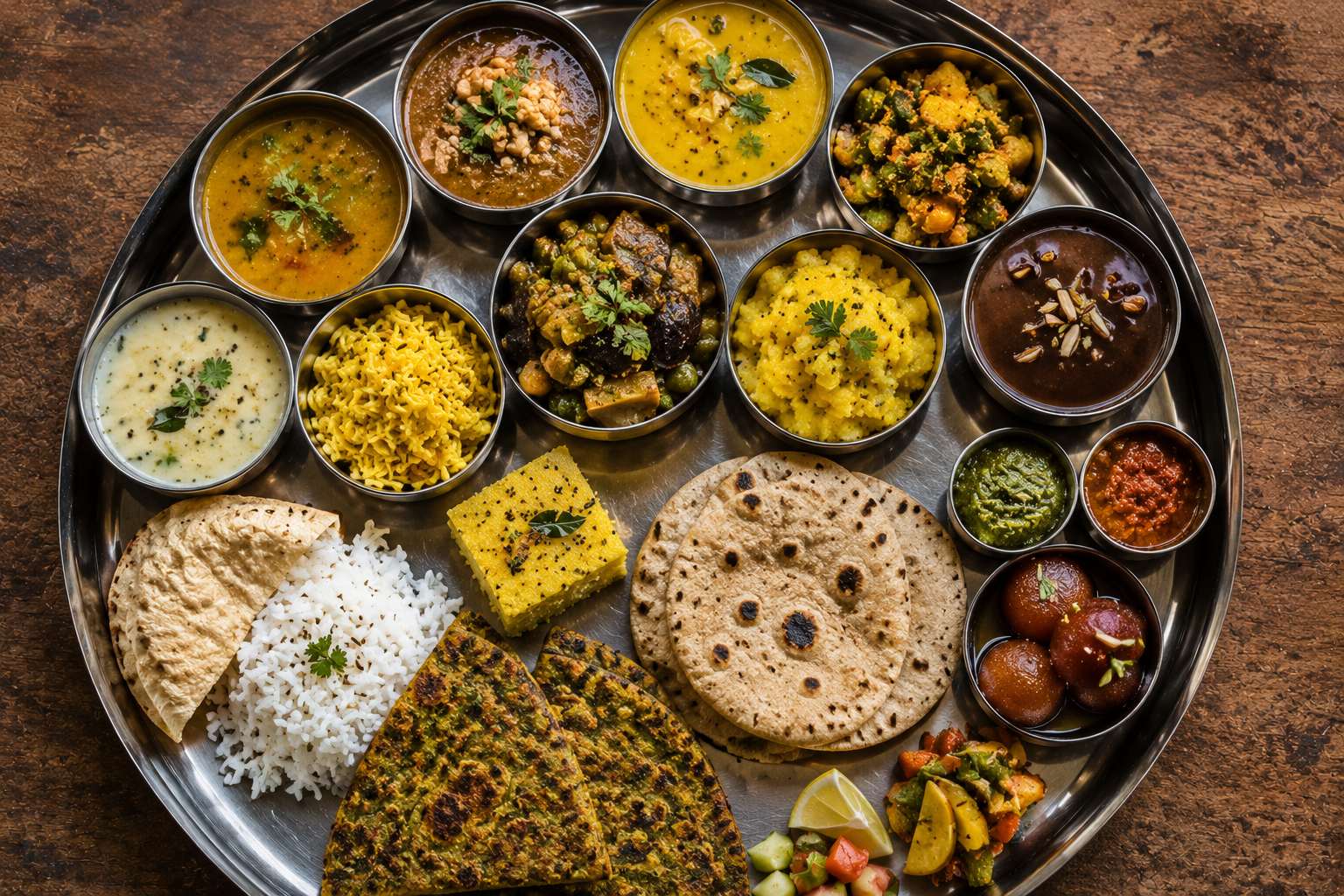
The state with the highest proportion of vegetarians in India — and the most complex vegetarian cuisine. Sweet and salty in every bite, Jain influence in every kitchen, and a thali that is both a meal and a philosophy.
⏱ 14 min read🗓 Updated June 2026★ State Food Guide
State Food Guide
Gujarat — The Vegetarian Capital's Complex Table
Gujarat borders the Arabian Sea and Pakistan — a position that made it a trading state for 3,000 years. The Jain merchant community (one of India's most commercially successful) shaped the food culture with a philosophy of non-violence that extends to avoiding root vegetables in its most observant form. The result: the most internally consistent and philosophically grounded vegetarian cuisine in India.
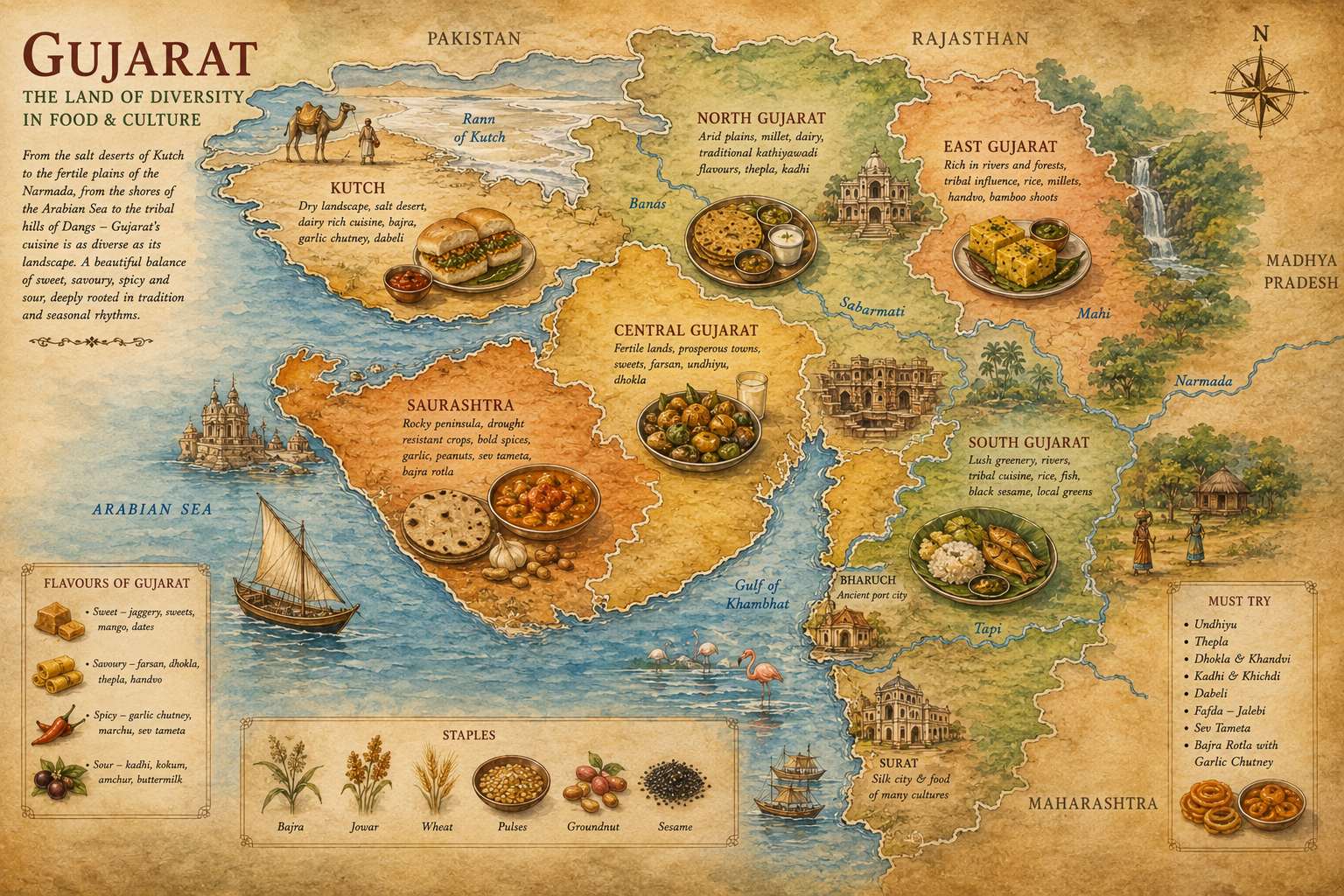
The geographic regions and food zones of Gujarat Food Guide.
🗺
Geography & Climate
The land that made this food inevitable
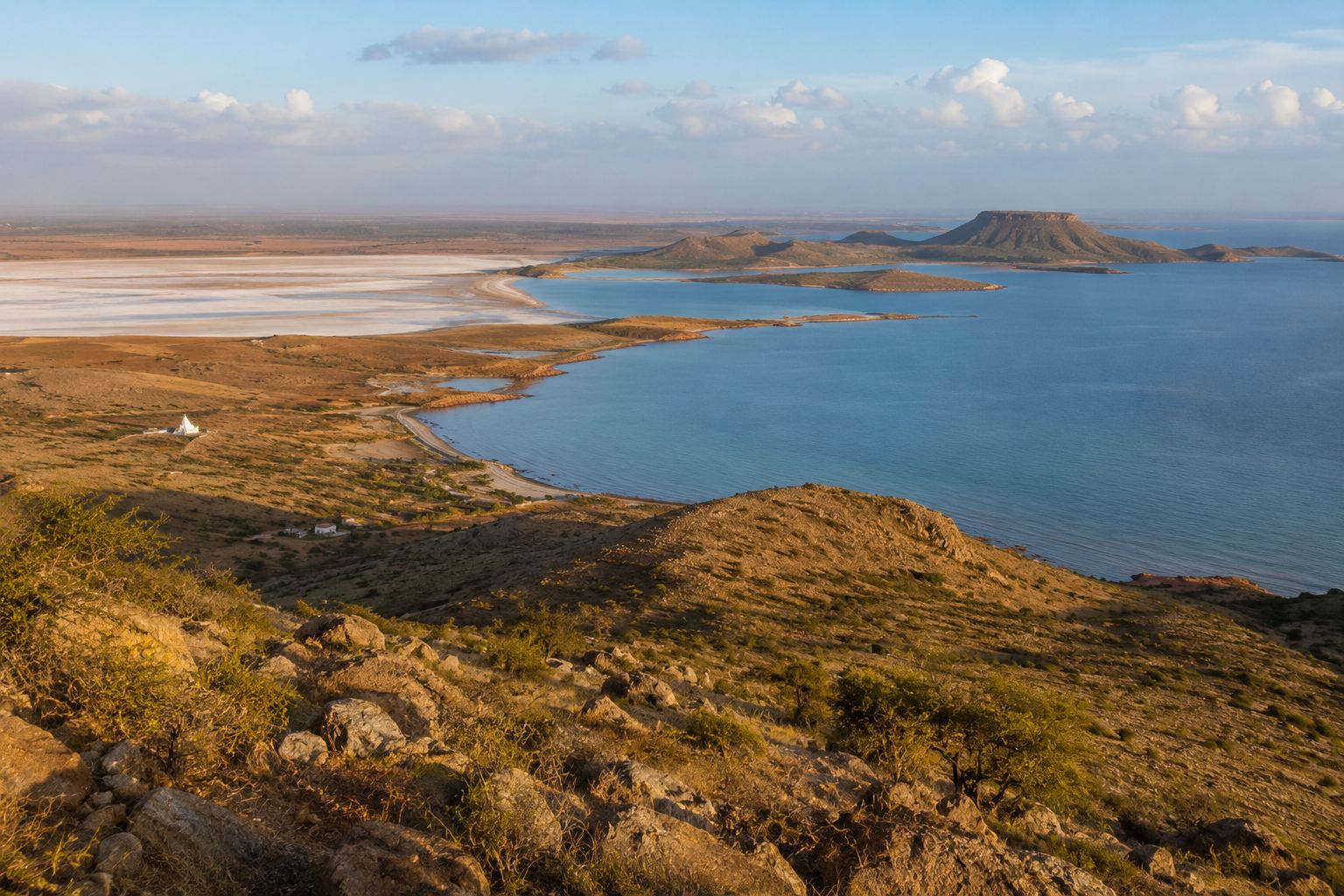
Gujarat is flat, dry, and historically oriented toward the sea — the Kutch salt flats, the Kathiawad peninsula, the Gulf of Khambhat all creating a trading coast that produced India's most commercially influential merchant communities. The Banias (Vaishnava Hindu traders), the Jains, and the Parsis all have their distinct food traditions within Gujarat's borders — and all converge on the fundamental character: a sweet note in every savoury preparation.
The sweetness in Gujarati food is not accidental or regional variation — it is a philosophical position. The Jain and Vaishnava traditions both associate sweetness with sattvic (pure, peaceful) qualities. Adding sugar or jaggery to dal, to sabzi, and to the tempering itself is not a Western influence or a modern development; it is the expression of a food philosophy in which flavour balance includes sweet alongside sour and salty in every preparation simultaneously.
Undhiyu — the winter dish cooked upside-down in a sealed clay pot buried underground with heat from above — is Gujarat's most technically specific preparation. Made only in winter when all its ingredients (surti papdi, purple yam, raw banana, brinjal, green garlic, methi muthia) are simultaneously in season, it is the most labour-intensive everyday preparation in Gujarati cooking and the dish that most completely expresses the cuisine's philosophy.
Why Gujarati Food is Always Sweet-Salty-Spicy
The simultaneous sweet-salty-spicy character of Gujarati food is not a flavour accident but the expression of the Jain and Vaishnava concept of food as sattvic balance. In Ayurvedic theory, a complete meal should engage all six rasas (tastes): sweet, sour, salty, pungent, bitter, and astringent — simultaneously rather than sequentially. Gujarati cooking's habit of adding a small amount of sugar to dal and sabzi, alongside the tamarind for sour and chilli for heat, is the practical implementation of this six-rasa philosophy in every single preparation.
The terrain and agricultural landscape that produces the defining ingredients.
🧬
Food DNA
The flavour architecture
Grains and Bread
Jowar (sorghum) rotla — the dry-zone flatbread — the staple of Saurashtra and Kutch
Thepla — spiced whole wheat flatbread with methi — the travel bread
Khakhra — crisp thin flatbread — the Jain travel snack that stores indefinitely
The Sweet-Salty Balance
Jaggery and tamarind — added together to virtually every savoury preparation
Sugar in dal — a tiny amount — the Gujarati signature that confuses everyone outside the state
Fafda-jalebi — the sweet-salty simultaneous combination taken to its street-food extreme
Legumes
Toor dal (Gujarati style) — with jaggery, tamarind, and kokum — the defining Gujarati dal
Khichdi — rice and dal together — the Gujarati comfort food
Dhokla — steamed fermented chickpea cake — the most internationally known Gujarati preparation
Jain-influenced
No root vegetables (observant) — onion, garlic, potato, carrot avoided
Asafoetida (hing) — the aromatic substitute for onion and garlic
Dried and preserved — the Jain preference for non-perishable ingredients where possible
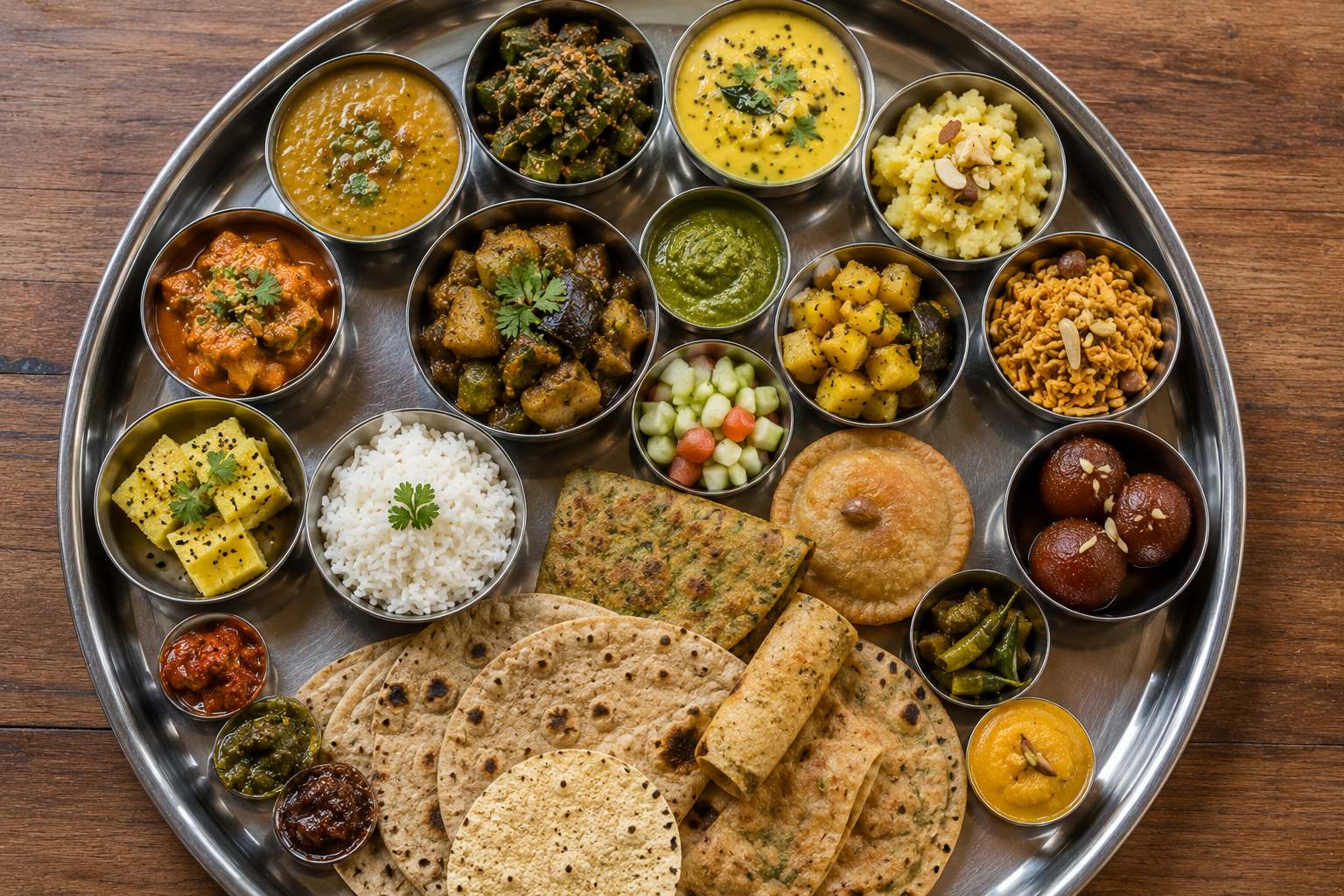
A complete thali representing the full flavour range.
🎉
Festival Foods
When the calendar drives the kitchen
Navratri
Farali preparations (foods permitted during fast) — sabudana khichdi, fruit, sendha namak preparations for 9 nights.
Diwali
Chevdo, mathri, and the Gujarati Diwali farsan (savoury snack) tradition — elaborate home-made preparations.
Uttarayan (Makar Sankranti)
The kite festival — undhiyu eaten on this day as a tradition; til and gur sweets.
Janmashtami
Dry fruit and milk preparations — the celebration of Krishna's birth with specific food traditions.
Holi
Puran poli and specific Gujarati Holi food — the spring festival food in its Gujarati expression.
🌍
Diaspora & Reach
How this cuisine spread beyond its borders
The Gujarati diaspora — the most commercially distributed Indian community globally, present in East Africa, the UK, the US, and across Southeast Asia — has made Gujarati food internationally known. The Gujarati thali restaurant format (unlimited refills, fixed menu) has appeared wherever Gujaratis have settled.
Farsan (savoury snacks) — the Gujarati tradition of elaborate fried and steamed snacks (dhokla, khandvi, fafda, sev) — has spread nationally through commercial production. MTR and Haldiram's both produce large Gujarati farsan ranges for the national market.
The sweetness in Gujarati cooking is a philosophical position derived from Jain and Vaishnava Ayurvedic principles — the concept that a complete meal should include all six tastes (sweet, sour, salty, pungent, bitter, astringent) simultaneously. Adding jaggery to dal and sabzi alongside tamarind and chilli is the implementation of this principle, not a cultural quirk.
What is undhiyu?
Undhiyu is Gujarat's most technically specific preparation — a winter dish of surti papdi, purple yam, raw banana, brinjal, and green garlic with methi muthia, cooked in a sealed clay pot buried underground with heat from above. Made only in winter when all ingredients are simultaneously in season. The name comes from 'undhu' (upside-down) — the inverted clay pot.