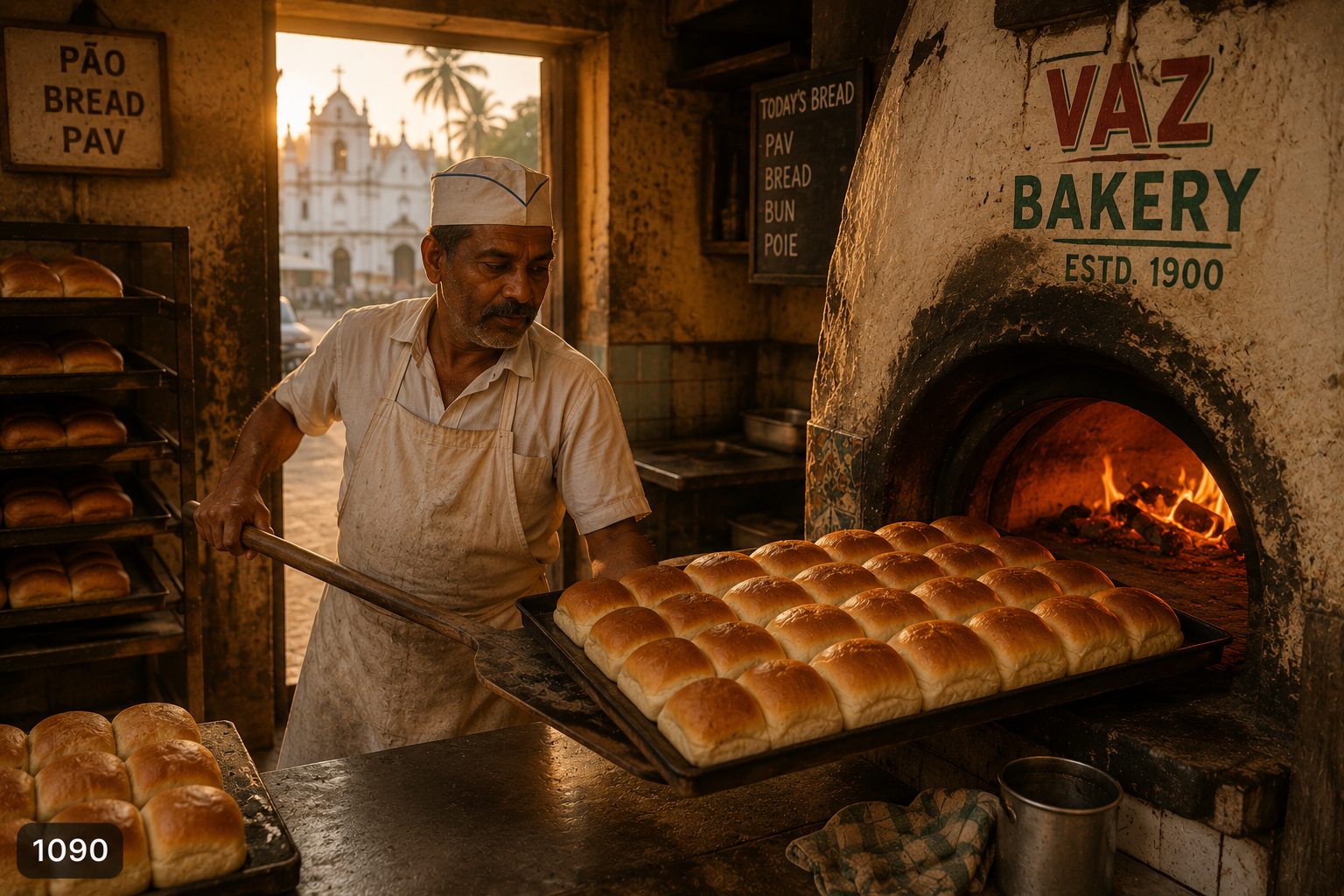
The Journey of Pav — The Portuguese Bread That Became Mumbai
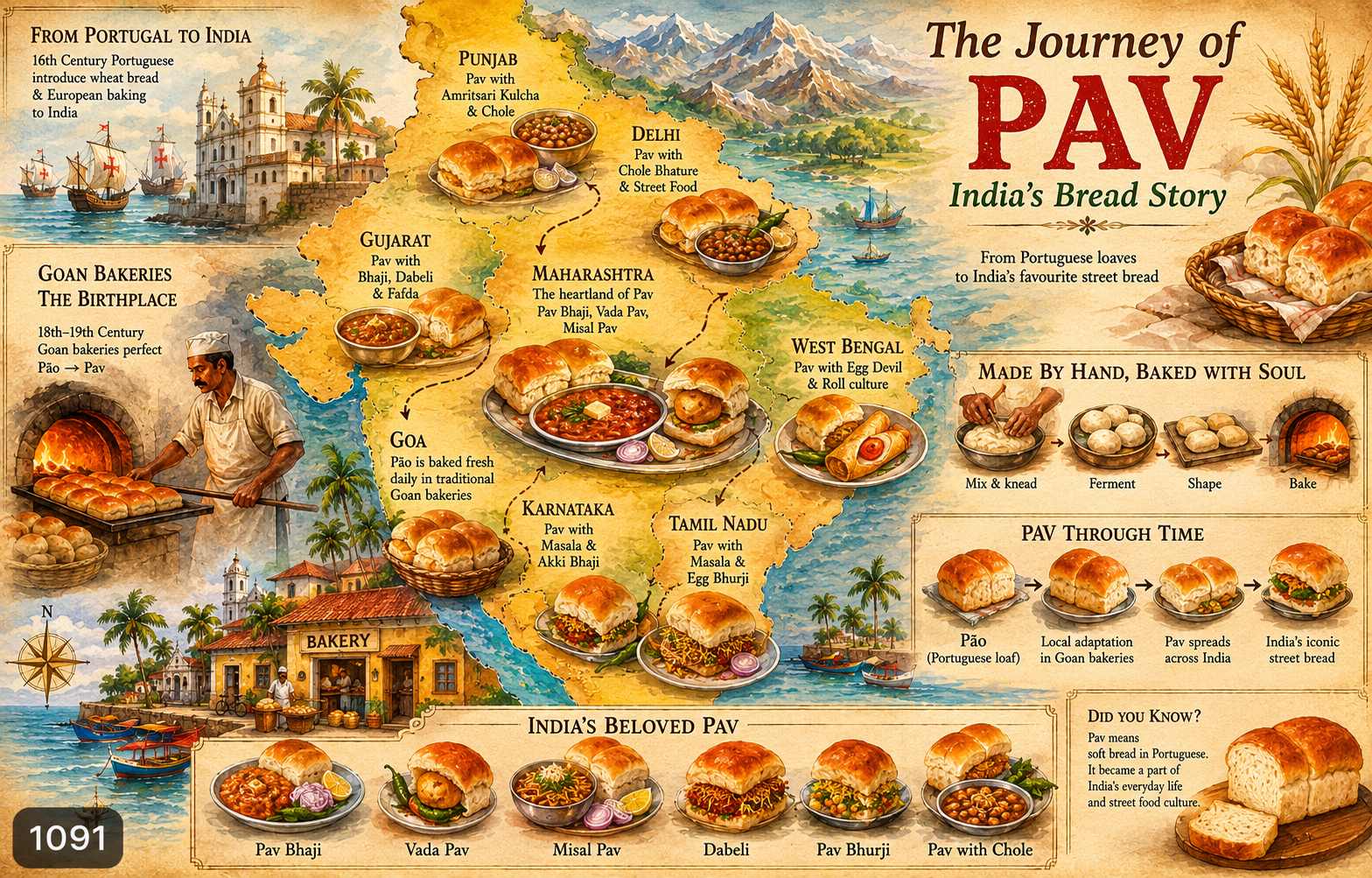
Pav (from the Portuguese pao) is the bread roll of the Konkan coast — introduced by the Portuguese in the 16th century, adopted first in Goa, then in Bombay, and now the foundation of Mumbai street food: vada pav, pav bhaji, misal pav.
⏱ 10 min read🗓 Updated June 2026★ Food Story
Origin
Before pav was Mumbai's bread
The Portuguese established themselves on the Konkan coast in the early 16th century — Goa from 1510, Daman and Diu from 1535, and settlements along the Malabar coast. They brought with them the pao — a soft wheat bread roll leavened with yeast. This was a genuine introduction: leavened wheat bread was not part of Indian cooking tradition before Portuguese contact.
The pav (the Indian adaptation of pao) spread from Portuguese Goa northward along the Konkan coast. In Bombay, which became the British commercial capital and received large migration waves from across India, the pav found its fullest expression — because Bombay's working-class population needed cheap, filling, portable food, and the pav provided exactly the right vehicle.
From Portuguese settlement to Mumbai street food institution.
1510 onwards
Portuguese Goa — The Introduction
The pao arrives with Portuguese settlers. Goa's bakers begin producing the soft wheat roll. The bread adapts to local flour and conditions.
Konkan Coast — 16th-18th century
Coastal Adoption
The pav spreads along the coast — Daman, Diu, the Vasai region north of Bombay. The coastal Catholic community becomes the primary bread-baking community.
Bombay — 19th century
The Commercial Capital
Bombay's growth as a commercial centre brings massive migration. The pav becomes the street food vehicle — cheap, soft, filling.
1970s
Vada Pav — The Invention
Ashok Vaidya creates the vada pav at Dadar station in 1971 — a potato vada in a pav, with dry garlic chutney. Instant success with mill workers.
Present
Pav as Mumbai Identity
Vada pav, pav bhaji, misal pav, keema pav — the pav is the foundation of Mumbai street food. Over 20,000 vada pav stalls in the city alone.
The Goan Baker Communities of Mumbai
The pav in Mumbai was historically baked by the Catholic community from Goa and the Vasai region — the padeiro (baker) communities who migrated to Bombay with their bread-baking tradition intact. Mumbai's pav tradition is a diaspora contribution within India — Goan Catholic bakers maintaining a Portuguese-derived tradition in a city that made it the foundation of an entire street food culture. The dabawallahs, the mill workers, and the vada pav stalls all depend on bread produced by communities whose connection to bread-baking comes from a 500-year-old Portuguese introduction.
Pav comes from the Portuguese pao — a soft wheat bread roll introduced to the Konkan coast when the Portuguese established settlements from 1510 onwards. Leavened wheat bread was not part of Indian cooking tradition before Portuguese contact. The bread spread from Goa northward along the Konkan coast and found its fullest expression in Bombay's working-class street food culture.
What is vada pav?
Vada pav was created in 1971 by Ashok Vaidya at Dadar railway station — a deep-fried spiced potato patty (vada) in a pav bread roll with dry garlic chutney. Created as an affordable, filling snack for mill workers. Now served from over 20,000 stalls across Mumbai and considered the city's defining street food.