Not one diet but a thousand — from the Brahmin who avoids onion and garlic to the Rajput who hunts game; from the Ayurvedic six-taste principle to the Vaishnavite prasad tradition. Hindu food is defined by its internal diversity as much as any common principle.
⏱ 12 min read🗓 Updated June 2026★ Food Story
The Core Principle
What Hindu food actually means
Hinduism does not prescribe a single diet. What it prescribes is a framework of purity (sattva), activity (rajas), and inertia (tamas) through which food can be classified — and leaves the application of that framework to individual tradition, community practice, and caste custom. The result is the most internally diverse food philosophy in the world: a Brahmin avoiding onion and garlic for purity; a Kshatriya warrior eating meat as appropriate to his nature; a Vaishya trader maintaining vegetarianism as commercial and social practice. One religion, three diets.
The Sattvic-Rajasic-Tamasic Triad
The Bhagavad Gita (Chapter 17) classifies food by the three gunas. Sattvic food (fresh, light, nourishing) promotes clarity: fruits, vegetables, dairy, grains. Rajasic food (spicy, bitter, sour, salty) stimulates activity: meat, chilli, onion, garlic. Tamasic food (stale, heavy, putrefied) produces inertia: meat, alcohol, overripe food. This classification does not prohibit rajasic or tamasic food — it describes their effect on the mind. The Brahmin pursuing spiritual clarity chooses sattvic food; the warrior maintaining combat fitness can choose rajasic. The framework accommodates all lifestyles rather than prescribing one.
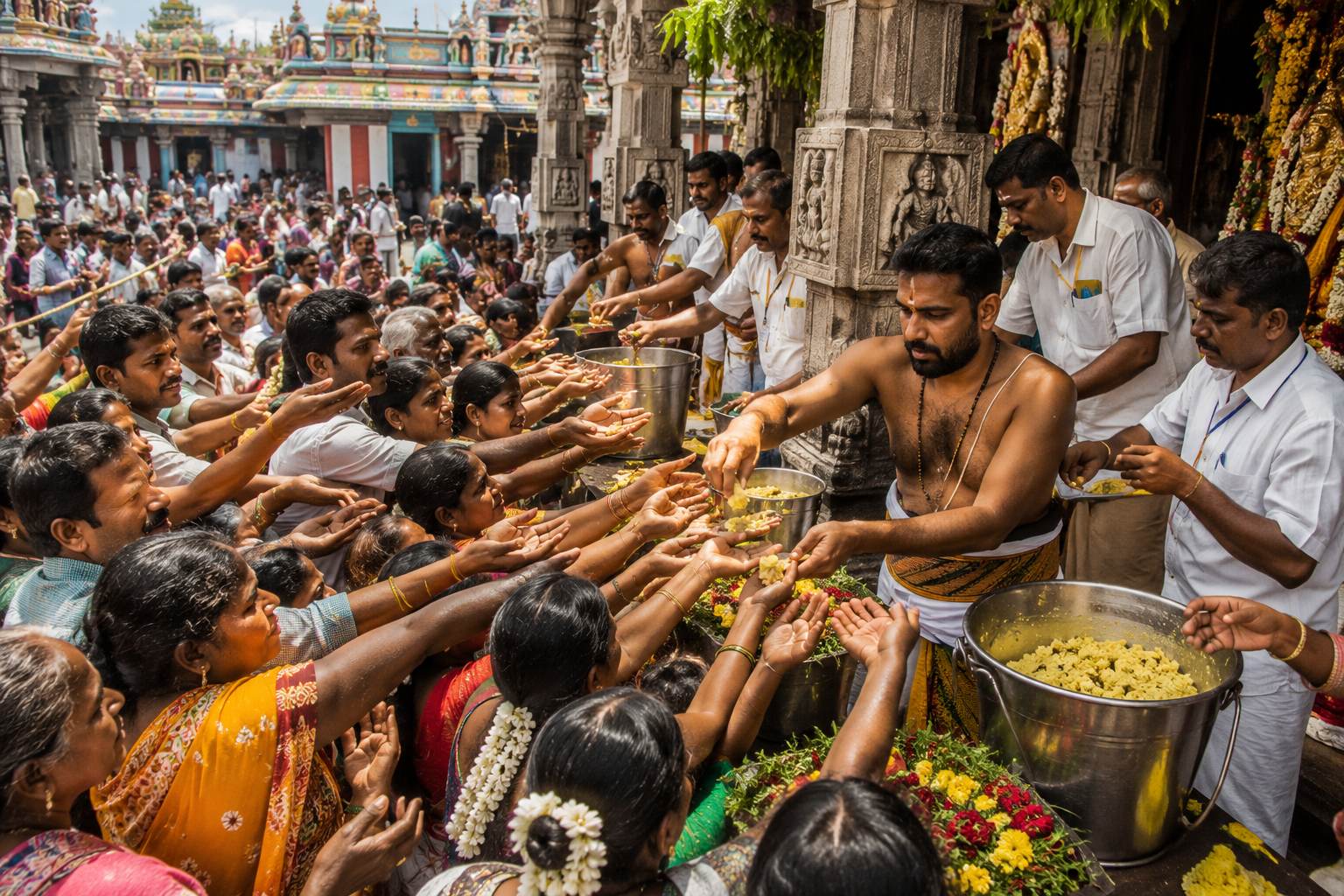
The Vaishnavite devotional tradition adds another layer: prasad — food offered to the deity before being consumed. The act of offering transforms ordinary food into blessed food. Temple kitchens across India produce enormous quantities of prasad daily — from the 100,000 ladoos of the Tirupati Jagannath temple to the 350,000 daily offerings of the Golden Temple (where the tradition is Sikh but the food culture overlaps). The idea that food can be sacred through ritual action is specifically Hindu in its most developed form.
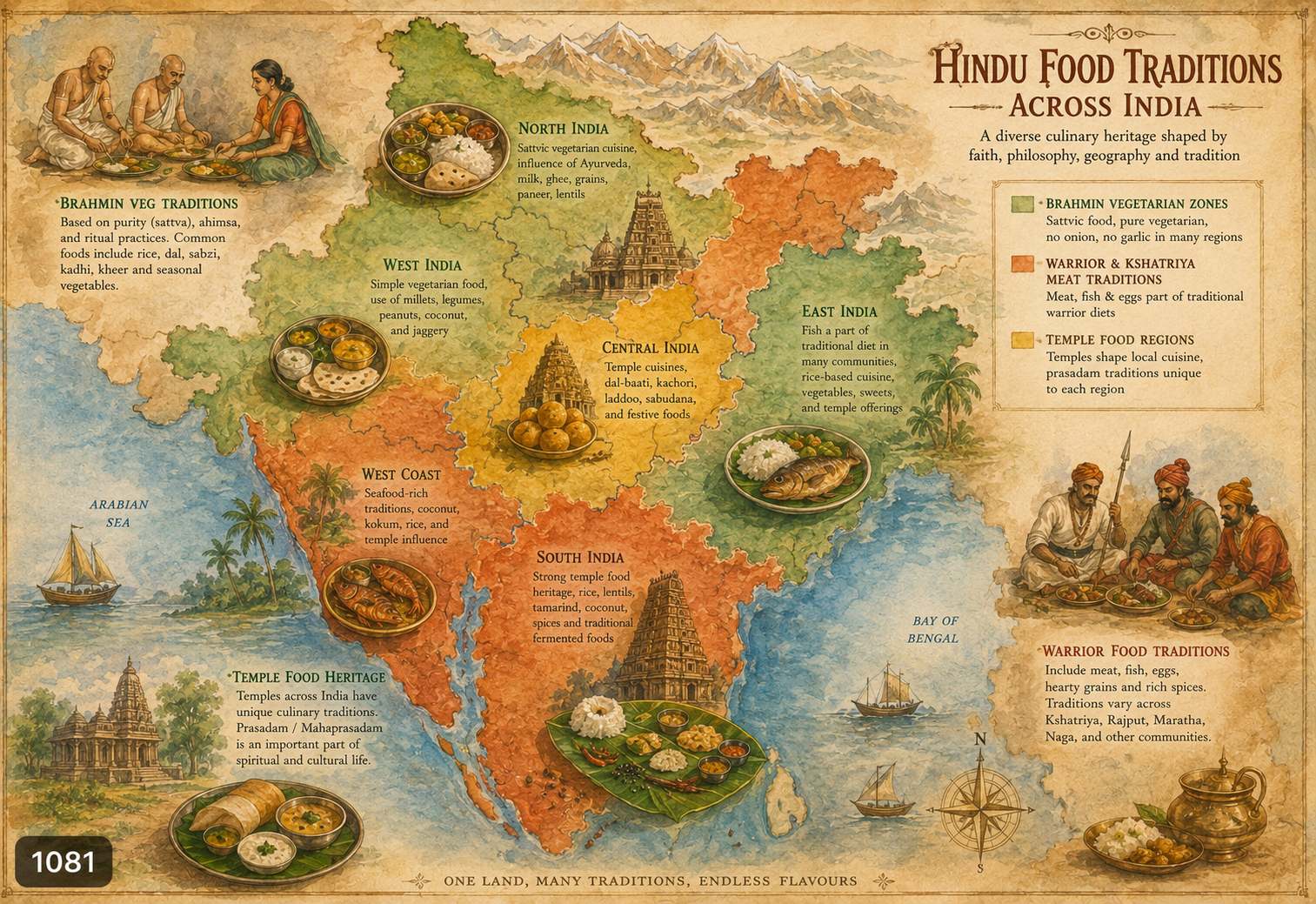
The geographic spread of Hindu food traditions — from strict Brahmin vegetarianism to non-vegetarian warrior traditions.
The festival food calendar is the most visible expression of Hindu food philosophy. Each festival has specific food requirements: the Pongal celebration requires rice cooked in new clay pots allowed to boil over; the Onam sadya requires 26 specific vegetarian dishes in specific positions on a banana leaf; Navratri fasting permits specific foods (sendha namak, sabudana, fruits) while prohibiting others. The calendar is as important as the diet in defining Hindu food.
No. Hinduism covers an enormous dietary range. Brahmin communities (particularly in North India) are often strictly vegetarian and may avoid onion and garlic. But the Kshatriya (warrior) tradition historically included meat; Bengali Hindus eat fish as a normal part of the diet; Kerala's Syrian Christians maintain beef-eating without contradiction with their specific tradition. The word Hindu covers more dietary diversity than any other world religion.
What is sattvic food?
Sattvic food is the Ayurvedic and Bhagavad Gita category of food that promotes clarity and spiritual purity — fresh fruits, vegetables, dairy, and grains. It avoids meat, onion, garlic, and heavily spiced or fermented food. The sattvic diet is the basis of Brahminical vegetarianism and Jain dietary practice, though neither is limited to the Gita's classification alone.