The Kodava people of the Western Ghats highlands have one of India's most distinct food identities — pork as the prestige meat, home-distilled kachampuli vinegar, the Akki Roti flatbread, and a warrior aristocracy's cooking tradition built on the specific produce of coffee and pepper country.
⏱ 13 min read🗓 Updated June 2026★ Sub-Regional Guide
Sub-regional identity
Coorg — Karnataka's Hill Country Kitchen
The Kodava people of the Western Ghats highlands have one of India's most distinct food identities — pork as the prestige meat, home-distilled kachampuli vinegar, the Akki Roti flatbread, and a warrior aristocracy's cooking tradition built on the specific produce of coffee and pepper country.
Kodava — a distinct ethnic group, not classified as a caste, with their own language and traditions
Elevation
900–1700m — coffee, pepper, cardamom, and orange cultivation at altitude
Defining meat
Pork — the Kodava prestige meat, which distinguishes Coorg from almost all South Indian cooking
Defining souring agent
Kachampuli — black, treacly vinegar from Garcinia gummigutta fruit; found only in Coorg
Defining bread
Akki roti — rice flour flatbread cooked on a cast iron tawa; distinct from Karnataka plains roti
Warrior tradition
The Kodava are historically a martial people — they retain the right to bear arms without licence under Indian law
Coffee
Coorg grows 30%+ of India's coffee — the landscape defines the cuisine
🗺
Geography
The place that made this food inevitable
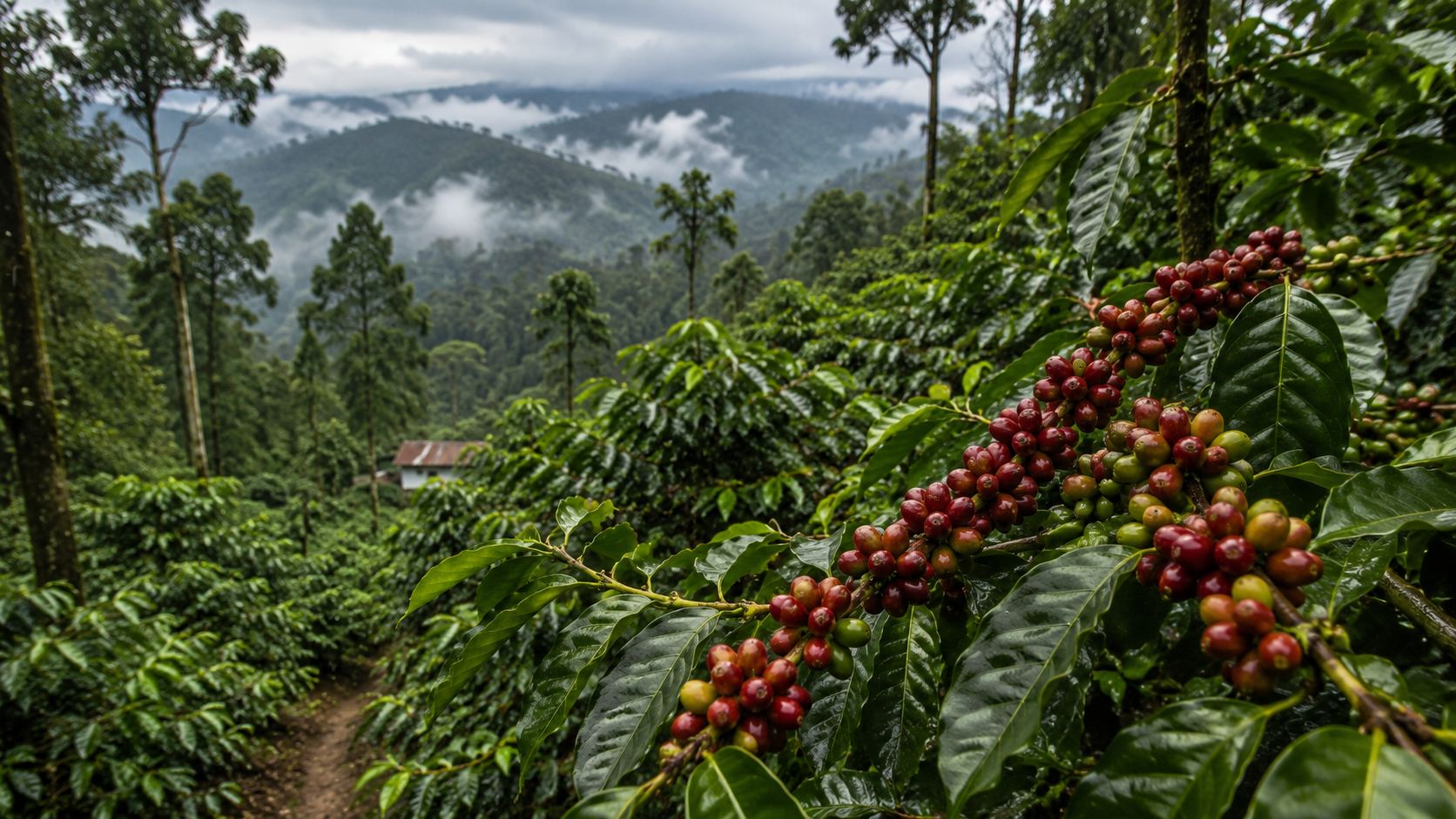
Coorg — officially Kodagu district — sits in the Western Ghats at elevations between 900 and 1700 metres, in the extreme southwest corner of Karnataka. The climate at this altitude is entirely unlike the Karnataka plains below: cool, misty, with heavy monsoon rainfall that makes the hills one of India's most productive agricultural zones for coffee, pepper, cardamom, and orange. Coorg produces over 30 percent of India's coffee — and the coffee estate landscape defines the food culture as thoroughly as any river or coast defines a lowland cuisine.
The Kodava people are the indigenous community of this highland — not classified as a Hindu caste but as a distinct ethnic group with their own language (Kodava takk), their own traditions, their own clan system, and their own legal status. The Kodava retain the right to bear arms without licence under Indian law — a recognition of their historic martial identity. This warrior aristocracy background shapes the food: pork is the prestige meat (unlike nearly all South Indian Hindu communities, the Kodava have never avoided pork), game animals were historically important, and the food reflects a self-sufficient highland community rather than a trading or temple one.
The specific produce of the Western Ghats highlands defines Coorg food in ways that no amount of cultural borrowing from the Karnataka plains can replicate. Kachampuli — a treacly, intensely sour vinegar made from the Garcinia gummigutta fruit that grows only in these hills — is unavailable anywhere else in India. Coorg pepper is grown at specific altitude. The specific variety of bamboo shoots available in the monsoon months is highland-specific. The cuisine is inseparable from its geography.
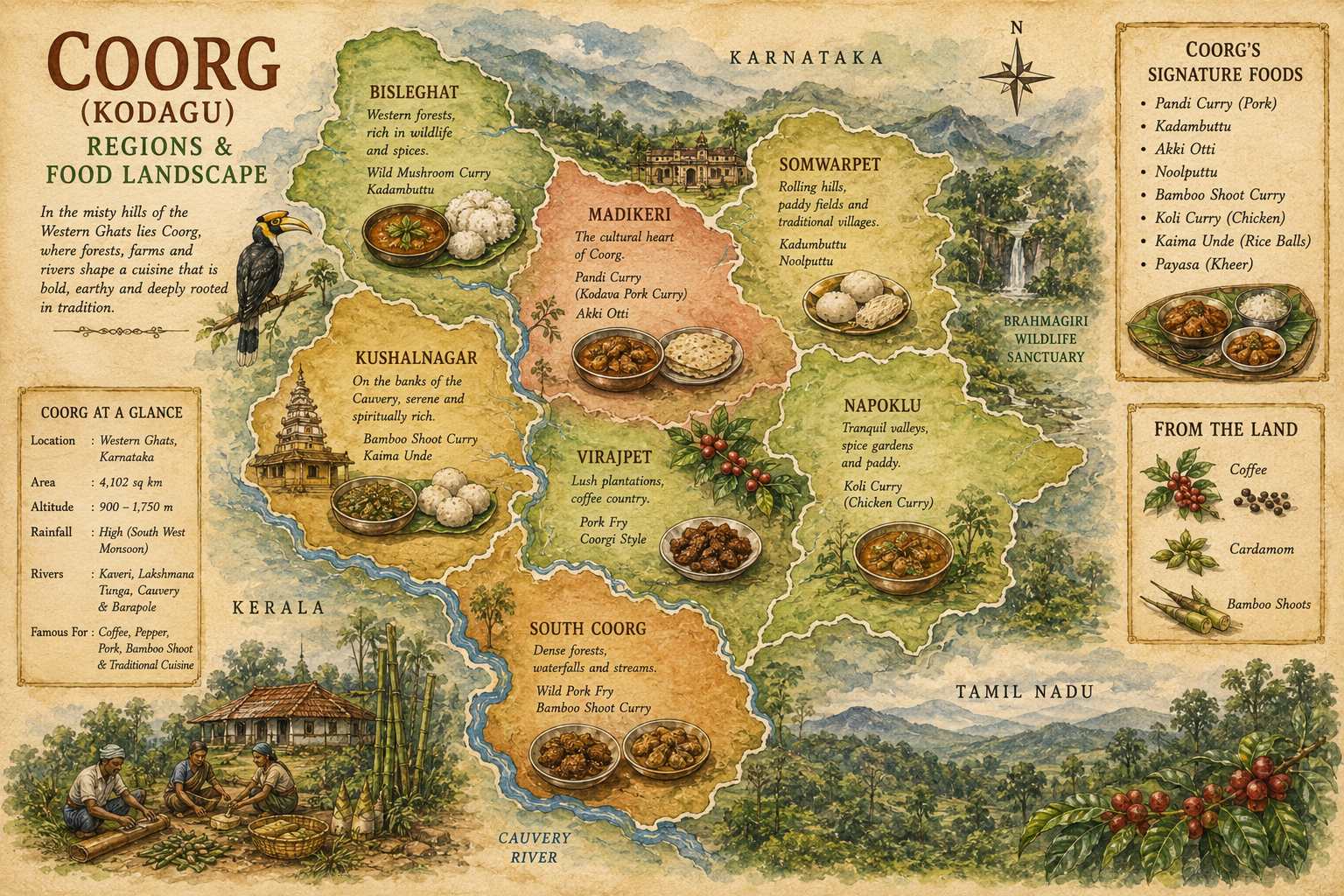
Location and regional context of Coorg within its parent state.
📜
Historical Origins
How this cuisine became distinct from its parent
The Kodava food identity is built on two foundations that distinguish it from all neighbouring cuisines. First, the absence of the restrictions that define mainstream South Indian Hindu cooking: no beef taboo is the norm (pork is the prestige meat); no avoidance of non-vegetarian food for the upper-class community; no Brahmin influence structuring the meal into specific sequences. The Kodava warrior aristocracy ate what their land and hunting provided, and their food tradition reflects that freedom.
Second, the specific agricultural produce of the Ghats highlands creates a food vocabulary that has no equivalent in the Karnataka plains or in coastal Mangalorean cooking. Kachampuli (the Coorg vinegar from Garcinia gummigutta) is the most extreme example: it is used in pork and chicken preparations, providing an intense sourness of specific character unlike tamarind, kokum, or lime. Its flavour is associated with Coorg in a way that makes food prepared with kachampuli immediately identifiable as from this specific highland region.
The Kodava calendar determines which specific produce appears in which preparations. During the monsoon months, bamboo shoots emerge from the coffee estate understory and become a specific food source — pickled, cooked with pork, used in curries. The pepper harvest produces fresh green pepper (very different from dried) available briefly. The orange season (November–January) produces both a fresh fruit for the table and a specific cooking context. The food is as seasonal as it is regional.
Kachampuli — The Vinegar That Defines a Region
Kachampuli is made by boiling down the juice of the Garcinia gummigutta (the same fruit that produces kokum on the coast, but processed differently in Coorg). The juice is reduced until it becomes a thick, black, treacly liquid of intense sourness with a specific Garcinia character. It is used in Coorg pork and chicken preparations as the primary souring agent — providing a different quality of sourness from tamarind, kokum, or vinegar. The flavour of kachampuli is so specific to Coorg that food prepared with it is immediately identifiable as being from this region. It is not available in the Karnataka plains and barely available outside India.
🧬
Food DNA
The flavour architecture
Prestige Protein
Pork (pandi curry) — the defining Coorg preparation — pork in kachampuli and black pepper
Country chicken — the highland free-range bird — important in all Kodava occasions
Game (historically) — deer, wild boar — the warrior community's hunting tradition
The Altitude Produce
Kachampuli — black treacly Garcinia vinegar — unavailable outside Coorg
Fresh green pepper — available briefly at harvest — very different from dried pepper
Bamboo shoots — monsoon season — from the coffee estate understory
Coorg oranges — November–January season — the highland citrus
Rice (highland variety) — specific varieties grown at altitude — different character from plains rice
Kadubu — steamed rice dumplings — specific Kodava festival food
The Kodava Table
Pandi curry — the prestige preparation — pork in kachampuli, black pepper, and highland spices
Koli curry — chicken preparation — the everyday non-vegetarian standard
Bamboo shoot curry — monsoon seasonal — bamboo with kachampuli and pork or on its own
🌿
Signature Ingredients
The ingredients that define this cuisine
Ingredient
What It Is
Flavour Character
Availability
Kachampuli
Reduced Garcinia gummigutta juice — concentrated to a thick black vinegar
Intensely sour with a specific Garcinia character — different from tamarind, kokum, or any other souring agent
Available from Coorg-specific vendors; rarely found outside Karnataka; no adequate substitute
Fresh green pepper
Piper nigrum harvested before drying — the pepper in its pre-processed state
Bright, aromatic, less sharp than dried black pepper — a completely different ingredient from the dried spice
Available only briefly at harvest time in the Western Ghats pepper-growing regions
Bamboo shoots (highland)
Specific bamboo varieties from the Ghats highlands — harvested in monsoon
Slightly bitter, earthy, crunchy — different character from the bamboo shoots found in Northeast India
Seasonal (monsoon months) and specific to the highland region; available locally only
Coorg rice (local variety)
Specific short-grain varieties grown in highland paddy fields
Slightly sticky, more aromatic than plains rice — specifically suited to Kodava preparations
Available in Coorg markets; the specific highland varieties are not distributed nationally
🍽
Signature Dishes
The dishes that cannot exist elsewhere
Dish
What It Is
Why It Matters
Pandi Curry (Coorg Pork)
Pork in kachampuli, black pepper, and Coorg spices — the defining Kodava preparation
The most unambiguously Coorg dish. The kachampuli's specific Garcinia sourness and the generous black pepper produce a preparation with no equivalent anywhere in Karnataka or the rest of South India.
Koli Curry (Coorg Chicken)
Free-range chicken in a dry-roasted Coorg masala
The everyday non-vegetarian preparation — less prestigious than pandi curry but the weekly standard. The Coorg masala uses highland spices (local pepper, specific dried chillies) in a dry-roasted base.
Akki Roti
Rice flour flatbread cooked on a cast iron tawa — the Coorg daily bread
Made differently from Karnataka plains akki roti — the Coorg version uses specific rice varieties, sometimes adding grated coconut or herbs. Eaten with pandi or koli curry.
Bamboo Shoot Curry
Monsoon-season bamboo in kachampuli curry — with or without pork
Available only during monsoon months when bamboo shoots emerge from the coffee estate understory. The combination of bamboo bitterness and kachampuli sourness is a specifically Coorg seasonal flavour.
Kadubu
Steamed rice dumplings — the Kodava festival food eaten at Kailpodh and Puthari
The specific festival occasions (the weapons-worship festival Kailpodh and the harvest festival Puthari) have specific food requirements. Kadubu is the defining Kodava festival preparation — rice flour steamed in specific leaf wrappers.
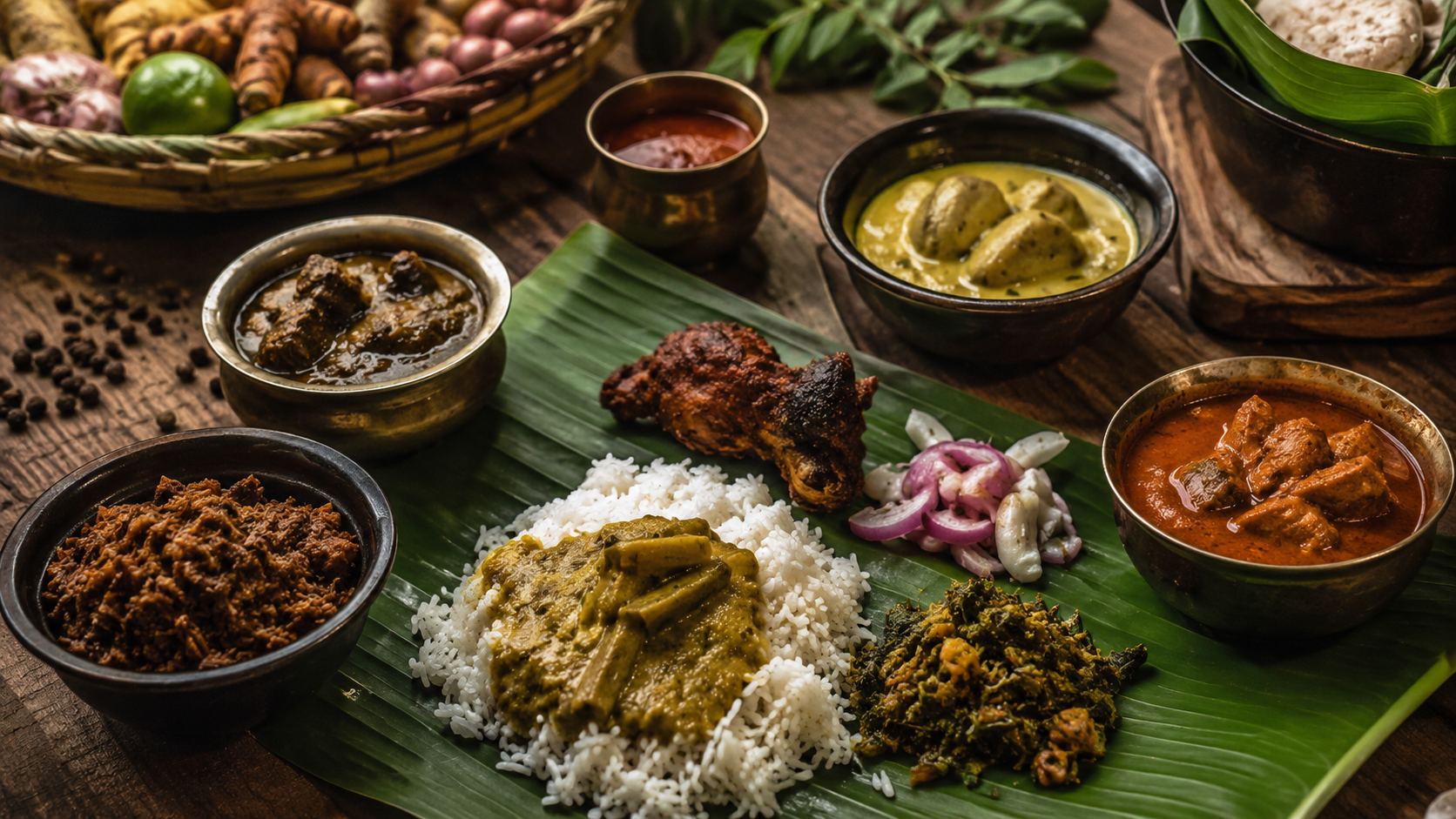
The defining preparations of Coorg.
⚙️
Unique Techniques
What this cuisine does that others do not
The pandi curry technique is the defining Coorg culinary process. Pork is marinated in kachampuli for a minimum of 30 minutes — sometimes overnight — before cooking. The kachampuli begins breaking down the pork protein slightly and infuses the meat with its specific Garcinia sourness. The pork is then dry-roasted in a heavy vessel with black pepper and Coorg spices before liquid (including more kachampuli) is added and the curry is slow-cooked until the pork is tender and the gravy has darkened to a characteristic deep brown-black colour. The colour of the finished pandi curry — a very dark, almost black preparation — comes from the kachampuli's Garcinia compounds and the dark-roasted spices.
The akki roti technique is specific to Coorg's highland rice tradition. Cooked rice (not raw flour alone) is combined with rice flour and worked into a dough — the cooked rice adds a specific softness and binding that pure rice flour roti lacks. The dough is spread directly on a hot cast iron tawa with wet hands, not rolled with a pin, into a thin oval. It cooks without any oil for the first stage, then oil is applied around the edges for the final crisping. The result is simultaneously soft in the centre and crisp at the edge — a texture not achievable by rolling the same dough.
Kachampuli reduction is the third defining technique. The fresh Garcinia gummigutta fruit juice (extracted by pressing the ripe fruit) is simmered in an open vessel for several hours until reduced to approximately one-tenth of its original volume — producing the thick, black, intensely sour kachampuli. The reduction concentrates not just sourness but the specific Garcinia volatile compounds that give it its character. This is why diluted kokum or tamarind cannot substitute — the reduction process produces compounds not present in the fresh juice.
Is Coorg Food South Indian?
Coorg's food shares almost no characteristics with mainstream South Indian cuisine as internationally understood. No idli, no dosa, no sambhar, no coconut chutney, no filter coffee as the default (despite Coorg growing India's coffee). Pork as the prestige meat; kachampuli as the souring agent; akki roti as the bread; bamboo shoots from the monsoon; no Brahmin restriction framework. Coorg is in Karnataka, therefore technically South Indian. But its food is more accurately described as Western Ghats highland — a distinct category that does not map onto the Tamil-Andhra-Karnataka-Kerala food geography that 'South Indian' normally implies. The Kodava themselves would probably agree.
🔗
Relationship to Parent Cuisine
How Coorg differs from Karnataka
Element
Karnataka
Coorg
Prestige meat
Generally avoids pork across Hindu South India
Pork — the Kodava warrior tradition never observed the mainstream Hindu pork avoidance
Primary souring agent
Tamarind (Tamil Nadu, Karnataka) or kokum (coastal)
Kachampuli — found only in Coorg; different sourness character from tamarind or kokum
Bread tradition
Rice and wheat preparations of the Karnataka plains
Akki roti (made differently from plains version) and kadubu (steamed rice dumplings)
Spice complexity
Sophisticated Karnataka masalas developed over centuries
Simpler, more direct — black pepper and kachampuli do the primary work
Community structure
Caste-based Hindu food rules
Kodava clan system — no caste, own ethnic identity, own food rules
📅
Timeline
How this cuisine evolved
Ancient period
Kodava establish highland identity
The Kodava people establish themselves in the Western Ghats highlands. Their food tradition develops around the specific highland ecology — coffee (after the 17th century), pepper, bamboo, and game.
17th century
Coffee arrives in Coorg
Coffee cultivation begins in the Western Ghats. The coffee estate landscape transforms Coorg's agriculture and provides the specific understory ecology that produces the bamboo shoots and other highland ingredients.
19th century
British colonial administration recognises Kodava distinctness
The British recognise the Kodava as a martial community and exempt them from arms licensing — the legal recognition that persists today. Their food tradition is documented by colonial administrators.
Present
Coorg cuisine and coffee tourism
Coorg becomes a domestic and international tourist destination. The coffee estate homestay tradition introduces Kodava food — particularly pandi curry and kachampuli — to national audiences.
Pandi curry is Coorg's defining preparation — pork marinated in kachampuli (Garcinia vinegar) and slow-cooked with black pepper and Coorg spices until the gravy darkens to deep brown-black. The kachampuli's specific sourness and the generous black pepper produce a preparation with no equivalent anywhere in South Indian cooking.
What is kachampuli?
Kachampuli is a thick, treacly, intensely sour vinegar made by reducing the juice of the Garcinia gummigutta fruit — the same fruit that produces kokum on the coast, but processed completely differently in Coorg. It is the defining Coorg souring agent, used in pork and chicken preparations. Unavailable outside Coorg and not substitutable by tamarind or kokum.