Vada pav on 20,000 stalls. Dhansak at Parsi cafes. Irani chai at century-old restaurants. The city that compression-tested every Indian food tradition and produced new ones from the pressure.
⏱ 13 min read🗓 Updated June 2026★ City Food Guide
City Food Guide
Mumbai — The Street Food Capital
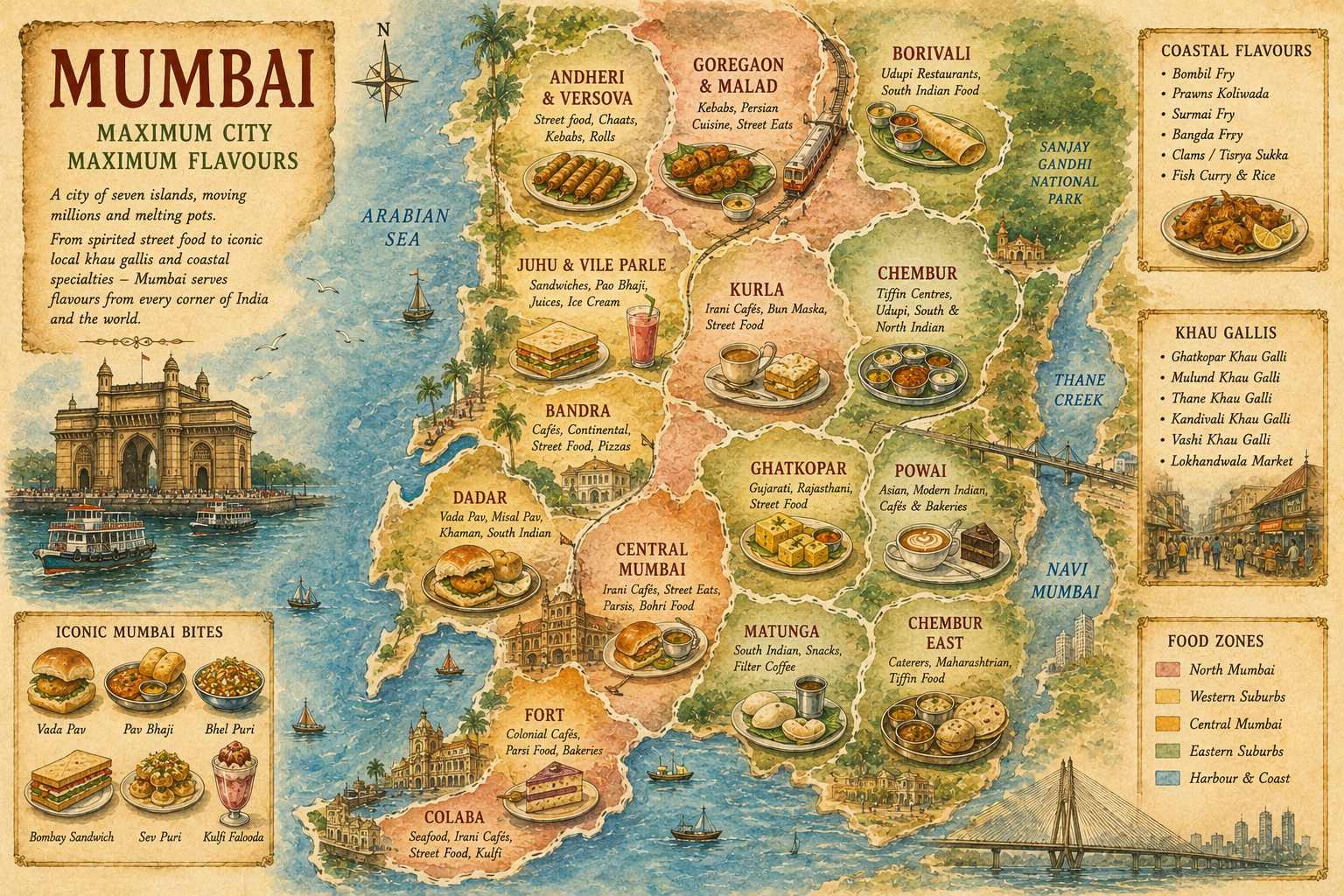
Mumbai is India's food compression chamber — every Indian state represented, every diaspora community present, every food tradition competing for the same sidewalk real estate. The result is not a blend but a layering: the Parsi dhansak, the Konkani fish curry, the Punjabi dhaba, the Gujarati farsan, and the specifically Mumbai street food (vada pav, pav bhaji) that exists nowhere else.
The food neighbourhoods and defining streets of this city's culinary geography.
🏙
City Food Identity
What this city defines itself by
Mumbai does not have a native cuisine — it has everything. The city's food identity is defined by compression and coexistence rather than by any single tradition. The Parsi community (settled in Mumbai since the 7th century) brought dhansak, salli boti, and the specific Irani cafe format. The Konkani Catholic community (from the Konkan coast) brought seafood preparations that are different from both Goan and Mangalorean fish traditions. The Gujarati merchant community brought farsan and the vegetarian tradition that makes Mumbai's vegetarian food market the largest in India. And then there is the specifically Mumbai street food — vada pav, pav bhaji, bhel puri — that came from the specific conditions of a city growing too fast for anyone to sit down.
The Dabbawallah System — 130 Years of Tiffin Logistics
Mumbai's dabbawallahs (tiffin delivery workers) have delivered home-cooked lunches to office workers since 1890. The current system handles 200,000+ tiffins daily with an error rate estimated at 1 in 6 million deliveries — Harvard Business School has studied it as a logistics case study. The dabbawallah system exists because Mumbai's working population wanted home-cooked food at their desks but lived too far away to go home for lunch. The city's size created the problem; the dabbawallah system was the solution. It has maintained a traditional food culture — home cooking as the default lunch — within India's most international city.
The street food culture that defines daily eating in this city.
🥘
Street Food
The preparations you eat standing up
Vada Pav
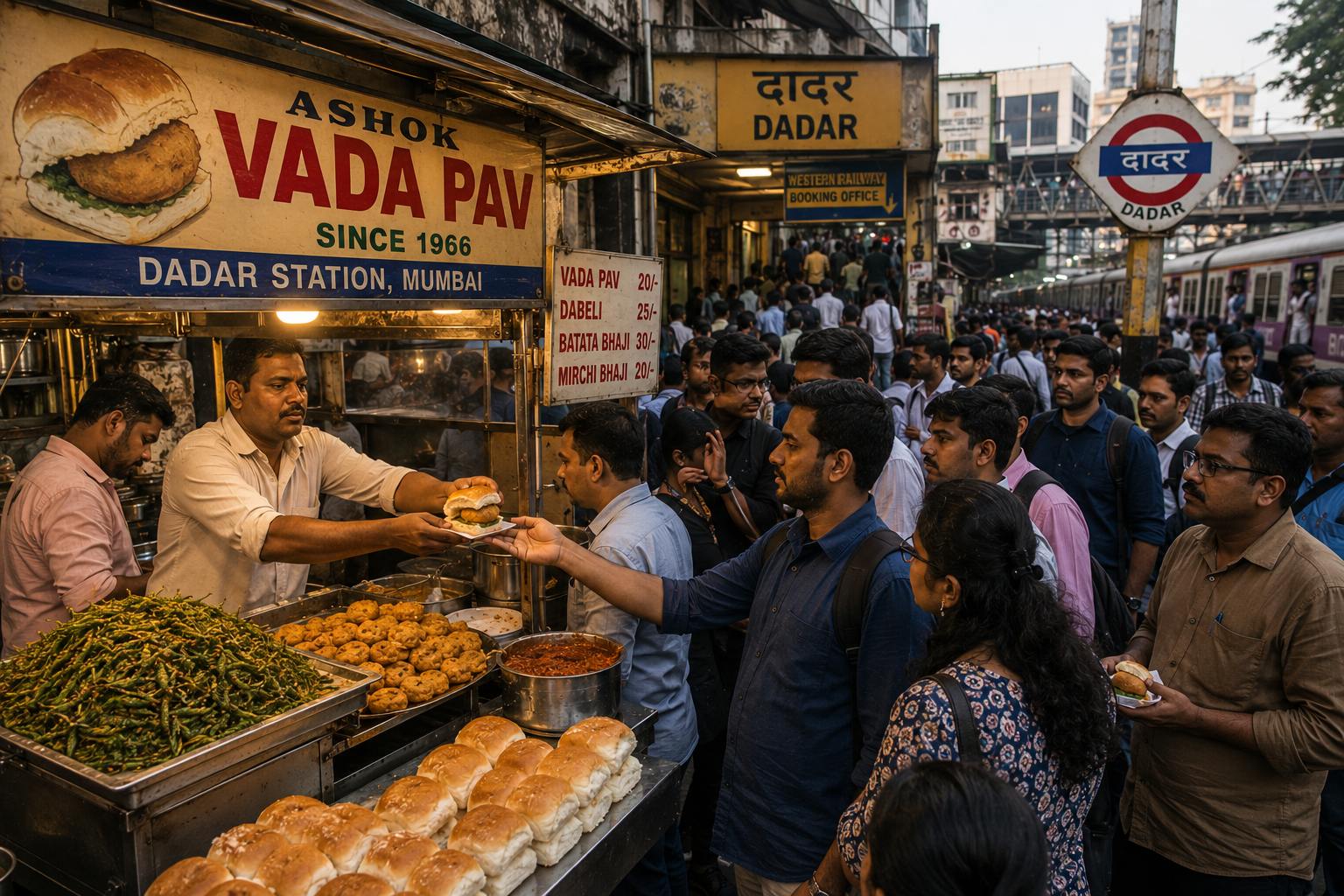
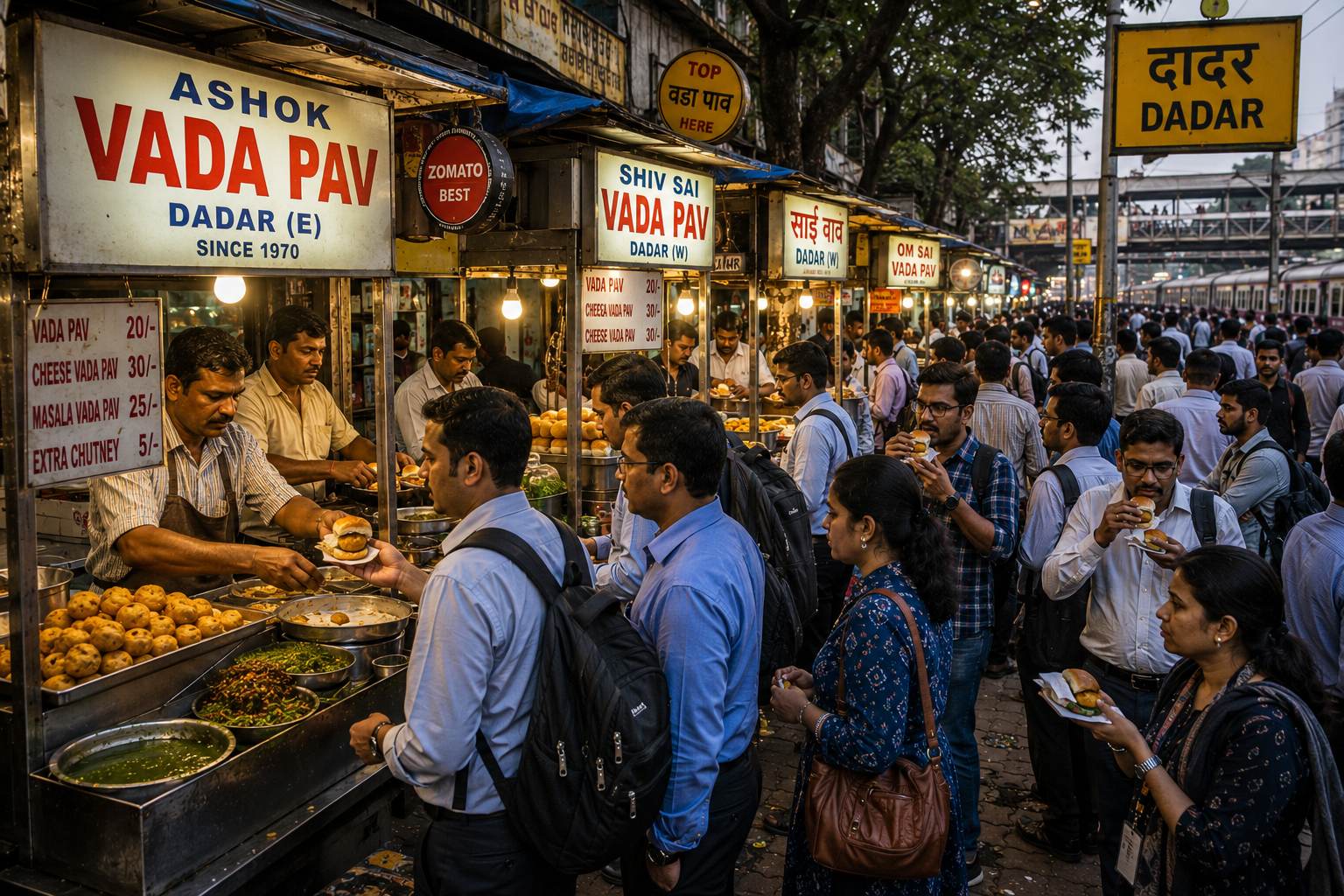
Created 1971 at Dadar station for mill workers. Now on 20,000+ stalls. The defining Mumbai food.
Pav Bhaji
Vegetable mash with butter and pav — created in the 1850s for textile mill workers needing a quick lunch.
Bhel Puri
Puffed rice, vegetables, tamarind, and chutney — the beach food of Chowpatty and Juhu.
Keema Pav
Spiced minced mutton with pav — the Muslim quarter's contribution to the pav format.
Misal Pav
Sprouted moth bean curry with pav — specifically a Maharashtrian preparation at its Mumbai best.
Irani Chai + Bun Maska
Century-old Irani cafes, strong tea, white butter on bun — a dying format but irreplaceable.
🍽
Restaurant Culture
How this city eats out
Mumbai's restaurant range is the widest in India — from the old Parsi cafes of South Mumbai (Britannia and Co., Café Irani) to the Michelin-aspirant new-wave Indian restaurants of Bandra and Lower Parel. The city's financial elite has produced India's most sophisticated restaurant market, while the Dharavi informal economy sustains the world's largest urban food micro-enterprise cluster.
🌍
Diaspora
How this city's food travelled
Mumbai's food culture spread nationally through Bollywood — the films, the songs, and the cultural production of India's entertainment capital embedded Mumbai food references into the national imagination. The vada pav now appears in cities where no Portuguese bread tradition existed. Pav bhaji has become a national party food. The Mumbai dhaba format has influenced restaurant design nationally.
Vada pav — created in 1971 by Ashok Vaidya at Dadar station for mill workers. A deep-fried spiced potato patty in a pav bread roll with dry garlic chutney. Now on 20,000+ stalls across Mumbai. If Mumbai has one defining food, it is the vada pav.
What is unique about Mumbai's food culture?
Mumbai is India's food compression chamber — every Indian state represented, every diaspora present, every tradition competing for sidewalk space. The specifically Mumbai contributions (vada pav, pav bhaji, bhel puri) came from the specific conditions of rapid urbanisation creating populations that needed cheap, fast, standing-up food.