Gujarat Food History — 3,000 Years of Trade and Vegetarianism
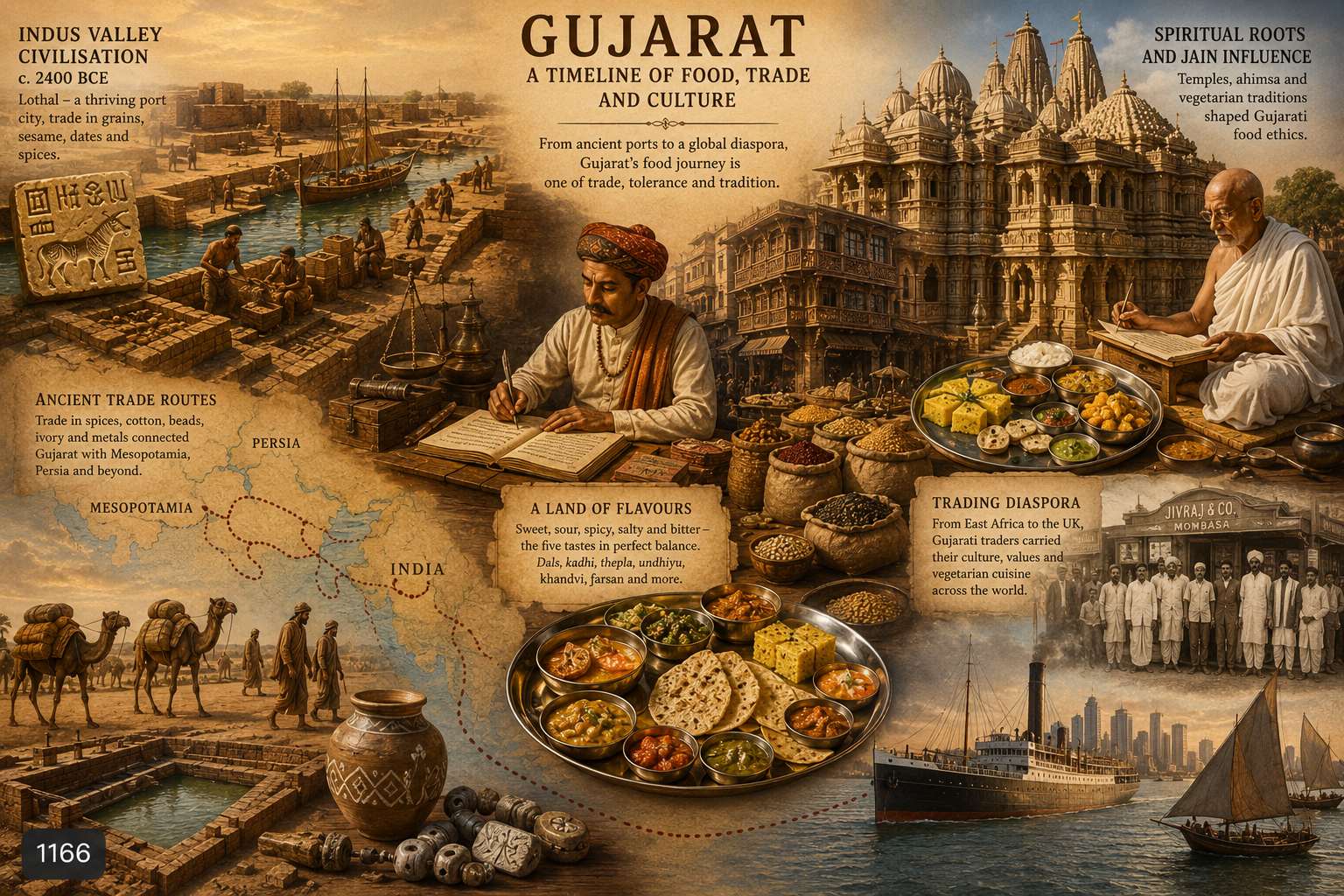
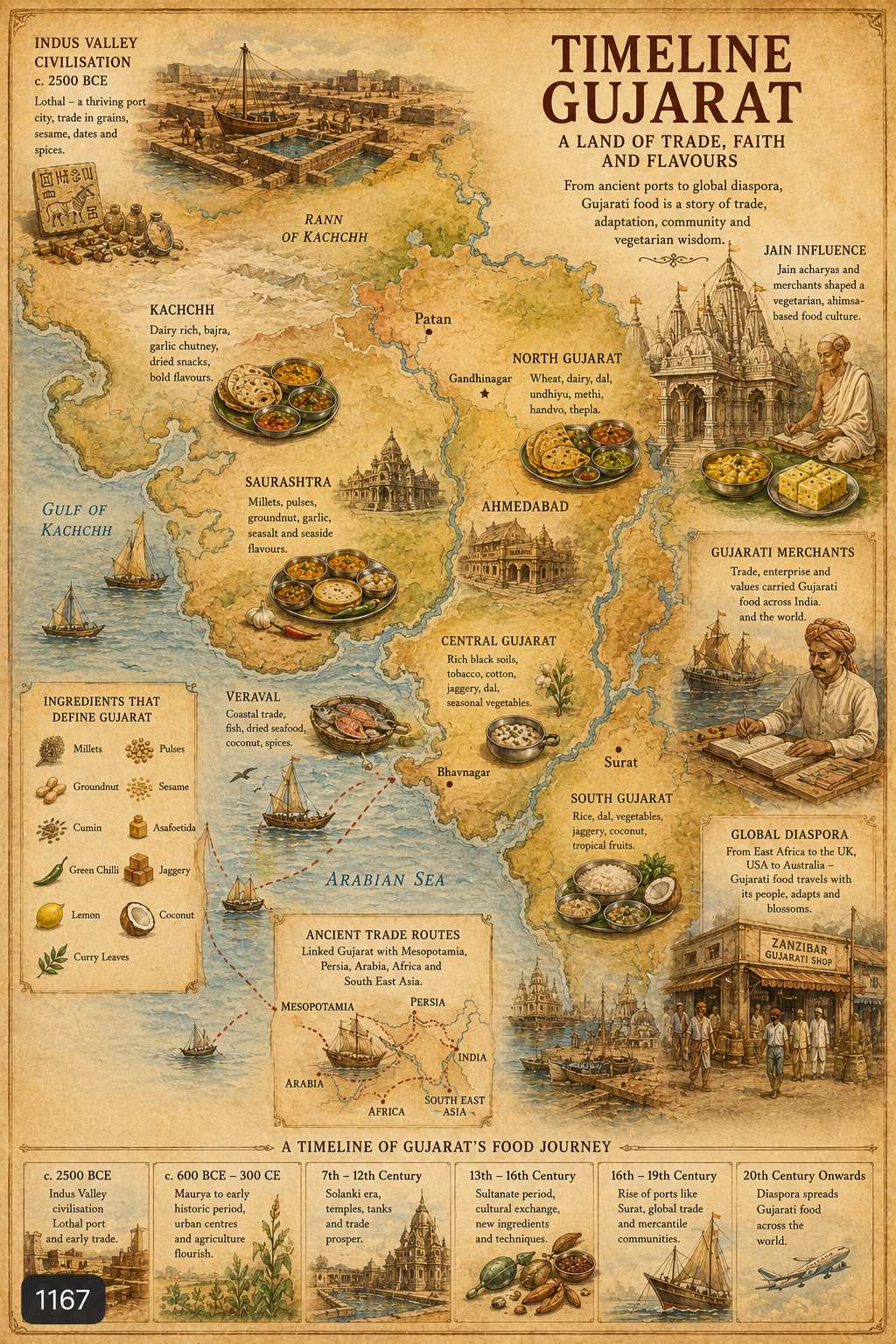
Gujarat's extraordinary trade history — from the Indus Valley to the Jain merchant diaspora — produced the most commercially distributed vegetarian food tradition in India. The world's Gujarati diaspora carries this food to every continent.
⏱ 13 min read🗓 Updated June 2026★ Food Story
2500-1900 BCE
Indus Valley — Lothal
The Indus Valley Civilisation's major port at Lothal (near modern Ahmedabad) — evidence of extensive trade with Mesopotamia. The trading tradition that will define Gujarat's identity for 4,000 years begins here.
300 BCE-1000 CE
Jain Influence
The Jain community becomes commercially dominant in Gujarat. Their dietary philosophy (no meat, no root vegetables) gradually becomes the cultural norm for the broader Gujarati food culture, even in non-Jain communities. The sweet-salty flavour combination emerges.
1400-1600
Gujarat Sultanate
The Gujarat Sultanate's court food culture integrates Muslim cooking traditions with the existing Jain-influenced vegetarian framework. The Mughal-period influence is lighter here than in North India.
1500s
Portuguese Contact
The Portuguese establish themselves in Daman, Diu, and Surat. They introduce the tomato, the chilli, and specific vegetable varieties. The Gujarati food vocabulary expands with New World crops.
1600-1850
Marwari and Parsi Additions
The Parsi community from Persia, settled in Gujarat since the 7th century, brings their specific food culture (including the Parsi dhansak — lentil and meat preparation). The Marwari trading community and their Jain dietary practices reinforce the vegetarian tradition.
1870s-1920s
Indian Indentured Labour in East Africa
Gujarati labourers and traders go to East Africa — taking their food culture with them. The East African Indian food tradition (now spread to the UK through the Uganda expulsion of 1972) is primarily Gujarati in origin.
1972
Uganda Expulsion
Idi Amin expels Uganda's Indian community (predominantly Gujarati) — 70,000 people, primarily to the UK. East African Gujarati food culture arrives in Leicester, Coventry, and London. The UK's largest Indian vegetarian restaurant sector is Gujarati in origin.
From the Indus Valley trading port to the global Gujarati vegetarian diaspora.
Gujarat's vegetarianism has deep roots in Jain philosophy — the Jain merchant community became culturally dominant in Gujarat and their dietary restrictions (no meat, no root vegetables) gradually became the regional norm. Approximately 70-75% of Gujaratis are vegetarian, the highest proportion of any major Indian state. The Jain philosophy of ahimsa (non-violence) embedded vegetarianism as a commercial and social identity marker over 2,000+ years.
How did Gujarati food spread globally?
Gujarati traders and workers spread across the Indian Ocean world from the medieval period — to East Africa, Southeast Asia, and eventually the UK (particularly through the Uganda expulsion of 1972). The UK's Gujarati community, primarily from East Africa, is now the largest Indian vegetarian restaurant sector internationally. Wherever Gujaratis settled, they maintained their food culture.