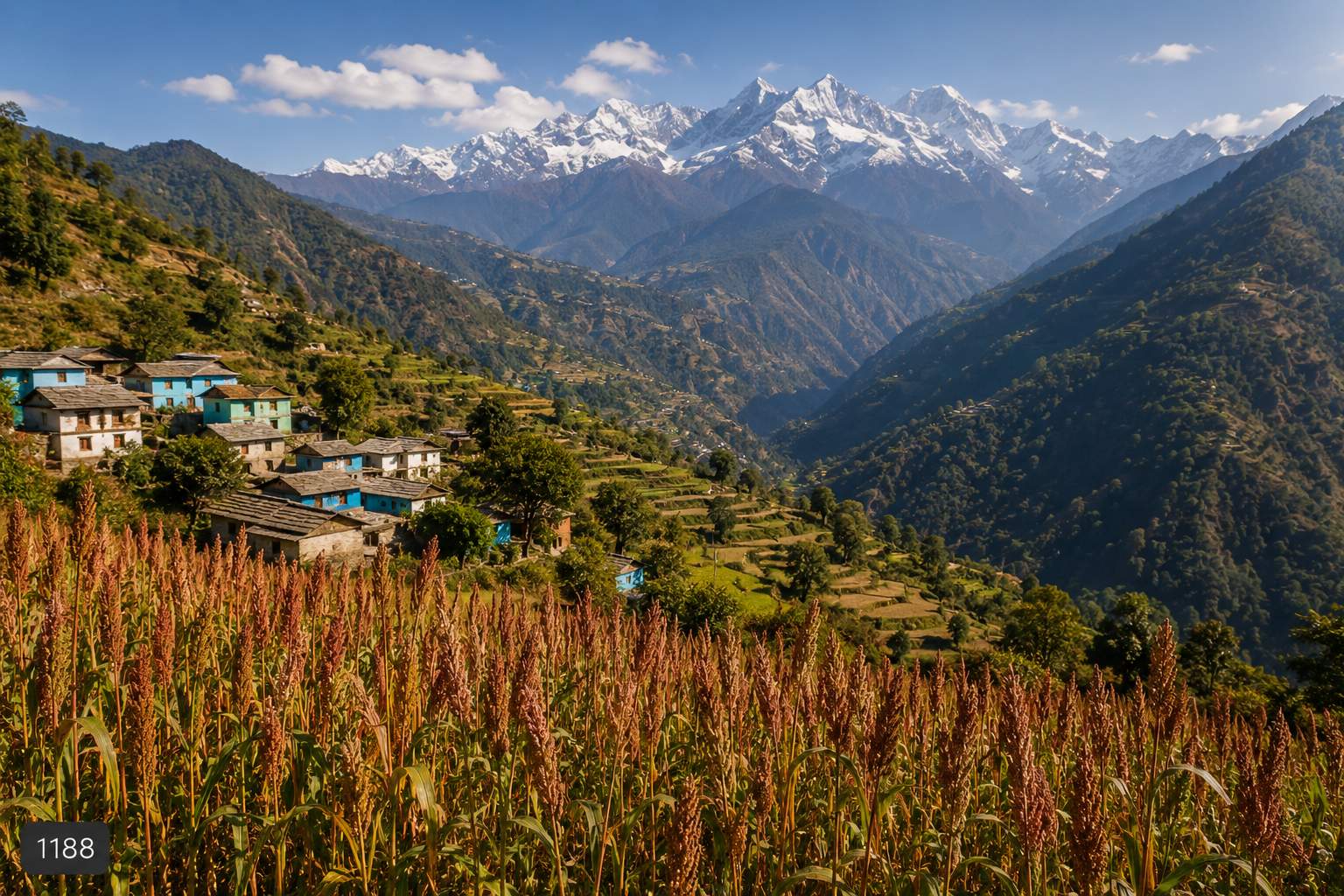
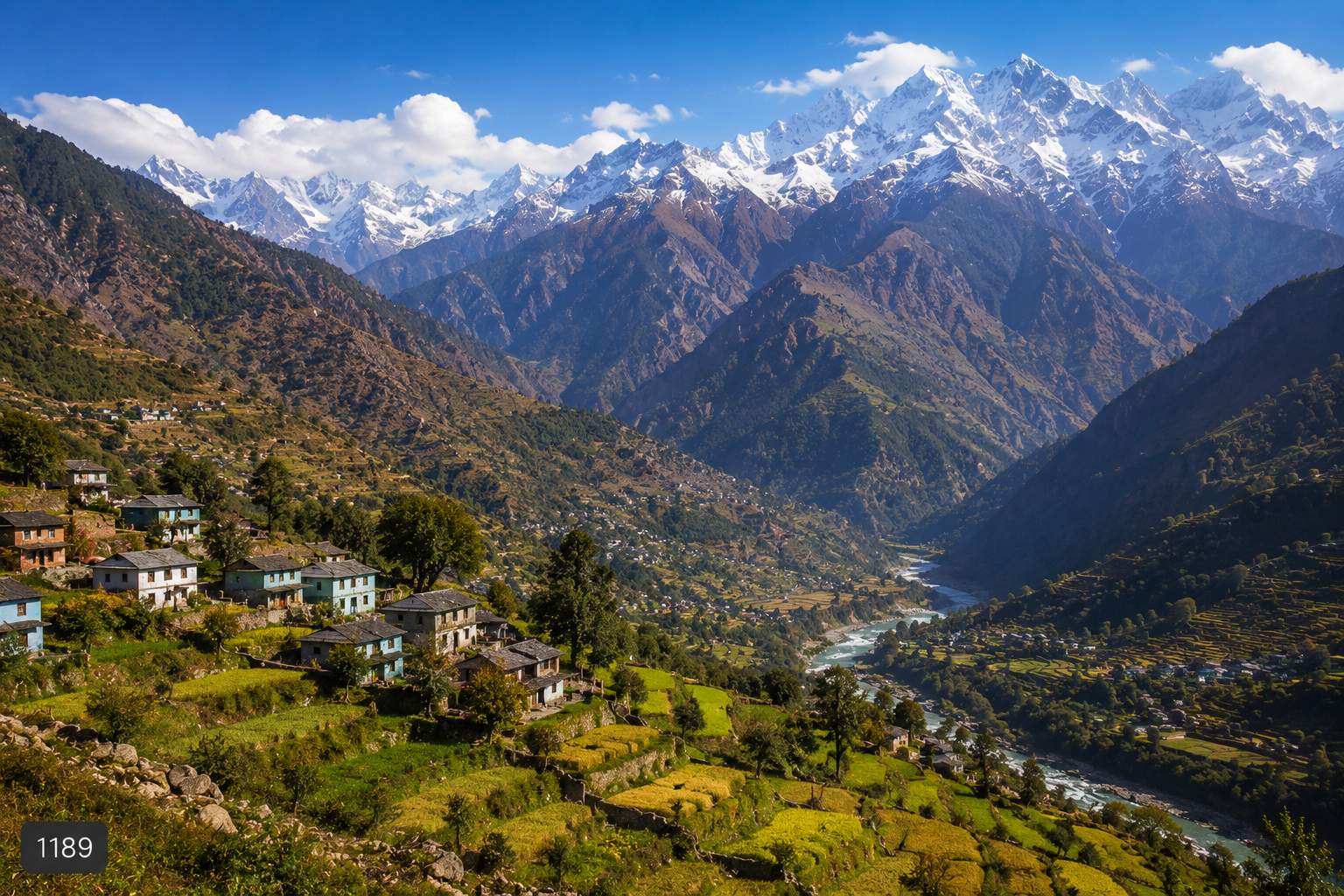
The Garhwal and Kumaon Himalayas — two distinct mountain cultures sharing a state but with separate food identities. Mandua (finger millet) bread, jhangora (barnyard millet) kheer, kafal berries, and the specific produce of the Himalayan altitude that no lowland cuisine can replicate.
⏱ 12 min read🗓 Updated June 2026★ State Food Guide
State Food Guide
Uttarakhand — The Himalayan Mountain Kitchen
Uttarakhand is the source state — the Ganges and Yamuna both originate here, in the high Garhwal Himalayas. The state divides into Garhwal (west) and Kumaon (east) — two distinct Himalayan cultures with related but separate food traditions, both built on the mountain grains (mandua, jhangora, gahat) that grow at altitudes where lowland crops cannot.
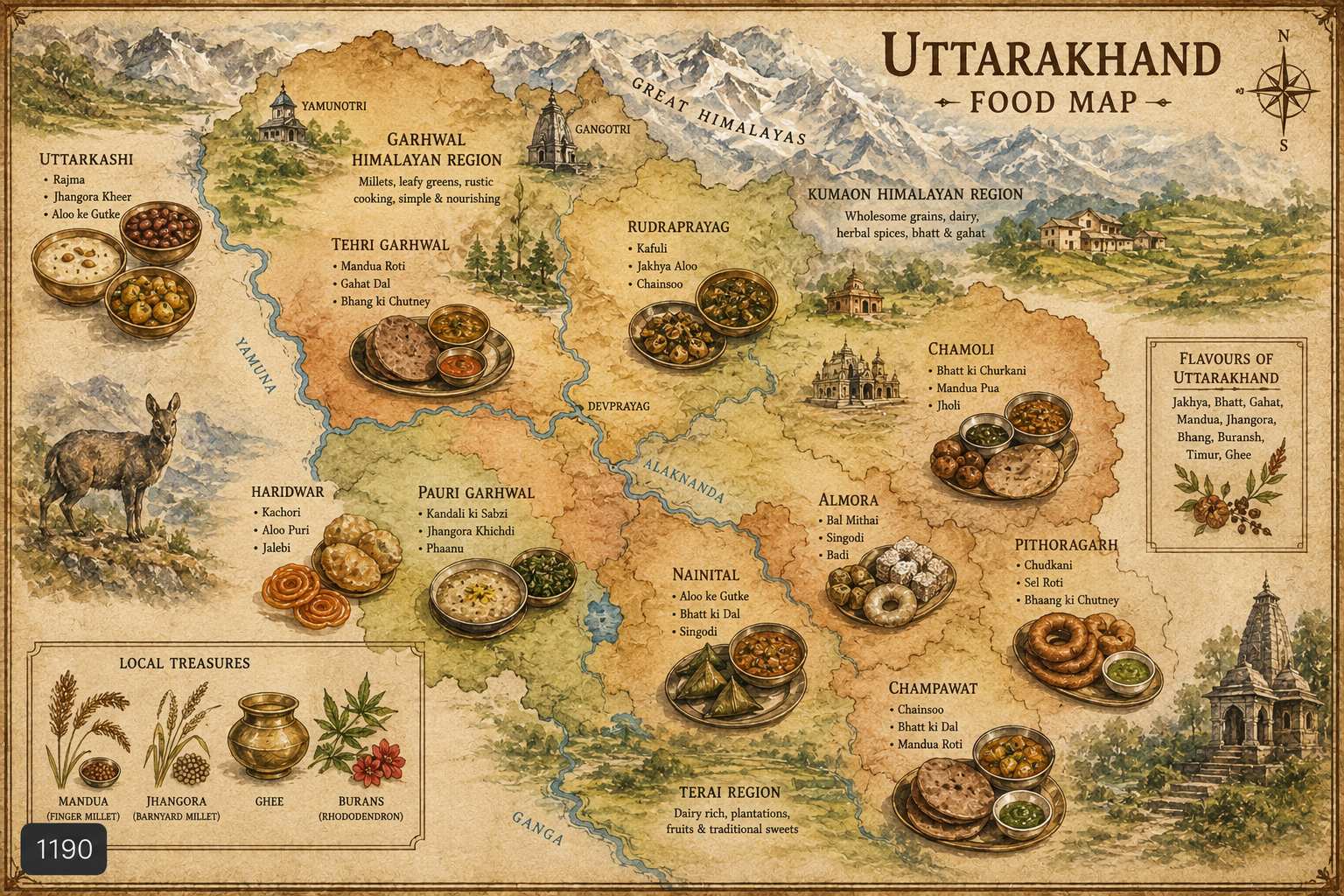
The geographic regions and food zones of Uttarakhand Food Guide.
🗺
Geography & Climate
The land that made this food inevitable
The Garhwal Himalayas rise to Nanda Devi (7,817m) — and the food culture ascends with the elevation. At the valley floors, wheat and rice are possible. At 2,000m, mandua (finger millet) and jhangora (barnyard millet) take over. At 3,000m+, the diet shifts to the specific high-altitude preparations of the Bhotiya and Jaunsari communities. The altitude gradient is the food gradient.
Mandua (Eleusine coracana) is Uttarakhand's defining grain — finger millet that grows at 1,500-2,500m where wheat and rice cannot reliably produce. Mandua ki roti — the thick, dark flatbread made from finger millet flour — is more nutritious than wheat roti, harder to work (it has no gluten), and deeply associated with the mountain communities' food identity. As commercial wheat flour reached the mountains in the 20th century, mandua consumption declined; it is now experiencing a revival as a health food, but this is a recent development overlaid on a tradition of practical necessity.
The Kumaon tradition has slightly more Nepal influence — the proximity to the Nepal border and the cultural connections with the Kumaoni-speaking communities across the border produce specific preparations (specific lentils, specific spice combinations) that are closer to Nepal's food tradition than to the Garhwal version. The specific gahat (horse gram) dal, which is the defining Kumaoni lentil preparation, is served at every important occasion and is the most Kumaoni food identity marker.
Why Mountain Food Cannot Be Replicated in the Plains
Uttarakhand's specific food ingredients — mandua, jhangora, gahat, specific kafal and buransh berries — are altitude-specific in ways that go beyond simple sourcing. Mandua grown in the plains is nutritionally and texturally different from mountain-grown mandua because the mineral content of the high-altitude soil and the cold temperature during grain development produce a different biochemical profile. The specific flavour of gahat dal prepared with mountain-spring water and cooked over a wood fire is not reproducible in a city kitchen even with the same ingredients. Mountain food is not just about the ingredient — it is about the entire mountain ecosystem in which the ingredient grew and is cooked.
The terrain and agricultural landscape that produces the defining ingredients.
🧬
Food DNA
The flavour architecture
Mountain Grains
Mandua (finger millet) — the defining mountain grain — roti darker and more nutritious than wheat
Jhangora (barnyard millet) — kheer as the festival sweet
Gahat (horse gram) — the Kumaoni identity lentil — slow-cooked, specific preparation
Mountain Produce
Kafal berries — the Himalayan wild berry — available briefly in spring
Buransh (rhododendron) — flowers used in juice and specific preparations
Wild mushrooms — pine and oak forest varieties
Garhwal Tradition
Phaanu — mixed lentil preparation — the Garhwal comfort food
Jholi — yoghurt-based curry — distinct from lowland raita
Baadi — rice flour dumplings
Kumaon Tradition
Gahat ki dal — horse gram dal — the Kumaoni identity preparation
Alu tamatar gutuk — potato and tomato in Kumaoni spicing
Bal mithai — the Kumaoni chocolate-coloured fudge sweet — the most internationally known Kumaoni preparation
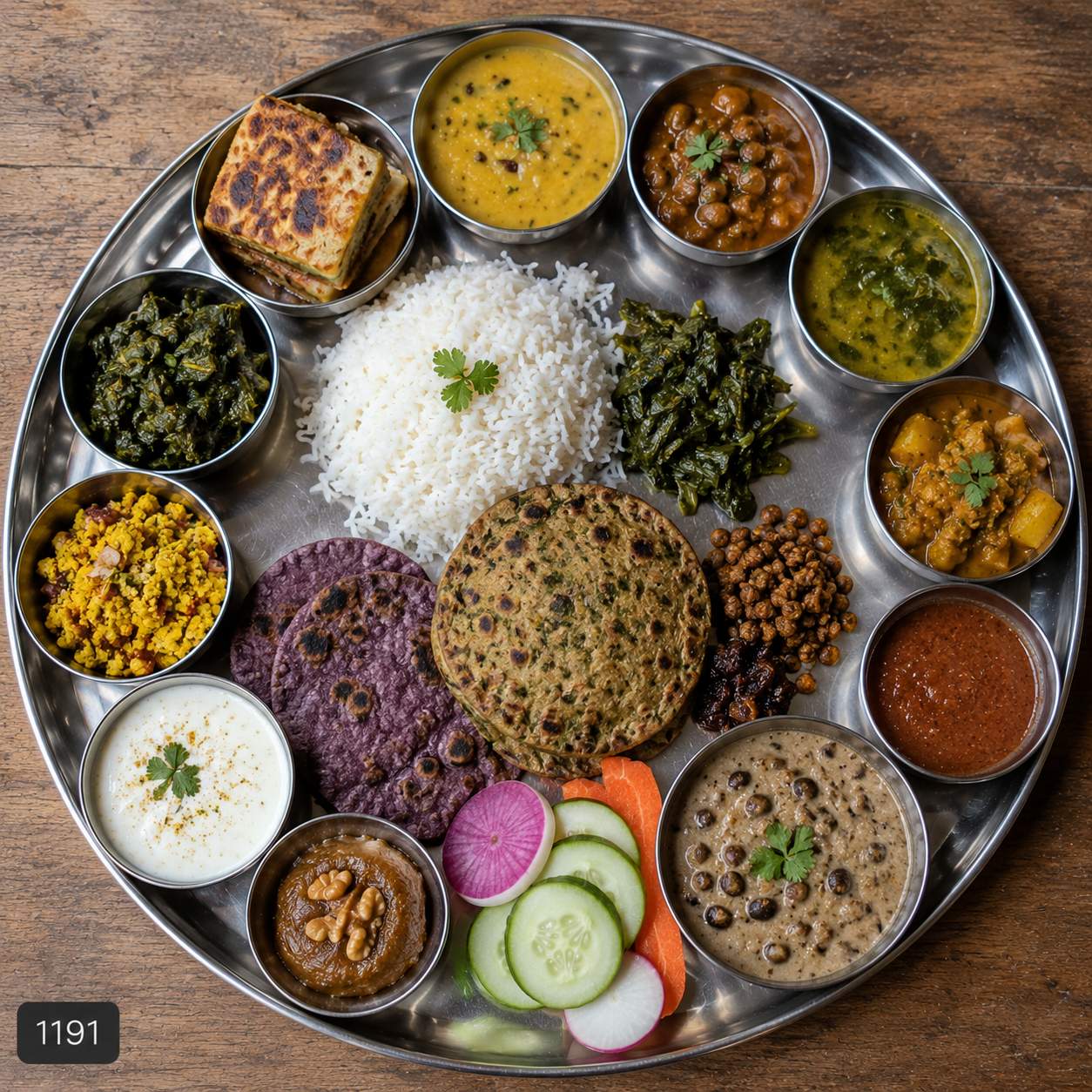
A complete thali representing the full flavour range.
🎉
Festival Foods
When the calendar drives the kitchen
Harela
The Garhwali green festival — specific food preparations for the sowing season.
Bhoj Patra Puja
Specific Himalayan mountain festival food traditions.
Makar Sankranti
Specific Uttarakhand Sankranti preparations — ghughute (fried dough birds) in Kumaon.
Phool Dei
The spring flower festival — a children's ritual with specific food traditions.
Nanda Devi Raj Jaat
The 12-yearly pilgrimage — specific pilgrimage food traditions of the high Garhwal mountains.
🌍
Diaspora & Reach
How this cuisine spread beyond its borders
Uttarakhand's mountain food traditions are increasingly attracting health-conscious and gastronomic tourists — the superfood properties of mandua and gahat, the foraging traditions, and the clean-ecosystem food appeal of high-altitude cooking are generating food tourism interest.
Bal mithai — the Kumaoni chocolate-coloured fudge made from roasted khoya coated in sugar balls — is Uttarakhand's most internationally recognised sweet, available in gourmet food stores nationally.
What is the difference between Garhwali and Kumaoni food?
Garhwali food (western Uttarakhand) centres on phaanu (mixed lentil preparation), jholi (yoghurt curry), and the specific preparations of the Garhwal valleys. Kumaoni food (eastern Uttarakhand) has more Nepal influence, centres on gahat dal (horse gram) as the identity preparation, and produces bal mithai (chocolate-coloured fudge) as its most distinctive sweet. Both use mandua and jhangora but in slightly different proportions and preparations.
What is mandua?
Mandua (finger millet, Eleusine coracana) is the primary grain of Uttarakhand's mountain zone — grown at 1,500-2,500m where wheat cannot reliably produce. The dark roti made from mandua flour is more nutritious than wheat roti (higher calcium, iron, and fibre) but requires specific technique as the flour has no gluten. Mountain-grown mandua has a different mineral profile and flavour from plains-grown mandua.