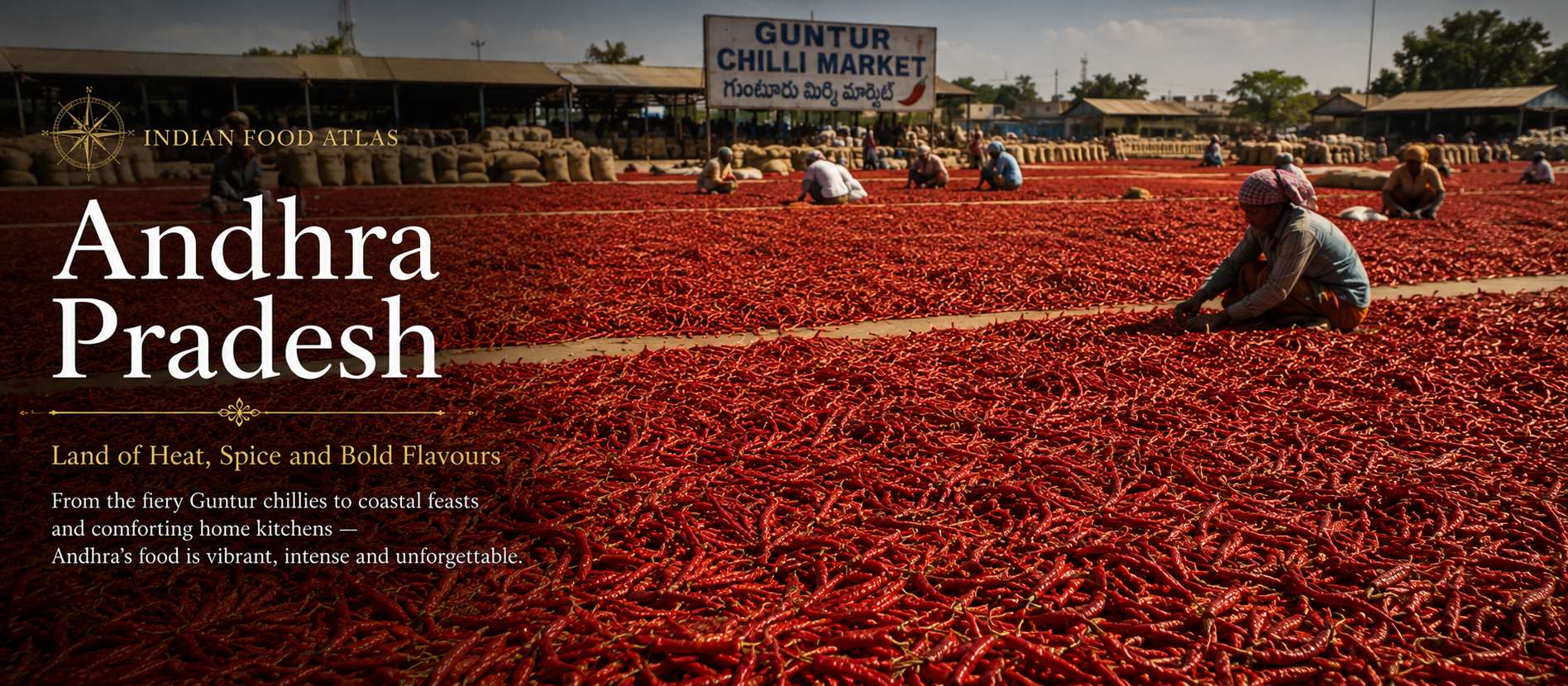
The state that holds the record for India's hottest cuisine — Guntur chillies, tamarind in industrial quantities, and rice as the absolute centrepiece. Plus the world's most visited temple (Tirupati) and a royal biryani tradition from the Nizam's court.
⏱ 13 min read🗓 Updated June 2026★ State Food Guide
State Food Guide
Andhra Pradesh — The Land of Guntur Fire
Andhra Pradesh has been divided — the Telangana state was carved out in 2014, separating the former Nizam's dominion (including Hyderabad) from the coastal Andhra region. What remains as Andhra Pradesh is the coastal and Rayalaseema zones — some of India's most intensely flavoured food, centred on Guntur chilli heat, rice, and tamarind.
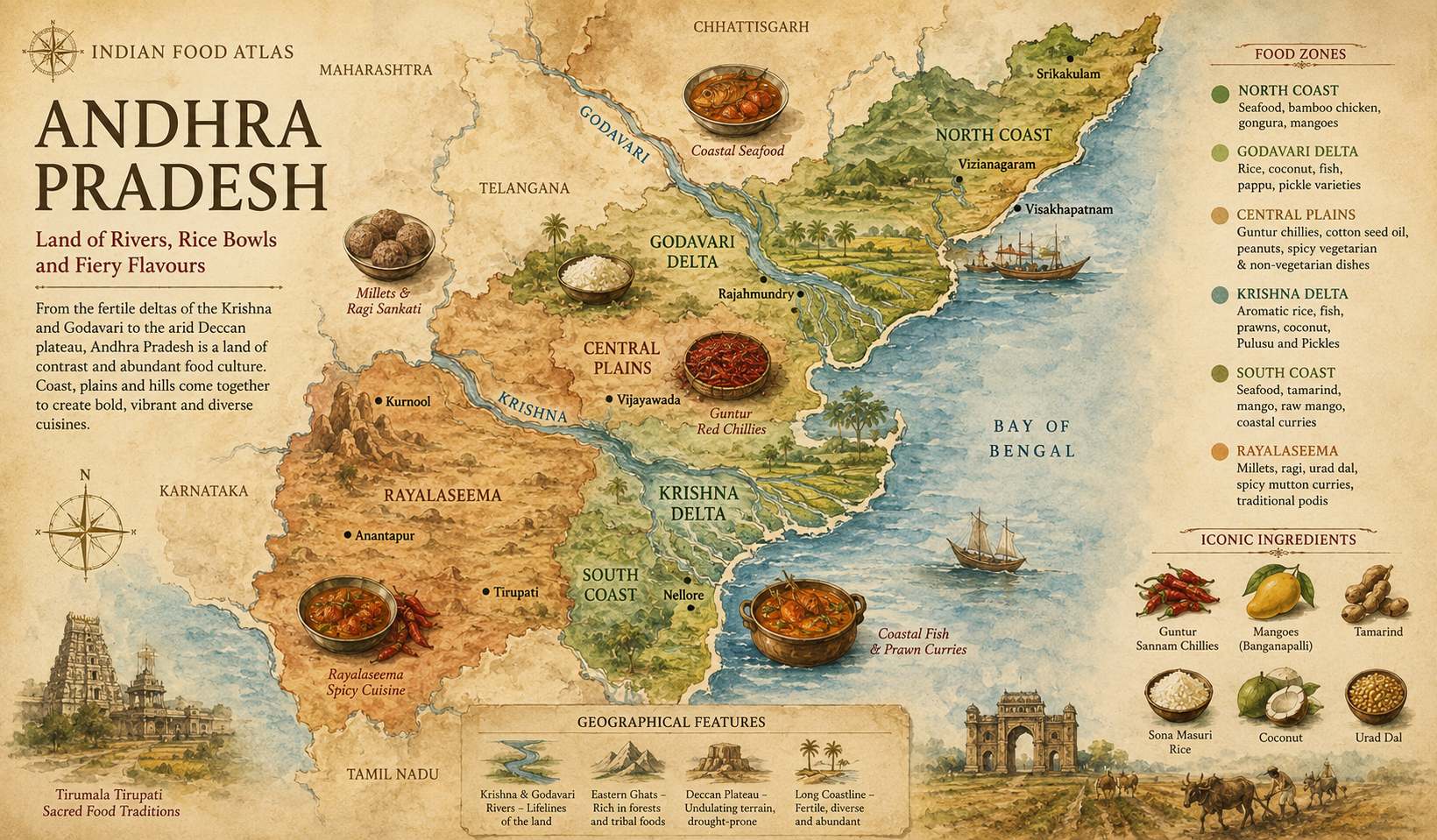
The geographic regions and food zones of Andhra Pradesh Food Guide.
🗺
Geography & Climate
The land that made this food inevitable
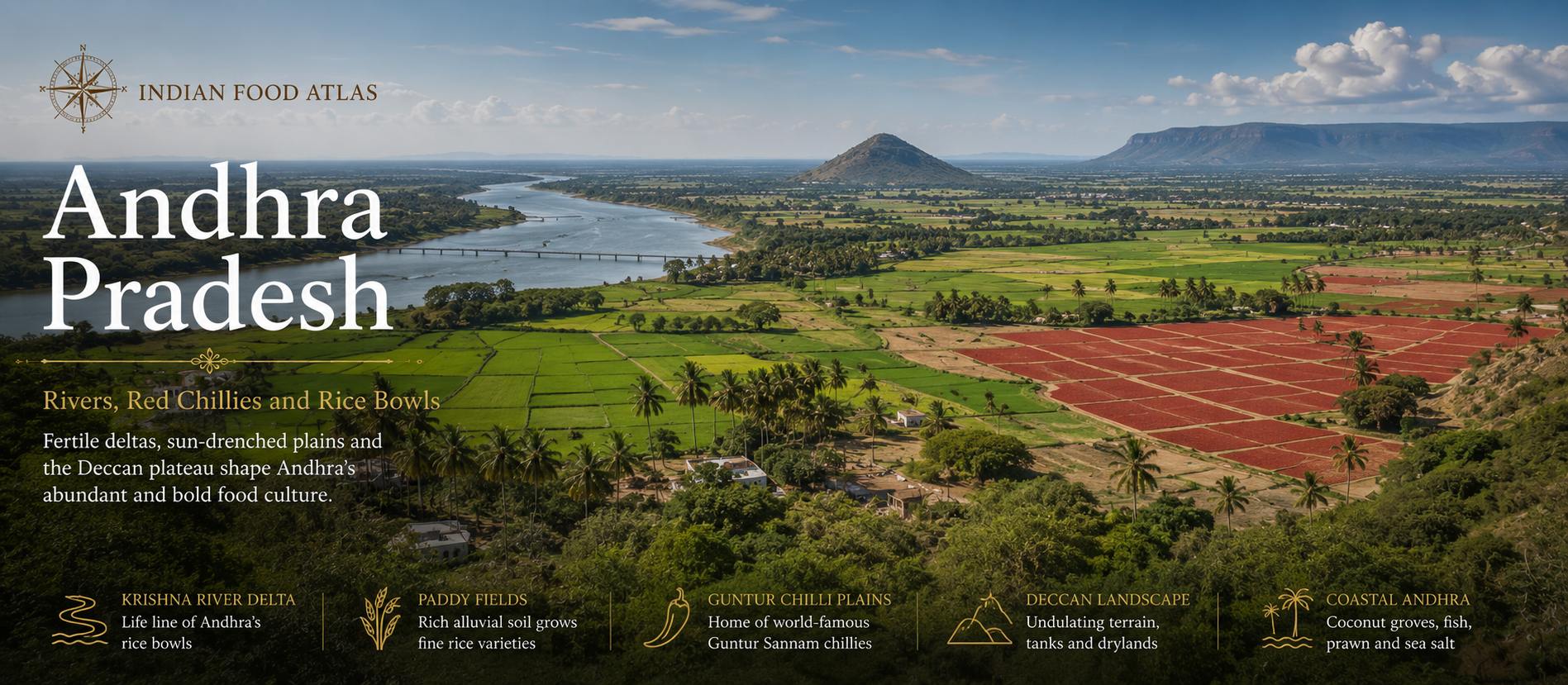
The Andhra Pradesh coast stretches 974 kilometres along the Bay of Bengal — the Krishna and Godavari river deltas producing some of India's most fertile rice land. Guntur district, in the central delta zone, is the chilli capital of India: the specific Guntur Sannam chilli variety that grows here is the most widely traded red chilli in India and produces a heat level that defines Andhra cooking internationally.
Tamarind is the other defining element. Andhra Pradesh uses tamarind more generously than any other South Indian state — in the specific sour-hot-savoury combination that makes Andhra food immediately identifiable. The rice-and-tamarind base, with Guntur chilli for heat, is the simplest expression of a food system that produces some of India's most intensely flavoured preparations.
Tirupati's Sri Venkateswara temple receives an estimated 50,000-100,000 pilgrims daily — making it possibly the world's most visited religious site. The temple's prasadam (sacred food offering) — the Tirupati ladoo — is one of the most specific and famous food preparations in India, with a Geographical Indication for its specific recipe. 100,000 ladoos are made daily, and the waiting list for the recipe's preparation rights is managed as one of India's most complex food logistics operations.
The Tirupati Ladoo — The World's Most Consumed Sacred Food
The Tirupati ladoo (laddoo) is made from besan (chickpea flour), sugar, ghee, cashews, raisins, and cardamom — prepared in the temple kitchens and distributed as prasadam to pilgrims. With 100,000 ladoos made daily and an estimated 150 million pilgrims annually, it is arguably the world's most consumed sacred food preparation. The ladoo's recipe is a Geographical Indication — legally protected, the specific preparation method cannot be replicated outside the temple kitchen without the GI qualification. The specific ghee, the specific besan, and the specific cooking vessel sizes are all specified by the GI registration.
The terrain and agricultural landscape that produces the defining ingredients.
🧬
Food DNA
The flavour architecture
Grains
Rice — 3 meals daily — the absolute centrepiece of every Andhra meal
Ragi (finger millet) — in the dry Rayalaseema zone — kali, sangati
Rice varieties — specific short-grain Andhra varieties for specific preparations
The Chilli and Sourcing
Guntur Sannam chilli — the most traded red chilli in India — Andhra's defining ingredient
Tamarind — used more generously than any other South Indian state
Raw mango (in season) — as a souring agent in specific seasonal preparations
Proteins
Fish (coastal) — from the Bay of Bengal — the Godavari delta fish tradition
Mutton — in Rayalaseema and interior Andhra
Egg curry — the everyday non-vegetarian standard across Andhra
Andhra Specifics
Pesarattu — green moong dal crepe — the Andhra equivalent of dosa
Pulihora — tamarind rice — the temple offering rice preparation
Gongura — sorrel leaf — the defining Andhra vegetable, used as a souring and flavouring agent
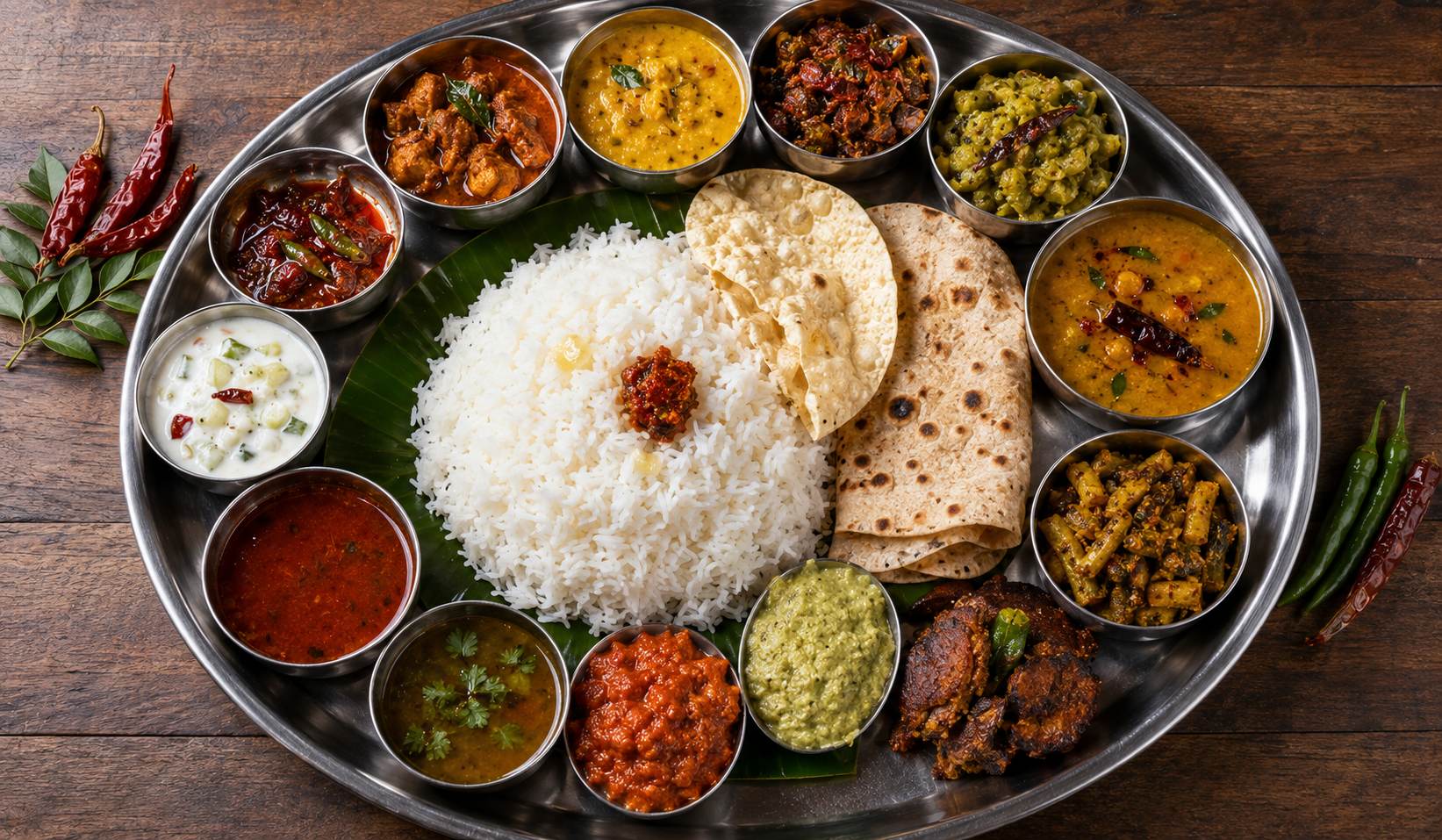
A complete thali representing the full flavour range.
🎉
Festival Foods
When the calendar drives the kitchen
Ugadi (Telugu New Year)
Ugadi pachadi — six-taste preparation: tamarind, jaggery, neem, salt, chilli, raw mango — representing the year's expected range of experiences.
Sankranti
Pongal in Andhra style and specific Sankranti sweets — the harvest festival food tradition.
Tirupati pilgrimage
The ladoo prasadam — 100,000 made daily, the world's most specific sacred food logistics operation.
Diwali
Gavvalu and specific Andhra Diwali sweets — deep-fried pastries and jaggery preparations.
Atla Tadde
Specific Andhra women's festival with its own food traditions — rice-based ritual preparations.
🌍
Diaspora & Reach
How this cuisine spread beyond its borders
Andhra Pradesh's rice and chilli tradition spread nationally through the South Indian restaurant format and through the significant Andhra diaspora in the US (particularly in New Jersey and the Bay Area), who are the largest Telugu-speaking diaspora community internationally.
Gongura pickle — the sorrel-based condiment specific to Andhra cooking — has achieved national recognition through restaurant menus and is now produced commercially for the diaspora market. The Tirupati ladoo's fame makes Andhra prasadam arguably the most internationally known sacred food preparation in India.
Andhra Pradesh is known for having India's hottest mainstream cuisine — Guntur Sannam chillies produce significant heat in most preparations. Rice is eaten three times daily. Tamarind is used generously. Gongura (sorrel leaf) is the defining Andhra vegetable. The Tirupati ladoo is the world's most distributed sacred food.
What is gongura?
Gongura (Hibiscus sabdariffa, sorrel) is a sour leafy vegetable used specifically in Andhra cooking — as a pickle, in mutton curry (gongura mamsam), and as a condiment. Its sourness is different from tamarind — more vegetal, slightly astringent. It is Andhra's identity ingredient, associated with the state internationally.