1518
Golconda Sultanate Founded
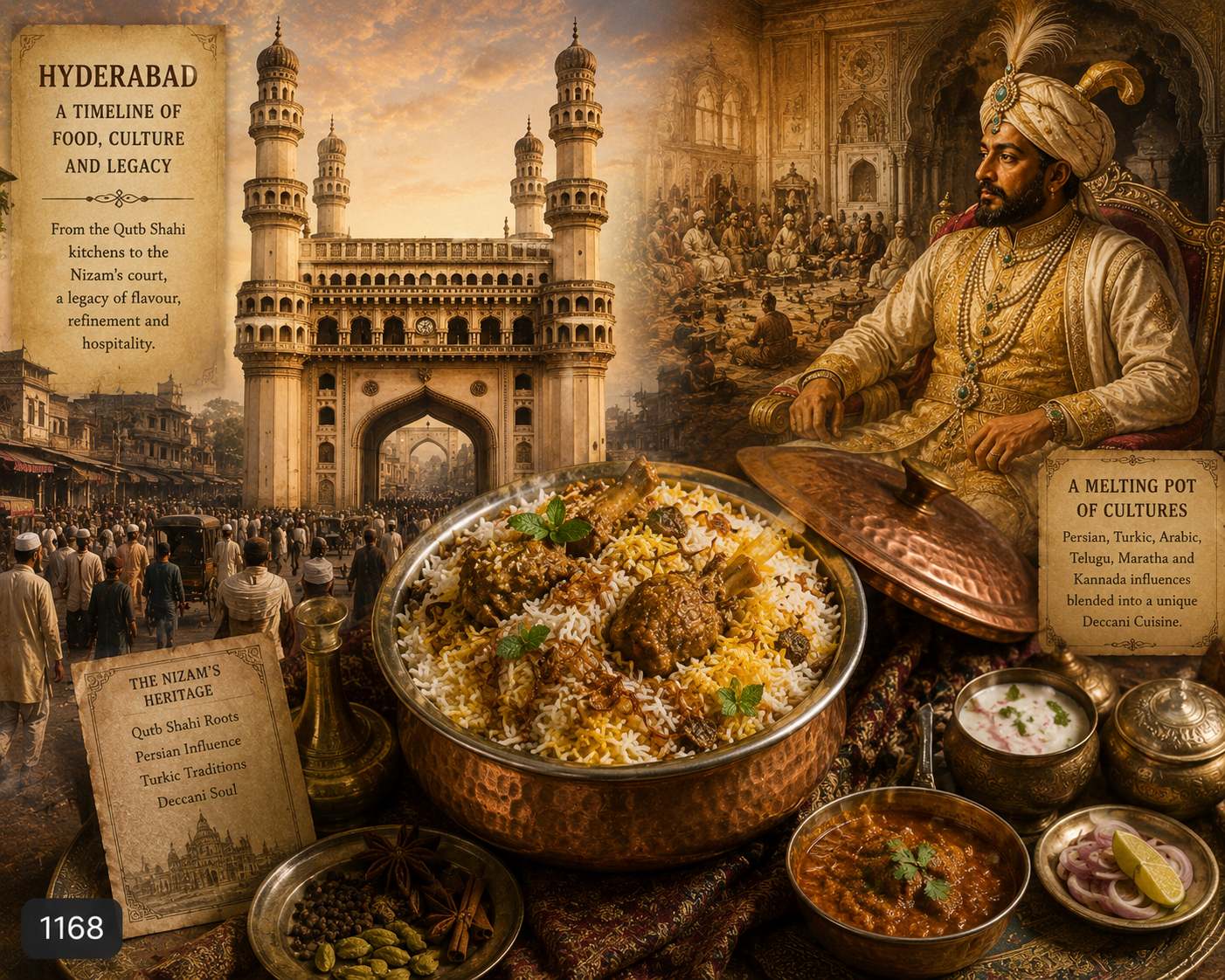
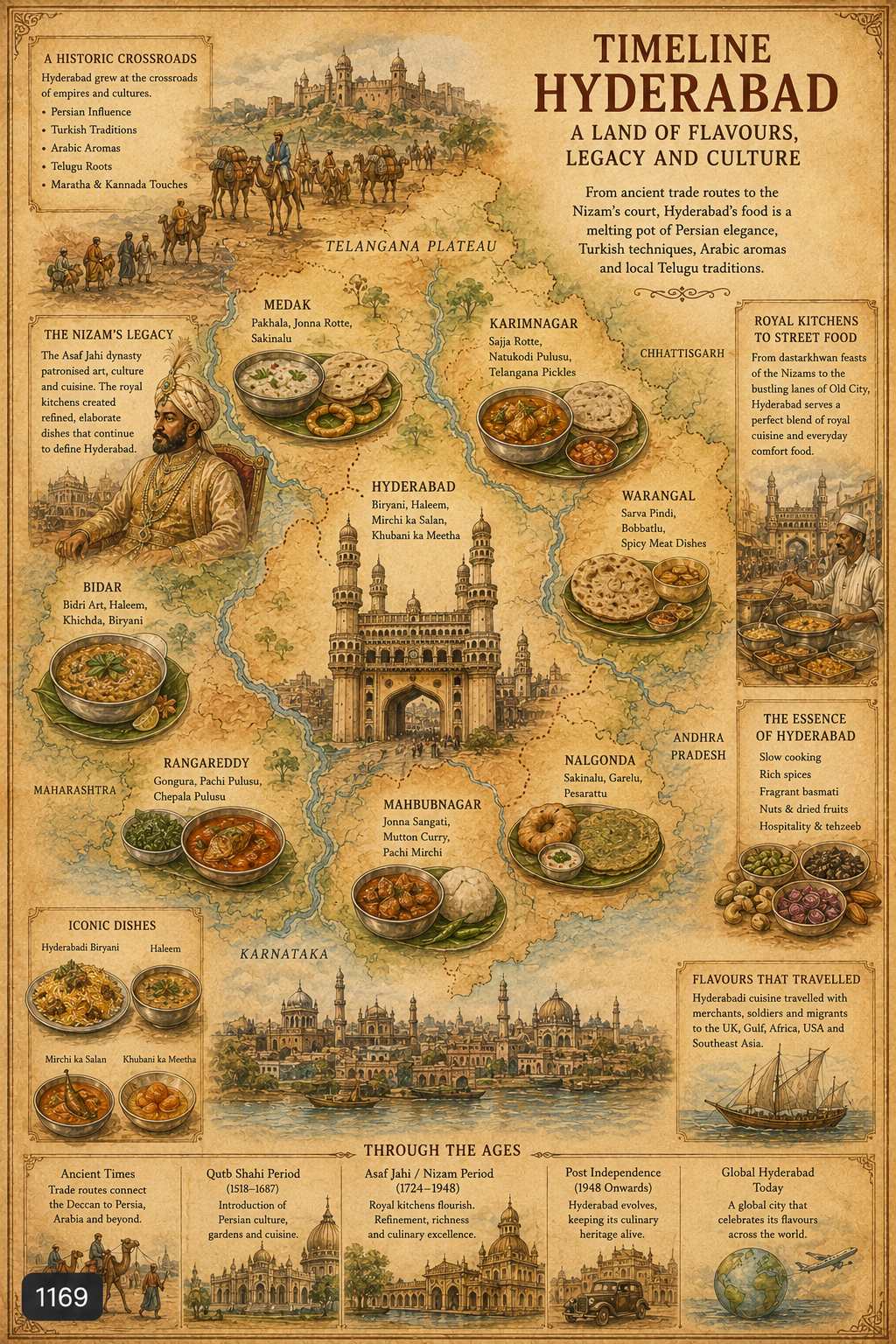
The Qutb Shahi dynasty establishes Golconda (later Hyderabad) — the diamond capital of the medieval world. Court food culture begins: Persian and Deccani synthesis, distinct from both Mughal Delhi and the South Indian temples.
1591
Hyderabad City Founded
Golconda city proves too small — Muhammad Quli Qutb Shah builds Hyderabad around the Charminar. The city's food culture develops around the court and the merchant quarter.
1687
Mughal Conquest
Aurangzeb conquers Golconda — Mughal influence arrives but does not replace the existing Deccani tradition. The biryani tradition begins its Hyderabadi development, distinct from the Mughal Delhi version.
1724
Nizam-ul-Mulk Establishes Hyderabad State
The Asaf Jahi dynasty begins. Hyderabad becomes effectively independent. The Nizam's court food tradition reaches its most elaborate form — 36-course banquets, specialist cooks for specific preparations, the kachchi biryani systematised.
1800-1948
The Nizam's Era
Hyderabad under the Nizams becomes the wealthiest state in India. The 7th Nizam is the world's wealthiest individual at the time. The court food tradition reaches its peak. Haleem (brought by Arab soldiers in the Nizam's army) is adopted and Hyderabadised.
1900s
Irani Cafes — The Persian Presence
Irani migrants from Persia establish cafes in Hyderabad — the specific format (Irani chai in small glasses, Osmania biscuit as accompaniment, specific meat preparations) becomes part of Hyderabad's food identity.
1948
Hyderabad Integration
The Nizam's state is integrated into India. The court food tradition disperses — but the preparations (biryani, haleem, Hyderabadi masala) survive in the restaurant culture that develops from the dispersed court cooks.
Present
Hyderabadi Food Global
Hyderabadi biryani is now the most commercially successful biryani format internationally — the kachchi method, the specific masala, and the Basmati rice combination recognised globally.