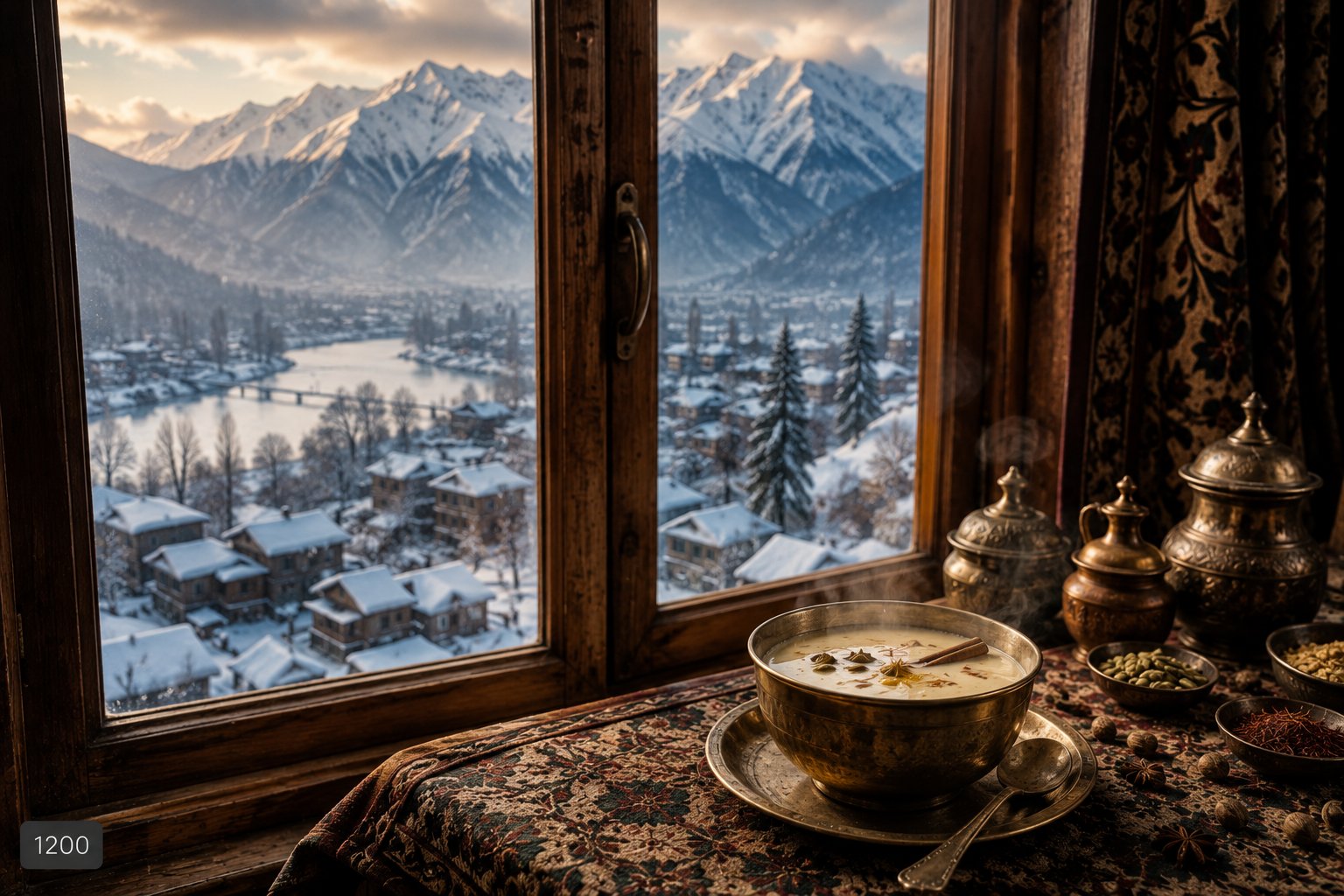
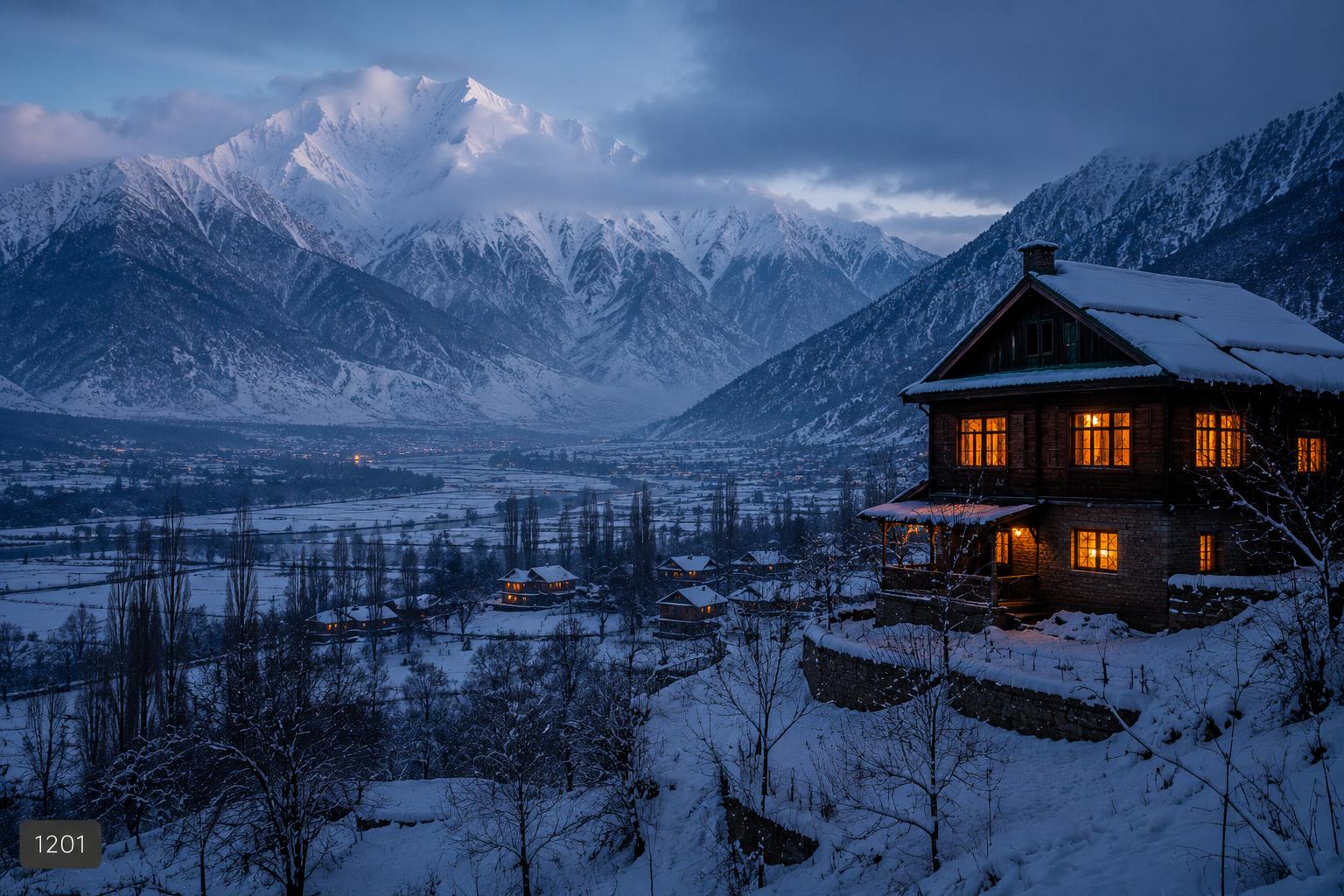
The Kashmir Valley sits at 1,600 metres. Winters last six months and temperatures drop to -10°C. The spice vocabulary — fennel, dried ginger (saunth), black cardamom, asafoetida — is a direct response to the mountain climate. These are not flavour choices. They are thermal choices.
⏱ 11 min read🗓 Updated June 2026★ Why This
The Climate
Six months of winter — and what the body needs
The Kashmir Valley at 1,600 metres experiences six months of genuine winter — temperatures dropping to -10°C or below, snowfall blocking the mountain passes, and a period when the valley is largely isolated from the outside world. This climatic reality shaped the spice vocabulary of Kashmiri cooking over centuries in a specific direction: toward spices that the Ayurvedic and folk medical traditions classify as warming (deepana — digestive fire-kindling).
Fennel seed (saunf) is the most distinctive element of the Kashmiri spice vocabulary — appearing in rogan josh, in yakhni, and in the general aromatic base of Kashmiri cooking in quantities and with a centrality found nowhere else in Indian cooking. Fennel is classified as warming in Ayurvedic medicine and as a digestive aid. In the mountain climate where digestion of heavy winter foods (mutton, rice with ghee, rich dairy preparations) is the physiological priority, fennel's digestive properties make it functionally important, not merely flavourful.
The mountain valley and its climate — the geographic reason behind Kashmiri warming spice use.
Dried Ginger vs Fresh Ginger — Why Kashmir Uses Saunth
Most of India uses fresh ginger (adrak) as the primary ginger form. Kashmir uses dried ginger (saunth) — the same rhizome but dried after harvest, producing a different biochemical profile. Dried ginger has a higher concentration of the specific compounds that Ayurveda classifies as warming. Fresh ginger provides immediate heat and a lighter flavour. Dried ginger provides a deeper, more sustained warming effect — exactly what a mountain winter climate requires for the body's thermal management. The Kashmiri preference for saunth over adrak is not a flavour choice but a climate-appropriate pharmaceutical one.
Black cardamom (badi elaichi) — the large, dark, smoky cardamom specific to high-altitude cooking — appears throughout Kashmiri cooking and in the broader Himalayan food tradition. It is a different species from the green cardamom of the Kerala Ghats (Elettaria cardamomum vs Amomum subulatum) and has a completely different character: smoky, camphoraceous, and specifically associated with mountain food cultures. It grows at high altitude (2,000m+) where green cardamom does not, and its specific character — which appears in Kashmiri, Nepali, Tibetan, and Ladakhi cooking — is the aromatic signature of the high Himalayan food zone.
Why does Kashmiri food use fennel when most Indian food doesn't?
Fennel is the defining aromatic of Kashmiri cooking — appearing in rogan josh, yakhni, and the general cooking base in quantities found nowhere else in Indian cooking. Fennel is classified as warming and digestive in Ayurvedic medicine. In a mountain climate where the winter requires warming foods and heavy preparations (mutton, rice with ghee) need digestive support, fennel's specific properties make it functionally essential.
What is black cardamom and why is it used in Kashmir?
Black cardamom (Amomum subulatum) is a large, dark, smoky cardamom species grown at 2,000m+ altitude — different from the green cardamom of Kerala. It has a smoky, camphoraceous character and grows in the same high-altitude zone as Kashmiri cooking. It appears throughout Kashmiri, Nepali, and Tibetan cooking as the aromatic signature of high Himalayan food culture.