Buddhist Food in India — The Diet That Changed Everything
The Buddha's doctrine of ahimsa (non-violence) transformed Indian diet more than any other single influence. From an era of Vedic meat sacrifice to the vegetarian ideal that Ashoka the Great spread across an empire — Buddhism reshaped what India eats.
⏱ 11 min read🗓 Updated June 2026★ Food Story
The Historical Impact
How Buddhism changed what India eats
The Vedic tradition that preceded Buddhism (roughly 1500 BCE-500 BCE) included regular animal sacrifice — horses, cattle, and other animals killed in ritual context. Meat eating was part of the elite Brahmin tradition. When Siddhartha Gautama taught ahimsa (non-violence toward all living beings) in the 5th century BCE, and when Emperor Ashoka converted to Buddhism in the 3rd century BCE and spread its dietary principles across the Maurya Empire, the dietary landscape of India began its fundamental shift.
Ashoka's Dietary Policy — The First State Vegetarianism
Emperor Ashoka (268-232 BCE) converted to Buddhism after the Battle of Kalinga and issued edicts throughout his empire restricting animal sacrifice and encouraging vegetarianism. His Rock Edicts describe a reduction in the number of animals killed for the royal kitchen (from hundreds daily to a handful) and prohibitions on certain animal killings. This is the first recorded instance of a state adopting food policy based on ethical principles rather than religious ritual. Ashoka's dietary edicts planted the seed of vegetarian philosophy that Brahmin and Jain traditions would later develop further.
From Ashoka's edicts to the present — how Buddhist dietary principles shaped Indian food culture.
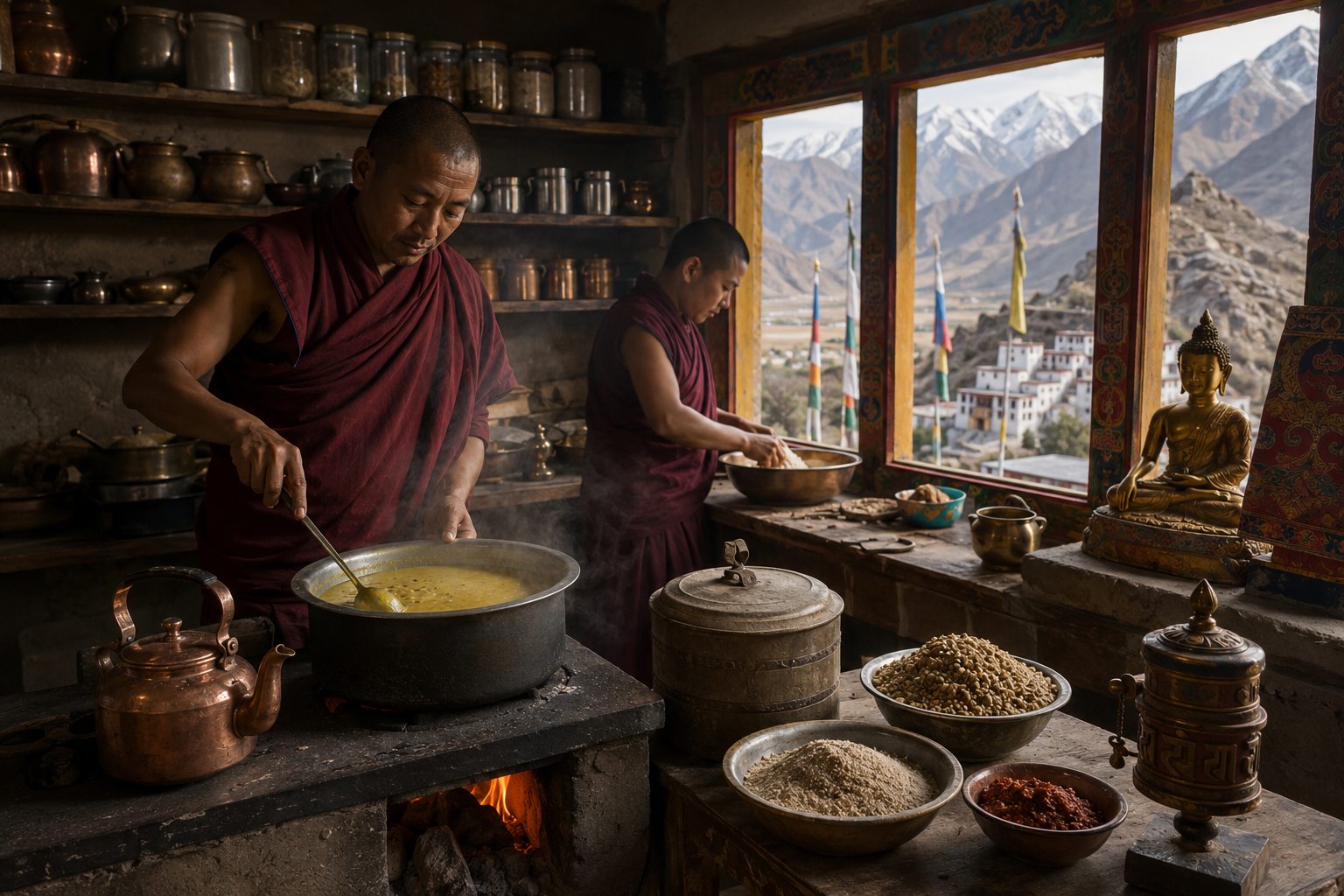
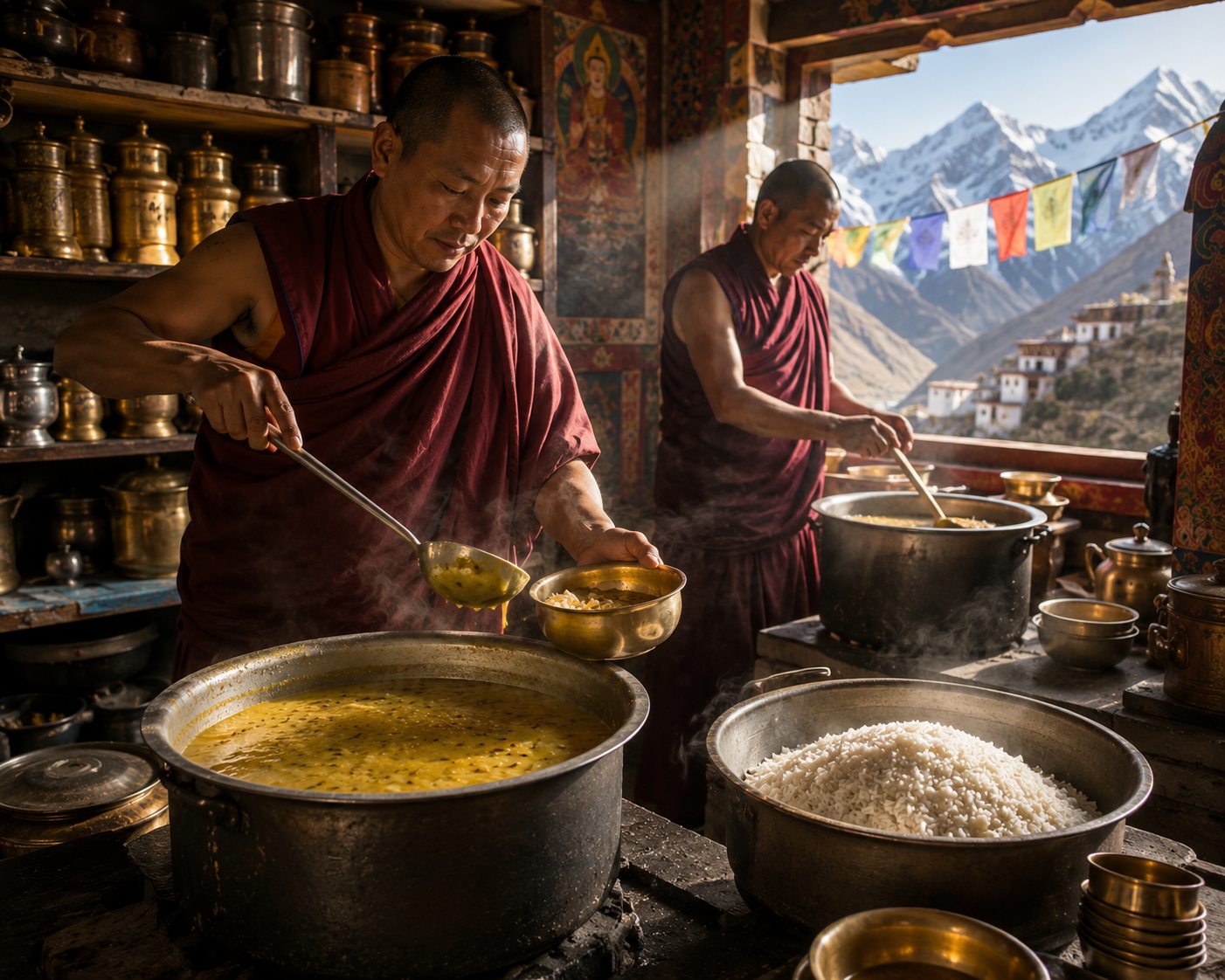
The contemporary Buddhist food tradition in India is primarily associated with the Ladakhi, Tibetan, Arunachali, and Sikkimese communities in the high Himalayan zone — where Buddhist monasteries maintain the tradition of vegetarian community cooking. Tibetan Buddhist food (thukpa, momos, tsampa) has spread nationally through Tibetan refugee communities in Delhi, Dharamshala, and Mysore. The Buddhist monks' daily alms-round (in Theravada countries) has parallels in the Indian monastic tradition — the monks ate whatever was offered, without selecting or rejecting.
Buddhism introduced the principle of ahimsa (non-violence) as a dietary practice — avoiding meat because its production requires killing. Emperor Ashoka's conversion in the 3rd century BCE and his subsequent edicts restricting animal sacrifice began the shift from the Vedic meat-eating tradition toward the vegetarian ideal. This shift was not immediate but accumulated over centuries, eventually influencing Brahmin and Jain dietary practices significantly.
Is Buddhist food in India vegetarian?
Traditional Buddhist food philosophy discourages meat but does not prohibit it in all schools — the Theravada tradition requires monks to accept whatever food is offered, including meat. In Indian Buddhist communities (particularly Tibetan, Ladakhi, and Himalayan Buddhist communities), both vegetarian and non-vegetarian food is eaten. The strict Buddhist vegetarianism associated with East Asian Buddhism is a specific development of Chinese and Japanese Buddhism, not universal.